About
The client is a direct-to-consumer home gym equipment retailer, one of three ecommerce brands under the same parent company. A sibling brand sells attachments for agricultural and land-management equipment, and another sells luxury outdoor furniture. OuterBox has managed SEO across all three sites for two and a half years. The relationship began with a full migration from Salesforce to Shopify, where OuterBox’s job was making sure a migration of that scale didn’t cost any of the three brands the search visibility they’d already built.
Challenge
Before generative AI reshaped search, the flagship brand had already built its SEO program around a specific bet: dominate the middle and bottom of the funnel, where people are actively comparing and buying specific equipment, rather than chase blog traffic at the top. That meant a smaller focus on blog content in favor of a heavy investment in category and product pages, paired with the client’s in-house paid search team and an aggressive presence in Google’s Organic Shopping feeds, which let shoppers buy in only one or two clicks.
That strategy worked well for traditional search. It also raised an open question: Can a site built to win on structured product data and fast purchase paths translate that advantage into AI search success?
Solution
The answer to the above question, in our study, was a resounding “yes.” The same fundamentals that made the site dominant in traditional organic search were the ones AI answer engines needed to trust it enough to cite and recommend it: a technically sound site, page speed that beat competitors on Core Web Vitals, full accessibility and compliance, schema markup covering the full product catalog, and a Google Merchant Center feed clean enough to run without errors or disapproved listings.
On top of that base, OuterBox built out buying guides and product content for the site’s core categories, giving AI models something substantive to draw from beyond bare specs. The same technical SEO and content discipline extended cleanly to GEO performance.
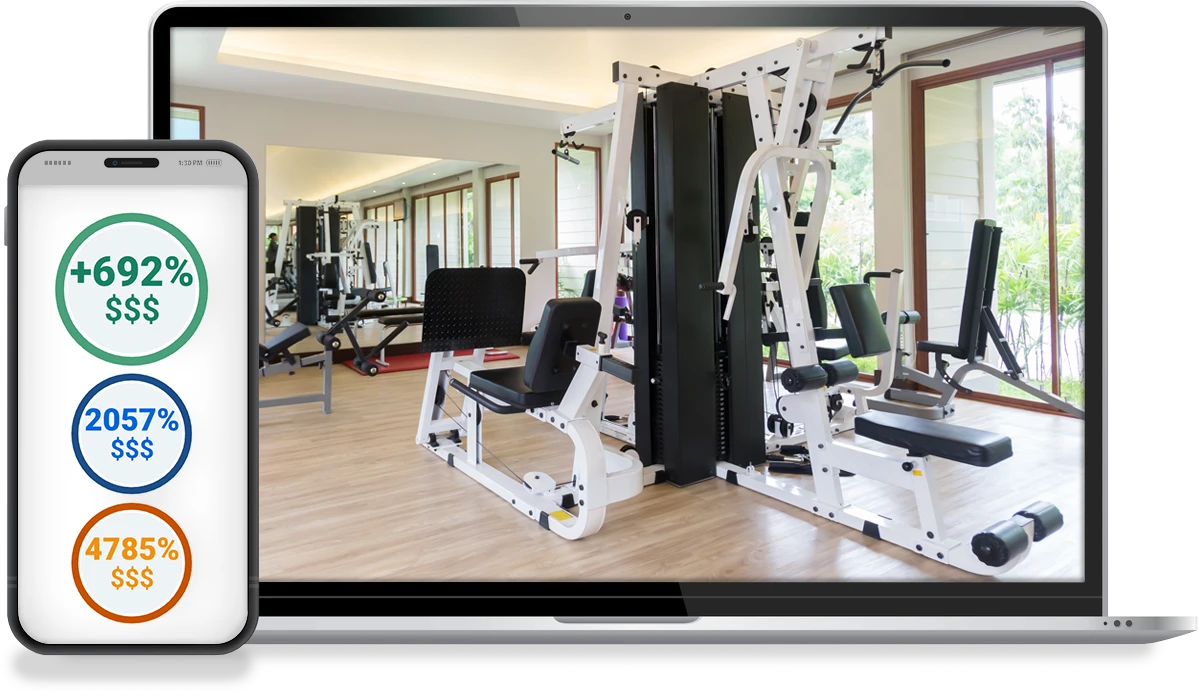
+692%
AI Search Revenue
(Flagship Brand)
+2057%
AI Search Revenue
(Sibling Brand 1)
+4785%
AI Search Revenue
(Sibling Brand 2)
Results
One Foundation, Two Kinds of Search Result
GEO is an emerging discipline that is beginning to reshape the marketing industry, but at this juncture it closely resembles traditional SEO. The technical health, page speed, accessibility, schema coverage, and clean product feeds that drive traditional organic rankings are also potent signals for a language model to trust a site and recommend specific products. AI answer engines are, if anything, less forgiving of ambiguity than a search engine, which will sometimes still rank a merely adequate page early in the results. Sites built to remove ambiguity for Google are also well-equipped to convince tools like ChatGPT to share their content to potential buyers.
Proof Across Catalogs
The three related brands have little in common as shopping categories. Home gym customers are different from agricultural equipment buyers, lawn furniture lives at an entirely different price point from either, the purchase considerations vary widely. Yet all three, running the same foundational SEO program, saw AI-driven revenue growth in the quadruple and even five-figure percentage increase range within the same year. That indicates that results were not specific to one niche or type of buyer, but driven by widespread AI adoption among consumers.
It also means none of the three brands had to scramble once AI search became a meaningful purchase channel. The technical and content foundation OuterBox had already been building over more than two years of partnership had given the client a head start once AI chat adoption took off.