
Healthcare Marketing Agency for Connected Growth
A healthcare marketing agency should simplify paths from attention to action across service lines, locations, and digital touchpoints. OuterBox connects audience priorities, SEO, PPC, web experience, conversion, and measurement in one plan. Your team can coordinate work and choose what to improve next.
"*" indicates required fields
"*" indicates required fields



Healthcare Growth Depends on More Than Channel Activity
Healthcare organizations may support several growth priorities at once. A health system may support a cardiology or orthopedics service-line launch.
A provider group may be entering a new market. A multi-location organization may need people to reach the right location, provider, and next step.
Those paths involve more than a campaign. A patient, caregiver, referring provider, plan member, or employer can arrive with a question and reason for showing up. Your team still has to agree on who matters first, what evidence supports the message, whether intake is ready, and what decision the program needs to inform.
Digital handoffs matter because a campaign can earn attention while the landing page fails to match the service or location. A provider directory, location finder, scheduling path, call center, or referral form can then send the person in circles or route the request without enough context. Stronger healthcare marketing connects demand with the experience and operating decisions that follow it.
What Healthcare Marketing Consultants Should Help You Evaluate
Healthcare marketing consultants and agencies may offer similar channels. Compare how each handles audience priorities, decision paths, stakeholder workflow, and measurement. These four questions move a buying committee from broad capabilities to a practical partner decision.

Which Audiences Matter First?
Your growth plan may need to separate patients, caregivers, referring providers, members, employers, and community audiences. An agency should help decide which audience matters first and what the next step looks like before building a channel calendar.
Ask how the agency ranks opportunities against internal capacity. A cardiology launch, urgent care location, home health referral goal, and organization-wide brand need should not inherit the same channel plan.
This keeps demand priorities explicit when capacity, review needs, or market conditions change.
Does the Agency Connect the Full Path?
Patients, caregivers, and referrers should not have to solve the organization chart. Look for an agency that traces:
- The search, ad, referral, or campaign that creates interest.
- The service page, provider profile, or location finder that continues it.
- The call, form, scheduling, or referral path that captures intent.
- The routing context the internal team receives.
This view shows whether the path breaks before a patient schedules, a caregiver gets an answer, or a referrer reaches the right team.
Can the Agency Align the People Behind the Program?
Your team may include marketing, digital, web, service-line, intake, analytics, clinical or legal, and executive owners. Clarify how the agency will:
- Set decision owners and working cadences.
- Document assumptions, dependencies, and approvals.
- Establish sources and review ownership for sensitive claims.
- Turn competing requests into a prioritized roadmap.
A good working model lets specialists contribute while keeping the program tied to shared growth priorities.
That clarity reduces rework when a dependency or approval changes during execution and reporting.
Will Reporting Guide the Next Decision?
Traffic, rankings, clicks, and form counts do not answer every business question. Ask how the agency defines a qualified action and connects channel signals with calls, forms, appointment requests, CRM outcomes, and stakeholder feedback where your systems allow.
Good reporting uses shared definitions, states data limits, and explains attribution gaps when the next step happens by phone, after intake review, or later in the journey.
The reporting cadence should end with a practical next decision, an owner, and a stated reason.
See How Connected Marketing Supports Growth
OuterBox brings strategy, channel expertise, web capabilities, and hands-on collaboration around client objectives. One connected team can align service-line priorities, audience paths, site dependencies, and reporting questions before separate channels drift. For healthcare organizations, that operating model keeps specialists focused on the same growth priorities, handoffs, and next decisions.
Strategy, implementation, and measurement stay connected to client priorities.
Match Marketing Measures to the Decision Ahead
A useful measurement plan starts with the choice a leader needs to make and the evidence available.
Match each plan to the decision leaders need to make, its time frame, and the facts the team can see. Name what the data can and cannot prove. State the available signals, known data gaps, and how the team will interpret them before reporting begins. When each handoff works, people reach the right page or route, intake gets useful context, and leaders see the next constraint before they add budget. The result is a clearer basis for the next move.

Where Generic Healthcare Marketing Breaks Down
Generic marketing can create activity while routing, intake, and prioritization remain unresolved. Warning signs appear when service lines share one plan, people reach the wrong path, claims lack review ownership, or teams disagree about value.

- Each Service Line Gets a Priority-Based Plan
Rank audiences, locations, readiness, and next steps before assigning channels. - Patients and Referrers Reach the Right Next Step
Trace the service page, provider or location finder, call or scheduling step, and routing before increasing demand. - Review Ownership Is Set Before Claims Move
Assign the source and review owner before a sensitive claim enters a campaign or page. - Marketing and Intake Share a Definition of Value
Agree on what intake can route, the CRM can record, and which outcome is observable.
Competitors
- Every Service Line Gets the Same Demand Plan
Ask every service line and location to use one message, landing pattern, and definition of success. - Patients and Referrers Reach the Wrong Next Step
Treat traffic as the finish line while a patient starts over or a referral reaches the wrong team. - Claims Move Before the Review Path Is Clear
Let a channel calendar outrun the people responsible for substantiation and final language. - Marketing and Intake Define Value Differently
Celebrate inquiry volume while intake reports poor fit, lost context, or misrouted requests.
How a Digital Healthcare Agency Moves From Discovery to Improvement
A digital healthcare agency needs a repeatable process to prioritize work and coordinate specialists. OuterBox uses four steps. Each keeps audience demand, page experience, intake readiness, review ownership, and measurement tied to the same healthcare growth priority from start to finish as the roadmap changes.

-
1. Map Audiences and Service-Line Priorities
Define priority audiences, services, locations, objectives, constraints, and capacity. -
2. Inspect the Handoffs Demand Depends On
Trace pages, calls, forms, scheduling, referrals, intake, CRM handoffs, claim sources, review owners, and data gaps. -
3. Sequence Channels Around Readiness
Sequence discovery, pages, intake, and reporting. Do not scale ahead of a required route, owner, or measurement definition. -
4. Learn and Reprioritize
Use searches, drop-offs, and intake feedback to reprioritize the next constraint.
Healthcare Marketing Agency Results At Health-System Scale
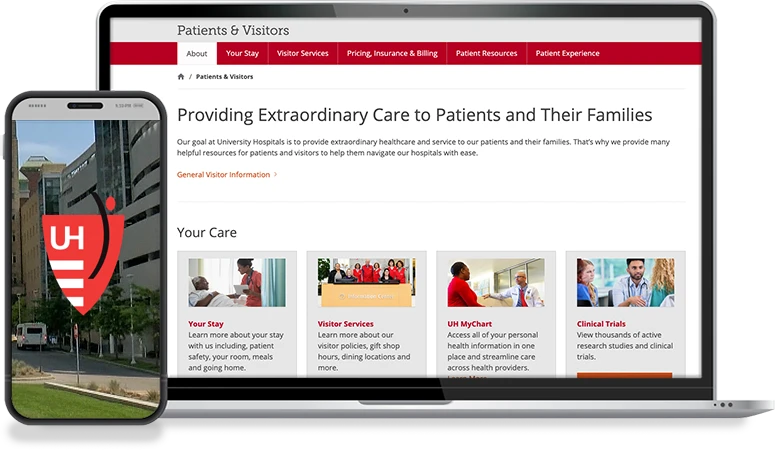
University Hospitals came to OuterBox during a major site redesign, with more than 28,000 indexed pages and a large internal team of digital marketers and service-line directors. OuterBox supported the SEO side of the launch, then helped the team with longer-term technical and content optimization. The engagement produced a 340% increase in organic traffic and a 321% increase in keyword rankings. The University Hospitals engagement shows that OuterBox has supported healthcare search work at health-system scale, where site architecture, technical execution, content governance, and internal coordination all matter. That experience informs broader healthcare marketing work. SEO is often the foundation, but it performs better when paid media, CRO, web design, content, local visibility, reputation, and analytics are planned around the same patient journey.
Healthcare Marketing Resources

Digital Marketing | 9 min read
Healthcare brands compete just like businesses in every other industry. Today, that means they need to deploy tested, effective digital marketing strategies that bring new…

CRO | 6 min read
In health marketing, your ability to turn impressions and engagement into conversions will always depend on the quality of your landing pages. Evolving user expectations…

Digital Marketing | 5 min read
In the healthcare industry, building and maintaining a strong patient relationship is paramount. Like any other industry, the key to a thriving healthcare business lies…

Why Healthcare Organizations Choose OuterBox
Healthcare marketing rarely stays inside one channel. A paid campaign can expose a landing-page problem, while content may depend on clinical review or technical work. OuterBox brings SEO, paid media, content, web design, development, CRO, analytics, and strategy together in-house, giving healthcare organizations specialist depth, shared priorities, clear measurement, and follow-through.
Since 2004
Digital Marketing Agency
1000+
Client Relationships
2M+
Page-One Google Rankings
All In-House
Cross-Functional Team
What Strong Healthcare Marketing Partnerships Require
A healthcare marketing partner should keep strategy, execution, and follow-through connected as priorities change. The strongest relationships combine long-term context, useful innovation, cross-channel experience, and clear ownership of the work from planning through measurement. That combination helps the relationship stay useful as new constraints or opportunities appear.

Long-Term Partnerships
Healthcare growth priorities change, but the relationship should not reset every quarter. OuterBox keeps service-line, location, audience, and intake priorities in one roadmap so specialists can improve the work without rebuilding the strategy from scratch.

Innovation & Excellence
New opportunities matter when they solve the next real constraint. We connect channel ideas with page experience, technical dependencies, review ownership, and measurement so innovation supports the plan instead of becoming another disconnected test for the team.

Experience Delivers Proven Results
An experienced team sees how search, paid media, content, web design, CRO, analytics, and intake affect one another. That cross-functional view helps surface problems earlier and keeps execution tied to the organization's priorities as work moves.

100% Ownership, 100% of the Time
OuterBox's in-house specialists own strategy, implementation, measurement, and follow-through together. Clear owners, shared definitions, and visible dependencies keep the work moving when new requests or constraints appear and make follow-through visible from start to finish.
Healthcare Digital Marketing Services
Build a More Connected Healthcare Growth Plan
Bring the service lines, audiences, locations, operating constraints, and current performance your team is working through. We will help you identify where the journey breaks, which dependencies come first, and what should shape the next marketing decision.
Services
"*" indicates required fields
Other Healthcare Marketing Services from OuterBox
Related Healthcare Marketing Services
Explore services that support healthcare growth across discovery, paid demand, digital experience, conversion, and content.





Healthcare Marketing Agency FAQs
These questions address the decisions buyers commonly need to make when evaluating a partner. They cover audience priorities, decision paths, stakeholder workflow, measurement expectations, and internal ownership.

What does a healthcare marketing agency do?
A healthcare marketing agency plans and executes work that creates, supports, and measures demand from priority audiences. That can involve audience planning, service and location discovery, website paths, intake handoffs, and measurement. The key distinction is whether those responsibilities follow one growth plan.
How should you compare healthcare marketing agencies?
Compare how each agency defines audience priorities, connects campaigns with website and intake paths, works with stakeholders, handles claim substantiation, and plans around data limits. Ask how its roadmap records owners, dependencies, routing needs, review steps, and the decision each report supports.
What should a healthcare marketing program measure?
Agree on qualified actions, data ownership, and system limits. A service-line launch may require discovery and path-completion signals, while an established location may need inquiry fit, phone attribution, or routing quality. Document time lags, observable signals, and questions the data cannot answer.
When should a healthcare organization hire an agency?
An agency can help when growth priorities exceed internal capacity or specialist depth, or when demand generation, provider or location paths, intake, and reporting are disconnected. The organization should still have engaged owners, stakeholder and data access, realistic expectations, and the ability to act on the roadmap.
How should an agency work with your internal teams?
Name the people who own priorities, claims, page changes, intake, and reporting. The agency should document decisions, dependencies, and review steps, then involve the right specialists without turning every issue into another meeting. Clear ownership helps service-line leaders, digital teams, and intake teams act on the same growth priority.