
Urgent Care Marketing Agency for Patient Growth
An urgent care marketing agency must work at the location level. Priorities depend on where each clinic is established, how demand shifts, and what capacity the team can support. OuterBox brings search, paid media, content, conversion rate optimization, and reporting into one plan so those decisions aren't made in channel silos.
Whether you operate one center or a growing regional network, our urgent care marketing services are built around the markets and patient paths that matter to your organization.






Why Urgent Care Marketing Works Differently
A patient may find a clinic through a local result, a service search, a paid ad, a map listing, or a brand query. From there, the path can include directions, a phone call, insurance or service information, online check-in, or booking when those options exist. If listings, campaigns, content, and landing pages tell different stories, valuable demand can disappear between discovery and action.
The operating picture changes too. A new location may need market awareness, while an established clinic may need better visibility for priority services or stronger conversion paths. An effective urgent care marketing agency helps the operator decide what to prioritize, then coordinates execution and measurement across channels.
Decisions Your Marketing Program Needs to Support
The channel list is only useful when it helps your team answer practical questions. We organize urgent care clinic marketing around four decisions that determine where time and budget can work hardest.

Which Locations Need Attention First?
A multi-location plan shouldn’t treat every clinic as an identical pin on a map. Location prioritization considers market maturity, service-area demand, local competition, listing quality, website experience, campaign coverage, and the services each clinic wants to emphasize. That creates a clearer basis for sequencing work across new, stable, and underperforming markets. It also gives central teams a shared framework while leaving room for location-specific messages and conditions. A location priority map gives operators a practical reference to revisit as capacity, demand, and business goals change.
Where Is Patient Demand Being Lost?
Visibility can break down before or after the click. A clinic may have weak search coverage, inconsistent location information, generic campaign landing pages, or content that misses the question behind the visit. A combined discovery and conversion review can identify the gaps most likely to affect calls, directions, online check-in, booking, or a supported patient action.
A demand-path view connects search presence, campaign entry points, landing pages, and the next step available to a prospective patient. It also gives the operator a shared reference for deciding which break in the path deserves attention first.
What Should the Website Help a Patient Do?
Urgent care websites must make practical information easy to find without forcing every visitor through the same page. Service details, hours, location information, insurance guidance, directions, and check-in or booking options need a clear hierarchy. Content strategy and conversion analysis can reduce friction between a patient’s question and a useful action. A location or service-page action map shows what visitors need, what the page communicates, and which calls to action can be measured. Recommendations stay within the features and workflows the operator can actually support.
How Will the Team Judge Performance?
Channel dashboards don’t automatically explain what a location should do next. Measurement starts with available actions such as calls, directions, forms, online check-in, booking, and qualified visit intent, then aligns reporting with the decisions operators need to make. With compatible systems, required permissions, and an agreed scope, marketing signals can be reviewed alongside location-level operating context. A useful measurement plan documents each event, its source, its limitations, and the reporting cadence. We don’t assume perfect patient-level attribution across disconnected systems.
Match Paid Media to Local, High-Intent Demand
Urgent care demand is immediate and highly local. OuterBox starts paid strategy with the customer and the search behind it, then aligns the work with priority services. Your team decides which markets are ready; the media plan and reporting follow that call.
Paid strategy starts with the customer and the search behind it.
Better Marketing Decisions Across Every Location
A coordinated program gives operators a more useful view of what is changing and why. Search and listing work can be evaluated beside paid demand capture, page behavior, and measured conversion actions. Location teams gain clearer priorities, while central leadership gets a repeatable way to compare markets without assuming they are identical. The program helps the business decide where to improve visibility, where to remove conversion friction, and where capacity or operational constraints should change the plan at specific locations.

Patient Access Through Smarter Paid Social
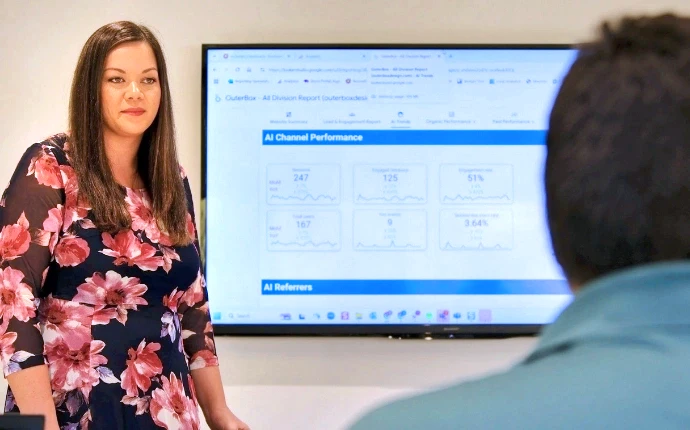
A clearer location-level campaign structure helped an urgent care network improve patient interest and reach across hundreds of in-person clinics.
OuterBox reorganized the network’s Facebook and Instagram campaigns around care lines and location-specific ad groups. The new structure increased patient interest 40% and exposure to new patients 92%. See the urgent care paid social case study.

Meet OuterBox
A national digital marketing partnership gives urgent care organizations access to specialists across SEO, paid media, content, web experience, conversion, and analytics. Those specialists work from one plan rather than as separate vendors, so priorities, measurement definitions, and review cadence stay consistent as the program grows.
An OuterBox engagement begins with the locations, services, systems, and operating constraints in scope, then builds the tactic mix from that context. Ownership stays explicit as the work proceeds, so the operator knows who is accountable for each decision, what is being measured, and when it comes back for review.
20+ Years
Digital Marketing Agency
1000+
Successful Client Partnerships
2M+
Page #1 Google Rankings
300+
USA-Based, In-House Experts
Urgent Care Marketing
Discuss Your Locations, Demand Paths, and Priorities
Bring the markets you want to improve, the patient actions you can support, and the reporting questions your team needs to answer. We will use that context to identify the right starting point and the constraints that should shape the work.
Services
"*" indicates required fields
Where Urgent Care Marketing Programs Commonly Break Down
Good tactics can still underperform when ownership, location context, or measurement is unclear. The patterns below show where coordination tends to fail and how an operator can give search, media, content, and website teams a common decision framework.

- Each Location Gets a Market-Based Priority Plan: Segment priorities by market maturity, service area, capacity, competition, and the services each clinic is prepared to support.
- Visibility Leads to a Clear Patient Action: Align queries, ads, listings, service information, location pages, and available calls to action around a coherent demand path.
- Reporting Connects Metrics to Operating Decisions: Define useful events, document attribution limits, and connect reporting to location questions within the available data, access, and implementation boundaries.
- Vendors Work From One Priority Framework: Use one priority framework, shared measurement definitions, and an agreed review cadence so tradeoffs are visible to the operator.
Common Breakdown
- Every Location Gets the Same Plan: Every clinic receives the same channel mix and message.
- Visibility Without a Clear Next Step: Search and paid activity lead to generic pages or unclear patient actions.
- Reports Without Operating Context: Teams receive channel metrics but can’t tell which decision should follow.
- Vendors Working From Different Priorities: Search, media, content, and website teams optimize independently.
Supporting Insights for Healthcare Marketing Teams

Digital Marketing | 5 min read
In the healthcare industry, building and maintaining a strong patient relationship is paramount. Like any other industry, the key to a thriving healthcare business lies…

Digital Marketing | 9 min read
Healthcare brands compete just like businesses in every other industry. Today, that means they need to deploy tested, effective digital marketing strategies that bring new…

CRO | 6 min read
In health marketing, your ability to turn impressions and engagement into conversions will always depend on the quality of your landing pages. Evolving user expectations…
How an Urgent Care Marketing Engagement Works
The process is structured enough for governance and flexible enough to reflect different locations. Each stage turns operating context into a decision the client and agency teams can document, execute, and revisit as markets, capacity, or services change over time.

-
Align on Markets and Operating Goals Your team brings the locations, services, audiences, capacity considerations, systems, and business questions in scope. We document the shared operating context before channel priorities are set.
-
Audit Discovery and Conversion Paths Patients encounter each location through organic and paid visibility, listings, content, and landing pages. Our audit tests those entry points, supported actions, and measurement conditions together.
-
Build and Execute the Priority Roadmap Business relevance, dependencies, available resources, and market needs determine the sequence. We turn those inputs into a roadmap the teams can execute and review.
-
Review Evidence and Adjust Your operators and OuterBox specialists examine channel evidence, conversion quality, location context, and known measurement limits, then turn those findings into updated priorities.
Why Urgent Care Operators Choose OuterBox
Operators choose OuterBox for the way specialists organize work around the decisions the business needs to make. The engagement connects national capability with location-level context, gives teams one view of the patient path, and keeps measurement limits visible as priorities change across markets over time.

Multi-Location Governance With Local Relevance
Shared standards for measurement, page quality, campaign structure, and reporting preserve the market detail that makes each clinic useful to nearby patients. Central leaders get a consistent operating view without flattening the differences that make each market matter.

Search, Media, and Conversion in One Plan
Our specialists bring organic visibility, paid demand capture, content, and website actions into one patient-path review across priority markets. The combined view gives operators clearer handoffs and exposes conflicts before separate teams optimize toward different goals.

Measurement Grounded in Operating Context
A shared measurement plan defines how each event informs decisions across priority markets. Integration, access, and privacy requirements determine the operating context included in reporting, while source and scope labels distinguish modeled, partial, and platform-specific data.

Priorities That Can Change With the Operation
The roadmap can respond as locations mature, capacity shifts, seasons change, or new services become important. Reviews focus on the evidence and constraints that should change the next decision instead of following a fixed annual checklist.
Related Services
Related Healthcare Marketing Services



Build a More Useful Urgent Care Marketing Program
Tell us which locations, services, patient paths, and reporting questions matter now. OuterBox can turn that operating context into a coordinated first set of priorities for your team to evaluate.
"*" indicates required fields
"*" indicates required fields
Urgent Care Marketing Agency FAQs
These answers cover the practical questions operators often ask while evaluating an agency relationship. They also clarify where channel coordination, location context, and measurement limits should influence the scope an operator chooses.
What services does an urgent care marketing agency provide?
An urgent care marketing agency may coordinate SEO, paid media, local discovery, content, website conversion work, and measurement. The useful mix depends on location maturity, market demand, capacity, technology, and the patient actions the organization can support and measure.
How does digital marketing support an urgent care center?
Digital marketing can help a center appear for relevant needs, communicate services and location details, and give prospective patients a clear next step. It can also help operators evaluate calls, directions, check-in, booking, or other tracked actions within known attribution limits.
How should a multi-location urgent care group measure marketing performance?
Start with consistent event definitions, then compare channel evidence with location context. Calls, directions, forms, check-in, booking, and qualified visit intent may be useful when configured. Cross-system reporting depends on the available technology, authorized access, privacy requirements, and implementation plan.
When should an operator use a specialist agency instead of separate channel vendors?
A specialist agency is useful when search, media, content, website experience, and reporting need shared priorities. The model can reduce ownership gaps and make tradeoffs visible. Separate vendors may still work when the operator has strong internal governance and reliable shared measurement.
What should an urgent care operator prepare before an agency consultation?
Bring the locations and services in scope, priority markets, capacity constraints, current vendors, major patient actions, available analytics, and the decisions leadership wants reporting to support. Known technology or privacy limitations are valuable planning inputs that should be shared.
How do capacity and seasonality change channel priorities?
A clinic with limited capacity may need tighter market or service focus, while a new location may need broader awareness and discovery work. Seasonal demand can change media pacing, content emphasis, and reporting windows. Priorities should be reviewed instead of assumed to be permanent.