By: Jeff Hirz
If you are planning a new website, the first question is usually direct: how much does a website cost?
The honest answer is still the one the old version of this article gave: a website can cost anywhere from about $500 to $500,000+. That range is wide because a simple site with a template and a handful of pages is not the same project as a custom ecommerce website, a B2B lead-generation site with CRM integrations, or an enterprise platform with complex data and governance needs.
The price depends on design complexity, programming needs, content, page count, platform, custom functionality, data imports, ERP integrations, ecommerce, SEO, analytics, maintenance, and the team doing the work. The best way to get an accurate website design cost is to scope the project with a website design company that can review your needs in detail.
This guide breaks down the major website pricing ranges, what changes the cost, and how to compare quotes without getting distracted by the cheapest number on the page.
How Much Does a Website Cost? Quick 2026 Price Ranges
Use these ranges as planning estimates, not fixed quotes. Website design pricing changes by business size, scope, vendor, platform, timeline, content needs, and technical requirements.
| Website project type | Typical planning range | Best fit |
|---|---|---|
| DIY website builder or basic template | $0 to $500/month plus setup time | Personal sites, tests, very small businesses, simple brochure needs |
| Basic professional small-business site | $3,000 to $10,000+ | Local or service businesses that need a polished site and light customization |
| Custom business or lead-generation website | $10,000 to $50,000+ | Established companies that need custom design, SEO structure, forms, analytics, and conversion paths |
| eCommerce website | $25,000 to $150,000+ | Stores with products, payments, shipping, tax, product data, feeds, and conversion needs |
| Enterprise, custom CMS, or complex web platform | $100,000 to $500,000+ | Large catalogs, integrations, portals, high traffic, governance, or custom workflows |
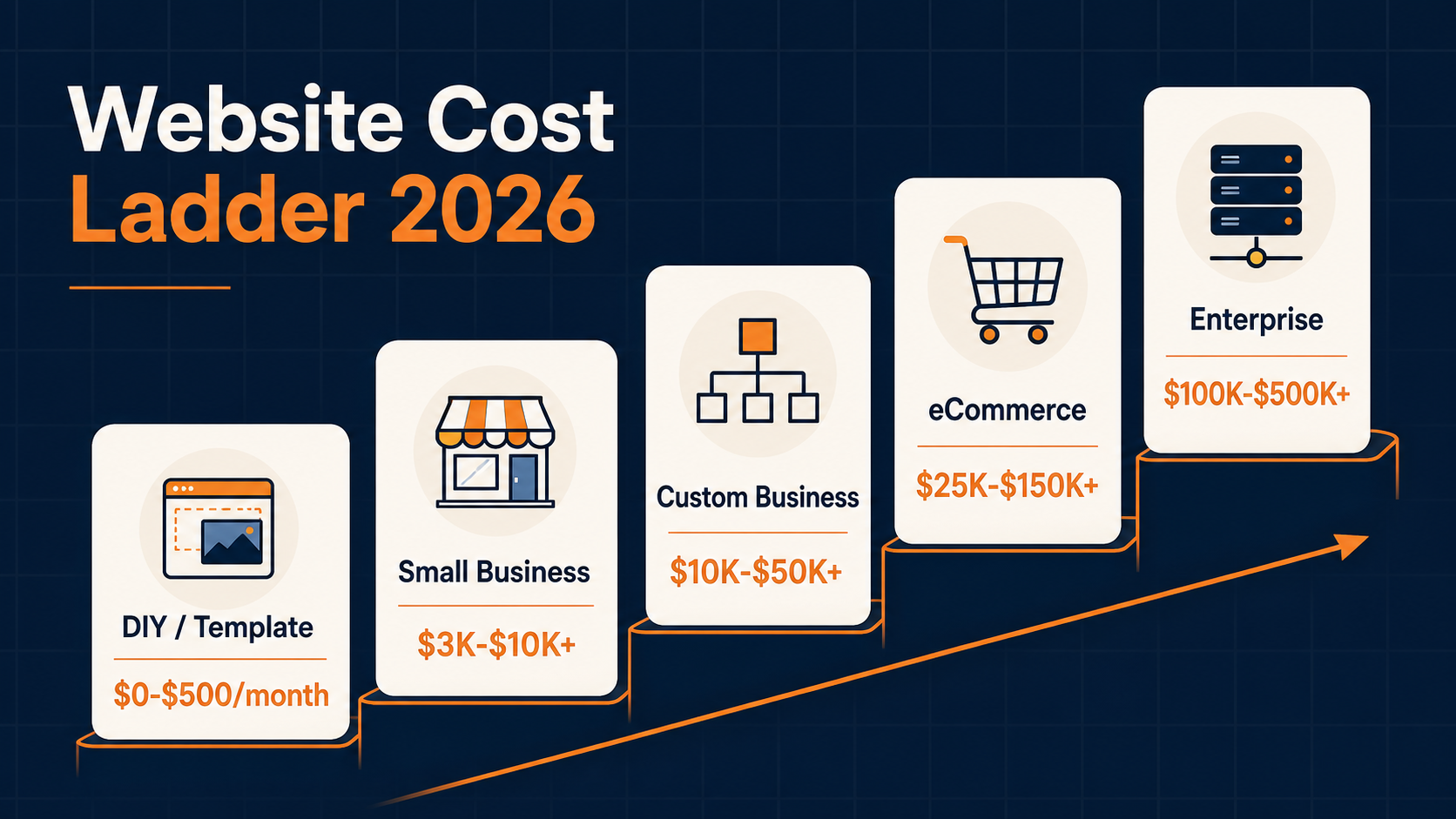
The lower end usually means more self-service, more templates, fewer pages, and less customization. The higher end usually means deeper discovery, custom design systems, cleaner development, more content work, stronger technical SEO, more QA, and better support after launch.
What Affects Website Design Cost?
The type of website you need is the biggest driver of cost. A basic website for a restaurant with 10 content pages is a relatively simple project. An ecommerce website processing millions in transactions with 50,000 items is a much larger website development undertaking.
The original article listed the right questions. Those questions still determine website price in 2026.
| Cost factor | Why it changes the price |
|---|---|
| Design style | A simple template setup costs less than a custom visual system with unique page layouts, motion, photography, and brand-specific components. |
| Page count | A 10-page brochure site is different from a 200-page site with services, resources, locations, case studies, and landing pages. |
| Platform | WordPress, Shopify, Squarespace, Wix, Magento, Adobe Commerce, headless, and custom CMS builds have different hosting, development, plugin, and support models. |
| Content entry | Someone has to write, edit, migrate, format, QA, and publish the content. Large migrations can become projects by themselves. |
| CMS needs | Basic editing is different from custom permissions, workflows, reusable components, localization, and multi-site management. |
| Integrations | CRM, ERP, inventory, product data, payment, shipping, email, analytics, and marketing automation integrations require planning and testing. |
| Payment processing | eCommerce, donations, subscriptions, booking deposits, and quote payments add checkout, tax, security, and support requirements. |
| Custom functionality | Calculators, filters, account portals, configurators, quoting tools, gated content, and dashboards add development and QA time. |
| SEO and redirects | A redesign needs metadata, redirects, indexation checks, schema, technical QA, and often content restructuring to protect traffic. |
| Maintenance | Hosting, updates, security, backups, monitoring, and support continue after launch. |
That is why a flat answer like $5,000 for a website is rarely useful. The better question is: what does the website need to do after it launches?
Use the ranges that follow as planning estimates. They assume a US-based agency project scope and depend on design, content, integrations, and the support a project actually needs after launch.
Website Design Pricing by Project Type
The same budget can mean very different things depending on the project type.
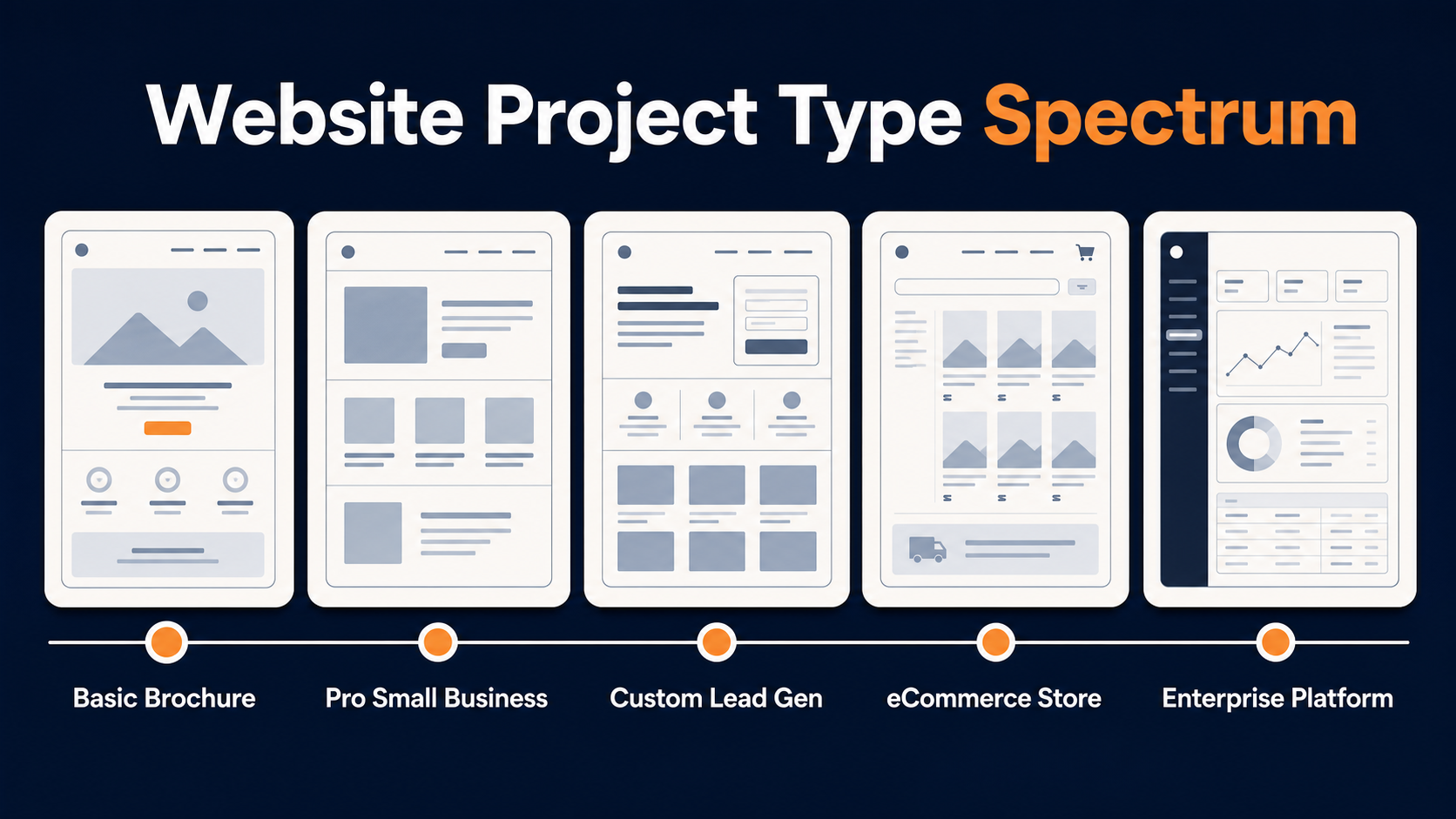
Basic or DIY Website
A basic website can be built with a hosted builder, template, stock imagery, and a few pages of copy. Wix, Squarespace, and similar platforms bundle hosting and site-building tools into monthly plans. As of mid-2026, Wix lists plans starting around the low double digits per month, while Squarespace positions its plans as hosted subscriptions with a free trial and annual-plan discounts.
This route can work when the site is simple and the business is still testing its offer. The tradeoff is that you are responsible for choosing the template, writing copy, loading content, configuring SEO basics, checking mobile layouts, connecting forms, and maintaining the site.
Professional Small-Business Website
A professional small-business website usually includes discovery, a design direction, page templates, content entry, forms, analytics, basic SEO setup, launch QA, and training. Many sites in this range use an existing CMS or builder but customize the design and content for the brand.
This is where website design cost often moves from hundreds into several thousand dollars. The budget buys fewer mistakes, better launch planning, cleaner brand presentation, and a site your team can update without breaking layouts.
Custom Business or Lead-Generation Website
Custom website design costs more because the site has to solve business-specific problems. A B2B company may need service-page templates, case studies, gated resources, CRM routing, lead-source tracking, event tracking, redirects, and technical SEO planning.
The design and development work is only part of the price. Information architecture, conversion strategy, content planning, accessibility, analytics, redirects, QA, and post-launch support all affect whether the site produces leads.
eCommerce Website
An ecommerce site has more moving parts than a brochure site. Product data, categories, filtering, checkout, payment gateways, shipping, tax, email templates, reviews, feeds, schema, analytics, inventory, ERP, and conversion testing all add cost.
Platform choice also matters. Shopify currently offers Basic, Grow, Advanced, and Plus plans with different monthly starting prices and payment-fee structures. WooCommerce says its core platform is free, but its pricing page also notes hosting, extensions, and payment processing costs. For deeper store budgeting, see our eCommerce website pricing guide.
Enterprise, Custom CMS, or Web Platform
Enterprise website pricing is a different category. The budget may include multiple brands, locations, permissions, content workflows, single sign-on, custom integrations, performance requirements, security reviews, legal/compliance constraints, and high-traffic infrastructure.
These projects can move into six figures because the website is no longer just a marketing site. It may be part CMS, part sales tool, part product database, part customer portal, and part operational platform.
How Platform Choice Affects Website Design Pricing
Platform is a technology decision and a cost decision. It changes build cost, ownership cost, and future flexibility.
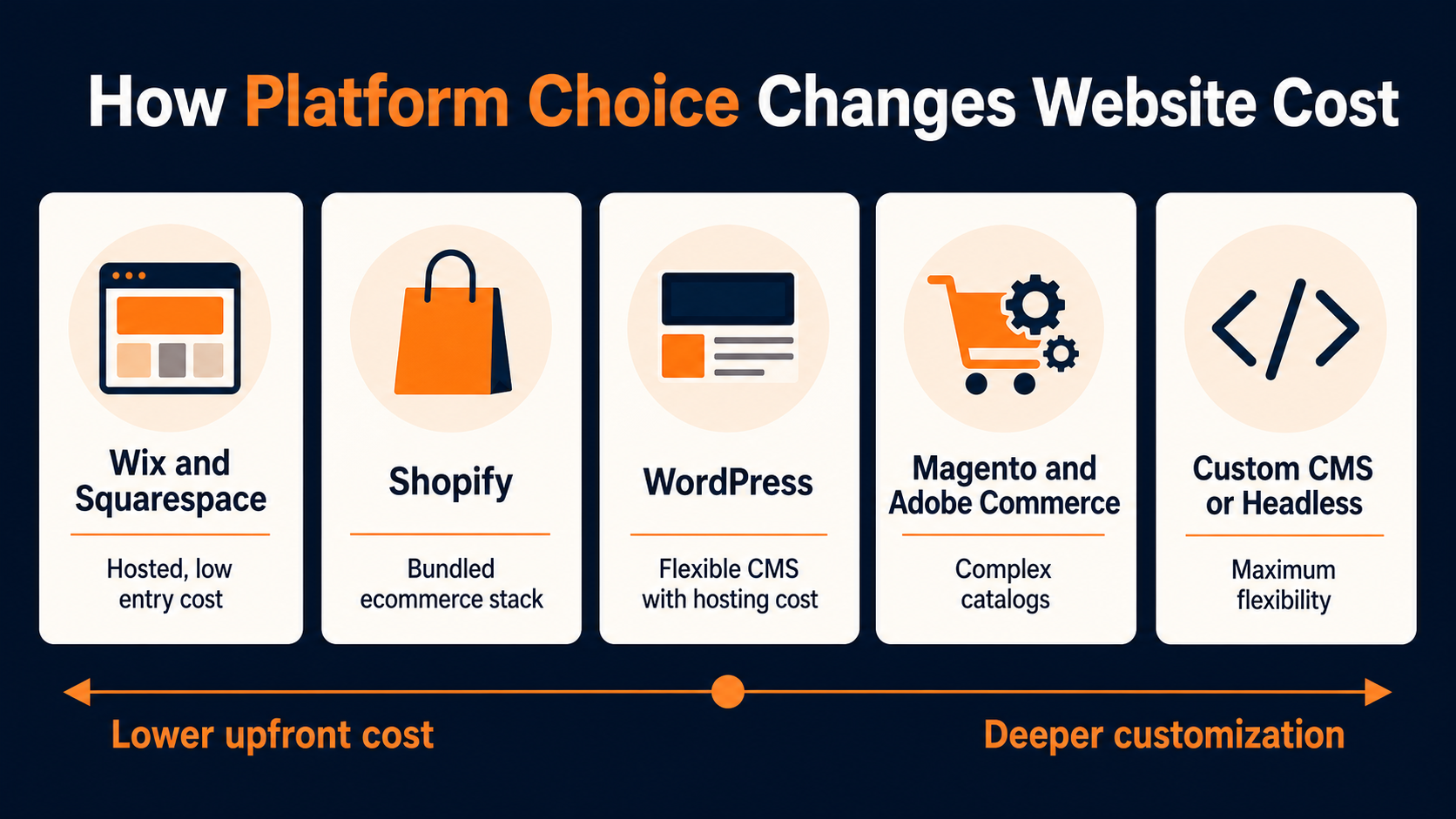
WordPress can be free to download, but WordPress.org’s own requirements still point to real hosting and security needs: modern PHP, supported database software, HTTPS, and a strong server environment. A custom WordPress site also needs design, development, plugins, content, security, backups, and support. If WordPress is the right path, our WordPress website pricing guide breaks that model down further.
Shopify can reduce infrastructure complexity for ecommerce teams because hosting, checkout, and commerce tools are bundled into plans. That convenience does not remove design, content, theme development, apps, migrations, SEO, or conversion work. Our Shopify website pricing guide covers that platform in more detail.
Wix and Squarespace can keep early costs low for simple sites because hosting, templates, and editing tools are bundled. They can be a good fit for small sites that do not need deep customization. Their limits usually show up when a business needs advanced SEO controls, custom workflows, complex integrations, or unusual ecommerce requirements.
Magento, Adobe Commerce, headless, and custom CMS projects can support complex catalogs and workflows, but the build and support budget rises with that flexibility. If a platform requires specialist developers, custom hosting, or deeper QA, the quote should reflect that.
DIY, Freelancer, Overseas Developer, or Agency?
If website prices are above your comfort level, there are cheaper alternatives to hiring a full agency. The original article called out several options, and the tradeoffs still matter.
A US agency usually costs more because more roles are involved: strategy, design, development, content, SEO, analytics, project management, QA, and support. That does not mean every business needs an agency. It means the quote should be judged by risk, accountability, and business impact, not only hourly rate.
Get a Free Website Design Quote
Send us your project goals, scope, and timeline and we will come back with a scoped estimate for your website.
"*" indicates required fields
"*" indicates required fields
How Much Does Web Design Cost Up Front vs Over Time?
A website budget has two parts: the launch project and the cost to keep the site healthy after launch.
| Cost item | Typical model | Notes |
|---|---|---|
| Domain | Annual | A standard domain is often inexpensive, but premium domains can cost much more. |
| Hosting | Monthly or annual | Shared, managed, VPS, dedicated, cloud, and enterprise hosting all carry different performance and support tradeoffs. |
| SSL and security | Included or annual | Many hosts include SSL, but larger sites may need monitoring, firewalls, backups, or compliance support. |
| Platform or builder | Monthly or annual | Hosted builders and ecommerce platforms often bundle hosting and tools into a subscription. |
| Plugins, apps, and extensions | Free, annual, or monthly | SEO, forms, accessibility, search, subscriptions, product feeds, reviews, and analytics tools can add recurring costs. |
| Maintenance and support | Hourly, retainer, or plan | Updates, small fixes, backups, security checks, uptime monitoring, QA, and training continue after launch. |
| SEO and analytics | Project or monthly | Redirects, metadata, schema, tracking, reporting, content, and optimization affect whether the website performs. |
The old article suggested budgeting for hosting and minor website tweaks, and that advice still holds. A serious business site needs some form of maintenance. WordPress core, plugins, themes, PHP versions, browser behavior, tracking scripts, and security expectations change.
For more detail, review our website maintenance pricing guide or consider ongoing website maintenance services if your team needs a support partner after launch.
How Much Does a Website Cost After Launch?
The website build is not the full growth budget. Without marketing, measurement, and conversion work, a new website may look better without producing more leads or sales.
Marketing costs depend on your business model, competition, channel mix, and growth goals. Common post-launch investments include:
- Technical SEO, redirects, metadata, schema, and indexation checks.
- Content strategy and new landing pages.
- SEO pricing for ongoing organic growth.
- Google Ads agency services for paid search visibility.
- Email, social, paid social, affiliate, or display campaigns.
- Analytics, call tracking, CRM attribution, and reporting.
- Conversion rate optimization to improve lead and revenue performance.
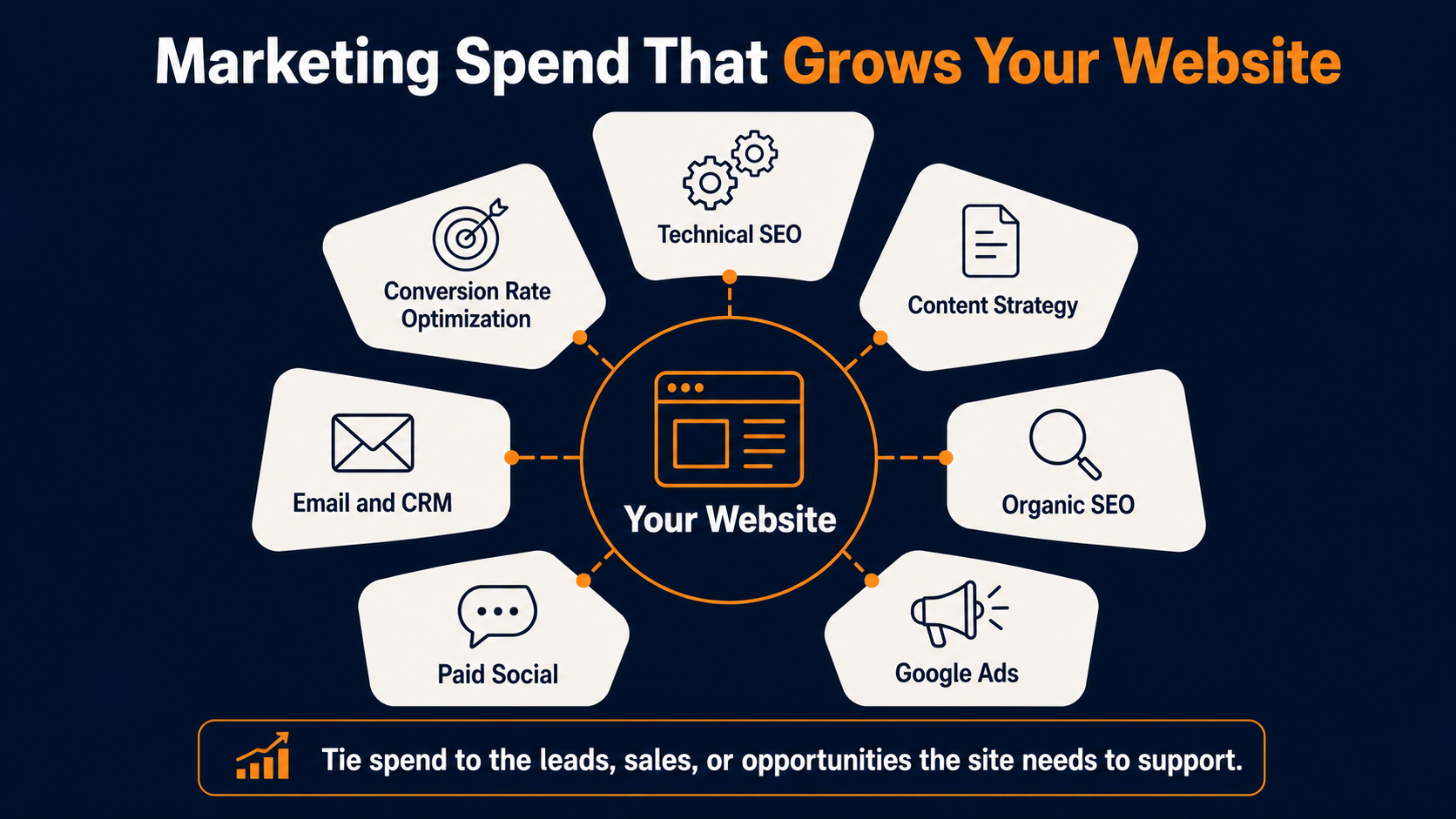
The old article’s ROI point is still the right frame. Work backward from the number of leads, sales, or opportunities the website needs to support. A cheaper launch budget may not help if the site cannot attract visitors, convert traffic, or show which channels are working.
How to Compare Website Design Quotes
Before you compare prices, compare what is included.
Ask these questions:
- Is this a template setup, custom design, custom development, or a mix?
- How many unique page templates are included?
- Who writes, edits, migrates, and formats the content?
- Are redirects, metadata, analytics, schema, and technical SEO included?
- Which platform, plugins, apps, or extensions are required?
- Who owns the theme, code, content, licenses, domain, hosting, and accounts?
- Are integrations included or only estimated?
- Is ecommerce, payment, shipping, tax, or product data included?
- Is accessibility considered?
- How is performance tested?
- What browser, device, and form QA is included?
- What happens after launch?
Red flags include vague scope, no staging environment, no launch checklist, no redirect plan, no ownership clarity, no plugin rationale, no maintenance option, and no explanation of how the site will support SEO, leads, or sales.
When a Higher Website Budget Is Worth It
A higher website cost can be worth it when the site has a real business job.
That might mean generating qualified leads, supporting a sales team, improving ecommerce revenue, helping customers find the right product, recruiting employees, supporting local locations, or making content easier to publish.
Higher budgets are easier to justify when they reduce risk or improve revenue potential. Examples include:
- Cleaner information architecture that helps visitors find services and products.
- Faster templates that improve user experience.
- Better forms and tracking that show which channels produce leads.
- Cleaner technical SEO during a redesign.
- Better product and category templates for ecommerce.
- Content structures your team can update without breaking layouts.
- Integrations that remove manual work for sales, support, or operations.
The goal is not to spend more for the sake of spending more. The goal is to avoid paying twice: once for a cheap website, then again to rebuild it when it cannot support the business.
Get a Web Design Cost Estimate
If you need a real number, the next step is a scoped estimate. A useful website quote should explain what is included, what is optional, what assumptions the price depends on, and how long the project should take.
OuterBox can review your current site, business goals, content needs, platform requirements, SEO considerations, ecommerce needs, integrations, and technical constraints. From there, we can recommend the right build path and help you understand the budget before you commit.
Website Cost FAQs
How much does a website cost in 2026?
A website can cost a few hundred dollars for a simple DIY build, $3,000 to $10,000+ for a basic professional site, $10,000 to $50,000+ for many custom business sites, and $100,000 to $500,000+ for complex ecommerce, enterprise, or custom-platform projects.
How much does it cost to build a website for a small business?
A small-business website often costs several thousand dollars when professionally designed and built. The price depends on page count, design complexity, content, forms, CMS setup, SEO, analytics, and whether the business needs custom features or integrations.
What is the average website design cost?
There is no single average that fits every project. A template site and a custom lead-generation website are different purchases. For planning, many professional business websites fall somewhere between $5,000 and $50,000+, while larger ecommerce or enterprise projects can cost much more.
How much does a website cost per month?
Monthly website costs may include hosting, platform subscriptions, plugins, apps, security, backups, maintenance, SEO, analytics, and marketing. A small site may have modest monthly costs, while a larger revenue-generating site may need an ongoing support and marketing budget.
Is it cheaper to build a website yourself?
DIY website builders can be cheaper upfront, especially for simple sites. The tradeoff is time, customization, SEO control, content quality, scalability, integrations, and support. If the website affects lead generation, ecommerce revenue, or operations, professional help can reduce long-term risk.
Why do website design quotes vary so much?
Quotes vary because agencies and freelancers include different levels of strategy, design, development, content, SEO, integrations, analytics, QA, training, and support. Compare scope and outcomes before comparing the final price.