By: Jeff Hirz
The honest answer is that Shopify website cost depends on how much of the store you are really building. A small store can start with a paid theme and a focused setup budget. An established brand may need custom Shopify website design, custom page templates, product data cleanup, integrations, app configuration, SEO, analytics, and conversion work. Those are very different projects.
In this article, we will walk through Shopify development pricing, Shopify website builder cost, design and theme costs, and the budget factors that change the final number. If you would rather talk through your store with a website design expert, you can reach us at (866) 647-9218 or start with our Shopify website design team.
Shopify offers premade and affordable templates, but that does not automatically mean a template gives your store the best chance to grow. For some brands, a theme is enough. For others, hiring an eCommerce web design agency is the more practical path because the site needs to fit the catalog, operations, content workflow, and marketing plan.
Shopify is widely used, which is part of its appeal. It also means many stores start from the same theme ecosystem. If your store needs to look, merchandise, and convert differently from competitors using similar templates, custom Shopify ecommerce website design becomes less of a luxury and more of an operating decision.
Does Shopify Design Your Website?
Shopify does not provide custom website design services as part of its standard platform fee. Shopify gives you the platform, admin, checkout, hosting, theme system, apps, and tools to run the store. You still need to choose a theme, customize that theme yourself, buy third-party help, or hire a Shopify web design company to plan and build a custom storefront.
The Shopify Theme Store includes free and paid themes. Current paid examples range from lower-cost options like Gain at $100 to premium themes such as Reformation at $430, with many other paid themes in the $250 to $350 range (Shopify Theme Store). Those prices cover theme licensing, not the strategy, copy, custom design, development, product setup, migration, SEO, or analytics work needed to launch a polished store.
For a newer store, a theme can be the right first move. It gives you a working foundation and lets you test products before investing heavily in custom design. For an established Shopify store, the calculus changes. If the site needs stronger brand expression, better category merchandising, custom product pages, B2B workflows, international selling, or integration with the systems behind the store, a custom design is usually the better long-term investment.
If you are comparing platforms, our broader guide to eCommerce website pricing can help you understand how Shopify compares with larger custom eCommerce builds.
Shopify Website Design Pricing
For basic Shopify web design services, many providers start around $500 to $1,000 for small graphics work, limited template tweaks, or basic setup support. You may find someone willing to set up an entire store for $500 to $2,000. But more often than not, that budget buys a simple configuration, not a growth-ready eCommerce website.
Most established Shopify design agencies’ costs range from about $5,000 to $20,000 for a custom-designed Shopify website. At OuterBox, the majority of our Shopify website design projects fall somewhere in the $10,000 to $20,000 range, with extensive projects approaching the $100,000+ mark.
That range is wide because a Shopify website is not one single deliverable. A simple brochure-style storefront with a small catalog is very different from a store with hundreds of SKUs, multiple product types, custom collection pages, product filters, subscription logic, bundles, store-locator needs, third-party fulfillment, and a reporting stack.
Think about Shopify website cost in tiers:
| Project Type | Typical Budget Pattern | Best Fit |
|---|---|---|
| Theme setup | A few hundred dollars to a few thousand dollars, plus the theme license | New stores, small catalogs, simple branding needs |
| Theme customization | Roughly $2,000 to $10,000+ depending on scope | Stores that like a theme but need design, content, layout, or app configuration help |
| Custom Shopify design | Often $5,000 to $20,000+ | Established brands that need a stronger customer experience and custom page designs |
| Advanced Shopify or Shopify Plus build | Often $25,000 to $100,000+ | Larger catalogs, migrations, B2B, integrations, custom workflows, and growth programs |
The point is not to push every store into the largest tier. The point is to match the budget to the business problem. A $2,000 theme setup can be smart if the store is validating demand. The same setup can be expensive later if it forces a second rebuild six months after launch.
What Changes The Cost Of A Shopify Website?
Shopify website designs usually require multiple page types. At minimum, a store may need a home page, collection pages, product pages, cart and checkout styling, blog or resource templates, policy pages, and landing pages. Some stores can use one product template across the catalog. Others need different templates for best sellers, bundles, subscriptions, high-consideration products, sale pages, or B2B buyers.
Catalog complexity is one of the biggest cost drivers. A store with 20 straightforward products is easier to structure than a store with 5,000 products, variant logic, fitment data, product bundles, subscription rules, or inventory that changes across locations. The larger the catalog, the more important it is to plan navigation, filters, search, URLs, product data, and internal links before design starts.
Integrations can also change the budget quickly. Shopify may need to exchange data with an ERP, CRM, PIM, warehouse system, shipping tool, payment gateway, marketplace, email platform, or analytics stack. A strong ERP eCommerce integration plan defines which system owns product data, inventory, orders, customer records, and fulfillment status before development begins.
Apps matter, too. Shopify’s app ecosystem is a strength, but every app has a cost: subscription fees, setup time, theme compatibility, site-speed impact, data quality, and maintenance. A cheaper build that depends on too many apps can become expensive if the store slows down or if apps conflict with each other.
Content is another common blind spot. Product descriptions, collection copy, photography, banners, promotion modules, FAQs, email templates, review setup, and merchandising rules take real work. Someone has to decide what products appear where, what copy supports each category, and how the site explains value without making every page sound the same.
Good planning saves money. It is cheaper to decide early how your catalog, apps, content, SEO, analytics, and fulfillment need to work than to rebuild pieces after launch because nobody mapped the operating details.
Shopify Website Marketing & Ranking On Google
Building your Shopify website is only part of the investment. The store still needs traffic, visibility, conversion tracking, and a reason for shoppers to choose you over every other result in the search page.
Shopify SEO has its own platform-specific details: collection architecture, product variants, duplicate product paths, theme speed, app bloat, product schema, redirects, and blog-to-category linking. A Shopify design project should account for those items before launch, not after the store has already started collecting technical debt.
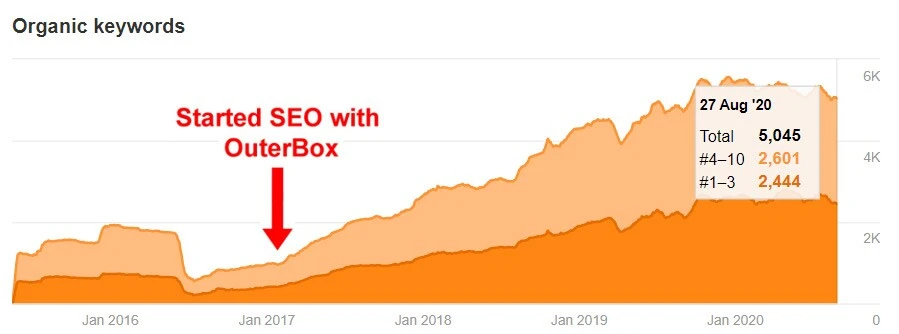
For stores with broader growth goals, eCommerce SEO connects category pages, product pages, content, technical SEO, links, analytics, and conversion work into one plan. That does not mean every design project needs a full marketing retainer on day one. It means the site should be built so marketing has something solid to grow.
If your current Shopify store already earns rankings or revenue, keep that proof in view during redesign planning. A new design should protect what is working before it tries to improve what is not.
Quick Facts: Shopify Website Cost Breakdown
The total cost of building a Shopify website usually includes several buckets:
| Cost Bucket | What To Budget For |
|---|---|
| Shopify subscription | Monthly platform fee based on plan, billing term, and Shopify Plus needs. |
| Theme or design system | Free or paid theme license, theme configuration, or a custom visual system. |
| Custom Shopify website design | Home, collection, product, cart, content, landing page, and campaign layouts. |
| Development | Theme development, custom sections, apps, checkout constraints, scripts, and QA. |
| Product and content setup | Product data, descriptions, collection copy, imagery, banners, FAQs, and blog/resource setup. |
| Integrations | ERP, CRM, PIM, fulfillment, shipping, payment, marketplace, analytics, and email systems. |
| Apps and tools | Recurring app subscriptions, setup, testing, and performance review. |
| SEO and analytics | Technical SEO, redirects, metadata, product schema, tracking, dashboards, and launch QA. |
| Performance work | Theme cleanup, image handling, app review, Core Web Vitals, and ways to speed up a Shopify website. |
| Post-launch support | Maintenance, conversion testing, campaign pages, merchandising updates, and reporting. |
If you only look at the Shopify subscription, the project will look cheaper than it is. If you only look at the design fee, you may miss the recurring app, platform, SEO, analytics, and maintenance costs that affect the store after launch.
Like What You Read Here?
Ready to Take Your Marketing to the Next Level?
Getting to page one starts with a conversation. Share a little about your business and goals, and we’ll show you exactly how we can help you get there.
Services
"*" indicates required fields
General Shopify Pricing Info
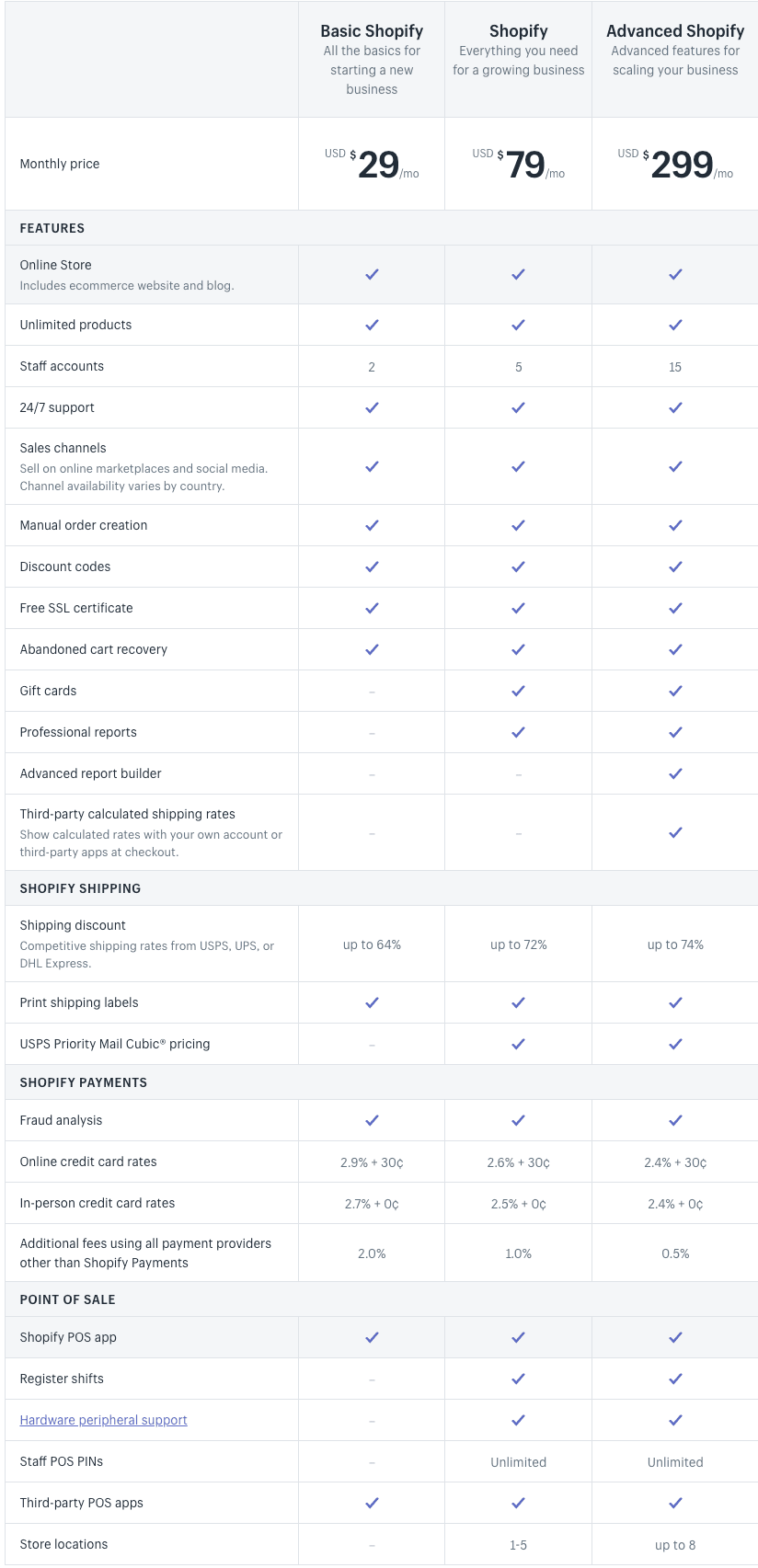
Shopify is a hosted eCommerce platform based on a monthly subscription model. Public Shopify pricing currently lists Basic starting at $29 USD per month when billed yearly, Grow starting at $79 USD per month when billed yearly, and Advanced starting at $299 USD per month when billed yearly. Shopify Plus starts at $2,300 USD per month when billed yearly on a 3-year term (Shopify pricing).
Those numbers are platform costs, not full website build costs. They give you access to Shopify, but they do not include custom design, copywriting, photography, data migration, custom development, SEO, paid media, email marketing, or ongoing optimization.
Payment costs can also vary by plan and payment setup. Shopify’s pricing page lists third-party transaction fees of 2% on Basic, 1% on Grow, and 0.6% on Advanced when using third-party payment providers. Card rates also vary by plan. For a low-volume store, those differences may be small. For a high-volume store, payment and transaction fees belong in the budget conversation.
Shopify’s own Help Center notes that there is no one specific plan that works for every business (Shopify Help Center). That is the right way to think about the website build, too. The plan, theme, apps, design, development, and marketing support should fit the business stage, not a generic package.
When A Shopify Theme Is Enough, And When Custom Design Makes Sense
A Shopify theme may be enough if your store is new, your catalog is simple, your brand is still forming, and you need to launch quickly. In that case, spend your budget on a good theme, clean product data, strong images, clear copy, analytics, and enough SEO foundation to avoid problems later.
Custom design makes more sense when the store already has traction or when the business model is more complex. If your buyers need comparison tools, technical product detail, bundles, subscriptions, size/fit logic, B2B workflows, custom landing pages, or tight merchandising control, a theme may become a starting point instead of the final answer.
The practical question is this: will the theme support how your team actually sells? If the answer is yes, keep the build lean. If the answer is no, paying for custom design and development can protect your team from workarounds that slow down marketing, operations, and future site improvements.
Shopify Website Pricing FAQs
How Much Is A Shopify Website?
A basic Shopify website can cost a few hundred dollars plus monthly Shopify fees if you use a free or paid theme and do most setup yourself. A professionally configured theme project often costs a few thousand dollars. A custom Shopify website commonly falls in the $5,000 to $20,000+ range, while complex Shopify or Shopify Plus projects can reach $25,000 to $100,000+.
What Other Costs Are Associated With Developing A Shopify Website?
Other costs can include a paid theme, apps, payment fees, product photography, copywriting, product data cleanup, migration, custom development, integrations, SEO, paid media, email marketing, analytics, maintenance, and conversion testing. Shopify’s platform fee is only one line item in the full website budget.
How Much Does The Design Of A Shopify Website Cost?
Shopify design cost depends on whether you are configuring a theme or designing a custom storefront. Light theme setup may cost under a few thousand dollars. A custom Shopify design from an experienced agency often starts in the $5,000 to $20,000 range, with higher budgets for larger catalogs, custom page types, integrations, and Shopify Plus needs.
How Long Does It Take To Build A Shopify Website?
A simple theme setup can happen quickly once products, images, copy, and settings are ready. A custom Shopify website usually takes longer because the team has to plan UX, design page templates, develop theme sections, configure apps, migrate content, test checkout paths, set redirects, and prepare launch tracking. Advanced builds can take several months.
Is Shopify Website Builder Cost The Same As Shopify Website Design Cost?
No. Shopify website builder cost usually refers to the platform subscription, theme, and basic tools needed to run the store. Shopify website design cost refers to the professional work of planning, designing, developing, configuring, testing, and launching the storefront. Both belong in the budget, but they are not the same expense.
Ready To Price Your Shopify Project?
The best Shopify budget starts with the store you are actually trying to build. Catalog size, content, integrations, theme constraints, SEO, analytics, and post-launch support all matter.
OuterBox builds Shopify websites for brands that need more than a template swap. If you want a practical estimate, bring us your current store, catalog, goals, and operating constraints. We will help you understand what needs to be built now, what can wait, and where your budget will do the most useful work.