
Digital Marketing Attribution Services For Leads Your Team Can Trust
Digital marketing attribution only helps when form fills, phone calls, CRM stages, and sales outcomes stay tied to the marketing that created them.
OuterBox provides marketing attribution services for teams that need form fills, phone calls, campaigns, CRM stages, and sales outcomes tied together. We build online lead attribution systems that help marketing, sales, and leadership read the same story before the next budget decision gets made.
"*" indicates required fields
"*" indicates required fields






Digital Marketing Attribution Services That Connect Spend To Sales Outcomes
Marketing attribution is not a model you pick from a dropdown. It is the operating layer that connects a click, visit, call, form fill, CRM stage, and closed deal back to the marketing that influenced it.
That matters most when lead volume and lead quality tell different stories. A campaign can drive 400 form fills and still waste budget if sales rejects most of them. Another channel can produce fewer leads and still deserve more investment because those leads move to qualified opportunity faster.
OuterBox builds attribution around the decision your team needs to make. Paid media may need offline conversion tracking so Google Ads learns from qualified leads instead of raw submissions. SEO may need lead-source and page-level reporting so content investment follows the pages that create serious buyers. CRO may need form, call, and session data to show where high-intent visitors disappear.
The goal is not a prettier report. The goal is a measurement system your team can use when the conversation turns to spend, pipeline, and revenue.
Online Lead Attribution Workstreams Built Around Your Sales Cycle
Online lead attribution works best when the engagement is shaped around your sales cycle, not a generic dashboard. A short-cycle ecommerce lead, a high-consideration B2B form fill, a phone-heavy home service inquiry, and a multi-stakeholder enterprise deal do not need the same attribution setup.

Lead tracking infrastructure built for clean attribution tracking
Your paid-search visitors, organic sessions, and email opens each carry signals that should ride into your CRM as one clean record. When the click ID drops, the UTM string gets rewritten by a redirect, or the GA4 client_id resets between visits, lead attribution silently breaks before the form even loads. Tracking infrastructure is the first layer we build, and it determines whether everything downstream is honest or guessed.
- gclid, fbclid, and msclkid captured at the click and preserved through every cross-domain hop (Google’s GCLID parameter is the canonical mechanism for matching clicks to offline conversions)
- UTM parameters standardized across paid, email, and partner traffic so two campaigns named slightly differently never collapse into one bucket
- Server-side GTM and the GA4 measurement protocol layered where browser-side blocks the data, with GA4 consulting services carrying the property-level configuration
- Cross-domain linker active between marketing site and lead form, so user_id and source data survive the handoff to the web intelligence platform and downstream CRM
- Form events and chat conversions fired through GTM with the same parameter dictionary as session data, so a submission inherits the full visit context
Your tracking layer is the foundation. Without clean signal capture, every attribution model below it is averaging guesses and calling it data.
Identity resolution: where lead attribution becomes one-record-per-human
Your CRM is full of duplicate humans. Same person, three records: the form fill from the webinar, the demo request from the LinkedIn ad, and the support ticket logged by their VP. Each touch hit a different identifier, and without a stitching layer your dashboards count them as three leads, three sources, and three first-touch credits. Identity resolution collapses those records back into one human profile.
- Email-as-primary-key matching is enough when the buyer authenticates early and the journey is short, so a known contact’s repeat visits update the same record instead of spawning new ones
- Hashed phone and form-submission email become necessary when sessions stretch across devices, so visit history collected before login merges with the post-login lifecycle
- Lead-to-account stitching matters more than person-level stitching for B2B, where six contacts at one Acme deal need to roll up to one buying committee
- A third-party identity layer (LiveRamp, Customer 360) is overkill until cookie-based stitching breaks the volume threshold; until then, customer data activation sees the merged record from native CRM dedup
- Personalization tactics downstream consume the cleaned profile, so the recommendation engine sees one history instead of three fragments
One human, one record, one source-of-record. Without that, every report below it is over-counting leads and under-attributing the channel that earned the conversation.
Multi-touch attribution modeling that credits the assist, not just the close
Your buyer doesn’t convert on the first visit. They click a paid search ad, read three blog posts, watch a webinar, and request a demo after a nurture email. Last-click hands the credit to the demo-request page and tells you to spend more there. Multi-touch attribution credits the path: paid search opened the door, content earned the trust, the email closed the loop.
- Linear, time-decay, position-based, and data-driven models tested against the buyer journey for the vertical, not picked because the platform defaulted to one
- Attribution modeling fundamentals framed against your sales cycle, so a B2B SaaS path with 90-day windows uses time-decay while an ecommerce path with 14-day windows uses position-based
- GA4 attribution reports pulled into the same dashboard as platform-level data (Google explains the credit-assignment logic in its GA4 attribution model documentation)
- Channel-level credit visible across organic, paid, social, email, direct, and referral, so your Google Ads agency and your SEO team make investment decisions from the same numbers
- Path reports surfaced for marketing leadership, so the conversion-to-channel story is auditable instead of hidden inside an attribution-platform black box
Bid decisions, content investment, and channel-mix planning move when the assist gets the credit it earned.
Choosing a marketing attribution model: when each attribution modeling approach fits
Your business doesn’t need every attribution model. It needs the right one for the cycle, the data volume, and the question you’re trying to answer. First-touch tells you what discovers you. Last-touch tells you what closes. Linear shows the average path. Time-decay weights touches near the conversion. Data-driven uses your conversion volume to assign credit empirically. Most teams pick whatever the platform defaulted to and live with the mismatch.
- B2B journeys with long cycles and many decision-makers reward time-decay or data-driven models, since late-stage touches carry more weight in deals that take months to close
- Ecommerce paths with short cycles and high transaction volume run cleaner on position-based models that credit discovery and closing without ignoring the middle
- Subscription and SaaS pricing pages benefit from first-touch reporting at the top of the funnel and time-decay at the renewal layer, with both views maintained in parallel
- Each model paired against an integrated marketing strategy so paid, organic, and content investments share the same yardstick
- Comparison reports reviewed as the business changes, so a model that fit at one revenue scale gets revisited before it forces bad decisions at the next, with PPC metrics and tracking standardized across the set
The right model is whichever one supports the decision the leadership team actually has to make.
CRM-native b2b attribution that sales actually trusts
Your sales team already lives inside Salesforce or HubSpot. When attribution data lives somewhere else, the rep ignores the source field, opens the opportunity, and writes “trade show” in the notes because that’s what the prospect last mentioned. CRM-native attribution puts the marketing source on the record where sales already works.
- HubSpot’s native campaign attribution reports credit contacts created, deals created, and revenue, so the marketing dashboard and the sales pipeline read off the same record
- Salesforce Campaign Influence or third-party attribution maps to opportunity-line-item revenue, so a Closed Won with three influencing campaigns shares credit instead of dropping two
- Lead-to-account stitching works on B2B SEO solutions targets, so an SDR working an Acme deal sees that three Acme contacts touched five marketing campaigns before the demo
- UTM, gclid, and source-of-record fields locked against overwrite after submission, so a re-engagement touch never replaces the original campaign source
- B2B ecommerce strategies and account-based plays measured against the same model, so ABM campaigns aren’t graded on a different curve than self-serve
B2B revenue lives in the CRM. When attribution lives there too, sales and marketing argue from one record instead of two reports.
Offline conversion import that pushes phone calls and demos back to the bid auction
Your most valuable conversions don’t happen on the website. They happen on the sales call, the demo, the support ticket that turned into an upsell, the contract signature in DocuSign. When those events stay locked in the CRM, Google Ads optimizes toward the form fill it can see and ignores the revenue that actually paid. Offline conversion import closes that loop.
- Qualified leads pushed back to Google Ads via offline conversion import or Enhanced Conversions for Leads, so Smart Bidding trains on revenue, not form volume
- Sales-stage events (SQL, Opportunity, Closed Won) imported on the schedule that matches the cycle, so a 60-day deal still gets credit before the lookback window expires
- Call tracking service tied into the same offline-conversion stream, so phone-driven revenue flows back to keyword and ad bids alongside web revenue
- Meta CAPI and LinkedIn Conversions API mirrored so paid social earns the same credit chain as paid search
- Conversion values weighted by deal size or LTV inside the Google Ads consulting account, so the auction optimizes for high-value customers, not low-value lookups
Phone calls, demos, and signed contracts finally feed the algorithm that decides what to bid on tomorrow.
How to measure marketing attribution without losing the audit trail
Your reporting layer has a clock running on it that most teams don’t notice. GA4 keeps event-level data for two months by default and 14 months at the maximum, after which the granularity collapses into aggregate. If your sales cycle is six months and your retention cap is two, last quarter’s pipeline is already gone. Reporting governance keeps the audit trail alive long enough to learn from it.
- GA4 event-data retention set to 14 months (Google’s data retention controls document the 2-month default and 14-month max), with BigQuery export running before that window expires
- Attribution data warehoused in BigQuery, Snowflake, or Looker so dashboards run off a stable record instead of decaying GA4 internals
- Channel and campaign naming conventions documented and enforced, so a quarterly review reads consistent campaign names instead of three variations of the same launch
- Web analytics fundamentals wired into a Looker Studio dashboard with consistent KPI definitions, so marketing, sales, and finance argue from one number
- The full analytics services hub report stack validated before executive reporting, so the leadership view inherits the same source data the operators use
Reporting cadence and clean naming mean a year-old conversion path is still legible when the team finally sits down to learn from it.
Closed-loop reporting that turns sales feedback into smarter lead attribution
Your marketing team builds the campaigns. Sales talks to the people who fill out the forms. Without a closed loop, marketing optimizes toward MQL volume and sales complains that the leads don’t close. With one, every Closed Won and every Closed Lost flows back to the campaign, the channel, and the keyword that opened the conversation, and lead attribution stops being a marketing-only narrative.
- Lead-source field written at form submission and stamped into the opportunity record, so the won/lost outcome travels back to the original campaign rather than getting overwritten
- MQL, SAL, SQL, and Closed Won definitions agreed between marketing and sales leadership, so the funnel-conversion math reads the same in both reports
- Disqualification reasons captured by the SDR and pushed back to marketing, so a campaign producing 200 leads that sales rejects gets paused before more budget burns
- Loop closed-loop reporting wired into the executive dashboard so the leadership view ties revenue to marketing investment, not to last-click guesswork
- Sales alignment with AI used to enrich call notes and ticket data so qualitative reasons feed the attribution review, not just numeric outcomes
Sales feedback is the part of the loop that makes the marketing model honest. Without it, attribution is half a story.
Closed-Loop Reporting From First Click To Qualified Lead

A closed loop is not one tracking change. It is a chain that survives from first click through qualified lead to sales-stage feedback. These are the pieces that have to be in place for the loop to read clean.
- First-party capture: click IDs, UTMs, and form submissions written into CRM fields that survive the next session and the next campaign rename.
- Call and chat parity: phone leads through call tracking, chat events, and appointment data attached to the same source-of-record as forms.
- CRM stage governance: deduplication, overwrite rules, and stage definitions so a re-engagement email does not erase the original source that opened the account.
- Offline conversion import: qualified outcomes returned to Google Ads via Enhanced Conversions for Leads or offline conversion uploads, captured with consent-aware first-party data.
- Sales feedback flow: MQL, SQL, opportunity, and closed-won stages feed back to the attribution model so bidding learns from quality signals, not raw form volume.
- Decision read: PPC lead generation, B2B SEO, and CRO consulting reads the same loop, so the team stops arguing from separate reports.
Lead Attribution That Changes The Next Marketing Move
Attribution earns trust when it changes what the team does next. Here are three places lead attribution moved the next marketing decision for real OuterBox clients.

Kapp Alloy & Wire: Lead Quality Over Volume
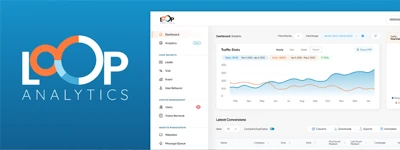
Kapp Alloy & Wire needed better lead quality, not more low-value hobbyist orders. LOOP Analytics identified which content drove larger B2B orders, then OuterBox optimized pages around grade and material details those buyers cared about. The published case study reports a 50% eCommerce sales increase by year-end and a 34% revenue lift comparing the three months before and after optimization.

American Stainless: Service-Area Growth
American Stainless and Great Lakes Specialty Metals needed digital lead growth without routing friction between sister companies. GA4 and LOOP Analytics connected traffic, lead location, and service-area performance. Between H1 and H2 2024, published results included 570% and 1,053% organic traffic lifts plus 465% and 3,166% quality lead lifts.

Weiss-Aug Group: Division-Specific Lift
Weiss-Aug Group needed better lead quality across divisions while growing a medical products segment. LOOP Analytics + B-SMART content strategy read user intent from real leads, then expanded division-specific content. Published results include 66% of leads from organic search, 72% from web forms, and a 270% YoY lift on surgical product pages.
“My team is extremely motivated to help us reach our sales goals.”
Timothy Wagner
Manager/Specialist, Kapp Alloy & Wire
Marketing Attribution Services
Get A Marketing Attribution Scope
Tell us where the attribution story breaks: forms, calls, campaigns, CRM stages, lead quality, or offline conversions. OuterBox will review the situation and outline the likely scope. Need to talk through a live opportunity? Call (866) 647-9218.
Services
"*" indicates required fields
From Start-Ups to Fortune 500 Companies, Our Clients Are Succeeding Online













Why OuterBox For Marketing Attribution?
Marketing attribution sits between analytics, paid media, SEO, CRO, development, content, CRM reporting, and sales operations. If one part of that system is missing, the report may still look clean while the decision behind it stays shaky.
OuterBox has been building digital marketing programs since 2004. Our 300+ USA-based, in-house experts (a.k.a. "Boxers") work across the disciplines attribution touches: tracking, dashboards, paid search, SEO, conversion paths, web development, form behavior, content strategy, and executive reporting.
That structure matters. A gclid issue may need a tag fix. A lead-quality issue may need CRM field governance. A traffic-to-lead mismatch may need content or CRO work. A paid media problem may need offline conversion import and a smarter definition of qualified lead.
We bring those pieces into one room so attribution does not become another report nobody owns.
Since 2004
Digital Marketing Agency
300+
USA-Based In-House Experts
Closed-Loop
Analytics Practice
Marketing Attribution
Multi-Touch Modeling
Why Choose OuterBox for Lead Attribution
We go beyond basic tracking to deliver full-funnel visibility, accurate modeling, and actionable insights that drive growth.

- Reporting Transparency: Custom, role-based dashboards; model comparisons; KPI alignment
- Attribution Modeling: Multi-model (first, last, linear, time-decay, position-based, data-driven)
- Call & Form Tracking: DNI, conversation scoring, spam filtration, lead quality scoring
- CRM Integration: Bi-directional sync with opportunity and revenue mapping
- Implementation & QA: Structured tagging schemas, governance, and ongoing data validation
- Optimization Cadence: Continuous testing with budget reallocation driven by model insights
- Support & Access: Dedicated analytics team; offices open 9–5 EST; direct phone support
- Data Ownership: Client owns all data, tags, and dashboards
Other Agencies
- Reporting Transparency: Static reports with limited customization
- Attribution Modeling: Single-touch or undocumented methodology
- Call & Form Tracking: Basic event tracking without quality controls
- CRM Integration: One-way lead capture without revenue tie-back
- Implementation & QA: Ad-hoc setup with minimal QA
- Optimization Cadence: Infrequent optimizations based on last-click data
- Support & Access: Ticket-only support with slow response times
- Data Ownership: Proprietary tools and limited data portability

Did you know? Multi-touch attribution often reveals 15–30% of conversions previously misattributed to branded search—freeing budget for higher-impact prospecting and mid-funnel campaigns. Learn more >
Get A Marketing Attribution Scope
Tell us where the attribution story breaks: forms, calls, campaigns, CRM stages, lead quality, offline conversions, dashboards, or the gap between marketing reports and sales reality. OuterBox will review the situation, outline the likely scope, and help your team decide what should be fixed first. Fill out the form or call (866) 647-9218 to talk through the reporting problem you want solved.
"*" indicates required fields
"*" indicates required fields
Related Analytics Services
More Analytics Services From OuterBox




Marketing Attribution FAQs
What is marketing attribution?
Marketing attribution is the process of connecting marketing touchpoints to outcomes such as form fills, phone calls, qualified leads, opportunities, purchases, or revenue. For lead-generation businesses, the useful version connects campaign and source data to sales quality, not only to raw conversion volume.
What is the difference between lead attribution and marketing attribution?
Marketing attribution is the broader discipline of assigning credit across marketing touchpoints. Lead attribution focuses on the path that produced a lead, including the source, campaign, landing page, form, call, CRM record, and sales outcome tied to that person or account.
Which attribution model should we use?
The right model depends on your sales cycle, data volume, channels, CRM maturity, and reporting question. First-touch, last-touch, linear, time-decay, position-based, and data-driven models can all be useful. OuterBox usually starts by clarifying the business decision before recommending how credit should be read.
Can OuterBox connect attribution with our CRM?
Yes. OuterBox can help map campaign, form, call, and source data into CRM fields and reporting workflows. The exact setup depends on your CRM, form stack, phone system, ad platforms, and how your sales team defines qualified leads, opportunities, and closed revenue.
How does offline conversion tracking help paid media?
Offline conversion tracking helps paid media platforms learn from outcomes that happen after the website conversion, such as qualified leads, booked demos, opportunities, or sales. When identifiers and first-party data are captured correctly, those later outcomes can inform bidding and budget decisions.
Can attribution include phone calls and form leads?
Yes. Strong lead attribution should include forms, phone calls, chat, appointments, CRM stages, and sales dispositions when those are part of the buyer journey. Phone data often needs call tracking so the source, landing page, campaign, and call outcome stay connected.
What should we prepare before a marketing attribution consultation?
Bring your site URL, current reporting problems, primary lead forms, phone system, ad platforms, CRM, campaign naming rules, sales-stage definitions, and examples of reports that do not match. If marketing and sales disagree about lead quality, bring that gap too.
Related Articles: Online Lead Attribution Services

Analytics | 5 min read
Thomas Jefferson once said, “Not all leads are created equal.” I think. Okay, he didn’t say that, but this sentiment holds true. Learning the elements…

Analytics | 5 min read
Whether you own a lead generation website or an eCommerce website , it is essential not only to track how many visitors your site gets,…
Analytics | 5 min read
Web analytics in digital marketing is more than just a tool for tracking website visitors — it helps businesses understand user behavior, conversion paths, and…