
Google SEO Services Built Around How Google Search Actually Works
Google SEO rankings slip for reasons that rarely fit into one neat box. Crawl issues, weak content, page-speed problems, thin internal links, poor titles, stale pages, and low-trust backlinks can all look similar in a dashboard. The visible result is fewer qualified visitors from organic search.
OuterBox is a Google SEO company that builds services around that reality. We diagnose what Google can crawl, understand, trust, and show, then connect those fixes to the pages and queries that matter to your business. For 20+ years, our SEO team has helped eCommerce, B2B, lead generation, and service brands turn search visibility into revenue, leads, and better-qualified traffic.
"*" indicates required fields






Google SEO Services Built Around Search Reality
Google SEO is not a bag of disconnected tasks. The work has to connect technical access, helpful content, site architecture, links, page experience, and measurement into one operating rhythm. If one layer breaks, the others work harder than they should.
OuterBox starts with the parts of your site that already have search potential: pages with rankings, revenue value, and trust signals Google has started to reward. Then we build the broader plan around what those pages need to compete. That may mean cleaner crawl paths, stronger content, better internal links, faster templates, clearer titles, and proof that the work is moving business outcomes.
That is the difference between an SEO checklist and a Google SEO program. The checklist says a title tag was changed. The program knows why it changed, what query it supports, and how Search Console will confirm whether the change helped.
What’s Included In Our Google SEO Services
Google SEO work only helps when each discipline supports the next one. Technical fixes make pages easier to crawl and trust, while content gives those pages a reason to rank. Measurement shows where the next improvement should happen.
Your plan may include technical audits, Google Search Console analysis, content optimization, new content, keyword mapping, SERP research, link review, and on-page tag improvements. The mix changes based on what is holding back qualified organic traffic.
When a deeper workstream is needed, OuterBox connects it to the right specialist path. That may mean an SEO site audit for technical blockers, technical SEO for crawl work, or content marketing for expansion.
It may also mean link building for authority growth or SEO consulting for senior-level prioritization. Use the detailed workstream comparison on this page to compare each area without reading the same scope twice.
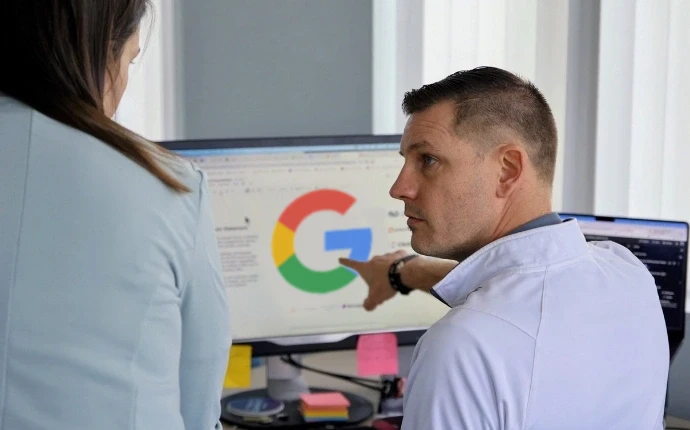
Technical SEO that clears the path between your pages and Google’s index
Your rankings depend on what Google can actually reach, render, and evaluate. A site that looks fine to visitors can carry crawl errors, redirect chains, and Core Web Vitals failures that suppress it in search results. Sites with good LCP scores receive on average 23 percent more organic traffic than comparable sites with poor performance. OuterBox has been running these audits since 2004, and the patterns that suppress rankings have changed while the fundamentals have not.
- Your crawl errors surfaced and resolved so Google reaches every page that deserves to rank, with the SEO site audit covering architecture, parameter handling, and orphaned URLs
- Your site speed benchmarked against Core Web Vitals thresholds: Largest Contentful Paint under 2.5 seconds, Interaction to Next Paint under 200 milliseconds, Cumulative Layout Shift under 0.1
- Your redirect chains cleaned so link equity flows to the pages that earn revenue instead of dissipating across three or four hops
- Your schema markup validated so rich results display correctly in search listings
- Your mobile rendering tested across device classes so the experience Google evaluates matches what shoppers actually see
Rankings improve when the technical layer stops working against the content that should be earning them.
Google Search Console turned into a decision-making tool instead of a dashboard you check once a month
Google Search Console holds the only first-party data Google shares about how it sees your site. Most accounts sit untouched until something breaks, which means the signals that could have prevented a traffic drop go unread for weeks. Your account should be a working instrument that surfaces problems early and confirms whether recent changes produced the intended result.
- Your index coverage reviewed so pages that should rank are indexed and pages that dilute authority are excluded
- Your performance data segmented by query, page, device, and country so traffic shifts get explained before they compound into something harder to reverse
- Your sitemap health monitored so new pages and updated content reach Google’s index without manual resubmission
- Your Core Web Vitals flagged at the URL level so fixes go where revenue impact is highest, informed by the same SEO consulting analysis that shapes your broader program
- Your manual actions and security issues surfaced immediately so penalties never go unnoticed while day-to-day optimization continues
Indexing problems that stay invisible for a month cost traffic that takes two months to recover.
Existing pages upgraded to compete for the queries they were built to win
Your highest-value pages already have authority, backlinks, and indexing history. Rewriting them from scratch risks losing that equity. But the better path is surgical: identify what each page ranks for, what it should rank for, and what structural gaps hold it back. When HubSpot began optimizing old content, the brand grew organic views on those posts by an average of 106 percent, and the principle holds across industries.
- Your highest-traffic pages audited for title tag alignment, header hierarchy, and keyword coverage so rankings hold instead of eroding quarter over quarter
- Your thin pages identified and expanded with the depth and specificity that Google’s E-E-A-T evaluation criteria reward
- Your internal linking restructured so authority flows from strong pages to the ones that need it, following the same content marketing strategy that drives the broader program
- Your content gaps mapped against the queries competitors rank for and you currently do not
- Your page-level performance tracked so optimization effort goes where the revenue impact is largest
Traffic from existing pages compounds when the content on those pages keeps pace with what the search results now reward.
New pages built around the queries your market is already searching
Your content program works best when it functions as an extension of your team. That means publishing decisions start with your business priorities and commercial calendar, then get mapped against verified search demand. Pages built this way rank from publication because the structure, keyword coverage, and internal linking are built in from the first draft.
- Your content calendar built around commercial queries with proven search demand, filtered against your B2B SEO priorities and category gaps
- Your new pages structured with heading hierarchy, internal linking, and on-page signals designed to rank from publication
- Your category and product-adjacent content filling the gaps between what you sell and what your buyers search for
- Your editorial priorities aligned with your business seasonality so content ships when demand peaks
- Your publishing cadence sized to your team’s bandwidth so quality stays high and nothing ships half-finished
Revenue from content grows when every new page is built around a query that already has buyers behind it.
Keyword strategy that maps search demand to the pages that generate revenue
Your keyword research determines where every hour of SEO effort goes. Queries get classified by search intent (informational, commercial, transactional, navigational) so each one routes to the right page type. A commercial query about pricing goes to a service page. An informational query about process goes to a guide. So nothing competes with itself, and every URL on your site has a defined purpose in the SEO program.
- Your keyword universe organized by search intent so commercial queries get service pages and informational queries get educational content
- Your highest-value terms identified by revenue potential rather than raw search volume, so effort targets the queries that convert
- Your keyword clusters mapped to existing and planned pages so no two URLs compete for the same query
- Your competitors’ ranking keywords analyzed to find the demand they capture that your site currently misses
- Your keyword priorities updated as search behavior shifts so the program stays aligned with how your market actually searches
Priorities stay sharp when the keyword map tells you where to invest next and where to stop spending time.
Competitive intelligence that shows where the ranking gaps are and what it takes to close them
Your competitors’ rankings reveal what Google rewards for your queries, and that picture changes faster than most companies track it. A query that returned ten blue links last year might now trigger an AI Overview, a featured snippet, or a People Also Ask carousel. Your SERP analysis has to account for these format shifts (a page optimized for the old layout can lose visibility even when its ranking position holds).
- Your direct competitors identified by the queries you actually share, with content gaps quantified so you see exactly which topics they rank for and your site does not
- Your SERP environment analyzed per query: featured snippets, People Also Ask, AI Overviews, and local pack presence shape what format each page should target
- Your competitors’ backlink sources mapped to reveal where their authority comes from and where your profile needs reinforcement
- Your content format benchmarked against what ranks, aligned with your generative engine optimization strategy for AI-driven search results
- Your competitive position tracked over time so ranking gains and losses get attributed to the specific changes that caused them
Position gains stick when they are built on what the SERP actually rewards today rather than what worked last year.
A backlink profile that builds authority without carrying risk
Your domain authority depends on who links to you and how. A backlink profile loaded with low-quality or paid links carries real risk: Google’s documentation states that a site with a manual action may have some or all of its pages removed from search results entirely. Cleaning the profile prevents damage from accumulating, and building it creates the authority that moves rankings forward. Both run continuously.
- Your existing backlinks audited for quality, relevance, and risk so toxic links get disavowed before they trigger a manual action
- Your anchor text distribution reviewed so the profile reads as natural editorial linking rather than a pattern that draws scrutiny
- Your referring domain diversity tracked so authority comes from a broad base instead of depending on a handful of sources
- Your competitors’ link sources analyzed to surface the publications and directories worth pursuing in your vertical
- Your link building guided toward the domains that carry authority in your industry rather than generic directories that add volume without adding trust
Authority compounds when new links come from relevant sources and the existing profile stays clean.
On-page signals tuned so Google reads every page the way you intend
Your title tags, headers, alt attributes, and structured data control how Google interprets your pages and how your listings appear in search results. Backlinko’s analysis of four million search results found that titles between 40 and 60 characters get 8.9 percent more clicks on average, which makes title tag optimization one of the most impactful changes available per page.
- Your title tags written to lead with the query the page targets, kept within the 55 to 60 character display window so the listing earns the click against competitors
- Your header hierarchy structured so Google understands the page’s topic depth and subtopic coverage without ambiguity
- Your image alt attributes descriptive and keyword-relevant so image search drives additional traffic to product and category pages
- Your meta descriptions written to preview the page’s value proposition within the 155 to 160 character display limit so click-through rates hold
- Your structured data implemented so prices, ratings, and availability display directly in search results, built on the same eCommerce web design infrastructure that powers your storefront
Listings earn more clicks when every on-page signal tells Google and the searcher exactly what the page delivers.
What Google SEO Services Need To Get Right
Google’s own guidance is clear about the basics: search engines need to crawl and understand your pages, and people need helpful content. That gets harder on a site with legacy redirects, JavaScript templates, product filters, old blog content, several CMS users, and multiple teams making changes.
OuterBox focuses the work into the lanes below so each one supports the next.
Industries We Grow As A Google SEO Company

- eCommerce
- B2B & Lead Generation
- SaaS
- Manufacturing
- Healthcare
- Financial Services
- Automotive & Aftermarket
- Home Services
- Education
- Travel
See The Strategy Behind SEO Services For Google Rankings
Strong Google rankings come from connected work rather than one tactic working in isolation. The right strategy shows how technical access, content quality, authority, measurement, and conversion paths support one another over time. OuterBox starts by finding the pages and queries with the strongest business case, then builds the supporting system around them: technical access, content depth, internal links, authority signals, Search Console monitoring, and conversion paths.
How OuterBox's collaborative, data-driven SEO process drives top-three Google rankings and real business growth
Get Your Google SEO Proposal & FREE SEO Strategy Blueprint
Are You Ready to Rank #1
We’ll respond within 24 hours, Monday–Friday. For immediate service, call 1-866-647-9218. Offices open 9–5 EST.
Services
"*" indicates required fields

Our Google SEO Experts and Specialists Work In-House
OuterBox has been building search programs since 2004. Our team includes SEO strategists, content specialists, designers, developers, analysts, and paid media specialists working inside the same agency. That matters because Google SEO rarely stops at the SEO team's desk.
A title rewrite might need content support. A Core Web Vitals issue might need development. A ranking gain might expose a conversion problem. A paid search test might show which message deserves an organic landing page. When those handoffs happen inside one team, the work moves with less translation loss.
OuterBox brings 300+ USA-based, in-house experts to that work, with experience across Shopify, Magento, BigCommerce, WooCommerce, WordPress, SAP, NopCommerce, and custom builds. We meet you where you are, then build the search foundation that can hold up through Google updates, site changes, and team turnover.
Why Choose OuterBox As Your Google SEO Agency
A side-by-side look at how OuterBox runs Google SEO compared with a typical agency engagement.

-
Diagnostic depth: Starts with crawl, indexation, content, links, page experience, and business-value review.
-
Google alignment: Builds around Search Essentials, helpful content, crawlable links, Search Console data, and clean technical access.
-
Implementation support: SEO, content, UX, analytics, and development can work through the same team.
-
Measurement: Connects priority keywords, qualified traffic, leads, revenue, Core Web Vitals, and indexation health.
-
Risk control: Reviews backlink quality, manual-action risk, redirects, duplicate pages, and technical debt before scaling.
-
Partnership: Clear next steps, direct communication, and full ownership from the Boxer team.
Typical Agency
-
Diagnostic depth: Starts with visible on-page edits and a keyword list.
-
Google alignment: Treats Google guidance as background reading instead of an operating standard.
-
Implementation support: Recommendations often stall when another vendor or internal team has to execute.
-
Measurement: Sends rank reports without enough business context.
-
Risk control: Chases more content or links before checking what could be holding the site back.
-
Partnership: Unclear ownership when performance changes or implementation gets hard.

A balanced search strategy often drives the best ROI. Pairing SEO with targeted Google Ads can accelerate testing, capture demand immediately, and inform your long-term content roadmap. Google Ads Management >
When to Pair Google SEO Services with Paid Search
Google Ads does not buy organic rankings. Google is explicit about that. Paid search and organic search can still work together when the relationship is honest.
Paid search can test messages quickly, capture demand while SEO work matures, and show which queries convert before a content team invests in new organic pages. SEO can lower long-term dependency on paid clicks by building pages that continue earning visibility. For some accounts, that makes Google Ads management a useful companion to organic SEO rather than a replacement for it.
OuterBox keeps the distinction clear. Paid data can inform the SEO plan. It cannot shortcut Google’s organic systems.
Related Services
Related Services To Supercharge Google SEO Services



Google SEO Company FAQ

What are Google SEO services?
Google SEO services improve how your site is crawled, understood, trusted, and displayed in Google Search. The work usually includes technical SEO, content optimization, keyword mapping, internal links, authority review, Search Console analysis, and reporting.
How does Google rank websites?
Google uses automated systems to crawl, index, and serve pages based on relevance, quality, usability, context, and many other signals. No agency knows every detail. A good SEO program follows Google’s published guidance and tests what improves qualified visibility.
How long does Google SEO take?
Google says SEO changes can take time, and its hiring-an-SEO guidance notes that results often take four months to a year. Established sites may see movement sooner, especially when technical blockers or high-potential pages are fixed first.
Can anyone guarantee first place on Google?
No. Google says there are no secrets that automatically rank a site first, and its SEO guidance warns buyers to avoid guaranteed first-place promises. OuterBox gives realistic plans, clear priorities, and measured progress instead of ranking guarantees.
What should I do if my Google rankings dropped?
Start with the technical foundation: index coverage, sitemaps, robots.txt, canonicals, 404s, redirects, Core Web Vitals, recent site changes, and manual actions. Then review content quality, internal links, backlinks, and changed SERP features before rewriting pages.
Is Google SEO different from general SEO?
Most SEO work is built around Google because Google drives most organic search demand. The difference is focus: Google SEO should align with Google’s crawl, index, Search Console, Search Essentials, page experience, and search appearance systems.
Do Google Ads help organic SEO rankings?
No. Google says advertising does not affect organic presence and that it does not accept money to include or rank sites in organic search. Paid search can still help test messaging and capture demand while organic work matures.
How do you measure Google SEO success?
OuterBox measures qualified organic traffic, leads or revenue, priority keyword visibility, indexation health, Core Web Vitals, content performance, and conversion paths. The goal goes beyond more rankings. It is a search program that supports business growth, with SEO performance measurement tied to business outcomes.
What affects the cost of Google SEO services?
Google SEO service costs depend on the size and condition of your site, market competition, technical needs, content scope, and the level of ongoing support. A focused repair plan is priced differently from a multi-market growth program. Our SEO pricing guide breaks down the factors and engagement models that shape the investment.
Is there a Google-certified SEO company?
Google does not certify or endorse companies for organic SEO performance. Google Partner and Premier Partner status applies to Google Ads capabilities rather than organic rankings. Be cautious of any SEO provider claiming a special organic-search relationship with Google or guaranteeing rankings. Evaluate providers by their methods, transparency, and verifiable results.
Get A Google SEO Plan You Can Actually Implement
Send us your website and we will review where your organic search program stands now. If there is a clear path forward, we will walk you through it. If the first move is technical cleanup, content repair, paid search support, or a deeper strategy session, we will tell you that too.
Need an expert now? Call 1-866-647-9218
"*" indicates required fields
"*" indicates required fields
Related Articles: Google SEO Services

SEO | 9 min read
Google says no third-party SEO tool sees its ranking data. Here’s where Search Console is authoritative, and where third-party tools still earn their place.

SEO | 16 min read
SEO prices in 2026 run $100–$250 per hour, $3,000–$7,500 a month for most US agencies, or $5,000–$50,000 for project-based work. The range is wide because…
SEO | 6 min read
Searching for an eCommerce SEO Agency in 2026 feels…familiar. Every “Top 10” list looks the same. Every agency claims to be “data-driven”. And half of…