
Proven Expertise in Industrial Digital Marketing
Industrial buying decisions don't happen instantaneously. For more than 20 years, OuterBox has been designing marketing programs to meet the specific challenges that help industrial brands build trust and win more business.
"*" indicates required fields
"*" indicates required fields






Industrial Digital Marketing Strategies Built on Experience

OuterBox has been in industrial and manufacturing marketing since 2004. Our dedicated teams have helped thousands of industrial businesses improve their marketing programs to attract more qualified leads.
OuterBox builds custom marketing strategies for businesses across a full range of industrial sectors:
- Manufacturers
- Contract Manufacturing
- Machine Shops
- OEMs
- Distributors
…plus the niches that don’t fit neatly under one label. That depth of experience means our team already speaks the language of this space. We understand the challenges, the nuances, and the stakes, and that’s allowed us to forge productive, long-lasting relationships with clients throughout the industrial landscape.
20+ Years
Digital Marketing Agency
1000+
Successful Client Partnerships
2M+
Page #1 Google Rankings
300+
USA-Based, In-House Experts
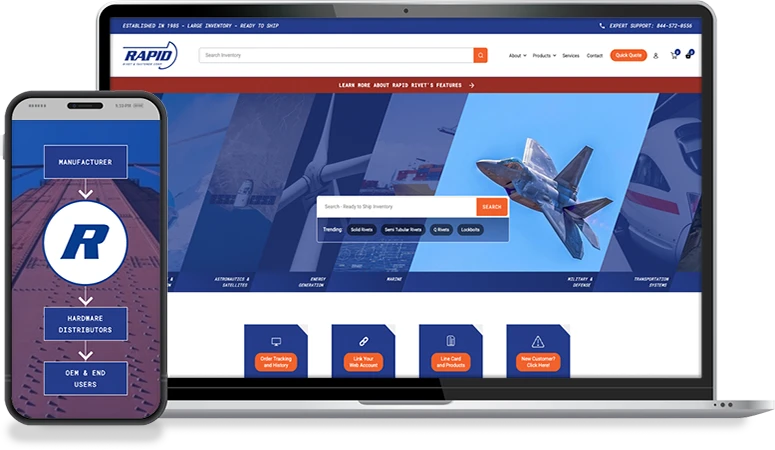
Product-Request Demand From Intent-Based Content
Rapid Rivets & Fasteners needed product content that matched how military, aerospace, and commercial buyers search for precision fasteners. OuterBox used B-SMART content additions to cover brands, specifications, materials, industries, and product types, then connected that search visibility to product-request opportunities.
Read the full Rapid Rivets case study to see how intent-based content connected industrial search demand to product-request opportunities.
increase in site conversion events
product-request opportunities
How We Tailor Our Marketing Services to Real Buyer Journeys
Good industrial marketing relies on a purpose-built channel mix that works across each step of the buyer journey. OuterBox builds custom marketing plans for industrial companies based on their real needs.
SEO/GEO For How Industrial Buyers Actually Search
Industrial buyers search with specificity: grade, form, application, and certification concepts rather than generic category terms. We build keyword and content strategies around those journeys, establishing a content and technical SEO foundation that both improves organic rankings while also making your brand and products more visible in large language models (LLM) conversations.
Industrial SEOPaid Media Sized To Your Budget and Goals
We develop PPC, paid social, and programmatic campaigns around the realities of industrial marketing. Ad sequences travel naturally through the consideration process, accurate targeting and disciplined exclusions avoid wasted spend, and creative and copy speaks directly to the right buyers in language they recognize.
Industrial PPCWeb Design Built Around Technical Buying Paths
An industrial sale rarely gets decided by one person reading one page. It may move through a technical evaluator, a procurement contact, and an executive, each looking for different proof before they sign off. We design sites and catalogs built to address the many questions your brand needs to answer before you'll receive an RFQ.
Industrial Web DesignCRO/UX Geared Towards RFQs
Your CRO program can't run on eCommerce assumptions: the conversions that matter is are submitted RFQs, not quick one-time purchases. We audit your site to find the real friction in your conversion pathways. Then we validate solutions with real performance data before building them permanently into your site.
Industrial CROAnalytics That Scores Lead And Call Quality
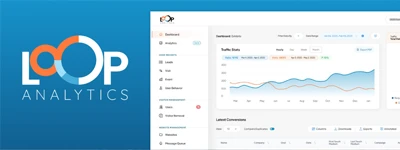
A trade show conversation, a branded search, and an RFQ weeks later might all be unrelated—or they could be steps along the way to the same deal. LOOP, our proprietary analytics platform, helps you find it. We tie calls, forms, campaigns, and lead quality together so you know what's actually driving success.
Explore LOOP AnalyticsEmail Built For Long, Multi-Touch Sales Cycles
Email is a long-game strategy, which makes it a perfect fit for the lengthy and involved sales cycles that industrial brands navigate. OuterBox creates personalized lifecycle sequences that provide prospective buyers with the right information at the right time, ensuring your leads don't go cold.
Industrial Email MarketingLeading the Way on Client-Focused AI Integrations
Plenty of agencies will gladly bolt a generic chatbot onto your site. OuterBox is one of the few agencies building actual custom AI solutions for industrial marketing programs.
We build both sides: customer-facing agents trained on your specs and documentation to handle product questions and RFQ intake, and internal tools that connect your internal systems so your teams can get quick, accurate answers without hunting across platforms.
Turning SEO and CRO Improvements Into New Revenue
An industrial digital marketing agency should connect product search visibility, website experience, landing-page conversion, and ongoing planning around the same buyer journey. See how OuterBox helped an industrial CNC parts supplier earn #1 rankings for key product pages, increase SEO-driven revenue by 8%, and improve ROI by 254% after optimizing a key landing page. The result shows how an industrial marketing agency can coordinate SEO and CRO to help technical buyers find the right parts faster while giving industrial companies a clearer path from demand to revenue.
An industrial CNC parts supplier connected SEO, UX, and CRO to measurable growth.
Where Generic Industrial Marketing Breaks Down
Industrial marketing usually fails because efforts are aimed at the wrong signals or divided across disparate teams that do not share the same context. Here’s what sets OuterBox apart.
Generic Industrial Marketing
- Demand mapping: The site gets more visits, but sales still receives vague inquiries that do not name a product, quantity, application, or fit requirement.
- Paid efficiency: Campaigns look busy while budget leaks into unsupported products, weak-fit searches, student traffic, job seekers, or broad terms that never become opportunities.
- Quote paths: Generic forms create undifferentiated leads, and sales has to ask basic qualifying questions before deciding whether the inquiry deserves follow-up.
- Connected execution: A redesign improves the look of the site but leaves search demand, catalog structure, quote paths, and reporting disconnected from buyer evaluation.
- Reporting: Dashboards stop at clicks, sessions, and form volume, leaving the team unable to tell whether marketing is creating pipeline or activity.

- DEMAND MAPPING: Every inquiry gets scored against real qualifiers, product, quantity, application, fit, before it reaches a rep, so sales knows in seconds whether it’s worth a callback.
- PAID EFFICIENCY: Search terms get filtered against real buyer intent before spend goes out, so student traffic, job seekers, and broad-match noise get cut before they touch a dollar.
- QUOTE PATHS: Forms capture material, size, quantity, application, file upload, part number, and urgency, so a lead arrives pre-qualified instead of sales chasing basics.
- CONNECTED EXECUTION: One team owns search demand, catalog structure, and quote paths together, so a redesign never undoes what SEO or CRO already built.
- REPORTING: Every channel ties back to lead quality, not just traffic, so the team can point to exactly which pages, campaigns, and product areas are producing pipeline.
How An Expert Industrial Marketing Program Comes Together
We’ve refined our process over more than twenty years of building marketing programs for manufacturers, distributors, OEMs, and other industrial businesses. Specialists in each discipline work off the same account plan, not separate ones, so SEO, paid media, and site changes get coordinated before they ship instead of undercutting each other.
-
Start With a Full Audit: Before we recommend anything, our strategists study your business, your competitors, and how you currently appear in search results and AI answers. We also audit your site’s technical health, content, paid accounts, and analytics tracking, then rank each finding by its likely effect on leads and revenue.
-
Design a Strategy Built for Your Company: Your strategy comes from the audit findings and your business goals, never from a template. When the plan calls for web development, analytics, email, or paid media, those specialists join the planning.
-
Put the Plan to Work: Our in-house team carries out the prioritized work across every channel in your plan. Once campaigns launch, your strategist checks early performance against the targets set during strategy and confirms conversion tracking is working correctly.
-
Close The Reporting Loop. We track RFQ rate, the share of qualified traffic submitting an actual request for quote, and weigh cost per lead against cost per best-fit account. Form and call data get read as one connected signal, and that shapes the next round of SEO, paid, and site decisions. Accurate reporting gives you the insights you need to further refine your marketing strategy.
- Never Stop Refining: We set strategy each quarter and carry it out through monthly plans, deliverables, and meetings with your team. In between, we track performance, search results, competitors, and platform changes. Every report ends with a clear next decision: scale, test, rebuild, or move budget toward what’s working.
Choosing the Right Industrial Marketing Partner
The right partner has to prove itself against a few consistent standards before handling technical demand. These tabs cover what separates an agency partner who truly understands industrial buying from one who doesn’t.

Product & Spec Search Visibility
Visibility built around product, spec, material, part, and application, not just company name.
Industrial buyers search with the same detail a sales team hears on calls: they’re looking by product family, part type, material, size, application, certification, brand, SKU, or replacement need. We build pages around precise language, so a search for “A286 stainless fasteners” finds a page built for that spec instead of one built for the generic word “fasteners.” Then we connect that visibility to paid demand, quote paths, and reporting, so ranking for a spec turns into an actual sales conversation, not just a traffic number.
Paid Approaches Determined By Buyer Fit
Campaigns built to reach real buyers, not to spend on broad clicks.
Industrial paid media can burn through budget fast on searches that look relevant but never turn into qualified demand. We structure campaigns by product type, build negatives against wrong-fit requests, match landing pages to the actual buying context, and report on the difference between a cheap lead and a useful one. For GPI Meters, a precision-measurement paid media program built around campaign restructuring and Shopping work delivered a 425% lift in paid conversions and a 48% lower cost per conversion. That’s the standard: paid demand controlled by fit, not volume.
Websites Built to Withstand Technical Evaluation
A site that lets a technical buyer evaluate fit before ever submitting an RFQ.
A site that only carries brand credibility loses a technical buyer fast. We build in the product data, capability detail, application context, and quote-cart logic that let buyers evaluate fit on their own, plus a path that tells sales exactly what the buyer needs, not a form that asks for name, email, and message and forces the team to requalify every inquiry from scratch. For Brazos Fasteners, a site modernization built around helpful content and clearer navigation gave technical buyers a faster path to the specific part they needed, and conversions followed. That’s the standard: a site built to help buyers evaluate, not just look credible.
Lead Reporting Sales Can Act On
Can sales see which inquiries are worth pursuing?
Raw form counts don’t tell a sales team anything about fit. We build reporting around the signals that actually predict it: quote-cart usage, product-line interest, and call context. CRM feedback and lead notes fill in the rest, showing why one inquiry deserves a same-day follow-up and another doesn’t. When reporting stops at traffic and conversions, leadership has no way to decide which product family, paid segment, or content path deserves the next dollar.
Consolidated Industrial Marketing Programs
Can one partner coordinate SEO, paid, web, CRO, content, and analytics?
Splitting services across different agencies means the SEO team doesn’t know what the paid team is bidding on, the web team doesn’t know what either one needs from a product page, and nobody’s job is to catch it when that costs a lead. Our team has spent decades in this vertical—we’re not a generalist agency running the same playbook across every industry. We build powerful, interconnected marketing strategies across your site, paid media, and outreach to deliver real results.
What Better Industrial Marketing Should Produce
Better industrial marketing should produce more qualified leads and a better understanding of how to optimize for them. A program that grows traffic without growing either one isn’t working, no matter how the dashboard looks.
Search and paid media bring the right buyers to the right page. The site and content help them evaluate before they ever call. CRO tightens the path from interest to a real request for quote. Sales gets an inquiry with enough context to know it’s worth chasing, not another form to requalify from scratch.
The same work should make the business easier to read: which product families are pulling demand, which pages and campaigns are earning real conversations, and where your ad dollars can go further. If your marketing program is built for better insights, it can fuel continual growth.
Industrial Marketing Strategy Review
Request An Industrial Marketing Strategy Review
Bring OuterBox into the conversation before another campaign spends against the wrong demand path. We will review how buyers find you, where paid media is spending, how the website supports quote or ecommerce paths, and what reporting tells sales about lead quality.
Services
"*" indicates required fields
Industrial Marketing Resources

SEO | 16 min read
Whether you handle your search engine marketing in-house or hire an SEO agency to develop and manage your campaign, it is extremely important to be…

Digital Marketing | 5 min read
Website traffic is a vital driver of overall business growth, so it’s important to learn multiple methods to increase your website traffic. It improves your…

CRO | 5 min read
Ready to change your website into a conversion powerhouse? Mastering CRO (conversion rate optimization) best practices is your ticket to transforming casual visitors into loyal…

eCommerce | 5 min read
2020 dramatically changed B2B shopping behaviors across countless industries. Workers stayed home to slow the spread of the COVID-19 pandemic and turned to digital solutions…
More Industrial Marketing Services
Related Industrial Marketing Services





Build A Stronger Industrial Demand Path
Your next marketing investment should make the sales path clearer, not just add another channel report. Talk with OuterBox about the searches, paid campaigns, website paths, quote details, and lead-quality signals that should shape your industrial growth plan.
"*" indicates required fields
"*" indicates required fields
Industrial Digital Marketing FAQs
What is industrial online marketing?
Industrial online marketing is the connected use of SEO, paid media, content, web design, CRO, analytics, and related channels to help industrial buyers find, evaluate, and contact a supplier online. The work usually has to account for product families, specifications, quote paths, ecommerce behavior, long sales cycles, and lead quality.
Should we hire you for industrial SEO, industrial PPC, or the full program?
If the main need is organic visibility, start with industrial SEO. If paid demand is pulling in the wrong inquiries, start with industrial PPC. If several channels are already running and none of them are talking to each other, take the full industrial program: search, paid demand, website paths, conversion quality, content, and reporting handled as one plan.
How is industrial digital marketing different from manufacturing marketing?
Industrial is the wider category: manufacturers, OEMs, contract manufacturers, machine shops, and distributors. Each one sells to a different person. A machine shop is proving capacity and tolerances to an engineer. A distributor is competing on availability and part-level search against a purchasing team’s shortlist. We run the same connected program across all of them and tune the content, quote paths, and reporting to the buyer you actually have.
Should an industrial company start with SEO or PPC?
The right starting point depends on demand, current visibility, paid waste, website readiness, and sales follow-up capacity. SEO is usually stronger for compounding product and spec visibility. PPC can capture demand faster when campaigns are structured around product fit and landing-page quality. The strongest programs often use both, with reporting that shows which channel creates qualified opportunities.
Can OuterBox support complex catalogs and RFQ paths?
Yes, when the engagement scope calls for it. Industrial programs can involve product-family structure, application content, ecommerce paths, quote carts, form fields, catalog navigation, ERP or CMS constraints, and reporting. The strategy should account for the buyer path and sales handoff instead of assuming every site needs the same build.
How should industrial lead quality be measured?
Lead quality should be measured by fit, not just count. Useful signals can include product or service area, quote details, call context, form fields, source, campaign, landing page, ecommerce behavior, sales notes, and whether the inquiry matches the company’s target customer. The exact reporting setup depends on the tools and sales process already in place.
What industrial proof can OuterBox show?
OuterBox has exact industrial proof from Fanuc World, Brazos Fasteners, and Rapid Rivets, plus related manufacturing and paid-media proof such as Weiss-Aug and GPI Meters.
What makes an industrial internet marketing agency different from a general agency?
An industrial internet marketing agency should understand technical buyer behavior, product and spec searches, quote paths, catalog complexity, long sales cycles, and lead-quality reporting. A general agency may still run campaigns, but the work can miss the details that determine whether an inquiry is useful to sales.