By: Cat Mulford-Lemus
The OuterBox team was at Google Marketing Live 2026, an exclusive event for performance marketers featuring the biggest announcements on Ads, AI, and YouTube.
Google’s leaders and experts on stage made one thing unmistakably clear: we are no longer in the era of keywords and clicks. We are in the era of AI-powered, conversational, commerce-ready search. Google didn’t just announce new features. They redrew the map of how consumers discover, research, and buy. Here’s what it means for your business.
1. Search Has Been Fundamentally Reimagined
The most important thing said on stage may have been the simplest: “Google Search is AI Search.”
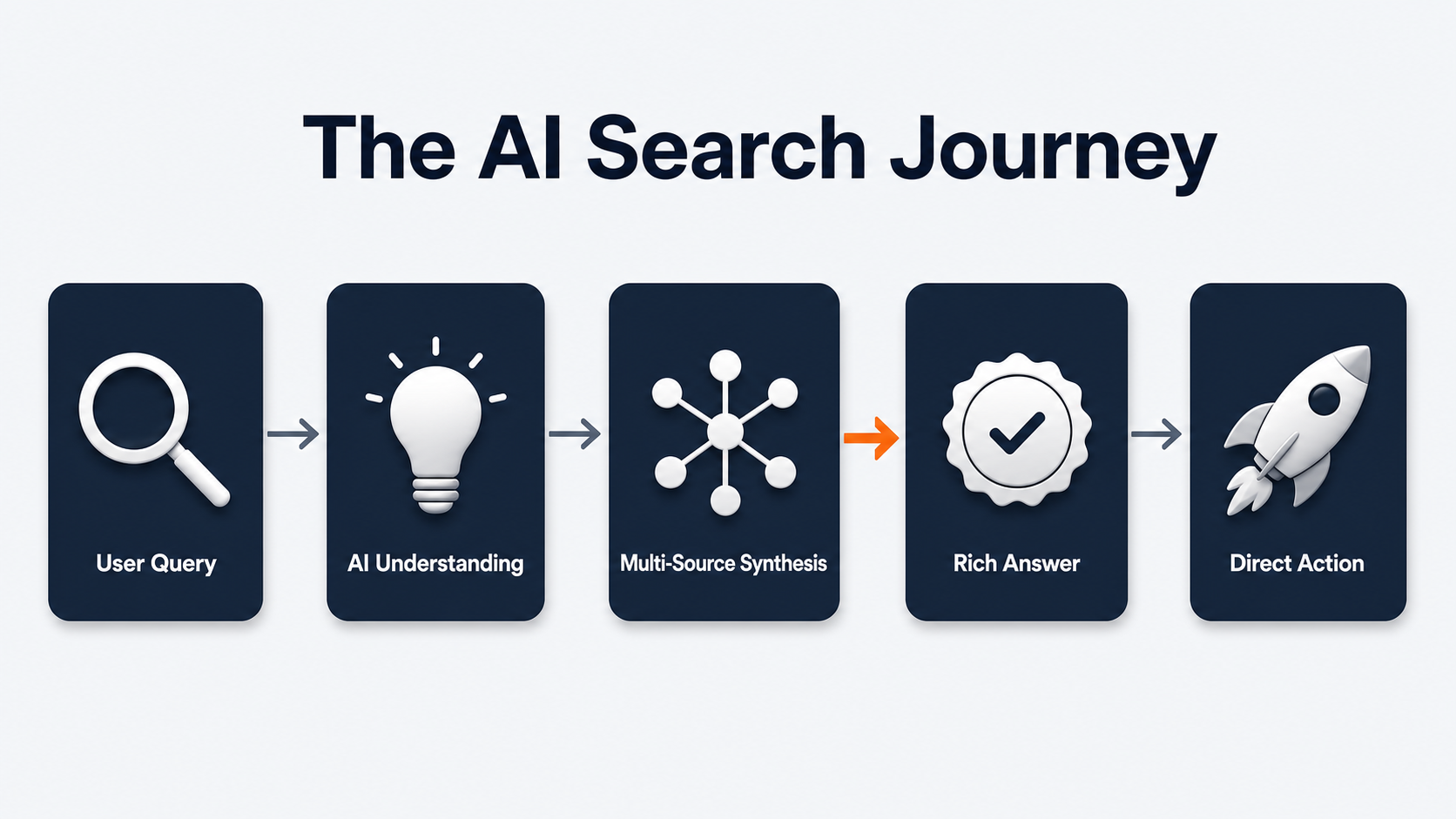
With 2.5 billion monthly users on AI Overviews and over 1 billion on AI Mode, the shift isn’t coming — it’s already here. Search queries are getting longer, more conversational, and richer with context. Users can now submit text, images, and video in a single search and expect a customized result based on their needs. Google is now synthesizing answers, making recommendations, and in some cases taking action on the user’s behalf through AI agents.
Google made clear that AI doesn’t make search less useful; it gives it superpowers. As AI makes things more efficient, consumers do more: more searching, more discovering, more buying. Seventy-five percent of people make faster, more confident decisions when using AI Mode and AI Overviews. That’s not a shrinking opportunity for marketers. It’s an expanding one.
What this means for marketers: Your SEO and paid search strategies need to evolve together. Showing up in AI-generated results requires genuine expertise, a unique brand perspective, and content that goes beyond text. SEO best practices still matter, but video, well-structured websites, and authoritative content are now non-negotiable for organic visibility in AI results. OBx specializes in integrated marketing, making us an ideal partner for building out your future strategies.
2. Agentic AI Is Creating a New Kind of Consumer Journey
Google introduced the concept of the “Agentic Era,” a world where AI doesn’t just answer questions, but proactively monitors, acts, and transacts on behalf of users around the clock. Think of an AI that tracks apartment listings to your exact specifications and alerts you in real time, or one that books a dinner reservation directly through Maps without you ever opening a separate app.
This has direct implications for how consumers interact with brands. The Universal Commerce Protocol (UCP) is Google’s infrastructure play here: a common language that connects agents, retailers, and users across Search, YouTube, Gmail, Gemini, and Google Pay. A Universal Cart is rolling out this summer, allowing users to add products to a single cart across any Google surface and check out directly, with coupons applied automatically.
Discovery to decision is faster than ever, and the brands best positioned to benefit are those with the richest, most complete product data feeding into Google’s systems.
What this means for marketers: Think of your product feed as the fuel for agentic commerce. Brands that invest in complete, accurate, real-time product feeds, including pricing, inventory, loyalty benefits, and promotions, will have a structural advantage as AI agents make purchase decisions on consumers’ behalf. Reducing friction at every step of the purchase journey is no longer a conversion rate optimization tactic. It’s a competitive necessity.
3. YouTube Is a Performance Channel, Not Just a Brand Channel, and the Two Are No Longer in Conflict
YouTube’s numbers from the stage were hard to ignore. The platform reaches 91% of US adults, has held the #1 spot in streaming watch-time for three consecutive years, and drives 2 billion Shorts views every month.
But the bigger story for marketers is that the old tension between brand and performance on YouTube is over. Google showcased these stats:
- Demand Gen campaigns deliver 2.2x higher long-term ROAS than streaming, social, and TV platforms combined.
- Google and YouTube appear in 82% of discovery journeys and precede social media in 89% of purchase journeys.
- And with only 40% of Demand Gen conversions happening in the first 30 days, measuring YouTube by last-click or short windows dramatically undervalues what it’s actually doing.
New capabilities amplify this further:
- Demand Gen is expanding to Google Maps.
- YouTube Affiliates and Creator Asset boosts (which lift conversions by 20%) make it easier to scale authentic video content.
- Ask YouTube, launching Summer 2026, brings AI-powered search directly into video, surfacing product reviews and how-to content at the moment of highest intent.
What this means for marketers: If YouTube isn’t a core pillar of your performance media strategy, you’re leaving measurable revenue on the table. Stop choosing between brand and performance. Demand Gen is built to deliver both. Invest in video creative, activate Creator partnerships, add product feeds (which drive a 33% lift in conversions on their own), and measure results by campaign type to see the full picture.
4. AI-Powered Ad Products Are Unlocking Scale, But Require a New Mindset
Google announced several new ad formats that sit directly inside the AI experience — and they represent a meaningful shift not just in what advertising looks like, but in how marketers need to think about it.
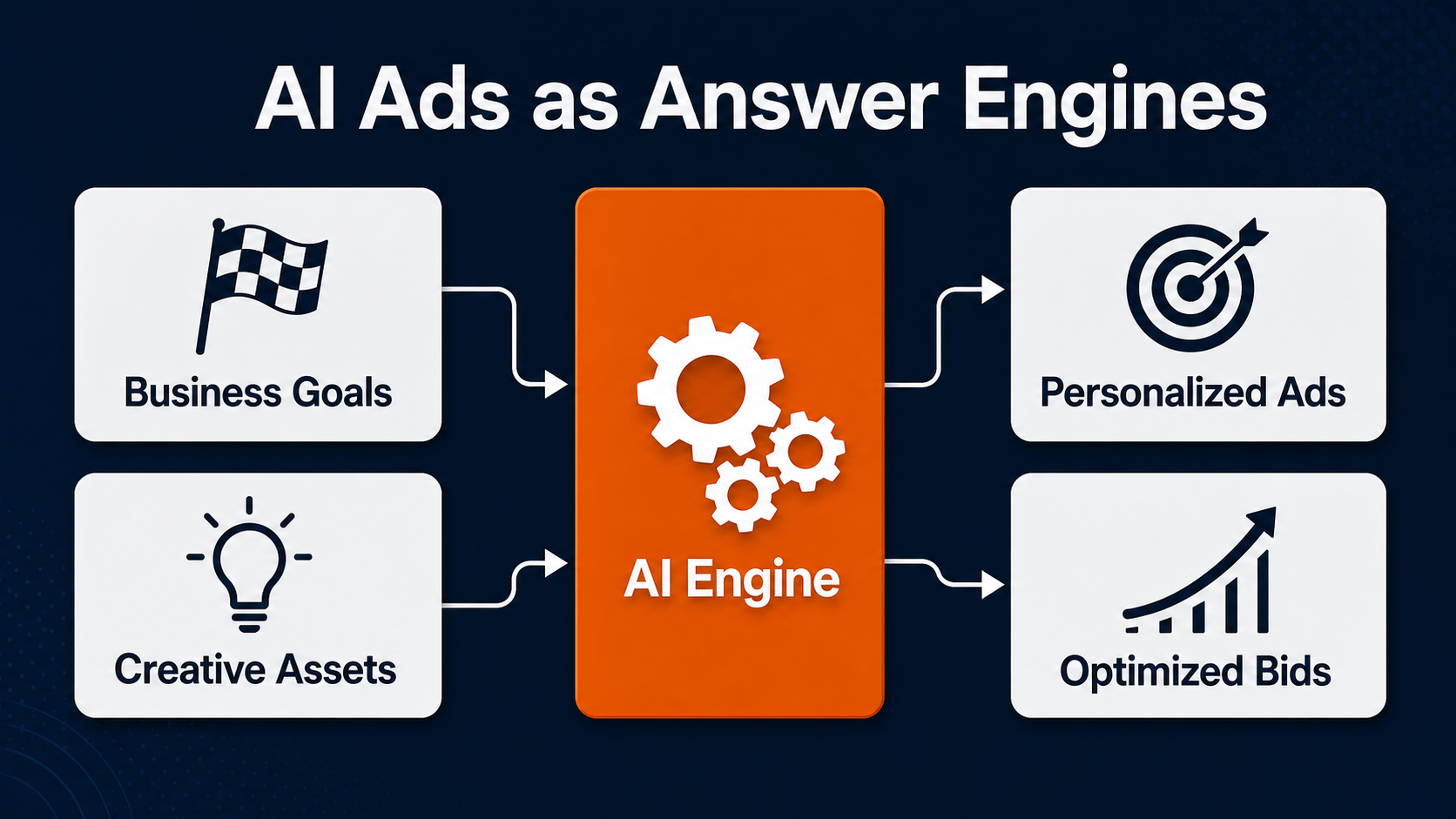
The old model: choose keywords, write ads, and manage bids.
The new model: inform context, and let AI match your brand to the right intent.
“The best ads are answers.” That line from the stage captures the shift precisely. Ads in AI Mode are clearly labeled within conversational results, but they succeed not by interrupting a search — they succeed by being the most relevant, helpful response to a question a consumer is already asking.
Key new formats include:
- AI Max for Search: delivers 27% more conversions by capturing longer-tail, conversational queries that traditional keyword campaigns miss entirely.
- AI-Powered Shopping Ads: available in PMax and AI Max, surfacing sponsored products with brief descriptions curated to match user intent.
- Direct Offers in AI Mode: open-ended, high-intent questions now trigger ad responses that include promotions and local offers integrated naturally into conversational results.
- Business Agent for Leads: ads that include pre-filled forms, follow-up questions, and immediate qualification steps, dramatically improving lead quality before your team ever touches a contact.
- AI Brief: automatically generates campaign guidelines based on your brand context, taking the guesswork out of campaign setup and giving advertisers more control.
Marketers adopting AI Max and PMax are seeing 15% more conversions, but only when budgets are sufficient to generate the data signals these systems need to learn.
What this means for marketers: The competitive advantage in paid search no longer belongs to the team with the best keyword list. It belongs to the team that best informs Google’s AI with strong creative assets, accurate product data, clear conversion signals, and the budget to let the system learn. Over-constraining campaigns or holding back investment increasingly means ceding ground to competitors who aren’t.
5. Measurement Is Getting Smarter and More Honest
One of the most practical announcements of the event was a suite of measurement improvements designed to give marketers a clearer, more defensible view of what’s actually driving results. Google organized these around three principles: Data Strength, Causality, and Unified View.
Data Strength: Google Tag Gateway and Data Manager bring cleaner, more complete data signals together in one place, forming the foundation on which everything else depends on.
Causality: Two new tools address the perennial challenge of proving impact.
- Attributed Branded Searches (ABS) connect your campaigns to brand-level search behavior, showing short-term lift that often goes unmeasured.
- Qualified Future Conversions (QFC) connect today’s actions to conversions likely to happen up to six months out, bridging the gap between performance metrics and long-term business value.
Unified View: Meridian, Google’s open-source Marketing Mix Model, is now being integrated directly into Google Analytics 360 and can be queried in plain language. This means MMM-level insights are no longer the exclusive domain of large enterprises with data science teams.
Tying it all together is Ask Advisor, a unified AI agent with shared memory across all Google planning and advertising surfaces. Ask it “Show me abandoned carts across new and existing customers by region,” and it will pull the answer from across your entire Google stack, remember the context of previous conversations, spot opportunities for improvement, and even generate campaign drafts.
What this means for marketers: The measurement gap between upper-funnel brand investment and lower-funnel conversions is closing. Executives should expect more sophisticated attribution conversations with their teams and should treat data infrastructure as a strategic investment, not an IT project. If your tracking and tagging aren’t clean, none of the AI-powered features above will perform at their full potential.
The Bottom Line
Google Marketing Live 2026 wasn’t a roadmap for the future. It was a progress report on a transformation that’s already underway. The five priorities that should be on every marketing leader’s agenda coming out of this event:
- Adapt your search strategy: AI Mode is the new default; optimize for expertise, specificity, and multi-format content.
- Build rich product feeds: they are the fuel for agentic commerce and every new shopping experience Google is launching.
- Unlock YouTube for performance: Demand Gen delivers, and brand vs. performance is no longer a tradeoff you have to make.
- Let AI work in your ads: AI Max and PMax require trust and sufficient budget, but the right campaign management and oversight can lead to significant performance improvements.
- Connect your data signals: Google Tag Gateway, Meridian, and GA 360 together give you the most complete picture of what’s actually driving growth.
The question is no longer “Should we be testing AI ad products?” The question is “How fast can we get our house in order to compete?”
Ready to put these recommendations into action?
Google has compiled an ROI Essentials guide from Google Marketing Live at business.google.com/us/accelerate/googlemarketinglive.
But understanding where search is headed is only the first step. Success in the AI-powered search era will depend on how quickly brands adapt their SEO, paid media, analytics, and content strategies to keep pace.
OuterBox helps businesses turn these shifts into measurable growth through integrated digital marketing strategies built for the future of search.
The future of search is already here. Is your strategy ready for it?