Overview
In recent years, the online therapy space has quickly grown crowded, with more companies than ever competing for potential patients. Just generating search traffic and visibility is one thing, but reliably generating new patient signups is a more difficult proposition.
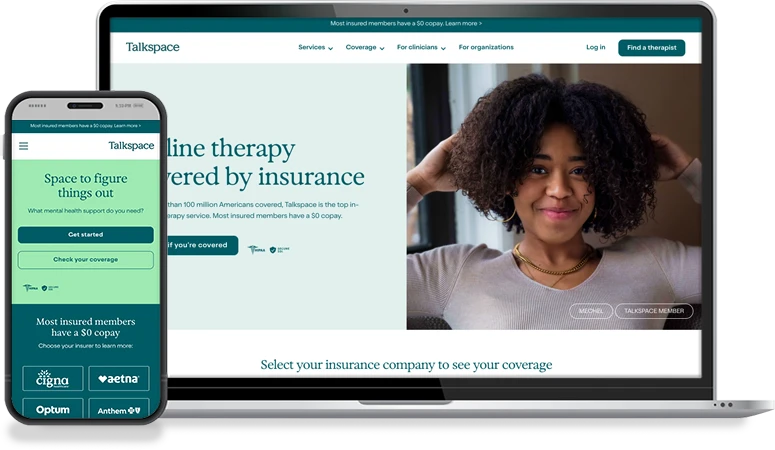
Talkspace is one of the most-established online mental health providers, but in light of all this competition it needed a more precise Google Ads strategy. Talkspace partnered with OuterBox to refine its paid search program that prioritized user intent rather than just traffic.
Key Results
+39%
Increase in Conversions
-24%
Decrease in Cost Per Acquisition
+17%
Increase in Conversion Rate
Challenge
The online mental health landscape gets more crowded every year, which puts increased pressure on digital marketing efficiency and acquisition costs. Search is especially valuable in healthcare marketing because it allows brands to engage users based on active intent rather than audience targeting—which is difficult to do in compliance with Google Ads platform policies and HIPAA.
To maintain continual growth, Talkspace needed to improve how it captured and converted high-intent searches without simply increasing spend across the board.
Solution
Rather than treating all searches equally, OuterBox restructured the account around intent level and funnel position.
Keywords were segmented based on where they aligned within the patient journey, separating broader informational searches from higher-intent conversion opportunities. Campaigns could then be managed with more tailored bidding strategies, budget allocation, and customer acquisition targets depending on the role each query type played within the funnel.
This created a clearer framework for optimization and gave Talkspace greater control of its pipeline. Instead of scaling spend broadly, investment could be concentrated more deliberately in the areas driving the strongest efficiency and conversion performance.
Results
The updated Google Ads strategy helped Talkspace continue growing patient acquisition while improving overall account efficiency.
Conversions increased by 39%, while cost per acquisition declined by 24% despite increased competition across the category. Conversion rate also improved by 17%, reflecting stronger alignment between user intent and campaign structure.
Together, those gains created a more efficient path for continued growth through paid search.