By: obxadmin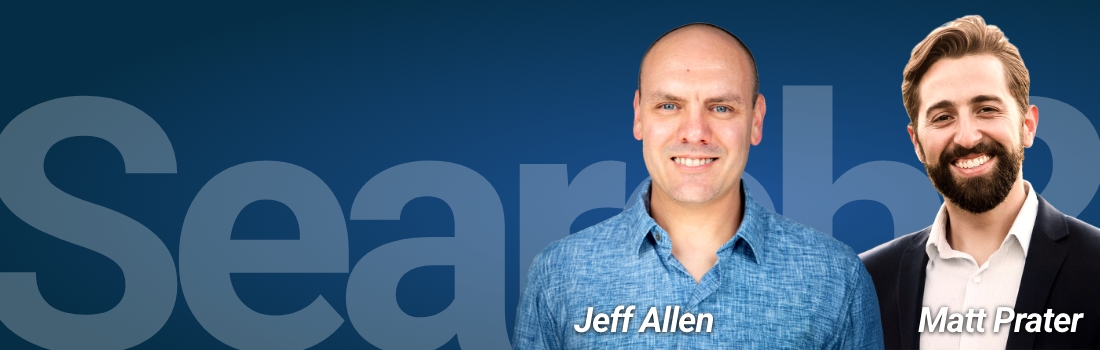
Search is Creating Decisions
Search has always been a way to capture existing demand: a person asks for something, finds a result, and visits a website. Today, AI Overviews (AIOs), AI Mode, and large language models (LLMs) are changing that sequence. People can research a problem, compare options, and learn about a brand without leaving the search experience.
That shift framed a recent fireside chat between OuterBox CEO Jeff Allen and EVP of Innovation Matt Prater. Their central message was that search has been “dying” for decades. The reality is search is increasing; it’s a more blended experience between search and AI.
Search is a more conversational, contextual, and distributed across Google, ChatGPT, Claude, Perplexity, Reddit, social platforms, image search, and voice search. The blue links now compete with synthesized answers, citations, products, ads, and follow-up prompts.

“Google’s earnings reports show that search revenue was up 17%. Now some of that is the paid ads and the cost going up as people rush to put more money into that to offset organic losses, but there was good query growth.” – Jeff Allen, CEO, OuterBox
As a result, the website visit may occur after a prospect has already gathered information, encountered the brand in multiple channels, and decided that it belongs on a short list. In other words, the decision is made before they visit the site. For marketers, that changes the question from “How do we generate more clicks?” to “How do we build enough visibility and confidence to generate the right clicks?”
Zero-Click Doesn’t Mean Zero Value
A zero-click search occurs when someone gets what they need from a search result or AI-generated answer without visiting a website. The growth of these experiences creates real challenges, particularly for publishers whose business models depend on pageviews, advertising, or subscriptions. However, for service providers and eCommerce, things are different.
Allen and Prater described a pattern they have observed across OuterBox and its clients: website traffic may decline while conversion rates, lead quality, and sales remain strong or improve. The people who do click may arrive with more context and clearer intent because they have already done part of their research elsewhere.

“If they show up in an AI overview and convert twice as much, a business might accept 50% less traffic.” – Matt Prater, EVP of Innovation, OuterBox
That does not make zero-click inherently beneficial, nor does it guarantee better results. The advantage comes from the marketing work surrounding the click. When clear website content, paid exposure, brand activity, reviews, and credible third-party citations consistently explain who a company is and why it is relevant, prospects can qualify themselves before they visit.
In that environment, less traffic can still create more value. The objective is not to lament lost visits; it is to recognize that traffic volume is no longer a complete measure of search performance.
Watch the Fireside Chat Video Here
Visibility Helps Prospects Self-Select
For a busy sales team, more isn’t always better. A business can attract thousands of visitors or calls with their digital marketing, but frustrate its sales team if those inquiries are irrelevant.
- Better information earlier in the journey gives potential customers a chance to understand the offer, assess fit, and opt out when the business is not right for them.
- The remaining prospects are more likely to arrive with a specific need and realistic expectations. That can translate into more relevant phone calls, less time spent filtering poor-fit inquiries, and a better experience for both the buyer and the business.
This is why rankings alone no longer explain performance. In fact, rankings is a data trap thanks to new Google Search Console reporting, which ranks every AIO link at position one (even when in an accordion menu) and distorts average position. A brand may influence a decision when it appears in an AI answer, earns a citation, or is discussed favorably on a trusted third-party site even if that interaction does not create an immediate session. Position still matters, but influence across the research journey matters more.
Paid, Organic, and Brand As One System
Paid and organic search have traditionally been planned and measured separately. AI-led discovery makes that separation less useful. A prospect may encounter a brand through an organic result, see it cited in an AI answer, recognize it from a paid placement, and validate it through a review or industry publication before taking action.
Each exposure can make the next one more effective. Organic search reveals the questions and proof points that matter to buyers. Paid media creates visibility at high-intent moments and accelerates learning. Brand marketing builds familiarity, while third-party authority supplies independent validation.
“It’s way less separation of church and state between paid and organic search.” – Matt Prater
Allen described this convergence as a need for marketers to operate more holistically. It does not require every company to advertise everywhere. It requires paid, organic, and brand efforts to reinforce the same position and give prospects a coherent path from discovery to confidence to action.
Authority Beyond Websites Shapes AI Visibility
Publishing more blog posts is not, by itself, a strategy for AI visibility. A company’s website remains essential, but search engines and LLMs also use third-party sources to understand what a brand is known for and whether it appears credible.
Reviews, trade publications, professional associations, conferences, expert commentary, news coverage, forums and relevant social communities can all connect a company with its expertise. The right sources depend on the market. Reddit and review platforms may be influential for a consumer brand, while an industrial manufacturer may benefit more from trade publications, newsletters, technical forums, events and expert commentary on issues affecting its industry.
That creates an opening for smaller and more specialized businesses. As Prater explained, a large competitor cannot rely on size alone if a smaller company has clearer positioning, useful information and stronger citations across relevant sources. Niche expertise can become an advantage when it is consistently demonstrated and independently reinforced.
““People on Reddit can tell if you’re a brand just trying to be a cool kid online.” – Matt Prater
Authenticity matters, especially in communities such as Reddit. Promotional participation can quickly backfire. Brands should be transparent, add genuine value, and recognize that they can contribute to a conversation without controlling it.
The Message is in the Technical Foundations
Although the search experience is changing, the underlying fundamentals remain familiar. A website should clearly explain who the company is, what it offers, whom it serves, and where it operates. Critical information should be available in clean, crawlable HTML rather than depending entirely on complex client-side rendering.
Accurate schema can reinforce those signals. Specific, original content demonstrates expertise, while concise FAQs provide direct answers in a format that resembles the questions people ask search engines and LLMs. The goal is not to write awkwardly for a machine. It is to remove ambiguity for people and machines at the same time.
Prater summarized the principle as “good data in, good data out.” Algorithms can scale strong inputs, but they can also scale weak ones. Clear structure, accurate information, and credible authority remain more durable than shortcuts designed to game a rapidly changing system.
Move Measurement Beyond Rankings and Sessions
Traditional rankings, clicks, and sessions still matter, but they need to sit inside a broader measurement framework. Marketers should examine:
- Whether the brand appears in AI answers
- Which sources are cited, and how visibility changes across prompts
- Whether AI platforms send referral traffic
- What happens after visitors arrive
There is no universal source of truth for AI visibility, so third-party tools are filling the gap. The more important shift is conceptual: visibility metrics should not become another isolated scorecard. They should be connected to qualified leads, sales, revenue, and the quality of the customer conversations marketing creates.
A decline in traffic deserves investigation, but it is not automatically evidence of declining performance. If fewer visitors convert at a higher rate and sales teams receive more relevant inquiries, the business may be trading unproductive volume for qualified demand.
What Marketers Should Prioritize Next
As search becomes more conversational and less dependent on a website visit, marketers should focus on the fundamentals that make a brand easy to understand, trust, and choose. The following priorities can help turn visibility across the customer journey into more qualified demand.
- Define the brand precisely: Make it easy to understand what the business offers, whom it serves, and why it is credible.
- Strengthen the search foundation: Use clear site architecture, crawlable content, accurate schema, and direct answers to important customer questions.
- Build earned authority: Pursue relevant reviews, mentions, expert contributions, and third-party citations rather than relying only on owned content.
- Connect the channels: Align paid, organic, and brand efforts around one position and one customer journey.
- Measure qualified demand: Track visibility and traffic, but judge their value through lead relevance, conversion rates, sales, and revenue.
- Use automation to improve the work: Let algorithms handle repetitive analysis while marketers focus on differentiation, judgment, and a more useful message.
Together, these priorities shift the focus from maximizing clicks to creating meaningful visibility. When every channel reinforces the same expertise and gives prospects useful information, the people who ultimately engage are more likely to understand the offer, recognize its value, and be ready to take the next step.
The Opportunity is Beyond the Click
AI use will continue to grow, but the durable strategy is not to chase every new acronym or platform feature. It is to make a business’s message easy to understand, visible where customers research, and credible enough to recommend.
The click still matters. It is simply carrying more context than it once did. When the rest of the marketing system builds familiarity and trust before the visit, search can produce fewer anonymous sessions and more informed opportunities. That is the real value of looking beyond the click.
Beyond the Click: How Search Visibility Can Create Better Leads
Are You Ready to Rank #1
We hope this guide cleared up the pricing confusion and gave you a framework for making a more informed decision about the SEO company that’s right for your business. If you have remaining questions or want to discuss your website with an SEO expert, call us at 866-647-9218 or request a quote below.
Services
"*" indicates required fields