
Unilog SEO Services For B2B Catalog Growth
Win more visibility, RFQs, and revenue from your Unilog store. OuterBox is a B2B eCommerce SEO agency with deep Unilog (CIMM2) expertise, combining platform-specific technical SEO, spec-driven keyword strategy, and conversion optimization to help distributors and manufacturers dominate search results.
Successful Client Relationships. Proven partnerships across B2B, distribution, and manufacturing
Page #1 Google Rankings. Breadth of ranking wins across competitive, spec-driven queries
Years in SEO. Founded in 2004 and focused on measurable SEO growth
U.S.-Based Experts. In-house SEO, content, design, development, and CRO specialists
"*" indicates required fields
"*" indicates required fields






Unilog SEO Has To Respect B2B Buying Behavior
B2B eCommerce search is different from consumer retail search. Buyers may look for product categories, part numbers, replacement items, brands, specs, use cases, materials, dimensions, compatibility, account ordering, or quote paths. They may also move between online self-service and a sales rep before they buy.
Unilog’s current CX1 platform positioning reflects that complexity. CX1 eCommerce, CX1 Product Content, and CX1 Connect are built around product content, commerce, and system connectivity for distributors, manufacturers, and specialty retailers. SEO has to work inside that same operating model.
That means the strategy cannot stop at title tags. A useful Unilog SEO program looks at how product data is organized, how categories are named, how search and navigation expose the catalog, how customer-specific rules affect pages, and where Google can or cannot reach the right content.
What A Unilog SEO Program Needs To Fix
Unilog stores can carry a large amount of valuable search demand, but that demand gets buried when the catalog structure is not search-ready. Thin category pages, supplier-copy product pages, filter-driven duplicate paths, and internal search competing with categories all hold performance back. OuterBox looks at the technical and commercial shape of the store before recommending a content calendar.

- Category demand and revenue mapping: which categories already have demand and revenue potential.
- Indexable product families: which products or product families deserve stronger indexable pages.
- Crawl-waste control: where filters, parameters, pagination, or internal search create crawl waste.
- On-page cleanup: which pages need schema, metadata, heading, copy, or internal-link fixes.
- Workflow constraints: which ERP, PIM, or content workflows affect what can be changed safely.
- Revenue-aligned measurement: which rankings should be measured against leads, quotes, orders, or revenue.
Those answers keep the roadmap grounded, so your team knows what needs developer support, what content can move now, and what should wait for catalog cleanup.
What's Included In Our Unilog SEO Services
Unilog SEO work is strongest when each workstream supports the same catalog strategy instead of becoming a loose set of tasks. A buyer evaluating a Unilog SEO partner usually needs to understand how the program will handle each area below.
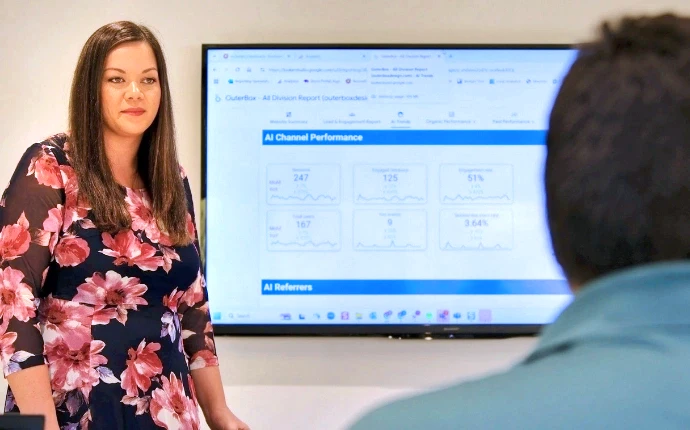
- Technical SEO audits for CIMM2 and Unilog storefronts, covering crawl access, indexation, templates, canonicals, pagination, filters, Core Web Vitals, and schema so search engines can actually reach and understand the catalog.
- Category and taxonomy optimization aligned to real search demand, so high-value categories, subcategories, and attribute pages get the copy, structure, and internal links they need to rank instead of sitting buried.
- Product-page SEO and product-content cleanup that adds unique detail where it matters, replaces thin supplier copy, and strengthens titles, headings, specs, and structured data across large SKU sets.
- Internal linking and crawl-path planning across the catalog to connect categories, products, and supporting content while keeping filters, parameters, and internal search from wasting crawl budget.
- SEO support for migrations, redesigns, and catalog changes, including URL mapping, redirect strategy, canonical rules, metadata and priority-page preservation, template QA, and post-launch monitoring.
- Reporting tied to rankings, traffic, inquiries, quotes, and revenue, so leadership can see which categories gained visibility and which work is moving toward qualified, commercial demand.
Content And Category Strategy For Unilog Stores
Unilog product content can be a search advantage when it is organized for buyers and search engines. Category pages need useful copy, clear headings, internal links, product context, and enough detail to explain why that page deserves to rank. Product pages need unique information where it matters, especially when resellers are working from similar manufacturer data.
OuterBox maps search demand across categories, product types, brands, modifiers, specs, and application language. Then we decide which pages need better copy, which pages need consolidation, which filters should stay indexable, and where supporting content can help category growth.
This is where B2B detail matters. A distributor selling thousands of SKUs cannot treat every page like a hand-written landing page. The content model may need reusable rules, stronger taxonomy fields, better product attributes, and internal-link patterns that scale without creating thin or repetitive copy.
Get a Free Unilog SEO Quote
Ready to Build Your Unilog SEO Growth Plan?
Tell us about your Unilog store and goals. We’ll respond within 24 hours, Monday–Friday. Prefer to talk now? Call 1-866-647-9218. Or start here: https://www.outerboxdesign.com/estimate
Services
"*" indicates required fields
Why OuterBox For Unilog SEO
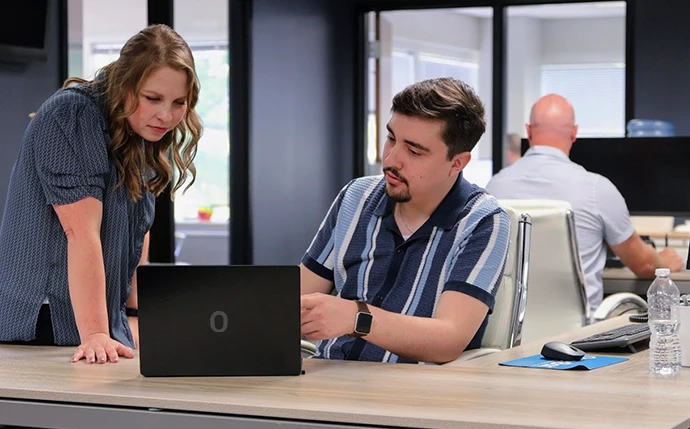
OuterBox has worked in digital marketing since 2004, and eCommerce SEO is one of the places where our structure matters most. Catalog SEO often needs strategists, technical SEOs, developers, content specialists, CRO, analytics, and paid media to stay aligned. Your Unilog store should not get an audit that leaves the hardest parts for someone else. OuterBox can help diagnose the search issue, document the implementation path, support content improvements, measure performance, and stay in the room after the first round of fixes ships. A Unilog SEO partner has to understand the platform, but also the business model behind it: product data, distributor workflows, sales-team involvement, customer accounts, quote paths, and the pressure to turn search visibility into qualified demand.
2004
Founded
250+
U.S.-Based Team
4.8 / 5
Average Rating
867
Reviews Cited
Proof From eCommerce SEO Work
OuterBox has deep eCommerce SEO experience across platforms, including Shopify, Magento and Adobe Commerce, WooCommerce, BigCommerce, WordPress, NetSuite, nopCommerce, Volusion, Unilog, and custom catalog systems.
That platform range matters because the same SEO recommendation can require different implementation paths. A redirect rule, metadata template, product schema fix, category content update, or analytics change may be simple in one environment and more involved in another.
OuterBox’s eCommerce SEO work gives Unilog buyers a useful benchmark for how we approach catalog visibility, technical cleanup, and revenue-focused reporting. When a proof point comes from another platform or broader eCommerce program, we label it that way, so your team sees relevant experience without inflated platform-specific claims.
Other SEO Services from OuterBox
Related eCommerce SEO Services





Get A Unilog SEO Plan
Send us your Unilog site and we will review the search path: category structure, technical risks, content gaps, priority pages, reporting, and the work most likely to affect qualified organic demand.
Prefer to talk now? Call us at 1-866-647-9218
"*" indicates required fields
"*" indicates required fields
Frequently Asked Questions About Unilog SEO

What are Unilog SEO services?
Unilog SEO services improve how a Unilog or CIMM2 eCommerce store appears in organic search. The work can include technical SEO, category optimization, product-page copy, internal linking, structured data, migration support, and reporting tied to qualified business outcomes.
Is Unilog SEO different from regular eCommerce SEO?
Yes. Unilog SEO often has to account for B2B catalog structure, product content, customer-specific pricing, real-time availability, RFQ paths, ERP-connected data, and sales-assisted buying. Those details change how SEO priorities should be scoped.
Can OuterBox optimize CIMM2 category and product pages?
Yes. OuterBox can review CIMM2 category and product templates, metadata, headings, content, internal links, schema opportunities, crawl paths, and reporting needs. The exact implementation path depends on the store setup and development workflow.
How long does Unilog SEO take to work?
Some technical and on-page fixes can create early movement in 60 to 90 days, especially when important pages are blocked, thin, slow, or poorly targeted. Larger catalog gains usually build over several months as technical fixes, content, and authority reinforce each other.
Do Unilog stores need product-page SEO?
Product-page SEO matters when those pages can rank for meaningful searches. Many B2B stores also need stronger category and taxonomy pages because buyers search by product type, use case, brand, part family, specs, or replacement need before they choose a SKU.
Can SEO support Unilog migrations or redesigns?
Yes. SEO migration support can cover URL mapping, redirects, canonical rules, metadata, priority-page preservation, analytics, schema, category content, and post-launch monitoring. That planning should happen before the development team locks the new structure.
How does OuterBox measure Unilog SEO performance?
OuterBox can report on shipped work, rankings, non-brand visibility, organic traffic, priority-page performance, calls, forms, RFQs, assisted revenue, and next-step priorities where tracking allows. The goal is to connect SEO work to business value, not just search activity.
How does OuterBox use proof for Unilog SEO?
OuterBox can use broader eCommerce SEO experience to show how we approach catalog growth, technical fixes, content strategy, and reporting. When an example comes from another platform, we label it clearly so your team understands what applies to a Unilog store and what is adjacent context.
Related Articles: Unilog SEO Services

SEO | 9 min read
Google says no third-party SEO tool sees its ranking data. Here’s where Search Console is authoritative, and where third-party tools still earn their place.

SEO | 16 min read
SEO prices in 2026 run $100–$250 per hour, $3,000–$7,500 a month for most US agencies, or $5,000–$50,000 for project-based work. The range is wide because…
SEO | 6 min read
Searching for an eCommerce SEO Agency in 2026 feels…familiar. Every “Top 10” list looks the same. Every agency claims to be “data-driven”. And half of…