
Cleveland Digital Marketing Agency
OuterBox helps Cleveland and Northeast Ohio companies connect SEO, paid media, web design, CRO, analytics, ecommerce, content, lifecycle marketing, and AI-capable workflows around qualified growth. Whether the buyer journey starts with a search result, an ad click, a product category page, a quote request, or a leadership report, the work has to connect back to revenue instead of living in separate channel reports.






Digital Marketing For Cleveland-Area Buyer Paths
Your buyers may be comparing a provider before a public meeting, researching a healthcare or education decision, checking product availability, requesting an industrial quote, or deciding whether a professional-services firm looks credible enough to call. The marketing program has to make sense before the first click and after the first conversion.
Strong local businesses still fit when the work is better service pages, cleaner paid search, stronger forms, and reporting that separates useful inquiries from weak ones. Companies based in Northeast Ohio also fit when their buyers compare options across the state, nationally, or online.
OuterBox builds around that decision path. SEO should help the right pages earn qualified visibility. Paid media should learn from conversions your sales or ecommerce team values. The website should make next steps clear. Reporting should show which channels created pipeline, revenue, ecommerce sales, or qualified inquiries.
That is the difference between more marketing activity and a growth system your team can use.
What Makes The Northeast Ohio Market Harder To Win
The market creates several kinds of demand at once. A medical and research-adjacent audience, a regulated financial buyer, a logistics operator, a regional retailer, and a technology supplier do not respond to the same page, ad, offer, or form.
-
Research and healthcare buyers need trust before action. Cleveland Clinic, healthcare systems, research organizations, and professional-services teams often need content, credibility cues, and reporting that can stand up to careful review.
-
Finance, healthcare, and professional-services buyers need clear measurement. Finance, professional services, healthcare, manufacturing, and public-sector-adjacent work create approval paths where lead quality, attribution, and stakeholder reporting matter.
-
Logistics and industrial buyers need useful quote paths. Smart manufacturing, materials, distribution, and B2B supply chains need search and paid media tied to product, service, inventory, and RFQ intent.
-
Retail and hospitality demand moves across corridors. Downtown, lakefront, University Circle, Midtown, and visitor-driven demand need landing pages, local search visibility, paid campaigns, and conversion paths that separate interest from action.
-
Regional technology growth raises the bar. Midtown and Opportunity Corridor development changes talent, infrastructure, and B2B competition expectations, even when the timing is uneven.
How To Compare Agency Options
A buyer can choose from local boutiques, SEO-only firms, PPC specialists, web shops, directories, listicles, and national agencies with local pages. The right choice depends on what has to improve.

Can the agency understand the business mix behind the geography?
Your market includes buyers who may be comparing a hospital-adjacent service, sourcing an industrial partner, choosing a retail or hospitality vendor, or researching a technical B2B purchase. A shallow plan treats all of that as one location. A stronger plan asks how each buyer searches, what trust signals they need, what page they land on, and what action should come next.
That matters when an appointment request, product category, RFQ, application, quote form, store visit, demo path, and professional-service inquiry all require different signals. A healthcare-adjacent buyer may need credibility and clarity before contact. An industrial or logistics buyer may need technical fit and operational detail. A retail or service buyer may need speed and confidence.
A useful agency conversation should show how those paths become pages, ads, conversion points, and reporting without inventing local proof. Ask how the team will separate buyer intent, what content or page type each segment needs, and how performance will be judged. If the answer is only a generic city page, the strategy is too thin for the market.
Can the agency separate serious opportunities from general activity?
Clicks, calls, form fills, carts, demos, and downloads are not equal. A logistics company may need quote paths that collect enough operational detail. A financial or healthcare-adjacent organization may need content that builds trust before a lead is ready. An ecommerce brand may need category and product improvements that move more shoppers from interest to purchase.
The stronger conversation asks which demand was qualified, where it started, what converted, and what should be scaled next. That means SEO, paid media, web design, CRO, ecommerce, analytics, and follow-up data have to be read together instead of letting each channel claim success on its own dashboard.
For a Northeast Ohio program, quality may come from fewer but better inquiries, clearer RFQs, stronger category paths, or more visible expertise. The agency should be able to define those standards before launch, then adjust pages and campaigns when the wrong demand starts filling the funnel.
Can paid media connect with landing pages and sales quality?
Paid search can capture urgent, local, regional, and high-intent demand, but it gets expensive when campaigns optimize toward weak signals. That matters for retail corridors, professional services, healthcare-adjacent organizations, ecommerce brands, logistics firms, and B2B sellers.
OuterBox plans paid media with keyword intent, audience logic, landing-page fit, conversion tracking, and the follow-up signals your team actually trusts. The point is to learn which searches and audiences become qualified inquiries, orders, RFQs, or sales conversations, then use that learning to refine both the campaign and the page.
The agency comparison should include how budget decisions will be made. Ask what gets paused, what gets tested, what requires a dedicated landing page, and how paid learning will inform SEO and CRO. Paid media should not stay isolated from the website and reporting system it depends on.
Can the website turn search and ad traffic into a useful next step?
The website is where channel strategy becomes visible to the buyer. Service pages, product pages, landing pages, quote forms, appointment paths, navigation, mobile flows, credibility cues, and checkout flows all influence whether someone takes action or keeps comparing.
For an industrial, logistics, or distribution company, that may mean clearer product and RFQ paths. For a research, healthcare, or professional-services organization, it may mean stronger comparison pages, credibility sections, and forms that help the next conversation start correctly.
A stronger agency will connect web decisions to channel decisions. The page should reflect the search intent, paid-media offer, buyer stage, proof requirement, and reporting plan. If the website remains an isolated design project, the program may look better while still losing qualified demand at the point of action.
Cleveland SEO That Supports Qualified Demand
Search visibility matters most when it earns the right buyer. In this market, SEO work has to support local service intent, healthcare and research audiences, professional-services comparison, ecommerce category demand, logistics and manufacturing research, and the pages buyers read before they contact a company.
OuterBox plans SEO around the assets that influence demand: service pages, product and category pages, technical fixes, content resources, internal links, and reporting that shows which visibility is producing qualified interest. For regulated, research, healthcare, technical, and professional-services buyers, that often means translating expertise into content people can understand and sales teams can use.
The channel is judged by qualified demand, not keyword count alone. A stronger SEO plan should clarify which searches need service pages, which topics support evaluation, which product or RFQ paths deserve more authority, and which technical fixes remove friction from the buyer journey.
-
Build service pages and expertise content around real buyer questions.
-
Improve product, category, comparison, and RFQ paths where B2B demand needs them.
-
Strengthen technical fixes, internal links, and page architecture.
-
Report on qualified visibility, not ranking volume alone.
Where Growth Programs Break
Underperforming programs usually break when the system is disconnected.
-
The campaign optimizes for the wrong action. Form fills, calls, carts, and quote requests need sales quality, order value, and close-rate context.
-
The content stops before the buyer is ready. A regulated, technical, healthcare, professional-services, or B2B buyer may need comparison, credibility, and service-depth content before a conversation starts.
-
The website treats every visitor the same. Different buyer paths need different next steps, from product research to quote requests to appointment forms and checkout.
-
The paid and organic teams learn separately. Search terms, ad copy, landing-page data, and sales feedback should sharpen each other.
-
The report shows activity instead of decisions. Leadership needs to know what to scale, fix, pause, or test next.
Fixing those breaks is where an integrated agency earns its place.
Real Brand Results
Real Results From Connected Growth Programs
Two OuterBox client programs where connected search, paid media, and conversion work produced measurable business results.
johnnie-O
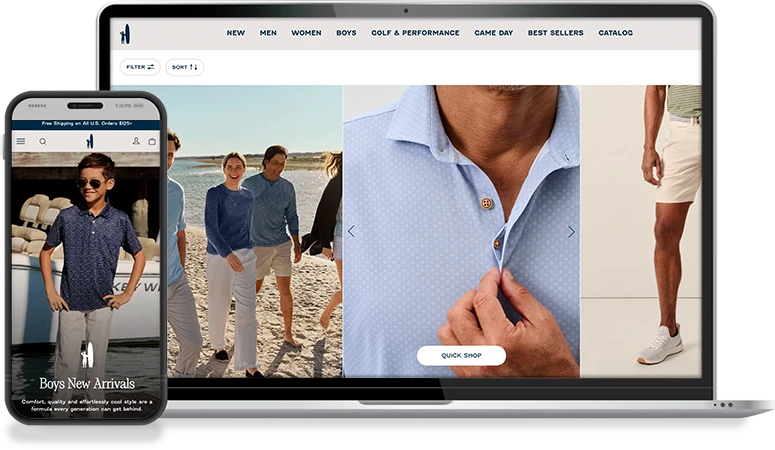
johnnie-O worked with OuterBox on cross-channel coordination across paid search and email that lifted revenue 21% year over year and return on ad spend 14.9% year over year.

Crovetti Orthopaedics
Crovetti Orthopaedics partnered with OuterBox on an integrated SEO and paid-search program that generated 1,000+ patient leads in a single month, 23,330+ website visits, and a 20% paid-search conversion rate.
Why OuterBox Fits Cleveland Growth Plans
OuterBox brings senior strategy, channel specialists, creative execution, analytics, and development support into the same conversation. That matters when your growth problem touches search visibility, paid media efficiency, website conversion, ecommerce revenue, lifecycle follow-up, and reporting at the same time.
For companies that sell through careful research, quote paths, product discovery, appointment requests, and regional sales conversations, depth only helps when it is organized. OuterBox gives your team access to specialists who can diagnose the channel problem and the business path together.
The work is still practical: understand the buyer path, build the pages and campaigns that carry demand, measure what changes, and stay in the room as the program improves. Your team gets a partner built to connect strategy, execution, measurement, and improvement instead of treating those jobs as disconnected workstreams.
20+
Years
1,000+
Clients & Sites
2M+
Page-One Rankings
4.8★
Rating
Cleveland PPC Built Around Spend Quality
Paid search can create demand quickly, but weak signals waste budget quickly. PPC work in this market has to connect search intent, landing-page quality, conversion feedback, and sales value before the campaign can make smart budget decisions.
For a retail or hospitality team, that may mean separating broad local interest from high-intent inquiries. For an ecommerce, logistics, or manufacturing company, it may mean shopping campaigns, product pages, quote paths, retargeting, and revenue reporting. For a local lead-generation company, it may mean forms and calls that teach the account which inquiries are worth more.
OuterBox builds paid media programs that work with SEO and CRO instead of competing with them. The goal is to know which keywords, audiences, offers, and landing pages create useful demand, then move spend toward that pattern. See our PPC management services for the paid-search depth behind this work.
What controlled PPC needs
-
Landing pages matched to intent. Each campaign points to a page built for that buyer’s urgency and next step, so a high-intent quote search and an early research click never land on the same generic page.
-
Conversion signals that mean something. Track qualified leads, booked appointments, RFQs, orders, and revenue instead of raw form counts, so the account learns to chase the demand your sales or ecommerce team actually values.
-
Budget shaped by value, not volume. Spend follows the keywords, audiences, and landing pages that produce qualified inquiries and sales, rather than the cheapest clicks or the biggest impression share.
-
Reporting that drives the next move. Every report should make the decision obvious: what to scale, what to pause, and what to test next, with spend tied back to pipeline and revenue leadership can see.
Where spend gets wasted
-
Click volume mistaken for success. The dashboard looks healthy while the clicks rarely become qualified inquiries, calls, or orders the business can use.
-
One generic page for every buyer. Retail, B2B, ecommerce, and quote-driven visitors all get pushed to the same page, so good clicks stall before they convert.
-
Budget moving without feedback. Spend shifts between campaigns without anyone confirming which ones produced real sales conversations or revenue.
-
Paid and organic working in silos. Search terms, ad copy, landing-page data, and sales feedback never sharpen each other, so both channels leave qualified demand on the table.
A Partner For Connected Growth
Many agencies can manage one channel. The harder work is getting every channel to support the same buyer journey, especially when one program has to account for medical research, manufacturing, and regional B2B sales. OuterBox brings SEO specialists, paid media strategists, designers, developers, CRO teams, ecommerce experts, analysts, content teams, lifecycle marketers, and AI-capability support into one operating rhythm.
That matters when your growth problem crosses demand generation, website performance, sales visibility, internal process speed, and ongoing optimization. You get a partner that can see the whole growth system, not a vendor looking at one slice.
The right partner is the one that can tell you what is worth doing next, what is noise, and how the work will be measured.
Cleveland Web Design For Better Conversion Paths
A website has to do more than look credible. It has to help different buyers understand the next step, especially when one company may serve technical evaluators, ecommerce shoppers, healthcare-adjacent audiences, industrial buyers, and regional B2B decision makers in the same growth program.
OuterBox approaches web design as a conversion and clarity problem. Page structure, navigation, forms, product details, credibility cues, mobile paths, page speed, and reporting setup all need to support how the buyer decides. The design should make service fit, product detail, technical credibility, and next-step confidence easier to see.
When the site becomes the bridge between search, paid media, sales, ecommerce, and reporting, the design work has a business job. The right project may be a full redesign, a landing-page system, a CRO cleanup, or sharper service, category, and quote paths. Learn more about OuterBox web design services.
Why Companies Choose OuterBox
-
Performance and website strategy in one place. Search, paid, CRO, ecommerce, web, analytics, lifecycle, and automation can be planned together instead of handed between disconnected teams.
-
Comfort with complex buying paths. Industrial, ecommerce, and professional-services companies need content and conversion flows that respect how buyers decide.
-
eCommerce and lifecycle depth. Product, retail, specialty, and recurring-revenue brands need search, shopping, email, merchandising, and conversion work to point toward revenue.
-
Conversion discipline. Forms, product pages, CTAs, checkout paths, booking paths, and quote flows matter because traffic only counts when it moves people forward.
-
Reporting built for decisions. The goal is a system your team can use when the conversation turns to spend, pipeline, revenue, and next steps.
Cleveland Digital Marketing Agency
Start With A Strategy Review
The first conversation should make the growth problem clearer. OuterBox can review your current search visibility, paid media, website path, tracking setup, content, ecommerce signals, and conversion points, then identify the highest-value next steps.
Services
"*" indicates required fields
FAQs About Hiring A Digital Marketing Agency
What does a digital marketing agency do for Cleveland-area companies?
A digital marketing agency helps companies improve how they attract, convert, measure, and follow up with buyers. For many companies, that includes SEO, paid media, web design, CRO, analytics, content, ecommerce marketing, email, AI-capable workflows, and reporting.
How is OuterBox different from a local boutique agency?
A boutique can be the right call for a narrow project. OuterBox is built for companies whose problem is bigger than one tactic, especially when SEO, paid media, the website, and the reporting need to stop contradicting each other.
Can OuterBox help with both SEO and paid search?
Yes. OuterBox works across SEO and paid media, then connects both channels to landing pages, tracking, CRO, and business reporting. That helps your team see where organic and paid work should support each other.
Do you work with businesses across Northeast Ohio?
Yes. OuterBox can help strong local companies and companies whose buyers are spread across Northeast Ohio, the Midwest, nationally, or online. The work starts with where revenue comes from and what your next buyer needs to believe.
Do we need a new website before marketing can improve?
Not always. Some companies need technical fixes, landing-page improvements, clearer CTAs, or better measurement before a full redesign. Others need a larger web design and development project because the current site blocks growth.
Can ecommerce companies use this kind of program?
Yes. Ecommerce companies often need category SEO, product discovery, shopping campaigns, feed quality, email automation, CRO, analytics, and technical improvements working together. The right mix depends on catalog, margin, demand, and conversion data.
What should we bring to a strategy review?
Bring your growth goals, priority services or products, current marketing concerns, sales-feedback patterns, reporting gaps, and any channel data you trust. OuterBox can help identify what needs deeper review after the first conversation.
Related Services
Related Digital Marketing Services





Helpful Digital Marketing Resources

SEO | 5 min read
Choosing an SEO company can feel overwhelming—especially when every agency claims to be “the best”? It would be poor marketing to tout an agency as…
CRO | 5 min read
It is no secret that in today’s fast-paced world having a website is crucial to your business’ survival. Today’s consumers want information when they want…

SEO | 16 min read
Whether you handle your search engine marketing in-house or hire an SEO agency to develop and manage your campaign, it is extremely important to be…
Build A Growth Program Your Team Can Use
Your next step is a clearer plan for how your market, channels, website, reporting, and internal workflows should work together. Start a conversation with OuterBox about the digital marketing program your company needs next. Talk with a strategist.
"*" indicates required fields
"*" indicates required fields