
Web Development Services Built Around The Way Your Business Runs
A website build touches more than the page someone sees in a browser. It affects how buyers move, how editors work, how campaigns convert, how data gets reported, and how the business keeps improving after launch.
Bring us the site you have, the systems it has to connect to, and the pressure behind the next build. We will help you shape the development path that fits the business, the buyer, and the team that has to run it.
"*" indicates required fields
"*" indicates required fields



Web Development Services For Sites That Have To Carry Real Business Work
OuterBox provides web development services for companies that need a site built around real business work: content management, custom functionality, eCommerce, integrations, SEO, analytics, QA, launch, and support. We connect strategy, design, development, and growth channels so the site can hold up after the first version goes live.
Website development gets expensive when the build is treated like a set of pages instead of an operating system for the business. A landing page, product category, quote tool, form, checkout, CMS field, tracking event, and integration endpoint can all affect the same buyer path.
OuterBox plans and builds with those connections in view. A content model has to work for editors. A template has to support search. A form has to send clean data to the CRM. A checkout rule has to match the way finance, shipping, and customer service work. A launch has to protect traffic, reporting, and revenue instead of creating a cleanup project the next week.
That is the difference between a site that looks finished and a site your team can keep moving.
What Our Web Development Services Include
We deliver end-to-end, platform-agnostic development across WordPress, Shopify, BigCommerce, Magento, and custom CMS solutions—aligned to your goals, timeline, and tech stack.
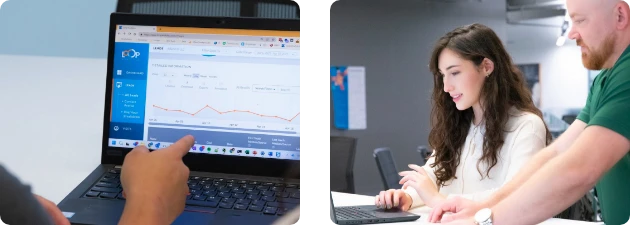
Custom design and UX decisions that give web development services a stronger foundation
The strongest build starts before the first component is coded. Custom web design gives the development team a clearer map of who the site serves, what each visitor needs to do, and which content or conversion path has to feel obvious on desktop, mobile, and tablet. For a parent website build, that planning keeps brand, usability, and engineering requirements in the same conversation.
- User flows translate buyer intent, sales questions, product paths, and form steps into screens the build can support.
- Wireframes define navigation, content priority, trust signals, and calls to action before visual polish hides structural gaps.
- Design systems keep buttons, cards, forms, tables, and content modules consistent as new pages are added.
- Accessibility and responsive states are planned into the layout so QA is not trying to rescue them at the end.
- Development-ready annotations clarify content states, component behavior, and breakpoints before the build team starts estimating tickets.
UX planning gives the build a working blueprint, so the finished site feels useful before it tries to look impressive.
Search-ready architecture before the first template ships
Search performance depends on development choices that happen long before launch. Technical SEO belongs in the architecture phase because crawlers, templates, redirects, schema, and page speed all depend on how the site is built. A web development company that waits until QA to check these items is already late, especially when a migration or redesign is involved.
- Navigation exposes important service, category, article, product, and location pages without burying them behind scripts.
- URL templates, breadcrumbs, headings, canonical rules, and structured data need clear patterns across every repeatable page type.
- Redirect maps, XML sitemaps, robots rules, and index controls get tested before traffic moves to the new site.
- Image handling, lazy loading, and internal links support visibility without slowing down the pages visitors use most.
- Staging checks compare source pages, destination pages, metadata, and tracking before DNS or launch approvals move forward.
SEO-first development keeps the site easier to crawl, easier to understand, and safer to launch.
Performance budgets built around real page templates
Fast websites come from repeated decisions across the build, then ongoing checks after launch. Core Web Vitals optimization has to account for the templates visitors actually use: homepage, service pages, category pages, product pages, forms, carts, and resource pages. Performance work is most useful when it reflects real layouts, real scripts, and real CMS behavior.
- LCP planning covers hero images, server response, font loading, and the largest visible content block on key templates.
- INP work keeps scripts, tag managers, forms, menus, and interactive modules from making the page feel stuck.
- CLS checks protect layouts from image, ad, embed, font, and dynamic-content shifts.
- Caching, CDN rules, modern image formats, code splitting, and script deferral match how the site is edited and marketed.
- Monitoring watches performance drift after new content, plugins, tags, and campaign pages go live.
- Release QA flags speed regressions before a new template, tracking tag, or media-heavy campaign reaches production.
Performance budgets keep speed connected to the build, the CMS, and the way the site changes over time.
CMS structures your team can use without breaking the site
A CMS should give marketing, content, and operations teams more control without turning every update into a risk. The right implementation defines what editors can change, which fields stay structured, how reusable sections behave, and where approvals belong before the admin ever reaches the client team.
That can mean WordPress website design with custom blocks and locked layout patterns. It can also mean Shopify, BigCommerce, Magento, or a custom CMS when catalog depth, account rules, or internal systems require a different foundation.
- Content types, taxonomies, and field groups keep service, article, product, location, and resource pages organized.
- Editor roles, previews, media rules, and approval steps help teams publish without damaging design or SEO fields.
- Reusable components protect buttons, cards, forms, and proof sections as new pages and campaigns get added.
Strong CMS implementation lets the team publish faster while protecting design quality, tracking requirements, and conversion paths.
Integrations that keep website data connected to the business
Modern websites often sit between marketing, sales, operations, finance, and customer service. The integration plan has to define which system owns each field before custom web development services begin wiring data together. Strong ERP integration planning keeps the site from becoming a disconnected copy of business data that already lives somewhere else. The same discipline applies to CRM, PIM, analytics, and commerce systems.
- CRM handoffs preserve source, form, campaign, lead quality, and sales routing details for the teams receiving the inquiry.
- ERP, PIM, OMS, payment, shipping, and tax connections need source-of-truth rules for products, pricing, orders, inventory, and account data.
- API authentication, rate limits, sync timing, error states, and retry behavior get documented before development starts.
- Test records prove that data lands correctly in both the website and the system receiving it.
- Launch plans include rollback rules when an integration fails, duplicates a record, or sends incomplete data.
Integration work is strongest when the website becomes a reliable part of the operating system and reduces the number of records teams have to reconcile.
Conversion and measurement paths built into the launch plan
The site has to be measurable and testable from the first real visit. CRO services are easier to support when development already accounts for forms, quote paths, calls, checkout steps, campaign pages, and proof sections that visitors use before they convert. Analytics and QA should be part of the same launch standard as design, development, and content.
- GA4 and Google Tag Manager events separate forms, calls, purchases, downloads, chat activity, and qualified lead actions.
- Event-to-CRM field mapping ties conversion type, page context, and qualification status to the record sales reviews.
- Form validation, thank-you paths, spam controls, and error messages get QA coverage across devices and browsers.
- Heatmaps, session recordings, and A/B testing tools need clean templates to read after launch.
- Conversion components stay reusable enough for new campaigns without creating one-off tracking gaps.
- Reporting views help marketing, sales, and leadership see which paths are creating qualified opportunities.
Measurement-ready development gives every traffic channel a cleaner path from visit to decision.
Post-launch development support that keeps the site improving
Launch is the point where real visitor behavior, search performance, content growth, and operational requests start testing the build. Website maintenance services keep that pressure from turning into slow pages, outdated plugins, broken forms, security exposure, and a backlog no one wants to own. The handoff should make ownership clear before those requests arrive.
The support plan should cover security patches, dependency updates, Core Web Vitals drift, analytics defects, CMS training needs, content expansion, and feature requests from sales or operations. It should also name how work gets prioritized, whether a release needs staging QA, and what happens when a plugin, API, or browser update changes expected behavior. That process keeps maintenance from becoming a pile of unrelated tickets.
A web development agency adds more value after launch when it already understands the codebase, the measurement plan, and the business goals behind the next set of requests. The site keeps improving because support is part of the roadmap.
Custom Web Development Services And Integrations That Match Your Operations
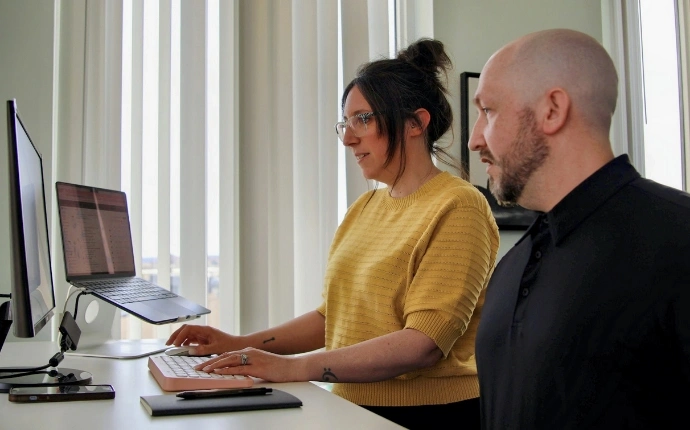
Custom development is worth doing when the site has to support a business rule that generic templates cannot handle. OuterBox scopes each build around the process it actually supports:
- Product finders that help buyers narrow the right fit before sales steps in.
- Quote request flows for B2B buying, customer groups, and account-level pricing.
- Dealer and customer portals with role-based access and account rules.
- Custom checkout rules that reduce the friction that sends customers to support.
- CRM, ERP, and PIM handoffs with clean, tested, monitored data flow.
- Configurators, resource libraries, and reporting views tied to real workflows.
These are build decisions tied to buyer behavior, staff workflow, and revenue path, not interchangeable feature lists.
Web Development With SEO, Speed, And Measurement Built In
A new website can create growth opportunities, but it can also create avoidable risk. URL changes can break rankings. Template choices can block crawl paths. Slow scripts can hurt conversion. Missing events can make reports useless. Redirect mistakes can turn a launch into a recovery project.
OuterBox plans development with search, speed, and measurement in the same room. That can include redirect mapping, sitemap updates, metadata fields, schema patterns, internal-link continuity, GA4 and Google Tag Manager event planning, image rules, script control, and performance budgets. For migration-heavy projects, technical SEO belongs in the plan before URLs move.
Wine Enthusiast needed a platform migration from a homegrown system to NetSuite SuiteCommerce Advanced, along with a move from a separate mobile site to responsive design. OuterBox treated the migration as both a development and visibility project, with architecture, URL, QA, and post-launch support planned together.
See How OuterBox Approaches A Build
A short look at how OuterBox connects strategy, design, development, and growth work so a site holds up after the first version goes live.
Watch how we handle complex integrations and custom development for any platform.
Real Brand Results
What These Web Development Projects Had To Deliver
Website results make more sense when you can see what the build had to solve, not only the marketing results around it.

Gifting Checkout Rebuild
Di Bruno Bros. needed a better gifting checkout. OuterBox rebuilt the theme on BigCommerce's Stencil framework and added custom multi-ship functionality. 44% revenue lift and 23% average order value lift.
B2B Replatform
TIE Industrial needed to reduce pressure on its internal IT team and support B2B buying. OuterBox replatformed Fanucworld.com to BigCommerce with customer and SKU-level pricing segmentation. 31.82% transaction lift.

Self-Select Product Tool
Jet Dock needed buyers to self-select complex products. OuterBox redesigned the site and built the Dock Finder tool so sales conversations could start with better context.

Custom Catalog Filtering
A&C Plastics needed an eCommerce site that helped customers find materials. OuterBox built a custom site with CMS-managed content and AJAX product filtering.

“OuterBox has done a great job understanding our business, our customer, and our website opportunities. The quality of the strategy and deliverables is very high.”
Adam Pemberton, President, Scratches Happen
Web Development Services
Get A Website Development Estimate
Tell us what you are trying to build and what the site needs to support: platform, page count, content state, internal team, integrations, eCommerce requirements, custom features, migration needs, timeline, and support expectations. We will help you define the right development scope and decide what belongs in phase one. Prefer to talk through an active project? Call (866) 647-9218.
Services
"*" indicates required fields
From Start-Ups to Fortune 500 Companies Our Clients Are Succeeding Online












Meet OuterBox
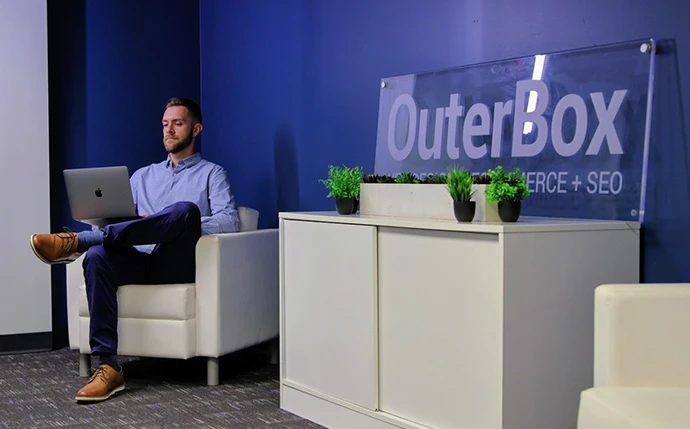
OuterBox has been building websites and digital marketing programs since 2004. Today, 300+ USA-based, in-house experts (a.k.a. "Boxers") work across web design, development, SEO, paid media, analytics, CRO, content, and the services that affect a site before and after launch.
That in-house structure matters in web development. A developer can pressure-test a form integration with analytics. An SEO specialist can review migration risk before the redirect map is final. A CRO strategist can look at the checkout or lead form before the template ships. A maintenance lead can call out support issues before the site becomes hard to update.
100/100 is the OuterBox ownership standard: 100% ownership of 100% of actions, results, and behaviors. In development work, that shows up in the small things that protect the project later: the field validation, the QA note, the rollback path, the documentation, and the handoff your team still uses months after launch.
Since 2004
Building Sites & Marketing Programs
300+
USA-Based In-House Experts
100/100
Ownership Standard
Boxers
Our In-House Team
Why Teams Choose OuterBox For Web Development
The difference is continuity. OuterBox can plan the site, build it, test it, launch it, and stay with the work after the first version is live. Here is how that compares to other agencies.

- Scope control: Defines page types, content needs, custom functionality, integrations, analytics, migration risk, QA, and support before development moves too far.
- Platform fit: Matches CMS, commerce, custom stack, hosting, editor workflow, and maintenance needs to the business.
- SEO and performance: Plans crawl paths, redirects, schema, image rules, script behavior, Core Web Vitals targets, and measurement during development.
- Integrations: Maps data flows, API contracts, failure handling, ownership, and testing paths before launch.
- QA and launch: Tests browsers, devices, forms, checkout, account flows, tracking, redirects, CMS editing, and rollback paths.
- Post-launch continuity: Keeps development, maintenance, SEO, CRO, analytics, and growth work connected after launch.
Other Agencies
- Scope control: Often focuses on visible pages first, leaving operational requirements to surface later.
- Platform fit: Tends to favor the platform the team already builds most often.
- SEO and performance: Often treats SEO, speed, and tracking as separate launch-week tasks.
- Integrations: May connect systems late, when process gaps are harder to fix.
- QA and launch: May rely on visual QA and basic launch checks.
- Post-launch continuity: May hand off the site before the next growth phase begins.

Did you know? Most website build risk shows up before code: unclear content ownership, unknown integrations, weak redirect planning, missing analytics events, or a launch with no rollback path. Start a website development conversation.
Other Web Development Services from OuterBox
Related Web Development Services



Website Development FAQs

What are web development services?
Web development services cover the planning, coding, CMS setup, custom functionality, integrations, testing, launch, and support needed to build or improve a website. The scope can include content models, templates, forms, eCommerce, analytics, SEO-ready architecture, and post-launch maintenance.
How are web development services different from web design?
Web design defines the user experience, layout, brand system, and visual direction. Web development turns that direction into a working site with templates, CMS fields, components, integrations, forms, checkout logic, analytics, and launch support. Strong projects connect both early.
Which platforms does OuterBox develop on?
OuterBox works across WordPress, Shopify, BigCommerce, Magento, WooCommerce, NopCommerce, custom PHP or .NET paths, and JavaScript frameworks when the project calls for them. Platform fit depends on content workflow, catalog complexity, integrations, budget, and support needs.
How much does a website development project cost?
Cost depends on platform, page count, design state, custom functionality, integrations, content needs, migration complexity, eCommerce requirements, timeline, and support model. Our website pricing guide can help frame the variables before an estimate is built.
How long does a web development project take?
Timeline depends on scope. A focused landing page or template update can move faster than a full rebuild, replatform, or custom eCommerce project. OuterBox scopes timing around content gates, design approvals, development complexity, QA, integrations, and launch risk.
Can OuterBox handle custom web development?
Yes. Custom web development can include templates, components, forms, calculators, quote tools, portals, product finders, checkout rules, account workflows, internal dashboards, and API integrations. We scope custom work around the business process it needs to support.
Can web development help SEO?
Yes, when SEO is planned into the build. Development affects crawl paths, URLs, metadata fields, schema, page speed, JavaScript rendering, redirects, internal links, and analytics. It does not promise rankings, but it can remove technical issues that hold SEO back.
Do you build eCommerce websites?
Yes. OuterBox builds eCommerce sites across several platforms and can support catalog architecture, product filters, search, customer groups, quote workflows, checkout, payment, tax, shipping, merchandising, and integrations with business systems.
Can you connect the website to our CRM, ERP, or other systems?
Yes. Common integrations include CRM, ERP, PIM, OMS, WMS, payment, tax, shipping, analytics, email, reporting, and internal systems. We define the data flow, timing, ownership, failure handling, and testing path before the integration is treated as ready.
What happens after launch?
After launch, a site may need monitoring, patches, bug fixes, speed work, content additions, CRO testing, SEO support, analytics checks, and feature development. OuterBox can define a maintenance or growth support model that fits the way your team wants to work.
Ready To Build A Website Your Team Can Keep Moving?
Bring us the current site, the project pressure, the systems involved, and the work the next version needs to support. OuterBox will help you build a site your buyers can use and your team can keep improving.
"*" indicates required fields
"*" indicates required fields
Related Articles: Web Development Services
Web Development | 7 min read
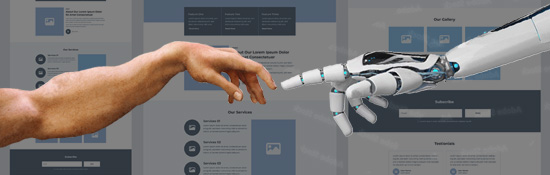
AI can spin up a functional website in minutes, but speed isn’t the same as strategy. This article breaks down where AI-powered web design tools…

Digital Marketing, Web Design, Web Development | 9 min read
Engineers are a discerning lot. They research specifications before talking to anyone, weigh all the evidence, and cringe at overt salesyness. Put differently, if the…

Digital Marketing, Web Design, Web Development | 9 min read
For a manufacturing firm, successful digital marketing hinges on the strength of your website. It’s not just whether it can attract traffic (though that’s still…