By: Jeff Hirz
Artificial intelligence (AI) continues transforming marketing, sales, and operational efficiencies in today’s rapidly evolving business landscape. To keep up, companies must wrap their heads around its adoption and where AI-driven solutions make sense.
The big question is, where to start?
Try right here. OuterBox has been following AI closely and was an early adopter of its business operations applications. We established an AI department and, created our own AI chatbot. While a brag, it is a humble brag. We love helping businesses improve their bottom line, and that includes adding AI to your day-to-day.
Let’s start with some AI 101 and then dive into examples of how you can increase your business efficiency.
The State of AI Adoption
Whether it is automation or as a writing aid, businesses (and likely your competition) are working with Artificial Intelligence (AI) in some capacity. One study showed that 78% of companies integrated AI into at least one function.
The early adopters are no surprise. Tech firms and financial services have been at the forefront. Meanwhile, regulated industries have understandably been slower. Industries like healthcare, government, and smaller enterprises encounter resource constraints and compliance challenges. These sectors are catching up. Almost 60% of small businesses have embraced AI but are skittish due to concerns about content quality and legal risks.
The money is heading toward AI. However, we know more money doesn’t always mean more success.
AI barriers such as integration with legacy systems, data security concerns, and personnel skills can slow adoption and impact results. One survey found two-thirds of businesses are stuck in generative AI pilot phases, and around 97% of data leaders struggle with showing generative AI’s business value.
What is the first step in adopting AI for business, and how can you avoid implementation challenges? Let’s get started.
Getting Started with AI in Operations
Director of Business Development Josh Blankenship likes to use this analogy: You use the same tools from the hardware store to build an armoire, but the outcomes between builders can differ significantly—from ornate works of art to a wobbly mess. Think of AI the same way. The tool isn’t what creates success; it’s the user.
If your business looks to implement AI, you’ll need a structured approach to ensure consistent outcomes (i.e., no wobbly mess). Here are a few things to consider when adopting AI for your business:
1. Establish an AI Policy
In one survey, 46% of executives said their company lacks an AI usage policy, and 14% that did admitted they haven’t familiarized themselves with the policies. So first, define clear AI policies addressing data safety, ethical considerations, human oversight, and transparency. Get it in writing, distribute it across all teams, and update it as your needs and use evolve. You’ll really want to define data safety and what you use these platforms for.
Questions to consider when creating a policy:
- What data can be shared with AI providers?
- What integrations could bring data privacy concerns, and how can we navigate this?
- What criteria and processes should be in place for evaluating new AI services?
- How will AI-generated content be reviewed for accuracy?
- What are the risk management strategies?
Even as you find new applications for AI, setting this standard early can help ensure team members are using it safely and consistently.
2. Pilot AI Initiatives
Scaling is key to doing things right. Start with focused AI pilots in areas like IT support, marketing, or sales, and allow time for testing capabilities before scaling up. You likely have AI champions already in your organization to leverage for testing and training. Find those folks and utilize them.
3. AI Training
AI literacy is worth the investment. Set up AI training programs and encourage teams to explore use cases during internal exercises.
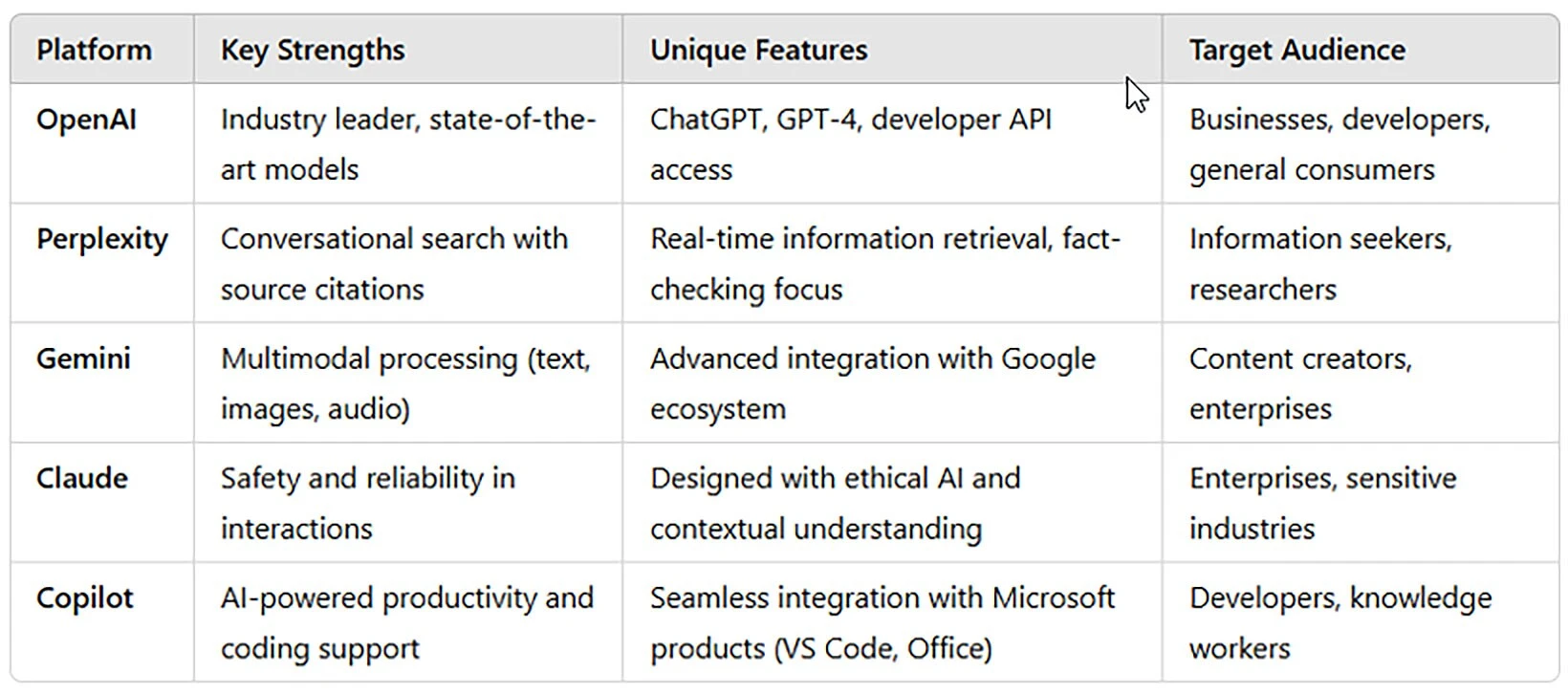
How to Align AI Projects with Business Goals
Once your policy is in place as a guardrail, you can start approaching AI on a project basis.
- Identify Pain Points: Select AI initiatives that solve real customer or operational problems rather than doing AI for the heck of it.
- Integrate into Workflows: Focus on clear pain points where AI can eliminate “busy work” or enhance decision-making.
- Measure KPI Improvements: Tie AI projects to KPI improvements like faster resolution time or increased conversion rate.
Successful AI integration must be tailored to your specific business before any impact on efficiency is felt.
AI for Data & Analysis
AI streamlines operations and decision-making by automating data analysis and reporting, enhancing CRM automation, and improving customer service responses through AI chatbots. In tracking these uses, teams that regularly use AI are 72% more likely to report high productivity.
Most companies analyze only 12% of all the data available to them. AI provides faster decision loops with daily insights to cover more data, more quickly (OpenAI, 2024).
You need the right prompts to achieve AI-driven analytics, data-backed decisions, and greater agility in responding to market trends. This goes back to the idea of AI as a tool and the user as the key.
A good prompt:
- Is super specific
- Uses action statements
- Asks to analyze patterns
- Asks the platform for correlations
- Asks questions with a role in mind, such as “As a marketing or sales manager, what actions would you take based on the data?”
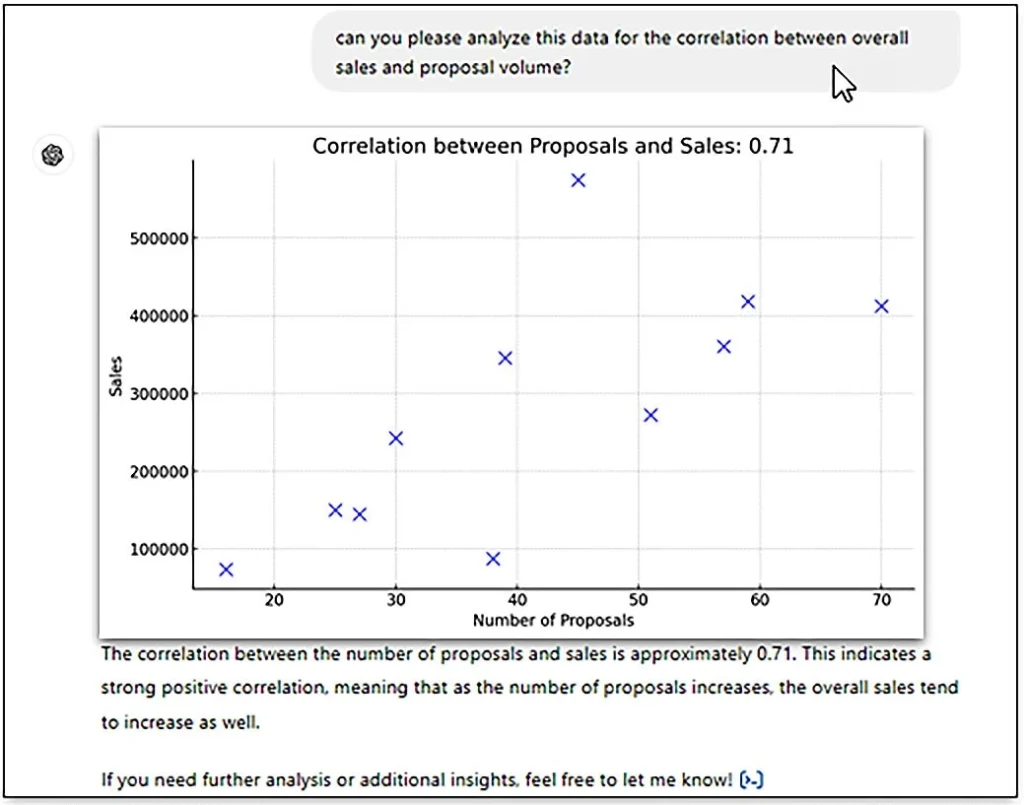
You can create lead analysis, KPI analysis, coaching and strategy outlines, data enrichment suggestions, and Google Sheets or Excel aids. We bet you can think of more. Remember that these tools are built for follow-up questions, so be sure to ask those questions and ensure you get the information or output you need.
Key Takeaways for Businesses
Establishing guidelines and guardrails via an AI policy ensures ethical and practical AI use across your organization. Once that’s in place, your business can use AI tools like LLMs to enhance decision-making processes and operations where it makes sense.
The main takeaway is to treat AI as a tool to assist your team, keeping in mind the power of your prompts and maintaining human oversight.