
Digital Marketing Services for Suppliers
OuterBox has led Digital Marketing Services for Suppliers since 2004, helping component providers, distributors, and OEM partners turn qualified traffic into RFQs and purchase orders. We understand spec-driven search, multi-stakeholder buying, and long sales cycles led by engineers and procurement teams. Our integrated strategy aligns SEO, paid media, CRO, and content to how B2B suppliers are actually sourced and evaluated.
Organic Traffic Lift for Aerospace Fastener Distributor (6 Months)
onversion Growth for Industrial Fastener Supplier (90 Days)
"*" indicates required fields
"*" indicates required fields



From Start-Ups to Fortune 500 Companies,
Supplier Clients Are Succeeding Online
Our formula is simple. When you succeed, we succeed. When your business grows, our business grows, too.

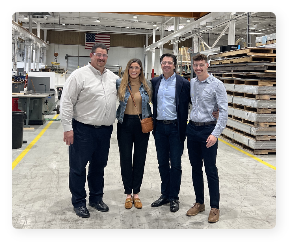



We’ve partnered with B2B suppliers across fasteners, MRO, raw materials, industrial components, and specialty equipment to build buyer-first websites and demand programs. From mid-market distributors to enterprise OEM supply divisions, our team engineers strategies that surface your SKUs and specs where procurement teams are searching, as 80% of B2B interactions now occur through digital channels. The outcome: more qualified RFQs, cleaner attribution, and measurable revenue growth.
From Start-Ups to Fortune 500 Companies, Our Clients Are Succeeding Online












Why Work With OuterBox for Digital Marketing Services for B2B Suppliers

- We build around procurement reality—specs, certifications, inventory signals, lead times, and value-add services—so your listings surface when buyers are sourcing, knowing that 80% of winning vendors are selected before sales engagement.
- Our in-house team of 250+ U.S.-based experts spans SEO, paid media, UX, dev, and analytics, giving suppliers a single, integrated partner.
- We speak technical: part numbers, tolerances, materials, and compliance requirements become search-optimized content that wins RFQs.
- We integrate with your CRM/ERP and quoting tools to attribute outcomes to channels and speed response times on high-value opportunities.
- From fasteners and fittings to chemicals and electronics, we’ve executed multi-location, multi-catalog strategies across supplier sub-verticals.
- We optimize quote funnels end-to-end—forms, gated spec sheets, and call tracking—so more sessions become qualified conversations.
- Proven results in the supplier space: triple-digit traffic and conversion lifts backed by transparent reporting and revenue alignment.
A Results Story
Our Proven Digital Marketing Services Approach for B2B Suppliers
Supplier marketing isn’t about broad awareness—it’s about being chosen on spec, speed, and reliability. Our approach connects high-intent searchers to the exact SKUs, datasheets, and capabilities they need, then streamlines RFQ paths that sales can act on. Every program is calibrated to 10.1-month B2B cycles, distributed buying committees, and channel conflicts common in supply networks.

Spec-Driven SEO
We map keywords to part numbers, materials, sizes, and certifications so your products rank for the exact queries buyers use. Structured data and catalog hygiene make large inventories crawlable and comparable in SERPs.
RFQ-Focused Paid Media
We deploy Google and Microsoft Ads with granular product groups, negative keyword sculpting, and ad copy aligned to procurement priorities. Budgets bias toward high-intent queries and remarketing that accelerates quote follow-ups.
Quote Path Optimization
We reduce friction in forms, enable request-by-part-number, and gate spec sheets to capture buyer details. Clear CTAs, phone routing, and chat-to-quote workflows increase submission rates without flooding sales with noise.
Technical Content & Resources
Application notes, tolerance guides, and comparison charts educate engineers and buyers while capturing long-tail demand. We turn tribal knowledge into indexable, conversion-ready assets.
CRM/ERP Attribution
We sync leads and RFQs to your CRM/ERP to track pipeline velocity and revenue by channel. This lets us prioritize SKUs, regions, and segments delivering the highest margin and win rates.
Continuous Testing & Scale
We iterate on filters, category taxonomy, and site search to improve findability across huge catalogs. Multivariate testing informs UX and ad creative, while dashboards surface true ROI to stakeholders.
Digital Marketing Services Excellence
Ready to Turn Traffic Into RFQs?
Request a free supplier-focused digital marketing audit. We’ll review your keyword footprint, paid media performance, site conversion paths, and quote workflows—then deliver a practical roadmap to lift RFQs and revenue. No fluff, just actionable next steps.
Services
"*" indicates required fields
A Digital Marketing Agency That Puts Your Needs First
See how our integrated SEO, paid media, CRO, and dev teams help suppliers win spec-driven searches and streamline quotes. We’ll walk through catalog SEO, RFQ UX, and CRM/ERP attribution that ties spend to revenue. Built for engineers, buyers, and operations stakeholders who expect precision and speed.
Quick Stats Overview
Quick Stats From B2B Suppliers
Our supplier programs succeed because they align to how procurement teams buy and how search engines rank technical content. We prioritize high-intent terms, optimize quote paths, and connect every lead to revenue in your CRM/ERP. The result is measurable growth you can forecast.
Conversions in 90 Days (Brazos Fasteners)
+442%
Organic Traffic in 6 Months (Aerospace/Military Distributor)
+216%
U.S.-Based Digital Experts (SEO, PPC, Dev, CRO, Content)
250+
Year Founded—20+ Years Growing Supplier Brands
2004
Unlock Your Business’s Potential
Send us your website for a free quote and strategy session from OuterBox, tailored to drive success.
Need an expert now? Call 1-866-647-9218
"*" indicates required fields
"*" indicates required fields



B2B Suppliers Digital Marketing Services FAQs

How do you tailor digital campaigns for B2B suppliers?
We start with a discovery of your product taxonomy, certifications, and buyer priorities, then map keywords and ad groups to SKUs, tolerances, and applications. On-site, we structure categories, filters, and spec sheets for fast findability and RFQ capture. We also localize where needed for distributor networks and align goals with your sales pipeline metrics.
Can you work with distributor and dealer networks without creating channel conflict?
Yes. We build channel-aware strategies that use location pages, co-branded landing pages, and geo-targeted ad campaigns to support dealers while maintaining brand guidelines. Attribution is configured to honor territory agreements, and lead routing ensures inquiries reach the right partner quickly.
What metrics matter most for suppliers using digital marketing?
We optimize toward RFQs, qualified form fills, call-in quotes, and reorder behavior—not just traffic or CTR. In your CRM/ERP, we track quote value, win rate, and margin by channel so budgets are tied to revenue outcomes. We also monitor quote velocity (first response time) because it strongly correlates with close rate in supply environments.
How do you handle technical content and specifications?
Our content team translates your engineering details into search-optimized, scannable pages that satisfy both buyers and algorithms. We incorporate part numbers, materials, standards, and certifications into metadata, copy, and structured data. Where appropriate, we add application notes, comparison charts, and FAQs to support technical evaluation.
Do you integrate with our CRM/ERP and quoting systems?
Yes. We integrate lead capture with CRMs like Salesforce and HubSpot and connect RFQs to ERP/quoting tools where feasible. This enables revenue attribution by channel, SKUs, and segments, and helps sales prioritize and follow up on high-value opportunities faster.
How long until we see results from supplier digital marketing?
Paid media and CRO improvements can drive early gains in 30–60 days. For SEO, suppliers typically see meaningful traction in 90–180 days as category pages mature and technical fixes are crawled. We set leading indicators (qualified inquiries, spec sheet downloads) and lagging indicators (won quotes, reorder rate) so progress is visible throughout.
Can you manage large catalogs and complex variants?
Absolutely. We normalize attributes, enforce naming conventions, and implement scalable templates so thousands of SKUs are crawlable and comparable. Faceted navigation, canonicalization, and structured data reduce duplication while improving discoverability for long-tail, spec-level queries.
Do you offer full-service management or can you plug into our in-house team?
Both. We can run your integrated program end-to-end or own a channel (SEO, PPC, CRO, analytics) while collaborating with your internal marketing and sales ops. Our cadence includes shared dashboards, joint planning, and clear SLAs for continuous improvement.
Related Articles: Supplier Digital Marketing Services
Digital Marketing | 1 min read
A lot of people think of Google Ads as a zero-sum game: You spend more, you make more. That’s not necessarily true. Success in paid…

Digital Marketing | 6 min read
Discover the digital marketing strategies helping multifamily properties generate better leads, fill vacancies faster, and maximize occupancy in competitive markets.

Digital Marketing | 5 min read
Learn the top digital marketing strategies student housing brands need ahead of leasing season, from paid search and SEO to social media, AI, and lead-to-lease…