
On-Page SEO Services
Drive more qualified traffic and revenue with OuterBox’s on-page SEO services. Since 2004, our in-house SEO team has delivered 2M+ page #1 Google rankings across 1000+ client engagements through technical on-page optimization, strategic content, and clear reporting. Request a custom proposal and get a response within 24 hours.
"*" indicates required fields
"*" indicates required fields






On-Page SEO Services That Grow Rankings, Traffic, and Revenue
On-page SEO is the foundation of sustainable organic growth. We optimize every crawlable, indexable element that influences how search engines evaluate and rank your pages—from information architecture and Core Web Vitals to keyword mapping, content quality, internal linking, and structured data. OuterBox is a 20+ year SEO-focused agency with an elite in-house team, custom strategies, and monthly reporting that’s actionable and transparent.
What’s Included in Our On-Page SEO Services
A comprehensive, technical-first approach tailored to your site, industry, and growth goals.
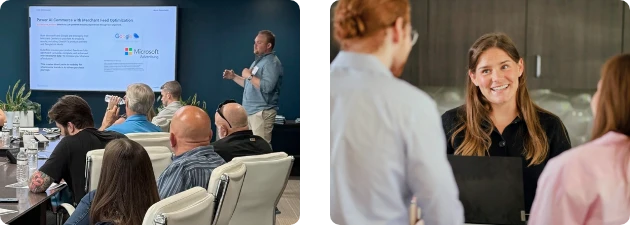
Core Deliverables and Ongoing Optimization
Technical on-page audits that expose crawl, indexation, and template risk
Your pages need a clear diagnostic path before an SEO audit turns into scattered tickets. A strong on page SEO service starts by finding the issues that stop important URLs from being crawled, indexed, understood, or prioritized.
- Status codes, redirects, canonicals, and pagination rules show whether search engines reach the right version of each page.
- Duplicate content, thin templates, and JavaScript rendering issues reveal where page quality or accessibility breaks down.
- Core Web Vitals, mobile usability, and indexation checks separate user-experience problems from crawler-access problems.
- Priority scoring connects each finding to the pages, templates, and revenue paths affected by the issue.
That diagnosis also helps marketing, content, analytics, and development teams work from the same evidence before tickets move into production.
Your team gets a roadmap that turns technical findings into page-level fixes that are easier to approve and ship.
Keyword mapping that assigns demand to the right page type
Your keyword plan has to show which page should win each search before optimization begins. SEO strategy connects demand to service pages, category pages, product pages, articles, and location pages so the site does not split authority across overlapping targets.
- Informational, commercial, and transactional queries are grouped by intent before they are assigned to URLs.
- Primary and secondary terms are mapped to pages that can satisfy the search and support the business goal.
- Cannibalization checks show where two pages compete for the same demand and need consolidation, retargeting, or clearer roles.
- Priority notes help stakeholders see which keyword opportunities should move first based on difficulty, value, and implementation effort.
That mapping gives writers, designers, and developers a shared view of why each page exists before optimization starts.
Every important search gets a destination that fits the buyer’s intent and the site’s growth plan.
Content optimization that makes each page clearer and more useful
Your content needs to help buyers act while giving search engines enough context to understand the page. SEO copywriting supports an on page SEO optimization service by turning keyword targets into headings, body copy, internal links, and page updates that still sound like the brand.
- Existing pages are refreshed for search intent, answer depth, helpful structure, and clearer next-step language.
- New pages use briefs that connect the target query, SERP expectations, internal links, proof needs, and page role.
- E-E-A-T signals are strengthened through useful explanations, accurate terminology, examples, and source-aware claims.
- On-page SEO optimization service recommendations stay practical enough for writers, designers, developers, and approvers to use.
The best updates improve relevance without turning the page into a list of terms the buyer would never say.
Your pages become easier for search engines to classify and easier for qualified visitors to evaluate.
Snippet and schema updates that clarify page relevance
Your page can be useful and still underperform when the search result does not explain the value clearly. Title tags, meta descriptions, headings, and structured data help connect the page’s topic to the way buyers scan search results.
- Title tags align the main query, page role, and business value without turning into keyword lists.
- Meta descriptions give searchers a reason to click while matching the promise the page actually fulfills.
- Header structures make the page easier to scan and easier for search engines to interpret.
- FAQ, Product, Article, Organization, and Breadcrumb schema support richer context when the page type calls for it.
These updates also give content teams a repeatable standard for future pages, refreshes, search snippets, and template-level improvements across the site consistently.
Search visibility improves when snippets and schema reinforce the page’s purpose before the visitor arrives.
Core Web Vitals fixes that protect rankings and user experience
Your important pages need to load quickly, respond smoothly, and stay visually stable after launch. Page speed metrics such as LCP, INP, and CLS give an on-page SEO service a practical way to connect performance issues to rankings, usability, and conversion paths.
- Image weight, font loading, scripts, caching, and delivery rules are reviewed against the templates that carry organic traffic.
- Performance budgets help teams understand which features, apps, or design choices create risk before changes go live.
- Platform-specific recommendations keep Shopify, Magento, WordPress, BigCommerce, and custom builds from getting generic fixes.
- Monitoring keeps page experience from regressing after new content, plugins, scripts, or media assets are added.
The work stays focused on the templates and assets that carry organic traffic, leads, product discovery, or revenue every day.
Your priority pages give users a faster path from search result to decision.
Internal links and URL architecture that make topical relationships clear
Your site structure should show which pages matter, how topics connect, and where authority should flow. Contextual internal links help an on page SEO service connect related pages without burying important URLs behind weak navigation or orphaned content.
- URL structures should make page type, topic, hierarchy, and intent clear to users and crawlers.
- Breadcrumbs help visitors move through the site while reinforcing relationships between parent and child pages.
- Hub and cluster models connect service, article, category, and supporting pages around the same search theme.
- Anchor text should describe the destination naturally without repeating the same exact phrase across every link.
Architecture work also helps new content inherit context from stronger pages so it avoids sitting disconnected after publication and editorial review.
Authority moves more efficiently when the site’s architecture points toward the pages that need to rank.
Image and media optimization that supports speed, access, and relevance
Your visuals should support the page while avoiding slowdowns or hidden context gaps for search engines. Image and media work often belongs in ongoing website maintenance because asset quality changes every time new content, products, case studies, or campaigns are added.
- Next-gen formats and compression keep large images from weakening page experience on traffic-driving templates.
- Alt text explains meaningful visuals for accessibility and relevance without stuffing keywords into every file.
- Filenames, captions, and surrounding copy help media reinforce the page topic when the asset deserves that context.
- Lazy loading and responsive image rules keep mobile and desktop experiences aligned across key page types.
Those details matter most on image-heavy service, ecommerce, case-study, and article templates that organic visitors use often across devices daily.
Media supports organic performance when every asset is faster, clearer, and easier to understand.
Robots and sitemap controls that guide crawlers to priority pages
Your crawl controls should help search engines find the pages you want indexed and avoid the areas that create waste. Technical SEO connects robots directives, parameter handling, XML sitemaps, and page-status rules so crawl paths stay clean as the site changes.
Robots.txt files can keep crawlers away from low-value or duplicate areas, but they should not accidentally block pages that need visibility. XML sitemaps should be organized by content type, updated reliably, and limited to canonical URLs that deserve discovery.
Parameter rules, sitemap coverage, noindex directives, and canonical signals work best when they are checked together. One conflicting signal can make a valuable page harder to find, evaluate, or keep indexed.
Clean documentation also helps developers understand which crawler controls are intentional and which ones need correction.
Crawlers spend more attention on priority content when discovery signals point in the same direction.
Testing and reporting that keep on-page SEO work improving
Your page updates need measurement after implementation so the work does not stop at a launch note. Google Analytics consulting supports an on-page SEO service by connecting rankings, CTR, indexed pages, Core Web Vitals, organic sessions, and conversions to the changes made on the site.
Testing can compare title tags, meta descriptions, headings, content blocks, internal-link placements, and page templates when the traffic level supports a clean read. Reporting should separate quick movement from longer-term trends so stakeholders understand what changed, what still needs time, and what should be improved next.
Monthly and year-over-year views help the team connect page-level work to visibility, qualified traffic, and revenue indicators. That context keeps optimization from becoming a list of isolated edits.
Clear reporting also shows whether future work should focus on content depth, technical cleanup, snippets, links, or conversion paths.
Your team can see which on-page changes are improving search performance and which ones need another pass.
On-Page SEO Expertise by Industry
-
Ecommerce
-
B2B & Lead Generation
-
SaaS
-
Manufacturing
-
Healthcare
-
Financial Services
-
Automotive
On-Page SEO That Accelerates Organic Rankings
Watch how OuterBox's on-page optimization strategy accelerated growth for Corsa Performance. This case study shows how targeted keyword placement, content structure, and technical refinements drive sustained ranking improvements. See how the right on-page approach turns search visibility into measurable traffic gains.
How on-page SEO optimization helped Corsa Performance climb the search rankings
Get Your On-Page SEO Estimate
Are You Ready to Rank #1
We’ll get back to you within 24 hours (Mon–Fri). For immediate service, call 1-866-647-9218. Offices open 9–5 EST.
Services
"*" indicates required fields
Meet OuterBox
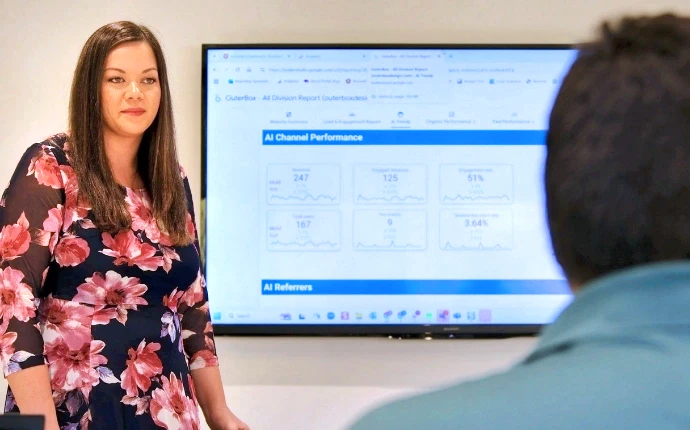
We’re a 20+ year, SEO-focused agency helping organizations grow revenue through technical on-page optimization, content, and conversion-centered strategy. With 1000+ successful client relationships and 2M+ page #1 Google rankings, our in-house team delivers custom on-page SEO programs backed by clear monthly reporting and continuous testing.
20+ Years
Digital Marketing Agency
1000+
Successful Client Partnerships
2M+
Page #1 Google Rankings
250+
USA-Based, In-House Experts
Why Choose OuterBox for On-Page SEO
You need an agency that can handle technical depth, content quality, and business outcomes—not just keywords. Here’s how we compare:

-
Experience: 20+ years, SEO-focused since 2004
-
Proven Results: 2M+ page #1 Google rankings
-
Team: In-house SEOs, strategists, and developers
-
Technical Depth: Full technical on-page audits and CWV remediation
-
Content Strategy: Keyword mapping, briefs, and optimization at scale
-
Reporting: Monthly MoM/YoY reporting with clear next steps
-
Turnaround: Response within 24 hours, 9–5 EST
-
Customization: Custom proposals by site and industry
Typical Agency
- Experience: Limited tenure or mixed focus
- Proven Results: Unverified case studies
- Team: Freelancer-reliant or outsourced
- Technical Depth: Surface-level checks
- Content Strategy: Ad-hoc content edits
- Reporting: Generic dashboards
- Turnaround: Slow communication
- Customization: One-size-fits-all packages
On-page signals—content relevance, internal linking, structured data, and page experience—directly shape how search engines understand and rank your pages. Strengthen the technical foundation to multiply your content ROI. Explore Technical SEO Services >


Unlock Your Business’s Potential
Send us your website for a free quote and strategy session from OuterBox, tailored to drive success.
Need an expert now? Call 1-866-647-9218
"*" indicates required fields
"*" indicates required fields
On-Page SEO FAQs

Why is on-page SEO important?
On-page SEO helps search engines understand your pages and match them to relevant queries. Optimizing titles, headers, content, internal links, and structured data improves rankings, CTR, and conversions.
How does speed optimization help rankings?
Faster sites improve user experience and Core Web Vitals (LCP, INP, CLS). Google uses page experience signals as a ranking input, so better performance can boost visibility and engagement.
How does Google rank websites?
Google evaluates relevance and quality using many signals, including content, links, user intent, page experience, and structured data. Strong on-page optimization clarifies topical relevance and improves discoverability.
How do I know if on-page SEO is working?
Track MoM/YoY organic sessions, rankings, CTR, indexed pages, Core Web Vitals, and conversions. You should see improved visibility, quality traffic, and measurable revenue impact.
What’s the difference between on-page and off-page SEO?
On-page focuses on your site’s content and technical elements (titles, content, internal links, schema, speed). Off-page centers on external signals like backlinks and digital PR.
How long until we see results?
Many sites see movement in 4–8 weeks for optimized pages, with compounding gains over 3–6 months as changes are crawled, indexed, and supported by ongoing content.
Do you provide custom proposals?
Yes. Every site is unique. We scope a custom on-page SEO plan and pricing after a quick discovery and high-level audit.
Can you work with my CMS or ecommerce platform?
Yes. We support major platforms (e.g., Shopify, BigCommerce, Magento, WordPress, and headless stacks) and provide platform-specific recommendations.
Related Articles: On-Page SEO Services

SEO | 9 min read
Google says no third-party SEO tool sees its ranking data. Here’s where Search Console is authoritative, and where third-party tools still earn their place.
SEO | 16 min read
SEO prices in 2026 run $100–$250 per hour, $3,000–$7,500 a month for most US agencies, or $5,000–$50,000 for project-based work. The range is wide because…

SEO | 6 min read
Searching for an eCommerce SEO Agency in 2026 feels…familiar. Every “Top 10” list looks the same. Every agency claims to be “data-driven”. And half of…