
Amazon Marketing Agency for Marketplace Growth
An Amazon marketing agency can help when every part of the marketplace program is managed separately. Ads send shoppers to listings that may not be ready. Organic visibility depends on product content, sales velocity, reviews, and category fit. Reporting looks healthy at the campaign level while margin, inventory, and ranking movement tell a different story.
"*" indicates required fields
"*" indicates required fields



What an Amazon Marketing Agency Should Manage Together
OuterBox helps brands bring those pieces into one Amazon marketing plan. The work can include Amazon marketing service planning, Amazon advertising services, Amazon SEO, catalog cleanup, product-page improvements, campaign management, review strategy, competitor research, and reporting that shows what should happen next.
That integrated view matters because Amazon is not just another media channel. It is a search engine, a marketplace, a merchandising shelf, and a conversion environment at the same time. A strong Amazon advertising consultant has to understand all four. Since 2004, OuterBox has helped eCommerce brands grow through the channels where shoppers actually buy, then connect that growth back to revenue and return on spend.
What's Included in Our Amazon Marketing Services
We build a tailored plan that aligns with your goals, margin structure, and inventory realities—then report progress with dynamic monthly dashboards and weekly check-ins.

Amazon Services We Manage
Account setup that gives Amazon advertising services a clean foundation
Amazon growth work gets harder when the account foundation is messy. Seller Central, Vendor Central, Brand Registry, Brand Stores, product taxonomy, and ASIN variation structure all affect what a brand can advertise, optimize, measure, and scale. A stronger eCommerce marketing plan starts by making those pieces understandable before media spend or listing rewrites begin.
- Seller and Vendor settings define which ownership, access, and catalog controls are available.
- Brand Registry and Store setup shape how the brand presents product lines and merchandising paths.
- Variation families, parent-child ASINs, and category assignments keep shoppers from landing on the wrong offer.
- Catalog hygiene catches suppressed listings, duplicate content, missing attributes, and policy-sensitive gaps.
- Setup notes align SEO, PPC, and reporting teams around the same account view before execution starts.
A clean account foundation gives Amazon marketing services room to work without turning every campaign or listing update into an account-structure repair.
Amazon account audits that expose margin, catalog, and campaign waste
An Amazon account audit should separate quick fixes from deeper marketplace problems. The review looks across ASIN health, catalog accuracy, listing quality, campaign structure, search term reports, ACoS, ROAS, fees, and contribution margin so the next plan is based on account reality instead of dashboard averages. Strong eCommerce consulting connects those findings to the commercial decisions behind the account.
- ASIN diagnostics show where listings are suppressed, thin, miscategorized, or underbuilt for conversion.
- Campaign reviews surface wasted spend, poor match-type structure, missing negatives, and weak budget pacing.
- Margin checks keep Amazon advertising management tied to fees, fulfillment costs, discounts, and inventory needs.
- Search term and product-targeting reports show which queries or rival ASINs deserve more attention.
- Roadmap notes sort the work into urgent account cleanup, listing improvements, media fixes, and longer-term testing.
The audit gives the Amazon program a practical starting line: what to fix first, what to monitor, and what needs a broader strategy.
Organic Amazon SEO that makes product pages easier to find and buy
Amazon SEO has to serve the search engine and the shopper at the same time. Product titles, bullets, descriptions, backend search terms, images, A+ Content, and Brand Analytics all influence whether an ASIN can be discovered, understood, and trusted. A focused Amazon SEO program keeps that work organized by product, query intent, and conversion role.
The organic side starts with keyword and search-intent mapping for each ASIN, then turns that map into listing copy customers can scan quickly. Technical catalog details still matter: variations need to be grouped correctly, backend terms need discipline, and content tests need to preserve the offer shoppers already understand. The work also has to coordinate with paid search. If PPC is proving that a term converts, the listing should be strong enough to support that demand organically.
Organic visibility improves when each product page has a clearer search role, stronger merchandising, and fewer conversion gaps between the query and the buy box.
Amazon PPC management tied to margin, inventory, and sales velocity
Amazon PPC works best when campaign structure reflects how shoppers actually compare products. Sponsored Products, Sponsored Brands, display placements, keyword targeting, product targeting, and ASIN conquesting all need different jobs. Focused Amazon PPC management keeps those jobs tied to sales velocity, inventory position, and margin.
- Sponsored Products can defend core listings, test keyword demand, and support individual ASIN sales.
- Sponsored Brands can send shoppers toward a Brand Store, product collection, or higher-level brand story.
- Product and ASIN targeting can protect branded space or challenge competitors where the offer is stronger.
- Match types, negatives, placement adjustments, and budget pacing keep spending from drifting away from intent.
- ACoS, TACoS, ROAS, and contribution margin help show whether revenue growth is worth the media cost.
Paid visibility should support the larger marketplace plan. Campaigns can fund the right terms, protect launch momentum, and reveal conversion problems that organic work still needs to solve.
BSR and category strategy for products that deserve more shelf share
Best Sellers Rank and category position sit inside the larger Amazon marketplace. They reflect how a product performs in its category, how the offer compares, how shoppers respond, and whether the account can support demand once visibility improves. Category strategy starts by choosing the right competitive shelf before trying to climb it.
The work can include category and subcategory mapping, launch sequencing for new ASINs, offer reviews, pricing checks, coupon or deal timing, cross-sell paths, and catalog relationships that help shoppers move through the product line. It also depends on fundamentals from eCommerce optimization work: product page clarity, merchandising, conversion paths, and inventory readiness.
Category rank responds to more than one lever. A product may need better listing content, cleaner paid support, a stronger offer, or better timing around inventory and promotions. BSR strategy gives those decisions a shared target so the account can pursue rank movement with a clear view of what caused it.
Competitor research that shows where rival listings are taking demand
Amazon competitors are visible in search results, sponsored placements, review profiles, pricing moves, and product-detail comparisons. Research has to turn that visibility into decisions instead of stopping at a list of rival ASINs. Useful web intelligence connects competitor movement to keyword gaps, content gaps, offer gaps, and media opportunities.
- Keyword gaps show where competing listings earn visibility before your catalog has answered the demand.
- Share-of-shelf checks show how often rivals appear across organic results, sponsored placements, and product targets.
- ASIN conquesting reviews identify where your offer can compete on relevance, price, proof, or merchandising.
- Review-gap analysis shows what shoppers praise, doubt, return, or complain about in the category.
- Price and promotion tracking helps protect margin while still answering the offers shoppers are comparing.
Competitive intelligence gives Amazon SEO, PPC, content, and merchandising teams a clearer view of where demand is moving and which response is worth testing first.
Review and ratings strategy that protects conversion rate without policy risk
Reviews influence how shoppers interpret the listing before they read every bullet or compare every image. The strategy has to stay compliant, practical, and connected to the actual reasons customers hesitate, return products, or leave negative feedback. That makes review work part of marketplace conversion rate optimization rather than a separate reputation task.
The plan can include Amazon Vine eligibility guidance, post-purchase request workflows, review monitoring, rating-floor checks, return-driver analysis, and listing QA for claims that create policy or expectation problems. It should also identify product-page issues that invite avoidable complaints: confusing variations, unclear sizing, weak images, missing usage details, or offer language that shoppers misread.
The goal is stronger proof without risky shortcuts. Review quality improves when a brand earns compliant feedback, studies what customers are saying, and fixes the product, offer, or listing issues that are creating friction in the first place.
Weekly reporting from an Amazon marketing agency that keeps decisions moving
Amazon reporting has to connect the parts of the marketplace program that teams often review separately: organic rank, paid spend, ASIN revenue, ACoS, TACoS, ROAS, contribution margin, category movement, inventory, and next-week actions. A useful Amazon marketing agency view shows how those signals affect each other. LOOP Analytics gives that decision rhythm a stronger data foundation.
- ASIN and campaign dashboards identify where performance is moving by product, target, and placement.
- Organic and paid views separate demand creation from demand capture.
- Margin-aware reporting keeps spend decisions connected to fees, discounts, inventory, and contribution margin.
- Weekly action items assign the next tests, fixes, budget shifts, listing updates, or review tasks.
- Trend notes clarify whether an Amazon advertising agency should push harder, protect efficiency, or pause for account cleanup.
Weekly reporting keeps the Amazon program from becoming a set of disconnected tasks. The team can see what changed, why it matters, and which decision should move next.
Amazon Growth Needs More Than Media Spend
Amazon advertising can create visibility quickly, but spend alone cannot fix a weak marketplace foundation. A product with poor variation structure, thin bullets, mismatched imagery, weak reviews, inventory issues, or unclear category fit will keep leaking demand after the click. The campaign may be technically active, but the shopper still has reasons to hesitate.
That is why an Amazon marketing agency has to look beyond the ad account. Seller Central or Vendor Central settings affect what can be changed. Brand Registry and Store setup affect merchandising paths. Listing quality affects conversion rate. Amazon SEO affects whether products are discoverable without paid support. Paid search data can reveal which terms convert, but the listing still has to earn the sale.
OuterBox starts with the account reality in front of you. Some brands need a sharper PPC structure. Some need product-page and catalog repair before spend scales. Some need category strategy, review monitoring, or a reporting view that finally connects ACoS, TACoS, ROAS, contribution margin, and inventory pressure. The plan should fit the account, not a generic Amazon checklist.
Make Your Next Amazon Decision Easier
Your Amazon program should make the next decision easier to see. If the account needs cleaner listings, sharper media structure, stronger organic visibility, or a reporting rhythm your team can act on, OuterBox can help you sort the work and build the plan. Call (866) 647-9218 or send the form to start the conversation.
Not Every Product Needs the Same Amazon Plan
Not every product should be pushed into the same Amazon strategy. That was true on the old page, and it is still the right posture. Some products need aggressive Sponsored Products coverage because search demand is already proven. Some need Amazon SEO and listing repair before more traffic makes sense. Some need a stronger offer, cleaner category placement, or better review quality before a larger media budget can work.
OuterBox treats that decision as part of the engagement. A strong Amazon advertising consultant should be willing to say when the problem is not the bid, not the campaign, and not the keyword list. Sometimes the account needs a cleaner catalog. Sometimes the brand needs to protect margin instead of chasing sales volume. Sometimes the best next step is a focused test, not a full-scale rollout.
That one-size-fits-one view keeps the work honest. Your Amazon account gets a plan sized around product economics, category pressure, internal bandwidth, and what the marketplace data is actually showing.
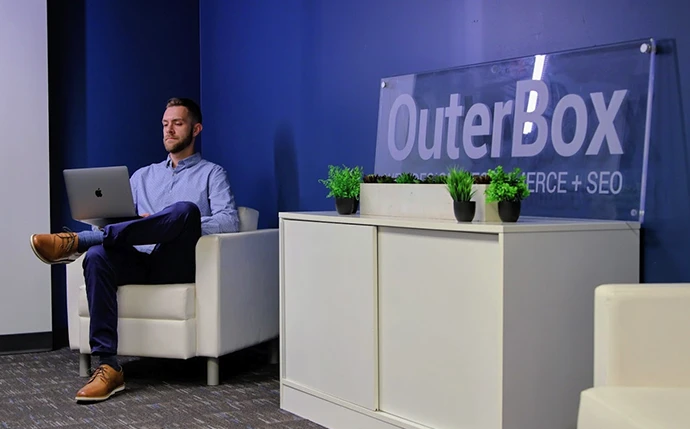
Amazon performance touches more than one specialty, and OuterBox is built for that kind of work. Our team includes paid media, SEO, analytics, conversion, eCommerce, and strategy specialists who can look at the same account from different angles without making the client coordinate every handoff.
Why OuterBox for Amazon Marketing?
That matters when the issue is not obvious. A campaign may look inefficient because the listing is weak. A listing may look weak because the category is wrong. A category may look crowded because the brand is not protecting its best ASINs or learning from competitor targets. OuterBox brings those questions into the same room instead of treating them as separate vendor tickets.
The broader OuterBox team includes 300+ USA-based, in-house experts and more than 20 years of digital marketing experience. That scale is not the point by itself. The point is continuity: your Amazon program can connect to eCommerce strategy, paid media management, Amazon SEO, analytics, CRO, and reporting without rebuilding the operating model every time the next issue appears.
Since 2004
Digital Marketing Agency
300+
USA-Based In-House Experts
100/100
Ownership Standard
Boxers
Cross-Functional Team
Get a Quote for Your Amazon Advertising Campaign
Ready to Improve Your Amazon Marketing Plan?
Tell us about your products and goals, and we’ll send a custom estimate and plan. Prefer to talk now? Call 1-866-647-9218. We’re open Monday–Friday, 9–5 EST.
Services
"*" indicates required fields
Other Amazon and Paid Media Services from OuterBox
Related Amazon and eCommerce Services

Amazon PPC Management
Amazon PPC management covers Sponsored Products, Sponsored Brands, Sponsored Display, targeting, bids, budgets, and paid marketplace growth.


Amazon Advertising FAQs

What does an Amazon marketing agency do?
An Amazon marketing agency helps brands improve marketplace performance across account setup, product listings, Amazon SEO, paid advertising, category strategy, reviews, competitor research, and reporting. The goal is a coordinated plan, not disconnected Amazon tasks.
What is the difference between Amazon advertising and Amazon PPC?
Amazon PPC is the paid campaign side of Amazon advertising, including formats such as Sponsored Products, Sponsored Brands, and Sponsored Display. Amazon advertising is the broader program that can also include SEO, catalog health, listings, reviews, and reporting.
Does Amazon advertising help organic ranking?
Amazon advertising can support organic growth when paid campaigns generate sales velocity and keyword data, but ads do not replace listing quality. Product content, relevance, conversion rate, reviews, pricing, and account health still affect organic visibility.
Which Amazon ad types should my brand use?
The right mix depends on your catalog, margin, goals, and account maturity. Sponsored Products often support individual ASIN demand, Sponsored Brands can guide shoppers toward a Brand Store or collection, Sponsored Display can support retargeting, and Amazon DSP can extend reach when the strategy calls for it.
How much should my brand spend on Amazon advertising?
Amazon advertising budgets should be based on margin, category competition, inventory, launch stage, conversion rate, and acceptable ACoS or TACoS. A small focused test is often smarter than scaling spend before the account is ready.
Can OuterBox help with Amazon SEO and listing quality?
Yes. OuterBox can support Amazon SEO, listing structure, content quality, keyword mapping, A+ Content direction, and conversion-focused product-page improvements. Deeper organic marketplace work belongs on our Amazon SEO services page.
Do I need account cleanup before running Amazon ads?
Some accounts do. Suppressed listings, poor variation structure, weak imagery, missing attributes, confusing offers, or category problems can waste media spend. Account cleanup gives Amazon advertising management a better foundation before budget scales.
How does OuterBox measure Amazon advertising performance?
OuterBox looks at campaign metrics and account-level outcomes together: ACoS, TACoS, ROAS, ASIN revenue, contribution margin, organic movement, category rank, inventory pressure, and next actions. The reporting should make decisions clearer, not just document what happened.
Related Articles: Amazon Advertising Services

Paid Media | 8 min read
The student housing market runs on tight timing, with a yearly cycle tied closely to the academic calendar. The main leasing window opens 10 to…

Paid Media | 8 min read
There are many quirks to marketing for student housing: A unique leasing calendar, a transient tenant population, and a target audience that splits between your…

Paid Media | 5 min read
Most companies benefit from AI-enhanced PPC bid management systems that can optimize campaigns in real time. These platforms range from simple, rules-based widgets that automatically…