
eCommerce Consulting Services
OuterBox provides eCommerce consulting services for teams that need the problem named before the next budget decision gets made. We help your team diagnose what is holding the store back, decide what to fix first, and turn the roadmap into work that can be built, measured, and owned.
"*" indicates required fields
"*" indicates required fields




eCommerce Consulting Services For Stores That Need A Clearer Growth Plan
eCommerce growth gets hard when the store’s real constraint is spread across channel data, catalog structure, product feeds, checkout, platform limits, and operational systems. Traffic can rise while margin slips. A weak feed can make paid media look inefficient, and filters or product data can hold back SEO before the content plan gets a fair shot. Conversion drops when the store asks qualified buyers to work too hard.
eCommerce consulting is the decision layer between “we need more revenue” and the actual work that should happen next. It looks at the store as a business system: how shoppers find products, how campaigns bring them in, how the catalog supports their decision, how checkout handles the order, and how the systems behind the site keep the promise after purchase.
That matters because eCommerce problems rarely stay in one lane. A category-page SEO problem can start with product attributes. A Shopping campaign problem can start with feed titles or inventory rules. A CRO problem can start with shipping logic. A reporting problem can start with how product, channel, and finance data are named.
OuterBox brings strategy, SEO, paid media, CRO, analytics, design, development, email, and platform experience into the same planning conversation. The goal is not a thicker recommendation deck. The goal is a ranked growth plan your team can fund, assign, and execute without rediscovering the same constraints every quarter.
What’s Included in Our eCommerce Consulting
Choose a targeted engagement or combine services for a complete eCommerce growth program. Every plan is customized to your goals and tech stack.

Consulting Pillars
Catalog SEO planning for revenue across categories, products, and filters
Organic growth on an eCommerce site depends on more than ranking a few category pages. The consulting work starts by looking at how shoppers, crawlers, and merchandising teams move through the same catalog, then connects that structure to an eCommerce SEO plan your team can maintain.
- Category templates need enough unique value to rank without forcing every merchandising update through custom development.
- Product detail pages need crawlable copy, internal links, structured data, and variant handling that support search visibility and buyer confidence.
- Faceted navigation, filters, and parameters need rules that protect crawl budget and prevent duplicate URL sprawl.
- Content priorities should support the product lines, buying questions, and margin opportunities that matter most.
Strong eCommerce consulting turns SEO from a task list into a catalog decision system. Your team gets a roadmap for what to fix first, what to leave alone, and where organic demand can create profitable revenue.
The result is a catalog that can be crawled, understood, and merchandised without creating new search problems every quarter.
Paid media decisions grounded in feed quality, margin, and inventory reality
Paid growth gets expensive when campaign structure is separated from the way the store actually operates. Product feed quality, inventory availability, promotional timing, category margin, and conversion paths all shape whether Google Shopping campaign management can scale profitably.
- Product feeds need clean titles, attributes, images, categories, pricing, and availability before budget can perform at full strength.
- Search, Shopping, Performance Max, and retargeting should have clear roles so campaigns do not compete for the same conversion path.
- Margin and inventory rules help prioritize the products that can support more aggressive spend.
- Promotion calendars, seasonality, and merchandising changes need to reach the media plan before performance dips.
eCommerce marketing consultants should be able to read the campaign data and the store data in the same conversation. That is where wasted spend, missing feed fields, and budget allocation problems become visible.
Paid growth scales with less waste once every dollar is tied to product economics instead of channel habit.
CRO consulting that finds the buying friction hidden in your storefront
Traffic only matters if the storefront helps qualified shoppers keep moving. eCommerce conversion rate optimization starts with the path from category entry to product evaluation to checkout, then isolates the friction that costs sales before teams spend more to acquire the same visitor again.
- PDPs need clear product information, image support, variants, shipping details, trust cues, and next-step clarity.
- Category pages need filters, sort logic, merchandising, and comparison cues that help shoppers narrow choices without dead ends.
- Site search needs to handle product names, symptoms, part numbers, misspellings, and high-value queries that buyers use.
- Checkout needs to remove avoidable form friction while preserving payment, tax, shipping, and compliance requirements.
The consulting layer decides which tests matter and which changes should ship without waiting for a test. That judgment keeps CRO from becoming a random experiment queue.
The storefront starts converting better once buying friction is named, prioritized, and fixed where it has the most revenue impact.
Platform choices that still work after launch
Platform decisions affect merchandising speed, operating cost, integrations, checkout flexibility, and the roadmap your team can support after launch. eCommerce consulting services should evaluate the platform against the business model before the build scope locks in.
- Shopify, BigCommerce, WooCommerce, Adobe Commerce, and headless options each carry different tradeoffs for content control, catalog complexity, and development overhead.
- Staff editability matters because slow internal updates turn routine merchandising into a support queue.
- Total cost of ownership should include apps, extensions, maintenance, hosting, integrations, migration effort, and internal workflow changes.
- B2B pricing, customer groups, quote flows, subscriptions, international selling, and multi-warehouse logic need to be known before platform selection.
The best cart is the one your team can operate, improve, and integrate without rebuilding the same constraints later.
Platform fit is proven months after launch as the business asks for the next capability and the store can support it.
Technical audits that separate urgent fixes from expensive distractions
Most eCommerce teams know something is slowing growth, but the hard part is knowing which issue deserves budget first. A technical audit looks across code, theme behavior, crawl health, speed, feeds, analytics, and system syncs, then translates the findings into a technical SEO and implementation roadmap.
- Core Web Vitals and page-speed issues get evaluated by template type, so category, PDP, cart, and checkout problems are not treated as one generic speed score.
- Crawl and indexation checks find canonical conflicts, blocked templates, duplicate paths, redirect issues, and parameter rules that limit visibility.
- Feed integrity reviews surface missing attributes, pricing mismatches, disapproved items, and product-data gaps that affect Shopping and merchandising.
- ERP, CRM, inventory, and analytics sync checks identify where business data is late, incomplete, or breaking reporting trust.
The audit should not hand your team a hundred equal-priority issues. It should separate revenue blockers from cleanup work.
The roadmap gives technical teams a clear sequence: revenue blockers first, dependency work second, cleanup after that.
Reporting that gives marketing, merchandising, and finance the same revenue picture
eCommerce reporting breaks down when channel dashboards, merchandising reports, and finance views tell different stories. Google Analytics consulting helps define the measurement layer so the same order, product, campaign, and customer behavior can support better decisions across teams.
- GA4 and Tag Manager setups need events that reflect meaningful shopping actions, not every click a tool can record.
- Attribution views should clarify how paid, organic, email, marketplace, and direct traffic assist revenue across the buying path.
- Dashboards need to separate product, category, channel, device, and customer segments so aggregate growth does not hide margin problems.
- Server-side tagging and data-quality checks can help protect tracking continuity as browsers, consent rules, and platform changes shift.
The goal is not a prettier dashboard. The goal is a reporting system that tells leaders what changed, why it matters, and where to act next.
Teams move faster with one trusted revenue picture instead of separate reports that argue with each other.
Lifecycle programs built around what customers buy, consider, and reorder
The purchase is only one point in the customer relationship. Strong email marketing for eCommerce uses behavior, product interest, purchase history, and merchandising priorities to build lifecycle programs that keep buyers engaged after the first order.
- Welcome flows should introduce the brand, clarify value, and route new subscribers toward the products or categories they showed interest in.
- Browse and cart abandonment flows need product context, timing, and proof points that help shoppers return without discounting by default.
- Post-purchase campaigns can support onboarding, replenishment, review requests, cross-sells, and product education.
- Winback and promotion calendars should respect margin, inventory, seasonality, and customer segments instead of blasting the same message to every buyer.
eCommerce marketing consultants should treat email as part of the merchandising system, not a separate newsletter function. The strategy needs to reflect what customers bought, what they considered, and what the business needs to grow.
Repeat revenue grows from the combined effect of lifecycle timing, product relevance, and margin discipline.
Integration planning for the systems your store depends on every day
An eCommerce storefront sits between many systems that have to stay aligned: ERP, CRM, OMS, WMS, PIM, payment, tax, shipping, email, analytics, and customer service tools. Development decisions have to account for those handoffs before the build creates operational drag.
- Product data architecture determines how attributes, variants, bundles, categories, and merchandising fields move through the site.
- Payment, tax, shipping, and fulfillment rules need to match how the business sells, ships, and handles exceptions.
- CRM and CDP integrations should capture the customer signals marketing and sales teams actually use.
- B2B ecommerce consulting often needs customer-group pricing, account approvals, quote-to-order workflows, purchase rules, ERP sync planning, and B2B eCommerce website design that supports account-based buying.
The consulting value is in exposing hidden dependencies before they become change orders. Teams can then choose whether to simplify the requirement, phase the integration, or invest in custom work.
A better-planned storefront reduces operational drag because the systems behind it are part of the strategy from the start.
eCommerce consulting services that turn channel activity into a prioritized growth roadmap
Many stores have active channels but no shared view of what should happen next. eCommerce strategy consulting connects SEO, paid media, CRO, lifecycle, merchandising, analytics, and implementation needs into an eCommerce marketing roadmap that leadership can actually fund and sequence.
- Quarterly planning should identify the revenue constraint first: traffic quality, conversion friction, retention, feed health, margin, technical debt, or platform limitations.
- Forecasting needs to reflect inventory, seasonality, average order value, repeat purchase behavior, and promotional pressure.
- Channel plans should explain how work compounds across SEO, paid media, email, CRO, and merchandising instead of creating disconnected calendars.
- Roadmaps need owners, dependencies, expected impact, and a clear reason each initiative is sequenced where it is.
An eCommerce consulting agency earns its value by helping teams stop treating every idea as equal. The work becomes a ranked plan for profitable growth.
Growth gets more predictable when the highest-impact decisions are visible, sequenced, and owned.
B2B eCommerce consulting for accounts, quotes, and ERP-driven storefronts
B2B stores need more than a retail cart with a different label. Customer-specific pricing, account approvals, purchase orders, quote-to-order workflows, tax rules, user roles, credit terms, saved lists, ERP sync, and sales-team handoff all shape whether buyers use the site or keep calling the same rep.
OuterBox defines those requirements before the build hardens. The consulting work also routes into B2B eCommerce website design when the next step is a storefront that supports account-based buying instead of forcing B2B workflows through a retail checkout.
Real eCommerce Results
What Happens When eCommerce Consulting Becomes Implementation
Three engagements that show diagnosis, prioritization, and execution by the same team. Real stores, real constraints, and the numbers that moved when the work shipped.

A&C Plastics
A&C Plastics needed a custom eCommerce site that could streamline ordering and support global reach. OuterBox built advanced AJAX product filtering and paired the new site with SEO, content, paid search, and remarketing.
1,225% organic search traffic. 450% organic leads. 522% AdWords conversions.

Jet Dock
Jet Dock needed stronger rankings and a way to reduce the time sales spent answering product-fit questions. OuterBox redesigned the site, built an interactive Dock Finder tool, and cleaned up SEO after a previous provider had over-optimized the site.
114% organic traffic. 163% organic leads. 95% conversion-rate lift.

Di Bruno Bros.
Di Bruno Bros. needed a better checkout path for customers shipping gifts to multiple recipients. OuterBox rebuilt the BigCommerce Stencil theme and modified multi-ship checkout so shoppers could choose shipping addresses and delivery timing per item.
44% revenue increase. 23% AOV lift.
Integrated eCommerce Consulting & Strategy
Learn how our eCommerce consulting serves as a strategic extension of your team. We provide integrated strategies across search, social, and web development to ensure every dollar drives measurable impact. Our focus on a sophisticated maturity model helps you scale your marketing.
Discover how our integrated approach to eCommerce consulting drives holistic business growth.
eCommerce Consulting Services
Get An eCommerce Growth Plan Before You Spend More
If your store is already spending on traffic, adding tools, or planning a platform change, get the constraint into the open before the next budget increase. Bring the current site, channel mix, product data issues, platform questions, reporting gaps, and operational friction.
OuterBox can help your team review the store, name the priorities, and decide what should happen first. Use the form on this page to start an eCommerce strategy conversation. Need to talk through an active store problem? Call (866) 647-9218.
Services
"*" indicates required fields
A Performance Marketing Agency Built For eCommerce
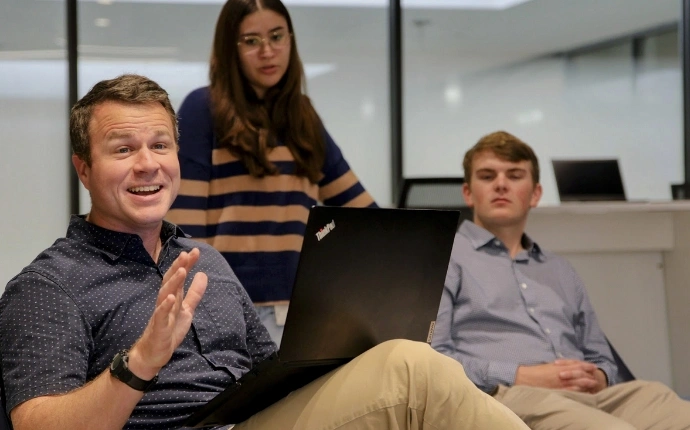
OuterBox has been building websites and digital marketing programs since 2004. Today, 300+ USA-based, in-house experts work across web design, development, SEO, paid media, analytics, CRO, content, email, and the services that shape how an eCommerce business grows.
That in-house structure matters in consulting. Our 300+ USA-based, in-house experts (a.k.a. "Boxers") can review a feed problem with paid media, a category issue with SEO, a checkout problem with CRO, a reporting problem with analytics, and an integration question with development. Your team is not left translating one specialist's recommendation for the next one.
100/100 is the OuterBox ownership standard: 100% ownership of 100% of actions, results, and behaviors. In eCommerce consulting, that shows up in the details that protect the roadmap later: the dependency list, the product-data decision, the tracking rule, the integration handoff, and the follow-through after the recommendation is made.
Since 2004
Digital Marketing Agency
300+
USA-Based In-House Experts
100/100
Ownership Standard
Boxers
Cross-Functional Team
Why Companies Choose OuterBox For eCommerce Consulting
Senior eCommerce consulting that connects the diagnosis to the team that can execute. Built for stores that need the constraint named, not another report.
OuterBox
- Store diagnosis across traffic, catalog, conversion, checkout, analytics, platform, and operations together.
- Catalog and platform depth connects category structure, product data, platform limits, and merchandising workflow.
- Channel coordination ties SEO, paid media, CRO, email, and reporting to the same revenue constraint.
- Analytics and attribution defines the events, dashboards, and revenue views leadership needs to trust the plan.
- Implementation path can move from consulting into design, development, SEO, paid media, CRO, analytics, and email.
- B2B and integration complexity plans pricing rules, accounts, quotes, ERP sync, product data, shipping, tax, and fulfillment dependencies.
- Accountability keeps the recommendation connected to the team that can execute it.
Report-Only Or Channel-Only Provider
- Reviews one channel and leaves your team to connect the rest.
- Treats the platform as a build preference instead of an operating decision.
- Optimizes channels independently, even when the blocker is outside the channel.
- Sends platform reports that do not match finance, merchandising, or channel reality.
- Hands off a document or pushes one service regardless of the diagnosis.
- Discovers operational requirements after scope, design, or development is already underway.
- Leaves your next vendor to reinterpret the strategy.

Did you know? eCommerce waste often looks like a channel problem. The source may be product data, feed quality, category structure, checkout friction, tracking, inventory logic, or a platform rule no one checked before the campaign launched. Consulting helps find the constraint before the next budget increase funds the wrong fix. Request an eCommerce consultation >
Ready To Find The Constraint Holding Back Your Store?
Bring the current store, the data you trust, the reports you do not trust, and the operational questions your team keeps circling. OuterBox will help you turn the next eCommerce decision into a plan your team can fund, execute, and own.
"*" indicates required fields
"*" indicates required fields
Other eCommerce Services from OuterBox
Related eCommerce Services To Move From Consulting Into Execution





eCommerce Consulting FAQs
What is eCommerce consulting?
eCommerce consulting is advisory work that helps your team diagnose store constraints, prioritize growth opportunities, and plan execution. It can cover catalog structure, SEO, paid media, CRO, platform choice, product data, checkout, analytics, email, integrations, B2B workflows, and roadmap sequencing.
What does an eCommerce consultant do?
An eCommerce consultant reviews how the online store works as a business system. The work may include auditing channel performance, catalog structure, product feeds, conversion paths, checkout, analytics, platform limits, integrations, and team workflows. The deliverable is usually a ranked roadmap, not a generic list of ideas.
When should we hire an eCommerce consulting agency?
Hire an eCommerce consulting agency when growth has slowed, the team disagrees on what to fix, a platform change is being considered, reporting is unclear, or channel work is not translating into profitable revenue. Consulting is especially useful before a major redesign, replatform, paid-media scale-up, or B2B commerce build.
Can OuterBox help choose an eCommerce platform?
Yes. OuterBox can compare Shopify, BigCommerce, Adobe Commerce, Magento, WooCommerce, headless commerce, and custom build paths against your catalog, checkout requirements, integrations, team skills, content workflow, budget, and growth plan.
Do you support B2B eCommerce consulting?
Yes. B2B eCommerce consulting can cover customer-specific pricing, account approvals, quote workflows, purchase orders, user roles, ERP sync, inventory visibility, tax and shipping rules, sales-team handoff, and account-based buying paths.
Can consulting cover SEO, PPC, CRO, and email together?
Yes. That is often the reason teams choose consulting. eCommerce growth usually depends on the way SEO, paid media, CRO, email, analytics, merchandising, and platform work fit together. The consulting engagement identifies which workstream should lead and which ones support it.
How is eCommerce consulting different from eCommerce marketing services?
eCommerce consulting diagnoses the constraint and builds the roadmap. eCommerce marketing services execute ongoing channel work such as SEO, paid media, email, CRO, analytics, and reporting. Some teams start with consulting and then move into execution once the plan is clear.
Can OuterBox help after the roadmap is built?
Yes. OuterBox can move from consulting into design, development, SEO, paid media, CRO, analytics, email, and maintenance when the roadmap calls for execution. Some clients use us only for advisory work. Others keep the same team involved through implementation.
How much do eCommerce consulting services cost?
Cost depends on store size, platform complexity, catalog depth, number of stakeholders, analytics needs, integration requirements, and whether the engagement is a focused audit or a broader roadmap. If your team is budgeting for a build, our eCommerce website pricing guide can help frame the variables.
What should we prepare before a consulting call?
Bring the store URL, platform, channel mix, main revenue concern, recent performance context, product-data or feed issues, analytics access questions, known integrations, and any upcoming deadlines. If your team already has a roadmap, scope, or vendor recommendation, bring that too.
Related Articles: eCommerce Consulting Services

Digital Marketing | 8 min read
Digital marketing gets more complicated for health and wellness brands every year, particularly on social media. Each platform has its own distinct policy restrictions for…

Digital Marketing | 11 min read
Senior living lead generation playbook for better senior living leads, stronger follow-up, more tours, and clearer move-in reporting.

AI, Digital Marketing | 8 min read
From OuterBox leaders, learn how AI search, earned authority, and connected marketing can educate prospects before they click and help turn search visibility into better…