
Industries We Serve With Web Development
Every industry has its own technical requirements, compliance standards, and user expectations. OuterBox builds custom websites engineered around those realities, not generic templates adapted after the fact. Our in-house development team has spent 20+ years solving industry-specific challenges for eCommerce brands, manufacturers, healthcare organizations, B2B companies, and more.
"*" indicates required fields
"*" indicates required fields






From Manufacturers to Healthcare Systems... Our Clients Are Succeeding Online
We’ve built and maintained websites across dozens of industries, each with unique technical demands. Our development team understands the integrations, security requirements, and workflows your industry requires because we’ve built them before, often hundreds of times over.
Our Proven Industry Web Development Approach
We don't build the same site twice. Each industry we work with gets a development plan built around its specific technical requirements, user behavior, and business model. Here's how we approach it across the industries we serve.

Industry web development for catalogs, carts, and merchandising velocity
Retail teams need storefronts that can handle product depth, promotion calendars, payment rules, inventory changes, and customer expectations at the same time. Strong eCommerce website design gives that work a structure shoppers can trust and internal teams can keep moving after launch. The build has to support marketing speed without creating catalog cleanup every time the team changes a collection, product badge, or offer.
- Shopify, BigCommerce, Magento, and WooCommerce each fit different catalog, merchandising, and ownership needs.
- Product templates should support variants, bundles, reviews, stock status, tax logic, shipping rules, and fulfillment handoffs.
- Search, filters, categories, and product cards need shared attribute rules so shoppers do not hit dead ends.
- Checkout paths should account for discounts, payment methods, fraud checks, subscriptions, returns, and mobile speed.
Catalog structure keeps the storefront usable when products, campaigns, and customer expectations change at retail speed across every channel.
Industry specific web development for specs, RFQs, and distributor paths
Manufacturers need websites that make technical product data easier to use and easier to maintain. Practical industrial web development connects product families, distributor needs, and sales workflows before templates, forms, and integrations are locked. The site should help buyers qualify a product while giving internal teams a realistic way to manage updates.
- ERP and PIM connections should clarify which system owns pricing, inventory, specs, lead times, and availability.
- Product pages need consistent homes for CAD files, SDS sheets, cut sheets, certifications, applications, and part numbers.
- RFQ paths should collect drawings, quantities, materials, tolerances, territories, and required delivery timing cleanly.
- Distributor portals and account views need permission rules that match channel relationships and customer-specific buying paths.
Product data becomes more valuable when engineers, procurement teams, distributors, and sales all work from the same path during research and quoting.
Web development for industries with secure access and appointment paths
Healthcare websites have to help patients, providers, administrators, and marketing teams reach the right destination without creating unnecessary risk. The development plan should account for HIPAA-aware workflows, secure forms, provider directories, scheduling paths, patient portal connections, and accessibility checks before visual design turns into templates. Location, specialty, insurance, and provider data also need consistent fields so users can compare options without calling for basic information.
Healthcare digital marketing also depends on that structure because the page experience shapes trust before a patient calls, books, or submits information. Content governance matters too: service lines, locations, physicians, accepted insurance, and patient resources need ownership rules so updates stay accurate.
Secure pathways give patients clearer access while giving internal teams a safer way to manage sensitive site content, location updates, and service-line changes over time with care.
Vertical web development for longer sales cycles and CRM handoffs
B2B and professional-services buyers often compare options over weeks or months, with several stakeholders influencing the decision. Early web development consulting helps the site support that process with proof, routing, content depth, and CRM context instead of a single generic form. The development plan should also define how service pages, case studies, resources, and forms share the same buyer record.
- Salesforce, HubSpot, and Microsoft Dynamics handoffs should pass service interest, firmographic fields, source data, and page context.
- Gated resources need clear value, consent language, follow-up rules, and ownership after the download happens.
- Service pages should help executives, technical evaluators, and finance teams find different levels of detail.
- Account-based content can support priority industries, named segments, partner pages, and sales-assisted landing paths.
Buyer context reaches sales more cleanly when the website is planned around the way complex decisions actually move from research to handoff.
Industry-focused website development for legal and financial trust journeys
Legal and financial-services sites have to build confidence quickly while respecting review, disclosure, and data-handling needs. Vertical web development for these firms should treat credibility, intake, document access, and approval workflows as core requirements rather than final-stage content tasks. The site also needs enough structure for offices, practice areas, professionals, insights, and contact paths to stay consistent.
- Attorney, advisor, office, and practice-area profiles need consistent fields, credentials, disclaimers, and update ownership.
- Conditional intake forms should qualify the request without asking for sensitive detail the firm does not need online.
- Secure document portals and upload paths need role-based access, encryption expectations, and retention decisions.
- Law firm digital marketing works better when the website already supports trust signals and high-intent local journeys.
Trust architecture helps serious prospects understand the firm, submit the right information, and move forward with less friction across regulated decision paths.
Web development for many audiences, permissions, and recurring updates
Schools, universities, associations, and nonprofits serve audiences that rarely follow one path. Students, parents, donors, members, volunteers, staff, boards, and community partners may all need different information from the same site, often during the same campaign or event cycle. The navigation has to help each audience move quickly without making the CMS impossible for a lean internal team to manage.
The platform should support event calendars, donation forms, program pages, member portals, LMS connections, document libraries, role-based editing, and accessibility review. Ongoing web development maintenance matters because these sites change constantly: deadlines move, events open, resources expire, stakeholders rotate, and teams need permissions that protect the site without slowing updates.
Content governance keeps the platform useful for every audience without forcing the organization to rebuild around each new update or recurring seasonal campaign cycle.
How OuterBox Builds for Your Industry
See how our team approaches industry-specific web development, from technical discovery and platform selection to integration testing and post-launch optimization.
Industry-focused web development that delivers results.
“Working with OuterBox has been a game-changer for our business. Their SEO expertise significantly increased our online visibility and organic traffic. We’re thrilled with the tangible results and growth in sales. Highly recommend them for anyone seeking digital marketing success!”
Platforms we optimize










Meet OuterBox
OuterBox is a full-service web development agency that builds custom websites for specific industries. Since 2004, our in-house team has delivered hundreds of projects across eCommerce, manufacturing, healthcare, B2B, and professional services. We pair every build with SEO, performance engineering, and ongoing support to make sure your site keeps working as hard as your business does.
20+ Years
Digital Marketing Agency
1000+
Successful Client Partnerships
2M+
Page #1 Google Rankings
300+
USA-Based, In-House Experts
Web Development Services
Tell us about your industry and project requirements, and we’ll follow up with a tailored proposal. Prefer to talk now? Call 1-866-647-9218 (Mon-Fri, 9-5 EST).

- 20+ Years of Industry Expertise: Deep experience building websites for specific verticals, with knowledge of the platforms and integrations each industry relies on.
- Custom Development: Every build is scoped to your industry’s technical requirements, including ERP connections, HIPAA compliance, PCI standards, and API-driven data feeds.
- In-House US Team: 250+ designers, developers, and strategists who collaborate on every project from discovery through post-launch support.
- SEO-First Architecture: Site structure built for search visibility before a single line of code is written, so your pages rank for the terms your buyers search.
Get a Custom Web Development Estimate
- Platform-Agnostic Builds: WordPress, Shopify, BigCommerce, Magento, and custom frameworks matched to your industry’s needs and your team’s capabilities.
- Performance Engineering: Every build is optimized for Core Web Vitals, mobile speed, and server response times as a standard, not an afterthought.
- Ongoing Support: Monitoring, security updates, and development sprints after launch to keep your site current as your industry evolves.
Unlock Your Business's Potential
Send us your website for a free quote and strategy session from OuterBox, tailored to drive success. Need an expert now? Call 1-866-647-9218
"*" indicates required fields
"*" indicates required fields



Industry Web Development FAQs
You’ve got questions. We’ve got answers.
Why does industry experience matter in web development?
Every industry has different technical requirements, compliance standards, and user expectations. A developer who’s built dozens of manufacturing sites already knows how ERP integrations, product configurators, and distributor portals should work. That experience saves time and avoids costly mistakes.
What industries does OuterBox specialize in?
We build websites for eCommerce and retail, manufacturing and industrial, healthcare, B2B professional services, legal, financial services, education, and nonprofits. Each vertical gets a development plan scoped to its specific needs and integrations.
Do you build on a specific platform for every industry?
No. We’re platform-agnostic and match the platform to the project. WordPress is common for lead-gen and content-heavy sites. Shopify, BigCommerce, and Magento are typical for eCommerce. Some industries need custom frameworks or headless architecture depending on their data and integration requirements.
How do you handle compliance requirements like HIPAA or PCI?
We scope compliance into the project from the start. For healthcare, that means HIPAA-compliant hosting, encrypted data handling, and secure patient portals. For eCommerce, it means PCI-compliant payment processing and secure checkout flows. We work with your legal and IT teams to confirm requirements before development begins.
Can you integrate our site with existing business systems?
Yes. We regularly connect websites to ERPs (SAP, NetSuite, Epicor), CRMs (Salesforce, HubSpot, Dynamics), PIMs, marketing automation tools, and custom APIs. Keeping your site connected to your business systems is usually the most important part of the build.
How long does an industry-specific web development project take?
Most projects run 12 to 24 weeks depending on complexity, integrations, and content migration needs. A straightforward WordPress build is on the shorter end. A custom eCommerce platform with ERP integration and product data migration takes longer. We’ll give you a detailed timeline after discovery.
Do you provide support after launch?
Yes. We offer ongoing maintenance, security monitoring, performance optimization, and development sprints for new features. Most of our clients stay with us after launch for continued SEO, CRO, and site improvements.
Is SEO included in your web development projects?
SEO is built into the architecture of every site we develop. That includes URL structure, internal linking, metadata, schema markup, and Core Web Vitals optimization. We also offer ongoing SEO services after launch to build on that foundation.
Web Development Resources & Insights
Web Development | 7 min read
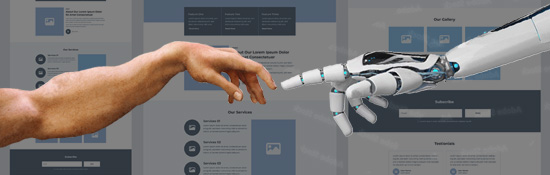
AI can spin up a functional website in minutes, but speed isn’t the same as strategy. This article breaks down where AI-powered web design tools…

Digital Marketing, Web Design, Web Development | 9 min read
Engineers are a discerning lot. They research specifications before talking to anyone, weigh all the evidence, and cringe at overt salesyness. Put differently, if the…

Digital Marketing, Web Design, Web Development | 9 min read
For a manufacturing firm, successful digital marketing hinges on the strength of your website. It’s not just whether it can attract traffic (though that’s still…