By: Jeff Hirz
If you are asking which ecommerce platform is best for SEO, the answer depends on how your store handles content, catalog structure, technical controls, and day-to-day operations. A small catalog with a lean team needs different controls than a B2B distributor with customer groups, faceted search, international storefronts, and thousands of SKUs.
The same decision often gets framed as choosing the best SEO shopping cart software, but the real question is which platform gives your team enough control to scale organic traffic.
For most stores, Shopify is the safest default. For larger catalogs and B2B complexity, BigCommerce is often the stronger SEO platform. For WordPress-first brands, WooCommerce gives the most publishing control. Adobe Commerce or Magento fits enterprise builds where custom architecture matters more than easy setup.
OuterBox has done ecommerce SEO across all of these platforms for more than 20 years. We have migrated stores, rebuilt category structures, diagnosed performance issues hidden in platform constraints, and watched platform changes ripple through client rankings. This guide distills what we have learned into a comparison that focuses on SEO fit, not generic popularity. Use it to narrow your platform shortlist before a redesign, migration, or ecommerce SEO project.
What Makes an Ecommerce Platform SEO-Friendly
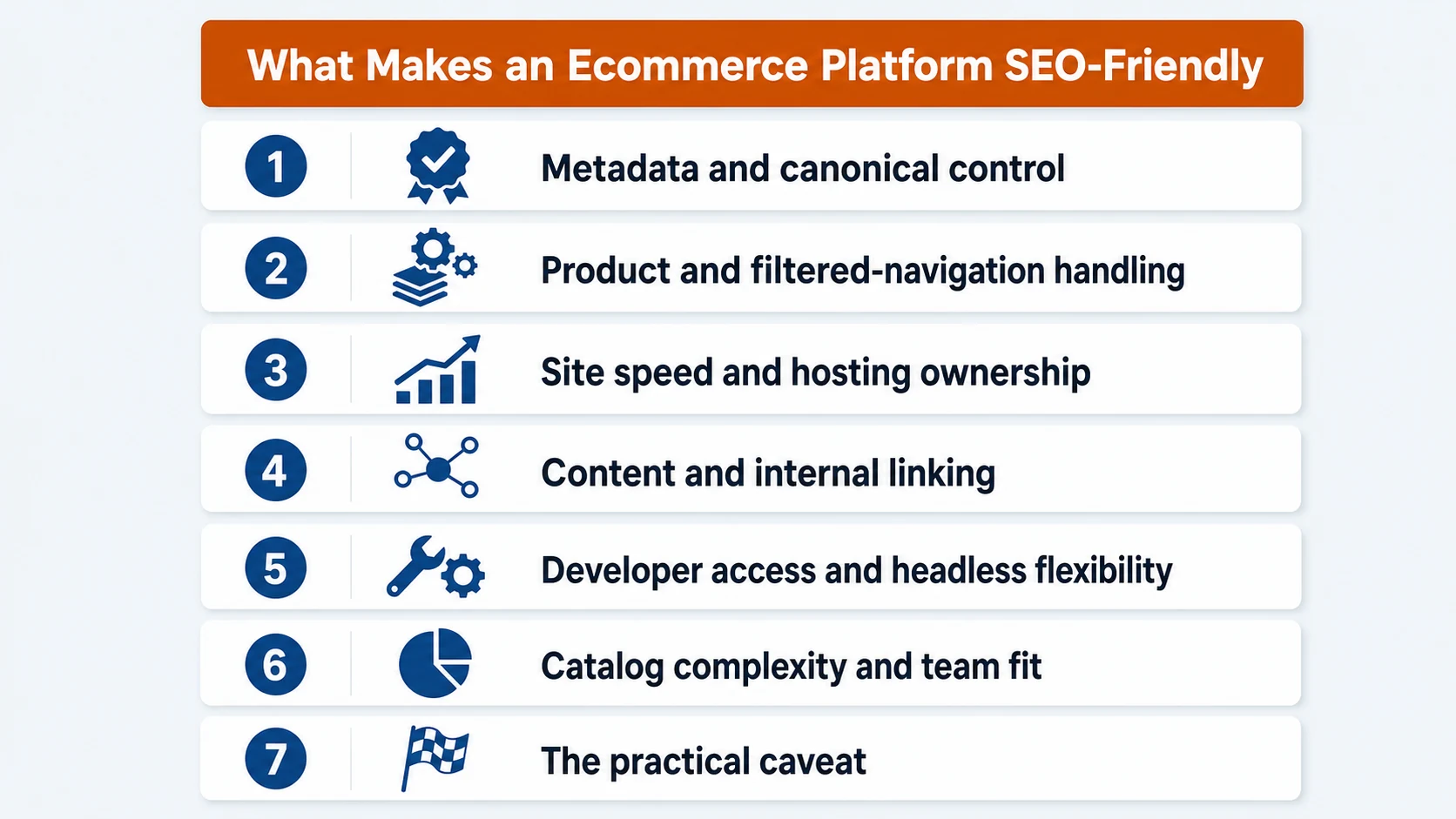
Not all platforms are equal for search. When you evaluate ecommerce platforms, focus on these seven criteria:
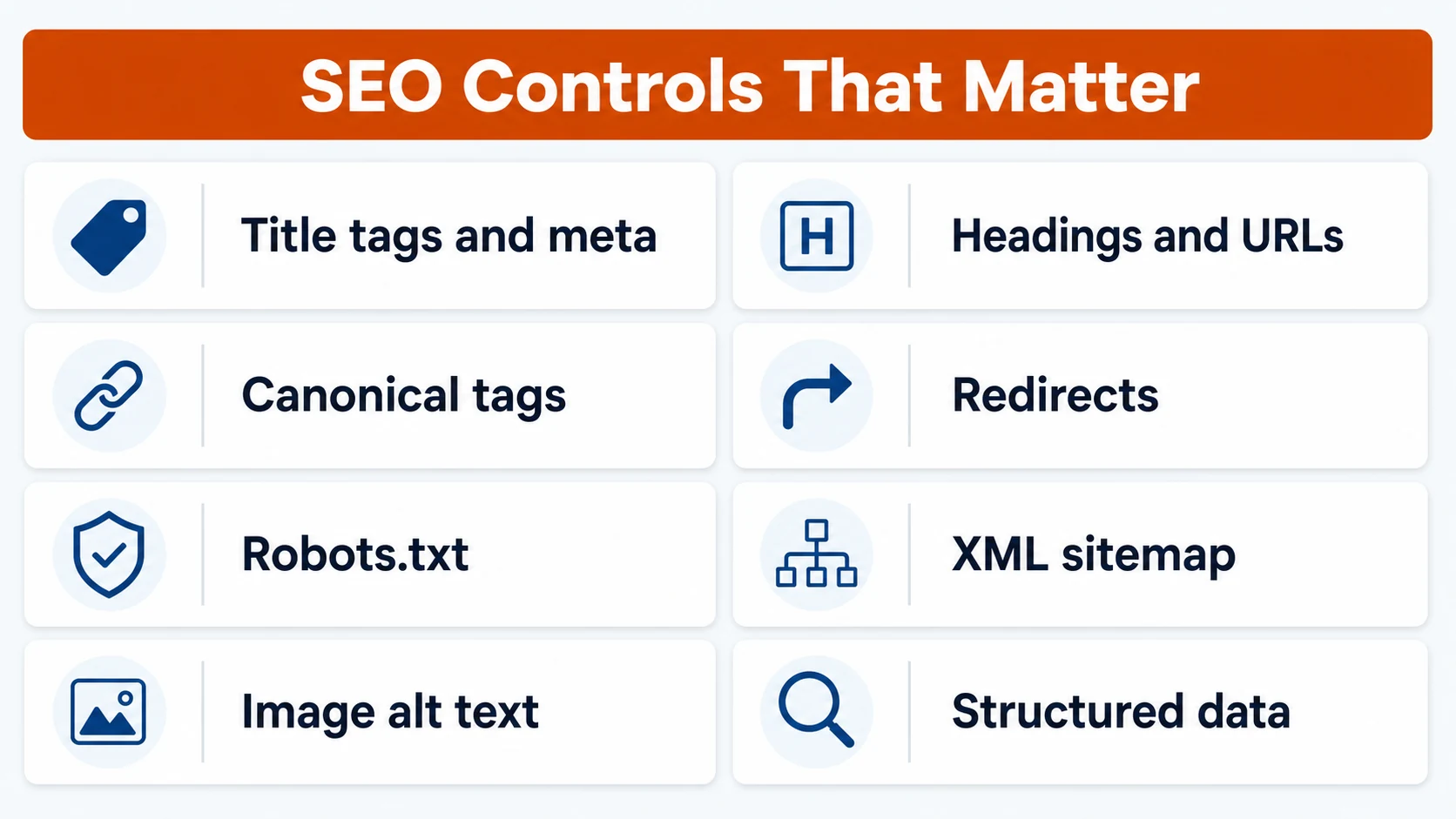
- Metadata and canonical control. Can you edit title tags, meta descriptions, headings, URLs, redirects, canonicals, robots.txt, sitemap behavior, and structured data? Control at the product, category, and template level matters more than simply storing the data somewhere.
- Product, variant, and filtered-navigation handling. How does the platform approach product variants, filtered results, pagination, tags, and faceted search? Duplicate content from filtering and poor variant management can sink organic rankings fast.
- Site speed and hosting. Does the platform own performance, or is it split between the theme, your apps, the CDN, and your developer? Site speed is a ranking factor and a conversion factor, so know who is responsible.
- Content and internal linking. Does the platform support blog posts, guides, landing pages, and internal linking between products and content? Content-driven growth depends on publishing flexibility and the ability to link between pages.
- Developer access and headless flexibility. Do you need to customize checkout, navigation, URLs, templates, or payment logic? How much API access and headless capability does the platform give you?
- Catalog complexity and team fit. Are you managing 100 products or 100,000? Are you B2C, B2B, or both? Do you need international storefronts, customer groups, or complex product rules? Choose a platform your team can actually maintain.
- The practical caveat. Every platform has a trade-off or a limit. Know what it is before you are locked in.
Quick Comparison: Best Ecommerce Platforms and Shopping Cart SEO
Use this table as a shortlist, not a universal ranking; the best SEO platform changes when catalog size, content needs, and technical control change.
| Platform | Best For | Caveat |
|---|---|---|
| Shopify | Most growing ecommerce stores that want strong SEO defaults | Advanced control may require theme work, apps, or Shopify Plus. |
| BigCommerce | Larger catalogs, B2B, and multi-storefront SEO | It can be more platform than a simple store needs. |
| WooCommerce | WordPress-first stores and content-led SEO | SEO quality depends on hosting, plugins, maintenance, and theme quality. |
| Adobe Commerce / Magento | Enterprise catalogs and custom SEO architecture | Powerful, but expensive and developer-heavy. |
| Webflow Ecommerce | Design-led stores with smaller catalogs | Not ideal for deep catalog or enterprise commerce complexity. |
| Wix | New stores that need guided setup and basic SEO controls | Easy setup does not equal deep technical SEO control. |
| Squarespace | Creative brands and simple product catalogs | Limited ecosystem and catalog depth for SEO-heavy growth. |
Best Ecommerce Platforms for SEO: Shortlist
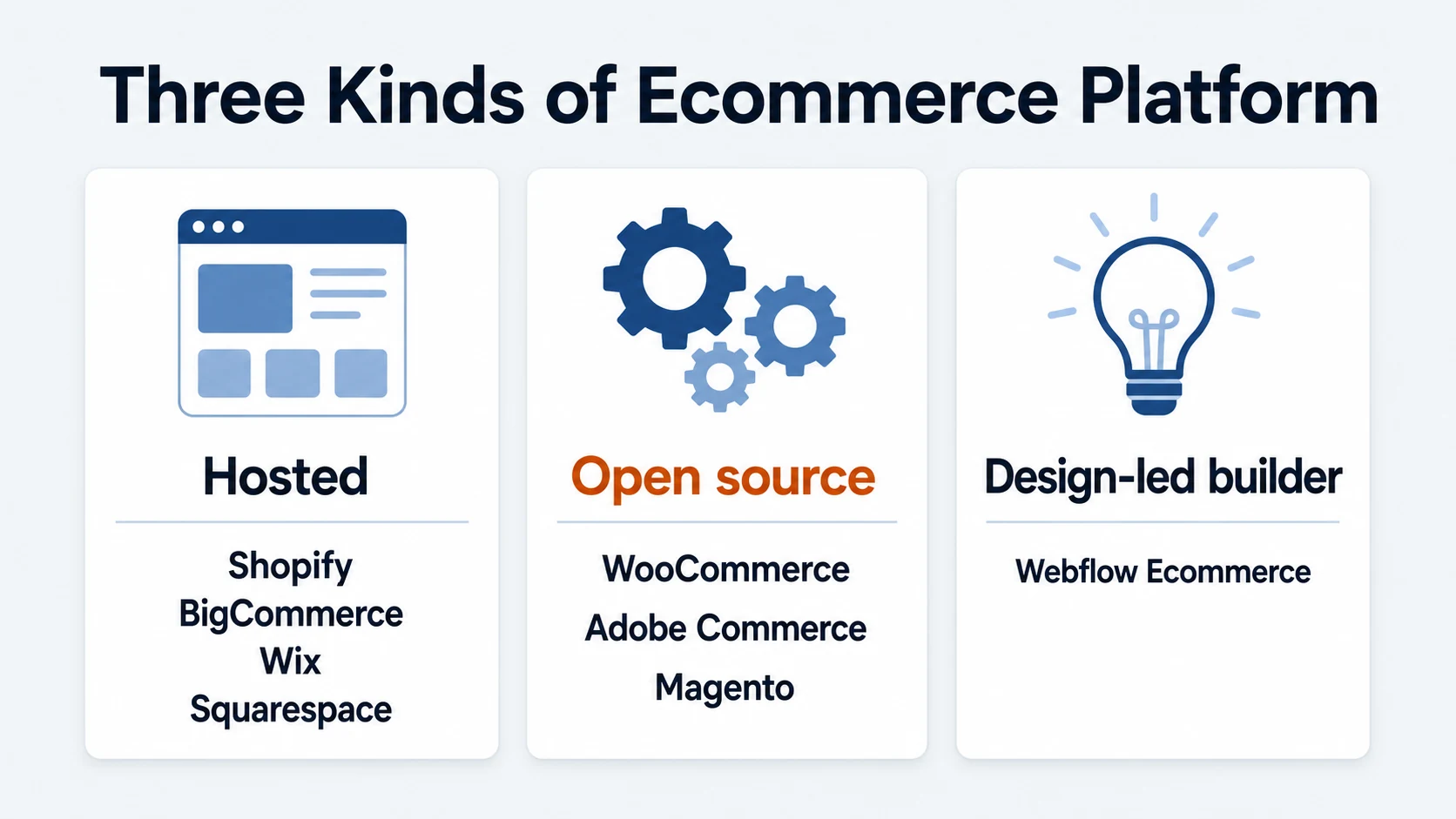
Shopify: Best for most growing ecommerce stores
Shopify is the default answer for many ecommerce brands because it combines hosted commerce, product management, themes, apps, checkout, security, and SEO basics without making the merchant own infrastructure. Shopify documents built-in canonical tags, generated sitemap and robots.txt files, editable title tags, meta descriptions, URLs, alt text, SSL, and product structured data support in themes.
For SEO, Shopify works best when the store needs a clean launch, reliable hosting, straightforward product and collection pages, and a large app ecosystem. It is also a practical choice when the internal team wants marketers to manage day-to-day content while developers handle theme, speed, and structured-data improvements.
Caveat: Shopify is not fully open-ended. Advanced faceted navigation, custom URL rules, checkout customization, and technical SEO changes can require theme development, apps, or Shopify Plus.
BigCommerce: Best for larger catalogs, B2B, and multi-storefront SEO
BigCommerce is a strong SEO fit when the catalog or selling model is more complicated than a simple direct-to-consumer store. BigCommerce publicly emphasizes customizable SEO-friendly URLs, metadata, robots.txt editing, site speed infrastructure, multi-storefront, headless, B2B, API depth, and catalog scale.
That makes it useful for brands managing large product sets, multiple storefronts, B2B customer groups, international selling, or headless content needs. The platform gives ecommerce teams more native control than many beginner builders while still avoiding the full infrastructure burden of a self-hosted platform.
Caveat: BigCommerce can be more platform than a small store needs. The SEO upside depends on how well the implementation team handles category architecture, faceted search, templates, and content.
WooCommerce: Best for WordPress-first stores and content-led SEO
WooCommerce is the strongest fit when the store is built around WordPress content, publishing, and custom control. It lets teams pair ecommerce with WordPress SEO plugins, editorial workflows, custom templates, internal links, blog content, and developer access.
WooCommerce is often a smart choice for stores where content drives demand: specialty retailers, publishers with commerce, niche brands with educational guides, and teams that already understand WordPress. It gives more ownership over structure than most hosted builders, especially when the site has good hosting and a disciplined development stack.
Caveat: WooCommerce is only as good as the build. Hosting, plugin choices, theme quality, database health, security, and maintenance can make or break SEO performance.
Adobe Commerce / Magento: Best for enterprise catalogs and custom SEO architecture
Adobe Commerce, built from the Magento platform family, fits enterprise ecommerce programs that need custom catalog logic, complex merchandising, integrations, internationalization, and deep development control. It is the most appropriate option on this list when SEO architecture has to be designed around business rules rather than platform defaults.
For the right company, that control matters. Enterprise teams can shape category structures, product data, templates, faceted navigation, structured data, feeds, and integrations around the way the business actually sells.
Caveat: Adobe Commerce and Magento are not lightweight answers. They require budget, development maturity, technical SEO oversight, and maintenance. Smaller stores usually get more SEO progress from a simpler platform and better content.
Webflow Ecommerce: Best for design-led stores with smaller catalogs
Webflow Ecommerce fits brands that care heavily about design, storytelling, landing pages, and front-end control, but do not need a huge catalog or deep enterprise commerce rules. It can work well for premium products, launches, small catalogs, and content-led brands that want more visual control than a template builder usually gives.
The SEO value is in the page-building and content experience. A team can build polished product, collection, and editorial pages without starting from a traditional ecommerce theme.
Caveat: Webflow Ecommerce is not the strongest choice for large catalogs, complex variants, marketplace operations, or heavy merchandising logic. Check catalog limits and operational needs before choosing it for SEO.
Wix: Best for new stores that need guided setup
Wix is a practical choice for new stores, founders, and small teams that need an easy site builder with ecommerce and guided SEO basics. Current public documentation and reviews describe support for XML sitemaps, robots.txt, canonical tags, structured data, URL and metadata controls, image optimization, hosting, and ecommerce selling features.
Wix is best when the priority is getting a clean small store live quickly and giving a nontechnical team enough control to manage pages, products, and basic optimization.
Caveat: Wix is easier than it is deep. If SEO success depends on large-catalog architecture, custom technical rules, or advanced ecommerce workflows, plan for platform limits before the site grows into them.
Squarespace: Best for creative brands and simple catalogs
Squarespace is strongest for design-led small businesses, creators, service brands with products, and simple catalogs. It gives teams attractive templates, integrated hosting, ecommerce basics, marketing tools, and enough SEO settings for a smaller store that is not trying to manage complex product architecture.
Squarespace can be the right answer when the product line is limited, visuals matter, and the team wants fewer moving parts. It is not trying to be a developer-controlled ecommerce framework.
Caveat: Squarespace is weaker for advanced ecommerce SEO. Large catalogs, custom technical rules, heavy app ecosystems, and complex integrations are better suited to Shopify, BigCommerce, WooCommerce, or Adobe Commerce.
How to Choose the Best Ecommerce Platform for SEO
Start with the SEO work your store will need in the next two years, not only the platform that feels easiest this week.
If you have a straightforward product catalog, need speed to launch, and want a strong app ecosystem, Shopify should be on the shortlist. If you have B2B rules, large catalogs, multiple storefronts, or headless ambitions, compare BigCommerce earlier. If your organic growth depends on editorial content and WordPress is already central to your team, WooCommerce may be a better fit than a hosted cart.
If the business has enterprise catalog rules, custom integrations, and a serious development budget, Adobe Commerce or Magento can support more complex SEO architecture. If the store is small and design-led, Webflow, Wix, or Squarespace may be enough, but do not choose them without checking catalog, URL, structured-data, speed, and content limits.
Ask these questions before choosing:
- Can we edit titles, descriptions, H1s, URLs, redirects, canonicals, robots.txt, sitemap behavior, alt text, and structured data?
- Can product, category, collection, blog, guide, and landing-page templates support unique content?
- How does the platform handle variants, filters, tags, search pages, pagination, and duplicate content?
- Who owns site speed: the platform, the theme, apps, hosting, or our developers?
- Can the platform support content hubs and internal links around product categories?
- How much developer help will we need for SEO changes?
- What happens when we need to migrate URLs, consolidate categories, or redesign templates?
The best ecommerce platform for SEO is the one that matches your catalog and your operating model. A platform with more control can still underperform if no one maintains it. A simpler hosted platform can rank well if the information architecture, templates, content, and technical cleanup are handled properly.
Frequently Asked Questions About Ecommerce Platforms and SEO
Which ecommerce platform is best for SEO?
For most growing stores, Shopify is the best default ecommerce platform for SEO because it has strong hosted infrastructure, built-in SEO controls, and a large app ecosystem. BigCommerce is often stronger for larger catalogs, B2B, and multi-storefront needs. WooCommerce is best when WordPress content control is central.
Is Shopify or BigCommerce better for SEO?
Shopify is usually easier for teams that want a clean hosted setup and broad app support. BigCommerce is often better when the store needs more native catalog, B2B, multi-storefront, and headless flexibility. Either can work if the site architecture and templates are built well.
Is WooCommerce good for SEO?
Yes, WooCommerce can be very strong for SEO because it runs on WordPress and can use the WordPress content and plugin ecosystem. The tradeoff is maintenance. Hosting, theme quality, plugin choices, speed, and security all affect SEO performance.
Is Magento still good for SEO?
Adobe Commerce and Magento can be excellent for SEO when a business needs custom architecture, large catalogs, and deep integrations. They are usually the wrong fit for a small store that wants simple management. The platform needs experienced developers and technical SEO oversight.
Are Wix and Squarespace bad for ecommerce SEO?
No. Wix and Squarespace can work for smaller stores with simple catalogs and basic SEO needs. They become harder to recommend when the site needs large-category architecture, complex filters, custom structured data, deep integrations, or heavy technical SEO control.
Should I migrate platforms just for SEO?
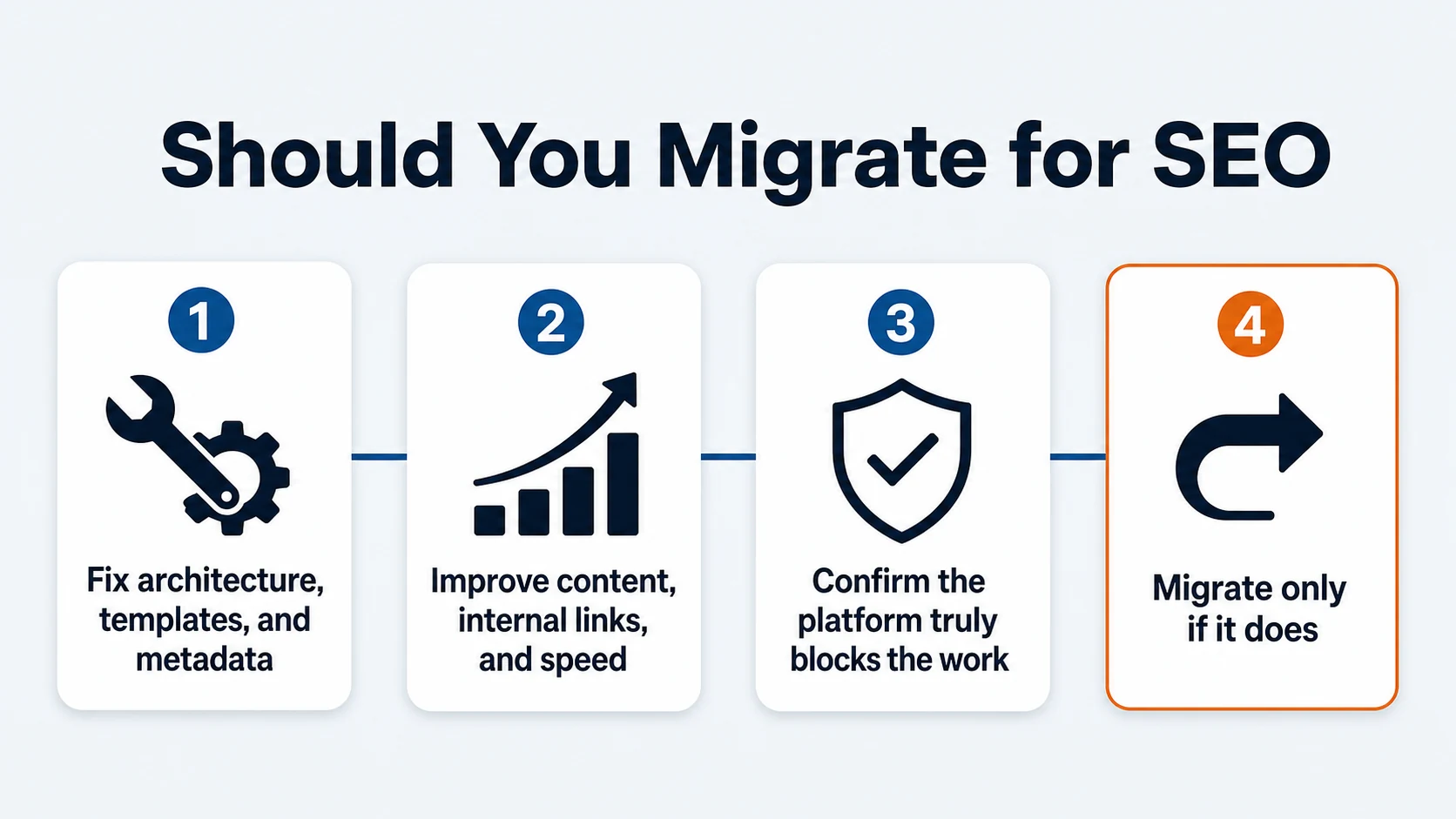
Not usually. Fix information architecture, templates, metadata, content quality, internal links, speed, and indexation first. Migrate only when the platform blocks important SEO work or when the business also needs a better ecommerce operating model.
Need Help Choosing the Best Ecommerce Platform for SEO?
Platform choice matters, but it is only one part of ecommerce SEO. The same platform can rank well or struggle depending on the migration plan, URL structure, category strategy, content, speed, schema, analytics, and cleanup after launch.
If you are planning a redesign, migration, or ecommerce SEO push, OuterBox’s ecommerce SEO team can help evaluate the platform, find the SEO risks, and prioritize what should happen before launch.