By: Jeff Hirz
The basics are easy to explain and harder to execute. Your Google Business Profile needs accurate data. Your website needs pages that match local intent. Your reviews, citations, content, links, and reporting need to tell the same story everywhere a customer checks.
That is what this Local SEO 101 guide covers: what local SEO is, how local search works, which parts matter most, and what a real local SEO program usually includes.
What Is Local Search Engine Marketing?
Local search engine marketing is the work of earning visibility when people search for a business, service, product, or provider in a specific area. It can include local SEO, paid search, map visibility, local landing pages, citations, reviews, and reporting.
The goal is not just more traffic. The goal is more qualified local demand: calls, direction requests, bookings, quote requests, store visits, form fills, and sales from people close enough or eligible enough to buy.
That is why local SEO is different from hiring the closest agency. A business in Akron, Cleveland, Houston, Rochester, or any other market does not necessarily need an SEO provider around the corner. It needs a team that understands how Google interprets local intent, service areas, profiles, location pages, reviews, and competition inside a specific market.
Google’s own local ranking guidance says local results are mainly based on relevance, distance, and prominence. In plain English: does your business match the search, is it close enough or relevant to the searcher’s location, and does the web give Google enough reason to trust that your business is known and credible?
How Local SEO Searches Differ from Standard Searches
A standard informational search might ask, “how does technical SEO work?” A local search has a place, implied place, or nearby need built into it.
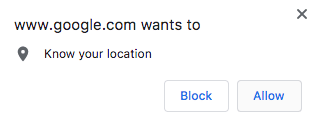
Someone in Cleveland might search “restaurants in cleveland,” “restaurants near me,” or just “restaurants.” Google can use the words in the query, the searcher’s device location, IP signals, saved places, and other context to decide that the person wants local results.
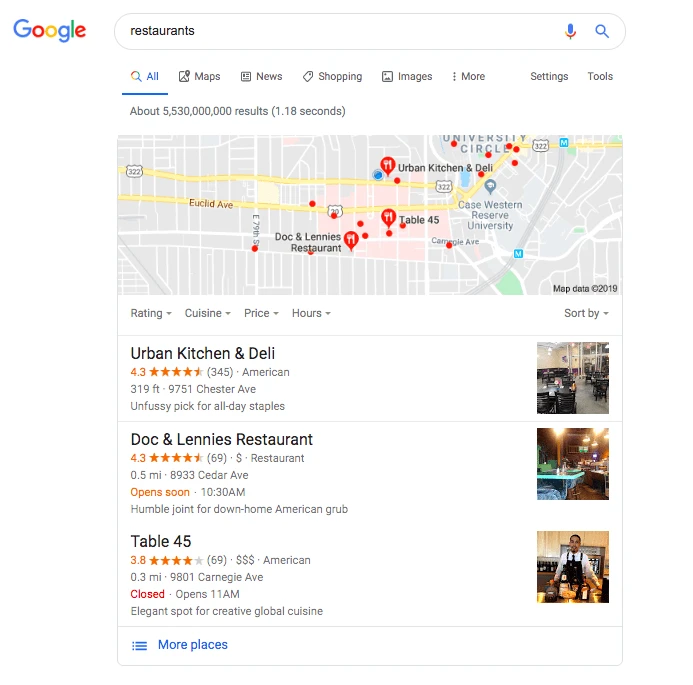
That shift changes the whole results page. Google may show a map pack, business profiles, review ratings, hours, directions, photos, website links, call buttons, menus, appointment links, and organic results in the same experience. The buyer is not just reading. They are deciding who looks open, nearby, trustworthy, and relevant enough to contact.
Local search also changes what your website needs to do. A national article can explain a topic broadly. A local page has to prove that the business serves the searcher’s area, understands the service, and gives the visitor a clean next step.
What Shows Up in Local SERPs
Local SERPs, or local search engine results pages, look different because local buyers need different information. They want to know where you are, when you are open, what you do, how other customers rate you, and whether your website confirms the same details.
The most visible local feature is often the local pack: a map with a small set of business listings. Those listings pull heavily from Google Business Profile data and other sources Google trusts. Organic results still matter, especially for service pages, location pages, industry guides, and supporting articles. But local search compresses the decision. Your profile and your website have to work together.
The old article said you do not need the best plumbing website in the world, just the best plumbing website in your city or service area. That idea still holds. Local SEO narrows the battlefield. It does not make the work easy, but it makes the right work more specific.
Google Business Profile: The Local SEO Control Center
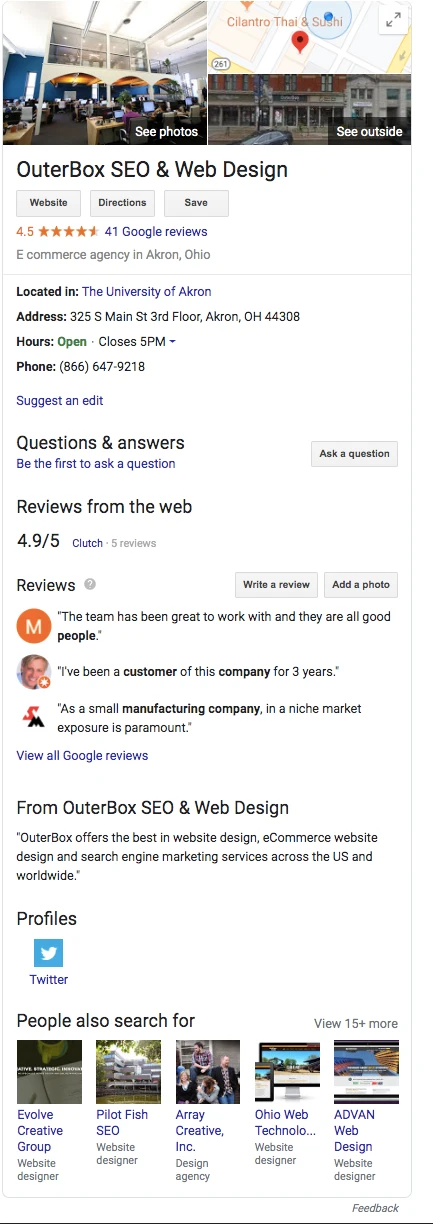
Google Business Profile is the current name for what many people still call Google My Business. It is the profile that can feed Search and Maps with your business name, address or service area, phone number, website, hours, categories, services, products, photos, videos, reviews, and updates.
Google says businesses with complete and accurate information are more likely to show up for relevant local searches. That does not mean filling out a profile guarantees rankings. It means incomplete or inconsistent information can keep Google and customers from understanding what your business does.
Start with the basics:
- Use the real-world business name people would see on signage, paperwork, and your website.
- Pick the fewest accurate categories that describe what the business is, not every service it has.
- Keep hours and special hours current.
- Use a phone number and website that represent the location or business directly.
- Add photos and videos that help customers understand the location, team, products, services, or work.
- Respond to reviews with specific, human replies.
Service-area businesses need extra care. Google allows businesses that travel to customers to create profiles, but a residential or non-customer-facing address should usually be hidden. The service area should be realistic, and the website should make the coverage area clear without creating thin doorway pages for every city on a map.
Your profile is also not a substitute for your website. A strong profile gets the customer interested. A strong website answers the questions that come next: services, locations, proof, process, pricing context, photos, FAQs, and a contact path that works on mobile.
Citations, NAP, and Local Listings
Citations are mentions of your business information across the web. They may include a link, but they do not have to. The most common citation elements are NAP: name, address, and phone number.
The original article’s citation point is still important: inconsistent business details create confusion. If one directory has an old phone number, another has an old address, and a third lists the wrong category, customers and search engines have to reconcile conflicting signals.
A citation can include more than NAP:
- Hours of operation.
- Directions or service-area notes.
- Business descriptions.
- Photos, videos, and other media.
- Payment options.
- Categories, industries, or niches.
- Reviews.
- Email addresses or appointment links.
The modern citation set is broader than classic directories. It can include Google, Bing Places, Apple Business Connect, Yelp, BBB, industry associations, chamber listings, niche marketplaces, social profiles, review platforms, and data aggregators.
For a single-location storefront, the priority is clean, consistent business data across the places customers actually use. For a multi-location business, the work becomes governance: each location needs the right name, category, address, phone, hours, page URL, and review process. For a service-area business, citations should support the real coverage area without pretending every suburb is a staffed office.
It also helps to teach the whole company what the correct business data is. Sales teams, store managers, recruiters, and field staff all create mentions over time. Local SEO gets easier when everyone uses the same source of truth.
How Google Evaluates Local Businesses
The old article used reputation, relevance, and location as the memory device. Google’s current wording is relevance, distance, and prominence. The ideas are close, but the wording matters.
Relevance is how well your business matches the search. Categories, services, website content, profile details, location pages, and reviews all help clarify what you do. A disability law firm should not look identical to a general law firm if disability cases are the real specialty.
Distance is how far the business is from the searcher or from the location named in the query. You cannot content-write your way around geography. But you can make your real locations and service areas clear so Google and customers understand where you operate.
Prominence is how well known and trusted the business appears to be. Google mentions factors like links, articles, directories, reviews, and positive ratings. That is why local SEO does not stop at the profile. Your website, citations, links, PR, reviews, and offline reputation all feed the broader picture.
Reviews deserve special attention because people use them heavily before contacting a local business. BrightLocal’s Local Consumer Review Survey reported that 97% of consumers read reviews for local businesses and that review recency, star ratings, and owner responses all shape trust. Use that as buyer behavior context, not as a simplistic ranking formula. Good reviews help people choose. Google’s prominence systems may also use review count and rating signals, but the deeper business value is trust.
What Local SEO Services Usually Include
The right local SEO service mix depends on the business model. A dental practice, HVAC company, franchise system, self-storage brand, law firm, and regional retailer do not need the exact same plan.
Most local SEO optimization services include some version of these workstreams:
- Google Business Profile optimization. Categories, services, products, photos, hours, attributes, updates, review responses, and issue cleanup.
- Citation cleanup and management. NAP consistency across the sites and data sources that matter for the business.
- Local keyword research. The real phrases buyers use, including city modifiers, “near me” behavior, service terms, and question searches.
- Website localization. Location pages, service-area pages, store pages, embedded maps where useful, local proof, team/location content, and clear calls to action.
- Technical SEO. Crawlability, indexation, page speed, mobile usability, redirects, schema, duplicate-location risks, and site architecture.
- Local content and on-page SEO. Service copy, FAQs, local guides, case studies, comparison content, and SEO copywriting that answers real buyer questions.
- Review and reputation management. Request flows, response guidance, platform monitoring, and issue routing.
- Local link building. Partnerships, sponsorships, local media, industry associations, and useful assets that earn mentions or links.
- Reporting. Profile actions, calls, direction requests, rankings, local pack visibility, organic traffic, leads, booked appointments, and revenue where tracking allows.
For many businesses, technical SEO and location-page quality are the hidden blockers. A polished profile cannot carry a slow, thin, confusing, or uncrawlable website. A strong website cannot fully overcome a profile with wrong hours, no reviews, and inconsistent categories.
That is why Local SEO services should be diagnostic first. The work should meet the business where it is, then prioritize the fixes most likely to change visibility and customer action.
How Local SEO Helps a Business Grow
Local SEO helps a business grow by reducing the gap between local demand and the business that can serve it. People already search for emergency repairs, same-day appointments, nearby stores, professional services, and local recommendations. The question is whether your business appears, looks credible, and gives them a reason to choose you.
Growth usually shows up in a few places:
- More qualified calls from people inside the service area.
- More direction requests or store visits.
- More website visits from local-intent searches.
- More form fills, appointments, quotes, or bookings.
- Better conversion from people who read reviews before contacting the business.
- More visibility across both map results and organic pages.
The measurement matters. Local SEO reporting should not stop at rankings. Use Google Business Profile performance, Google Search Console, GA4, call tracking, form tracking, CRM data, and SEO reporting to understand which searches and pages are turning into real opportunities.
How OuterBox Supports Local SEO
Local SEO gets messy because the work crosses profile data, website content, technical SEO, citations, reviews, links, reporting, and real business operations. A profile update may need a location-page rewrite. A citation cleanup may expose a phone-routing issue. A review problem may point to a service or staffing issue that marketing cannot fix alone.
OuterBox works across those pieces. Our SEO strategists, content team, developers, designers, analysts, and account managers are in-house, which matters when local SEO needs more than a checklist. The right fix might be a profile cleanup, a link building campaign, a location-page buildout, a tracking repair, or a new content plan for regional searches.
If you are trying to understand how to do local SEO for your own business, start with the basics above. If you need a partner to diagnose the work, prioritize the right fixes, and stay in the room after the first round of cleanup, OuterBox can help. Our SEO services team has supported local, regional, national, and multi-location programs since 2004, and our SEO case studies show how visibility work connects to business outcomes.
FAQ: Local SEO Basics
What is local SEO marketing?
Local SEO marketing is the work of improving how a business appears when people search for products, services, or providers in a specific area. It includes Google Business Profile optimization, local website pages, citations, reviews, links, content, technical SEO, and reporting.
What are local SEO services?
Local SEO services are the tactical parts of a local visibility program. They often include profile optimization, citation management, location-page writing, review management, local keyword research, technical SEO, local link building, LocalBusiness structured data, and reporting tied to calls, clicks, forms, directions, bookings, and sales.
How do you start local SEO?
Start by checking the basics: claim and verify the Google Business Profile, fix the business name/address/phone data, choose accurate categories, update hours, add useful photos, respond to reviews, and make sure the website has clear service and location pages. Then build citations, improve content, fix technical issues, earn local links, and measure what changes.
Is local SEO only for businesses with storefronts?
No. Local SEO also applies to service-area businesses that travel to customers, like plumbers, HVAC companies, movers, home service providers, consultants, and some medical or professional practices. The profile rules are different, especially around whether the business should show or hide its address.
Do reviews help local SEO?
Reviews help local SEO in two ways. Google says prominence can include review count and positive ratings, and customers use reviews to decide who to trust. The best review program is steady, honest, and responsive: ask real customers, avoid incentives for positive reviews, respond like a person, and treat repeated complaints as operational feedback.