
Industries We Serve With Website Design
Every industry has its own buying patterns, technical requirements, and user expectations. OuterBox builds custom websites tailored to how your specific market actually works, from complex product catalogs and fitment tools to visual lookbooks and RFQ workflows. Our in-house team of designers and developers has spent 20+ years solving the problems that generic agencies miss.
"*" indicates required fields
"*" indicates required fields



Why Work With OuterBox for Industry-Specific Web Design
We've designed and launched websites across dozens of industries, each with its own set of challenges. Our clients come to us because we understand the difference between building a site that looks good and building one that actually performs in their market. That industry knowledge shows up in every wireframe, every integration, and every launch.

Industry web design shaped by how your buyers evaluate
Industry web design starts with the way your market actually makes decisions. An automotive buyer may need year, make, and model fitment before they trust a part. A fashion shopper needs imagery, sizing cues, and a fast path to the right variant. A manufacturer may need RFQs, spec sheets, technical documents, and proof that your team understands the product.
OuterBox has built web design services around those differences for 20+ years. Discovery comes before wireframes, so the site structure reflects your sales cycle instead of forcing every industry into the same funnel.
- We map buyer questions before page templates are planned.
- We account for product complexity, sales handoffs, and content depth.
- We shape navigation around how customers compare, quote, configure, or buy.
- We keep SEO, conversion, and brand needs in the same discussion.
The result is a website that feels familiar to your buyers because it was planned around their expectations.
Custom design that follows the market instead of the theme
A template can make a site look finished while still missing the work your buyers need it to do. Web design by industry has to account for proof modules, quote paths, resource hubs, product category layouts, service pages, and forms that match how the market evaluates options.
Our custom website design process ties design decisions to the buying path. That may mean a technical resource center for industrial buyers, richer merchandising blocks for eCommerce, comparison content for B2B teams, or guided forms for service categories with longer sales cycles.
- Page templates are planned around the content your team will maintain.
- Component libraries keep recurring proof points consistent across the site.
- Product and service layouts can support different levels of technical detail.
- Conversion paths are designed for the next real step, not a generic button.
Good custom design gives your market enough context to move forward without making your internal team fight the CMS.
One in-house team from strategy through launch
Industry website design breaks down when strategy, design, development, SEO, copy, analytics, and QA are handled in separate silos. Details get lost. Technical requirements show up late. The launch plan becomes a scramble.
OuterBox keeps the work with one USA-based in-house team of 250+ experts. Your strategists, designers, developers, SEO specialists, copywriters, analysts, and project managers work from the same plan, with shared documentation and clear ownership.
- Strategy defines the buyer path before visual design starts.
- UX and design translate that path into page systems and components.
- Development checks platform, integration, and performance requirements early.
- SEO and content teams protect search visibility during structure decisions.
- QA verifies templates, forms, tracking, redirects, and launch details.
That structure reduces handoff gaps and gives your team one coordinated partner instead of a chain of vendors.
Platform planning around workflow, catalog, and ownership
The right platform depends on how your business sells, manages content, updates products, and connects back-office systems. WordPress, Shopify, BigCommerce, Magento, WooCommerce, NopCommerce, and custom builds can all be valid choices when the decision starts with operations rather than agency preference.
Our platform planning looks at editorial workflow, catalog depth, product data, integration needs, merchandising control, hosted commerce requirements, and long-term ownership. A brand with a focused DTC catalog may need a different setup than a distributor with account-specific pricing and thousands of SKUs.
Shopify website design is one common path, but the principle is broader: the platform should support the way your team works after launch.
- Content teams need editing workflows they can manage.
- Commerce teams need catalog and checkout rules that match operations.
- Marketing teams need clean tracking, landing pages, and campaign flexibility.
- Developers need a codebase and integration layer that can be maintained.
Platform choice should make the site easier to run, not just easier to sell.
Catalog architecture for SKUs, specs, fitment, and RFQs
Complex catalogs need more than a product grid. Buyers may need YMM fitment, product attributes, filters, spec sheets, configurable products, quote carts, comparison paths, account-specific visibility, and clear rules for large SKU sets.
That work belongs in the architecture, not as a late add-on. OuterBox plans catalog structure around the data buyers use to narrow options and the workflows your team uses to manage products.
- Fitment and compatibility rules help shoppers find the right part or model.
- Filters should reflect real product attributes, not just broad categories.
- Spec sheets, downloads, and technical content need consistent placement.
- Quote paths can support B2B purchases that do not fit standard checkout.
- Configurable products need clear steps, validation, and pricing logic.
Our B2B eCommerce web design work connects product data, buying workflows, and site structure so complex catalogs feel usable instead of overwhelming.
Search architecture planned before design turns into code
Industry-specific web design should not treat SEO as cleanup after launch. URL structure, keyword mapping, page templates, metadata, schema, internal linking, Core Web Vitals, faceted navigation, and migration rules all shape how the site performs in search.
OuterBox plans those decisions before design turns into code. That means category, service, product, and resource templates can support the right terms, structured data, internal links, and crawl paths from the beginning.
Technical SEO also protects the parts users do not see but search engines depend on: canonicals, redirects, indexation rules, mobile rendering, JavaScript behavior, and performance signals.
- Keyword targets guide page hierarchy and template needs.
- Faceted navigation gets rules before it creates thin URL sprawl.
- Metadata and schema fields are built into repeatable page systems.
- Migration plans protect traffic when URLs, content, or templates change.
SEO works better when the site is built to support it, not patched after launch.
Integrations that keep the website connected to operations
Your website has to work with the systems that already run the business. Salesforce, HubSpot, NetSuite, SAP, ERPs, CRMs, PIMs, marketing automation platforms, inventory systems, pricing tools, and custom APIs all affect what the site can show, collect, and hand off.
OuterBox plans integrations as part of web development services, not as a side task after design approval. We define data ownership, field mapping, lead routing, product feeds, inventory logic, pricing rules, form behavior, and error handling before launch.
- CRM connections should route leads with the context sales teams need.
- ERP and inventory feeds need rules for availability, pricing, and product data.
- PIM connections should keep attributes, images, and documentation consistent.
- Marketing automation needs clean events, forms, segments, and consent logic.
- Custom APIs need security, testing, fallback behavior, and documentation.
The integration layer keeps the website connected to operations, so your team is not stuck reconciling systems by hand.
Post-launch programs that keep the site aligned with the market
After launch, the market keeps moving. Product lines change, competitors adjust, campaigns expose new friction, and buyer questions shift as your team learns more. Industry sites need ongoing review because the first version of the site cannot answer every future change.
OuterBox can connect the build to ongoing digital marketing services across SEO, CRO, content, paid search, paid social, analytics, and reporting. The same context that shaped the site can inform the next roadmap.
- SEO reviews can expand pages around new demand and protect existing rankings.
- CRO testing can improve forms, product paths, navigation, and checkout steps.
- Content can support new categories, buyer questions, seasonal needs, and product changes.
- Paid campaigns can test messages and landing pages that feed future site improvements.
- Analytics can show where users stall, convert, or need a better path.
Industry websites keep getting sharper after launch when someone is still watching what buyers do next.
Industry-Specific Web Design That Drives Results
See how OuterBox approaches web design with deep industry expertise, building sites tailored to the specific needs and audiences of each vertical. This video shows the strategic design process that turns industry knowledge into high-converting digital experiences. For industry-focused companies, this means a web design partner who understands your market before touching a wireframe.
How OuterBox builds industry-specific websites that convert visitors into leads and customers
Platforms we optimize










Your Industry-Specific Web Design Partner
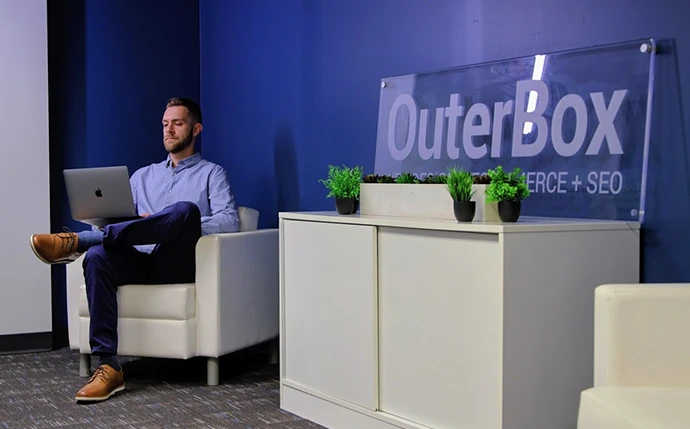
We're a full-service web design and digital marketing agency that builds websites around how your industry actually works. Since 2004, we've launched sites for automotive, fashion, manufacturing, industrial, B2B, and eCommerce companies, pairing custom design with SEO and marketing that drive measurable growth. Our 250+ in-house designers, developers, and strategists work together from discovery through launch and beyond.
Website Design & Development
Get a Custom Web Design Estimate for Your Industry
Tell us about your project and industry, and we’ll follow up with a tailored proposal. Prefer to talk now? Call 1-866-647-9218 (Mon-Fri, 9-5 EST).

Auto parts eCommerce demands more than a standard product grid. We build YMM fitment search tools, parts lookup functionality, and catalog structures that handle tens of thousands of SKUs without slowing down. Our automotive sites are built for the aftermarket buyer who needs to find the right part fast and trust that it fits.
Automotive Web Design
Fashion eCommerce is visual-first. We design sites with lookbook-style layouts, size and fit guides, quick-view functionality, and product photography that does the selling. Our fashion builds run on Shopify and BigCommerce, with the speed and mobile experience that apparel shoppers expect.
20+ Years
Digital Marketing Agency
1000+
Successful Client Partnerships
2M+
Page #1 Google Rankings
250+
USA-Based, In-House Experts

Did you know UX services enhance user satisfaction by improving usability, accessibility, and interaction, leading to increased customer loyalty? Learn more >
Unlock Your Business’s Potential
Send us your website for a free quote and strategy session from OuterBox, tailored to drive success.
Need an expert now? Call 1-866-647-9218
"*" indicates required fields
"*" indicates required fields


Industry Web Design FAQs
You’ve got questions. We’ve got answers.

Why does industry experience matter in web design?
Every industry has different user expectations, catalog structures, and conversion patterns. A site built for auto parts buyers needs YMM fitment tools and large catalog support. A fashion site needs visual storytelling and size guides. Generic design misses these requirements, and that costs you conversions.
What industries does OuterBox specialize in?
We have deep experience in automotive, fashion and apparel, manufacturing, industrial, B2B, and eCommerce. We’ve also built sites for healthcare, SaaS, professional services, and several other verticals over our 20+ year history.
Which platforms do you build on?
We work with WordPress, Shopify, BigCommerce, Magento, WooCommerce, and NopCommerce. We’ll recommend the platform that best fits your industry, catalog size, and integration requirements.
Can you handle complex product catalogs?
Yes. We’ve built catalog systems with tens of thousands of SKUs, YMM fitment data, configurable products, spec sheet libraries, and PIM integrations. Large catalog management is one of our core strengths.
Do you build SEO into industry websites?
SEO is part of every project from day one. We plan site architecture, URL structure, metadata, schema markup, and internal linking around your industry’s keyword targets before design starts.
How long does a typical project take?
Most projects take 12 to 20 weeks from discovery through launch. Complex builds with large catalogs, ERP integrations, or content migrations can take longer. We’ll give you a detailed timeline after the discovery phase.
Do you offer marketing services after the site launches?
Yes. We run ongoing SEO, CRO, content marketing, paid search, and paid social programs. Post-launch optimization is where most of our clients see the biggest returns on their web design investment.
Can you integrate with our existing business systems?
Yes. We integrate with ERPs (NetSuite, SAP, custom systems), CRMs (Salesforce, HubSpot, Dynamics), PIMs, marketing automation platforms, and other third-party tools. We’ll map out integrations during discovery.
Web Design Resources & Insights

Digital Marketing, Web Design, Web Development | 9 min read
Engineers are a discerning lot. They research specifications before talking to anyone, weigh all the evidence, and cringe at overt salesyness. Put differently, if the…

Digital Marketing, Web Design, Web Development | 9 min read
For a manufacturing firm, successful digital marketing hinges on the strength of your website. It’s not just whether it can attract traffic (though that’s still…

Web Design | 5 min read
Just like the latest technology advancements, website design is constantly evolving. What was cutting edge just a few years ago is quickly outdated because of…