
Web Design Services Built for Search, Speed, and Sales
OuterBox builds custom websites for eCommerce brands, B2B companies and manufacturers that cannot afford to lose rankings in a relaunch. Our website design services cover the CMS build, the CRM integrations and the technical SEO.
"*" indicates required fields
"*" indicates required fields






Website Design and Development Services Planned as One Project
Plan design and development apart and you risk layouts that cannot be built and URLs that move without redirects. We plan them as one project: search visibility, conversions, marketing integrations, publishing.
You review page structure in wireframes before anyone builds it. Designers turn those wireframes into reusable components, and developers connect the site to your CRM, ERP and analytics.
Before launch we check the redirect map, crawlability, structured data and internal links against the pages that already earn traffic. Post-launch support can include CMS updates, security patches and CRO testing.
What Our Web Design Services Cover
A website project runs on eleven workstreams. We agree which are in scope and who handles the rest. UX, front-end and back-end development, CMS, SEO, CRO, content, integrations, QA and post-launch support belong in the same scope as the design.
When Custom Web Design Services Beat a Theme Build
With a theme you design around what the template already allows. Custom web design builds the visual system, the component library and the page structure around your buying path. We start from your brand rules and the content you actually publish.
- Brand rules for logo, color, typography and voice hold at the component level.
- Page templates fit what you publish: service pages, product lines, resources, case studies.
- Clickable wireframes validate the user flows before pixel design starts.
- A documented design system lets your team publish without breaking brand consistency.
- We tie each design decision to a named outcome you can measure after launch.
Your team gets reusable components, page templates and a documented design system for future publishing.
UX Strategy and Wireframing Before Any Pixel Design
Nielsen Norman Group’s research puts the average page-exit window at 10 to 20 seconds. A buyer shouldn’t have to scroll to find what they came for, so we decide per template what that is.
- Buyer research and segmentation set the layout around their questions.
- Information architecture follows buyer intent, so prospects reach the right page in fewer steps.
- Clickable prototypes test flow, copy and CTA placement before a production asset exists.
- We choose content and calls to action for researchers and for buyers ready to contact you.
- WCAG 2.1 AA accessibility is planned during wireframing, while layouts can still change.
Conversion rate optimization consulting then tests those layout decisions against real visitor behavior.
Front-end Development That Holds Up on Real Devices
Slow templates put the mobile visits you already paid for at risk. Front-end development turns the design into HTML, CSS and JavaScript that load fast on a mid-range Android phone and scale cleanly to a 4K desktop. eCommerce web design is where those patterns meet real shopping traffic.
- Semantic HTML gives screen readers, crawlers and future developers something they can parse.
- Component-scoped styles and design tokens keep CSS maintainable as the site grows.
- We load heavy JavaScript only on the pages that need it.
- We test responsive breakpoints on the devices your analytics show; StatCounter’s March 2026 data puts mobile at 55.94% of global web traffic.
- Tabs, accordions, filters and mega-menus work for keyboard navigation and touch targets from the first build.
We measure Core Web Vitals on the same phones and connection speeds your buyers use.
Back-end Development Sized for the Traffic You Expect
We test the back-end at the peak you expect, before launch. We size the servers, the caching and the database for a Black Friday spike, a product-launch email or a link from a major publication. Web development maintenance keeps the stack patched and monitored afterward.
- The back-end runs the queries, logic and API calls behind every page.
- The database schema fits your content model: catalogs, resource libraries, accounts, subscription tiers.
- Caching keeps dynamic pages fast and fresh where it matters: inventory, pricing, personalization.
- We document and version API endpoints for your CRM, ERP and marketing integrations.
- Hardening against SQL injection, XSS and credential stuffing happens during the build.
Your team gets documented endpoints, a monitored stack and a schema built for your catalog.
CMS Implementation Your Marketing Team Can Actually Use
We match the CMS to the pages your team edits: pricing, resources, service copy. We recommend one after looking at what your team publishes, how often, and who approves it. B2B website design is where platform choice meets a complex content model.
- WordPress builds ship with custom theme development, plugin governance and workflows for non-technical editors.
- Shopify, BigCommerce and Magento implementations use platform-native commerce features where that matters more than design flexibility.
- Drupal handles complex permissions, multi-site architecture and regulatory compliance without bolted-on fragility.
- Headless stacks such as Contentful, Sanity and Strapi syndicate content across web, apps and partner channels.
- Training and documentation are built around your workflow, so editors keep publishing through staff turnover.
Your editors ship normal updates without a developer.
Core Web Vitals and On-Page SEO Built In From the Start
Leave SEO until after launch and you risk reworking templates you already approved. Crawlability, page experience, internal linking and structured data are decided in the build. Our technical SEO team continues that work after launch.
- Core Web Vitals meet Google’s documented thresholds on every template before launch: LCP under 2.5 seconds, INP under 200 milliseconds, CLS below 0.1.
- Semantic HTML, heading hierarchy and internal linking live in the templates.
- JSON-LD schema for Organization, Product, Service, FAQ and Breadcrumb deploys at template level, so pages qualify for rich results.
- Canonical tags and redirect maps get built before launch, well ahead of Google noticing a 404.
- Indexation controls and a scoped XML sitemap point crawl budget at the URLs that produce pipeline.
We check indexation, rankings and crawl errors in the weeks after launch.
Conversion Rate Optimization Decided During Wireframing
Conversion work starts in the wireframes, before the design is approved. Designers and CRO specialists set CTAs, form length, trust signals and hierarchy together. CRO runs the tests that follow against real visitor behavior.
- Primary CTAs land after proof, phrased as the outcome the visitor wants.
- Form field count matches lead value: short at top of funnel, deeper for demo and sales requests.
- Client logos, review stars, security badges and certifications appear where skepticism surfaces.
- We review checkout steps for obstacles to completing a purchase. Baymard Institute’s 50-study average puts online cart abandonment at 70.22%.
- We roll a winning test out across the site as a repeatable pattern.
You get the test plan, the results and the patterns worth reusing.
Copy Written for the Rankings and the Reader
Filler copy leaves your marketing team with a writing job after launch. Every template gets real copy before launch, written from the keyword research and the wireframes at the same time. Our SEO team uses keyword research to plan the topics each page covers.
- We use keyword research and the buyer journey to plan each page’s copy.
- The headline answers the visitor’s question on the first line; a longstanding Nielsen Norman Group finding holds that users read at most 28% of the words on an average visit (20% is more likely).
- Case studies, testimonials and specific client outcomes read from the buyer’s angle.
- Documented voice guidelines keep the site consistent through staff turnover.
- Readability, scannability and structural SEO get checked before anything goes live.
Your team can reuse the documented voice guidelines when it writes new pages later.
Integrations That Connect the Site to the Rest of the Business
Without a CRM connection, you may have to enter leads by hand. Your site writes to your CRM, reads from inventory, triggers marketing automation and feeds analytics. Our AI development services team builds custom API logic when off-the-shelf connectors do not meet the integration requirements.
- Salesforce, HubSpot and Microsoft Dynamics sync submissions, lead scoring and engagement history both ways.
- Marketing automation triggers the right nurture sequence because lead behavior flows in at the page level.
- Stripe, Recurly and PayPal integrations include documented error handling for failed transactions.
- ERP, inventory and order management keep pricing and availability current without a daily manual export.
- Documented, version-controlled endpoints mean a future integration or replatform builds against a known contract.
We test each connection with real records before launch.
QA and Compliance Before the Site Goes Public
We test the paths your customers take before release. Our web development team tests on the browsers, devices and screen readers your audience uses, and reviews requirements for the regions you serve.
- The testing matrix comes from your live analytics rather than a generic list of popular devices.
- Accessibility clears WCAG 2.1 AA for contrast, keyboard navigation, screen-reader compatibility and alt text; WebAIM’s 2026 Million report found 95.9% of home pages have detectable WCAG failures.
- Load testing happens before launch, against the traffic you project.
- SSL, header hardening and authentication flows get verified before the site is exposed publicly.
- We use a go-live checklist and test the rollback plan before launch.
We review the QA findings with your team before launch.
Support and Growth Work After the Site Launches
Without agreed support, your team could be left maintaining the site. Post-launch support can include CMS updates, security patches and content iteration. Analytics shows which changes are moving revenue.
- We keep the CMS, plugins and dependencies current through the agreed maintenance work.
- Analytics review finds the pages losing traffic and the terms losing position.
- The content calendar is built from search intent and your business priorities.
- CRO tests concentrate on the pages that carry the most revenue.
- OuterBox has 20+ years in business. The roadmap tracks your commercial priorities.
That growth work adds analytics review, CRO testing and content expansion.
Recent Client Results
Web Design Results From Three Real Businesses
Each of these businesses came to us with a different site problem. The figures are historical results from each client’s combined engagement rather than forecasts for a future project.
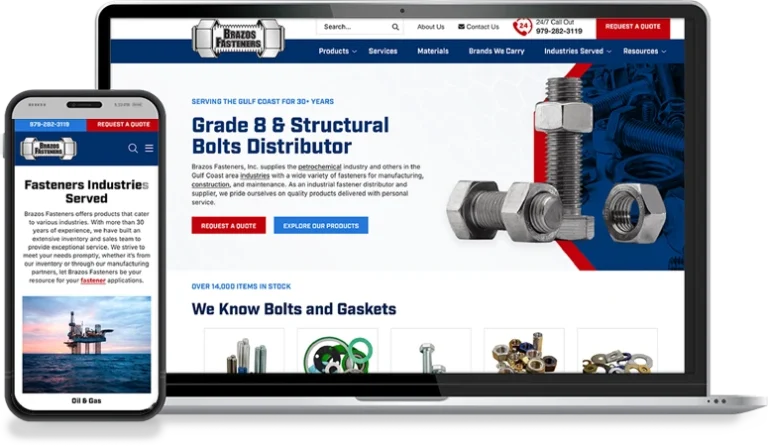
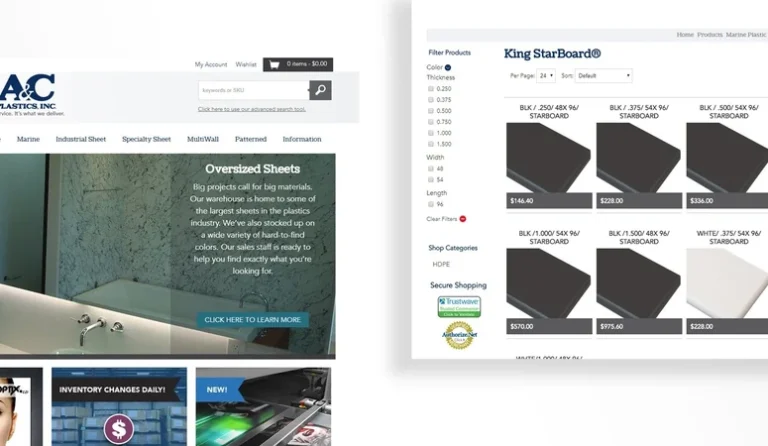

See how this work has played out for the businesses we've partnered with.
See Our Web Design ResultsWhat Effective Website Design Services Need to Get Right
-
A clear path to the answer. A visitor should reach the proof, product, form or checkout step they came for without searching.
-
Crawlable, fast templates. Search visibility needs clean URLs, schema, internal links, indexation rules and Core Web Vitals page speed.
-
Mobile-first experience. Google indexes and ranks the mobile version of your content, so every template gets designed and tested at phone width first.
-
An editor-friendly CMS. Reusable components, structured fields and page templates keep publishing fast without letting the design drift.
-
Sales and marketing instrumentation. Forms, analytics, call tracking, CRM handoffs and conversion events show which pages create qualified demand.
OuterBox Web Design Process
How Web Design & Development Services Bring a Site to Life
Platform, integrations and page structure get decided with you before design starts.
Discovery & Strategy
Discovery covers your business model, audience, search demand, integrations and launch risks.
Design
Wireframes, visual concepts and reusable components, reviewed with your team in stages.
Build
Front-end, back-end, CMS, SEO, integrations, accessibility and analytics built against the approved plan.
Launch & Growth
QA, redirects, analytics validation, then post-launch SEO, CRO and maintenance.
See How We Build High-Performing Websites
One in-house team works on the project from the start and stays on SEO, CRO, content and maintenance after the site goes live. Post-launch work is scoped in the agreement alongside the build.
Our Personalized Approach to Building High-Performing Websites

“OuterBox has brought tremendous value to our business. The combination of the website, search marketing and eCommerce capabilities has changed who we are.” – Fanuc World
Get a Free Website Design Estimate
Get a Free Website Design Estimate
Tell us about your goals, timeline, and must-have features. We’ll follow up within 24 hours (Mon–Fri). Prefer to talk now? Call 1-866-647-9218.
Services
"*" indicates required fields
From Start-Ups to Fortune 500 Companies Our Clients Are Succeeding Online













Your Web Design and Development Partner
OuterBox is a website design company and full-service digital marketing agency founded in 2004. The strategy, design, development, SEO, CRO, content and analytics all come from the same in-house team.
URL changes get reviewed with SEO specialists, and the CMS is chosen around your team's publishing needs. We check page speed on the landing pages your paid campaigns use.
Before the build starts, we review these decisions with you. OuterBox's record includes 2M+ page-one Google rankings and a 4.8/5 average rating from 867 reviews.
20+ Years
Digital Marketing Agency
1000+
Successful Client Partnerships
2M+
Page #1 Google Rankings
300+
USA-Based, In-House Experts
Why Choose OuterBox as Your Web Design Company
What changes when web design, SEO, CRO and CMS come from one accountable team.

- Strategy: Site plan from buyer behavior, search demand, conversion paths, platform fit and internal workflow.
- Team: Designers, developers, SEOs, CRO specialists, analysts, content strategists and project managers on one plan.
- SEO: Crawlability, redirects, metadata, schema, internal links, Core Web Vitals and launch checks, built in.
- CMS: Editor workflows, structured fields, reusable components and documentation shaped around how your team publishes.
- eCommerce: Product discovery, checkout, catalog structure, platform constraints, integrations and CRO planned together.
- Launch: QA, redirect checks, analytics validation, form testing, accessibility review and rollback planning before go-live.
- Growth: Post-launch SEO, CRO, analytics, content, paid media and maintenance with the same team.
Typical design-only provider
- Strategy: Visual direction first, business requirements often after approval.
- Team: A smaller creative or freelance team may need separate SEO, content and analytics vendors.
- SEO: May be addressed after launch, when rankings can already be affected.
- CMS: Theme defaults and builder freedom can drift after launch.
- eCommerce: Storefront visuals may ship ahead of merchandising, SEO and back-office systems.
- Launch: Checklists often centered on visual review and browser testing.
- Growth: Handoff may leave your team to coordinate the next phase.
Get an Estimate for Website Design and Development Services
Tell us what your current site needs to solve. That may be more qualified leads, a better eCommerce experience, a cleaner CMS, stronger SEO, faster performance, a safer migration, or a full brand and UX rebuild. We will review your goals, ask the right scoping questions, and recommend the web design services path that fits your business, timeline, platform, and budget. Prefer to talk now? Call 1-866-647-9218 between 9 and 5 EST. Sound good? Let's get started by reviewing your website and what the new site needs to accomplish.
"*" indicates required fields
"*" indicates required fields
Other Web Design Paths from OuterBox
Related Services That Support Your Web Design Project



Web Design Services FAQs

What is included in web design services?
Website design services include discovery, sitemap planning, UX strategy, wireframes, visual design, front-end development, CMS setup and content support. SEO foundations, analytics setup, QA, launch support and team training belong in the same project, with the scope settled before launch.
Complex projects add eCommerce work, CRM or ERP integrations, migration planning, custom features, accessibility work and post-launch support on top of that.
How much do web design services cost?
Many OuterBox website projects fall between $10,000 and $50,000, and larger custom builds or complex eCommerce and integration projects can exceed $100,000. Cost follows scope: page count, content needs, content management system choice, integrations, eCommerce requirements, migration risk, custom functionality and timeline.
Two sites with the same page count can land far apart, which is why the number comes after a scoping conversation.
How long does it take to design and build a website?
Many projects take 10 to 20 weeks from discovery through launch, and focused WordPress or lead-generation sites may move faster. Large eCommerce, corporate, or integration-heavy projects usually need more time for requirements, design review, data migration, QA, and launch planning. The schedule also depends on when your team supplies content and approves designs.
Scoping names the content and approval assumptions before work starts.
Does web design include SEO?
It should. Our SEO team reviews sitemap structure, template design, URL rules, internal links, metadata, schema, page speed, content hierarchy, redirects and launch validation. We review these during the build so changes can be made before the site goes live.
Our SEO team joins the first discovery session and stays on the project through launch validation.
Which platforms does OuterBox work with?
OuterBox builds on WordPress, Shopify, BigCommerce, Magento, WooCommerce, NopCommerce and custom development paths. The right platform depends on your content workflow, catalog complexity, integration needs, internal team, budget and long-term ownership goals, which is why the recommendation comes after discovery.
We assess the platforms against your publishing workflow, catalog size and required integrations.
Can you redesign our current website without losing rankings?
A redesign can hold its rankings, and the work that protects them happens before launch. That work starts with a URL inventory and a redirect map checked against the pages that actually earn traffic. Metadata and structured data get rebuilt on the new templates, alongside internal links, analytics validation and Search Console checks.
We watch indexation and organic sessions through the transition and after the switch.
Will our team be able to manage the site after launch?
Yes. A CMS setup built for your team gives editors reusable components, structured fields, documentation and training, so normal updates ship without a developer. We build layout rules, brand styles and SEO fields into the templates and train your editors to use them.
Documentation of the accounts, environments and publishing workflows belongs in the handover, and it’s worth asking for up front.
What are custom website design services?
Custom website design services build the page structure, visual system and templates around how your buyers evaluate you. You get a component library your editors can publish with, templates that match the content you have, and a site structure planned for search.
A theme costs less when your content fits inside one. We recommend a custom build when your page structure, product story or buying path needs templates a theme doesn’t have.
Do you support websites after launch?
Yes, post-launch support can include maintenance, SEO, CRO, analytics, content, paid media and future development. It matters because rankings, conversion paths, security risks, content needs and platform requirements all keep changing after the launch date. What support covers and what counts as a new project belong in the agreement, settled before launch.
Maintenance keeps the site current, while growth work adds analytics review, CRO testing and content expansion.
Related Articles: Web Design Services

Digital Marketing, Web Design, Web Development | 9 min read
Engineers are a discerning lot. They research specifications before talking to anyone, weigh all the evidence, and cringe at overt salesyness. Put differently, if the…

Digital Marketing, Web Design, Web Development | 9 min read
For a manufacturing firm, successful digital marketing hinges on the strength of your website. It’s not just whether it can attract traffic (though that’s still…

Web Design | 5 min read
Just like the latest technology advancements, website design is constantly evolving. What was cutting edge just a few years ago is quickly outdated because of…