By: Stefanie Thompson
However, these shifts shouldn’t come at the expense of long-term SEO and brand strategy. Why? Marketing is an ecosystem where your channels work together to help you show up in the right places to the right people. A proactive integrated marketing approach keeps your brand consistent as you tackle short-term fixes as needed.
Now is a great time to take a breath and evaluate your marketing strategy—how are you reacting to volatility, and where can you take a proactive approach?
Let’s examine recent shifts to illustrate integrated marketing insights and strategies that every marketing team should consider now.
Volatility: The New Normal
We start with the tough questions:
- What have you done to be proactive?
- What have you had to react to?
Again, there are many things your team may be reacting to, including tariff-related marketing responses and decreasing organic traffic from zero-click searches and AI. A fun term for those last instances is the “crocodile effect,” where search impressions rise, but clicks decline.
Here are some of the responses we’ve seen from our client base:
- Increase PPC spend to bridge SEO volatility stemming from lower organic clicks
- Emphasis on first-party data (via LOOP Analytics) to improve targeting using lead data
- Content changes focusing on domestic sourcing, pricing, and other tariff-response messaging
- Renewed focus on retention and loyalty-building tactics, not just acquisition
These strategic shifts are smart, as they don’t completely discard the marketing playbook, but only work when long-term efforts are in place. Let’s break down each area of integrated marketing to see what’s changed, how companies are reacting, and what you can do to be proactive.
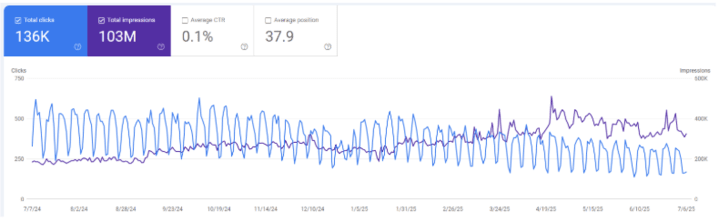
The Crocodile effect
Traditional Search: It Isn’t Dead
Yes, rankings have fluctuated. Everyone feels that ‘crocodile effect,’ and yes, some brands have responded by shifting their budget to PPC. However, brands can build agility by aligning organic and paid media—not trading one for the other.
Here’s why. Even with the introduction of new bells and whistles in the marketing space, Google still maintains the largest market share of any channel. Secondly, 75% of users don’t scroll too far through their results, keeping the “first page” mentality of yore. Brands earn credibility by appearing in SERPs multiple times, effectively pairing SEO and paid media. This is especially true now as AI utilizes rankings when generating results.
The new reality: Investing in SEO today means preparing for AI tomorrow. That’s right. Your SEO budget includes LLMO (similar to technical SEO) and GEO (similar to SEO content optimization); they are not separate efforts.
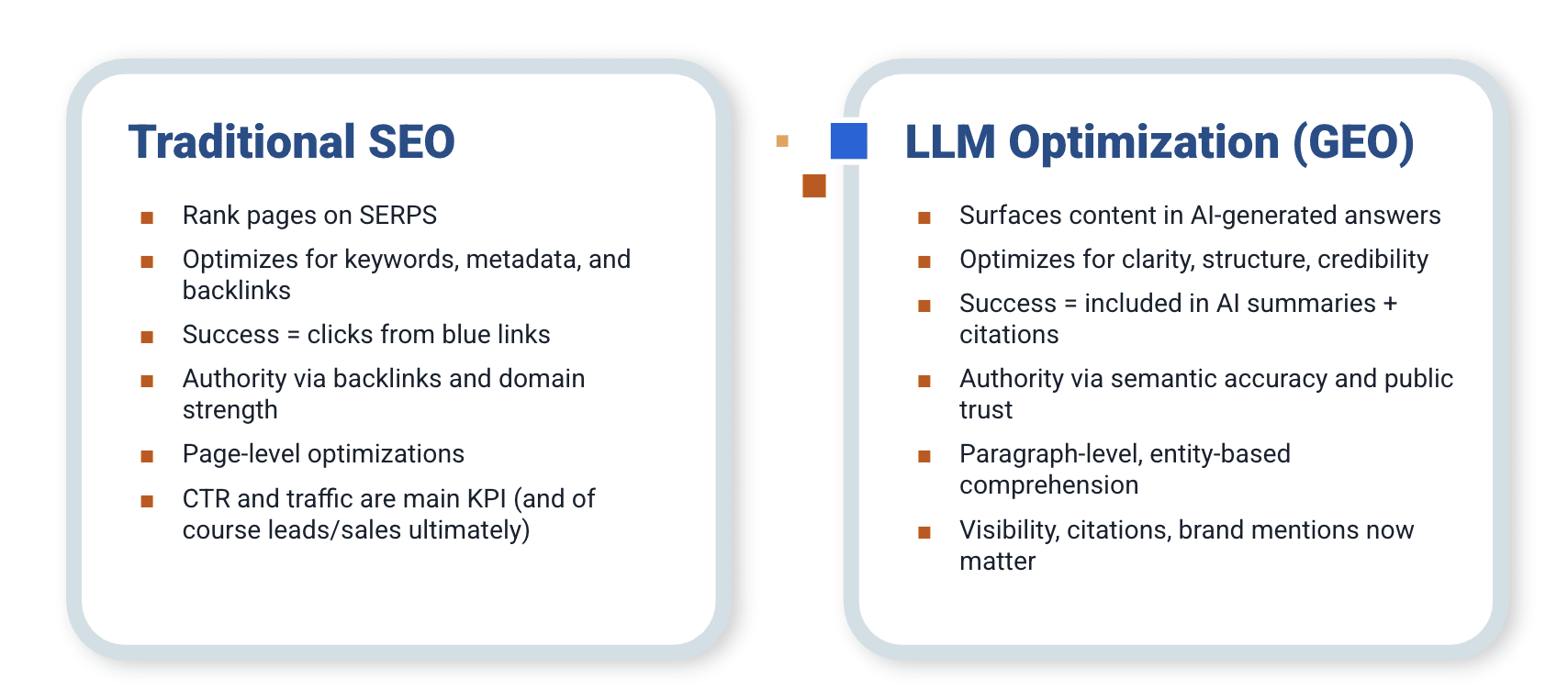
SEO vs LLMO, explained
If your content isn’t showing up in search engines’ AI answers, you’re likely leaving leads on the table. For more on this, we explore LLMO and GEO in greater detail in this article.
AI: Threat or Opportunity? (Hint: It’s Both)
Artificial Intelligence is changing how people discover brands, make decisions, and engage with content. However, the goal remains the same as SEO—be the answer your audience finds first.
63% of websites receive AI traffic. We’ve seen clients increase inbound form fills from ChatGPT in LOOP. AI is quickly becoming the great equalizer—giving marketers the ability to punch above their weight class.
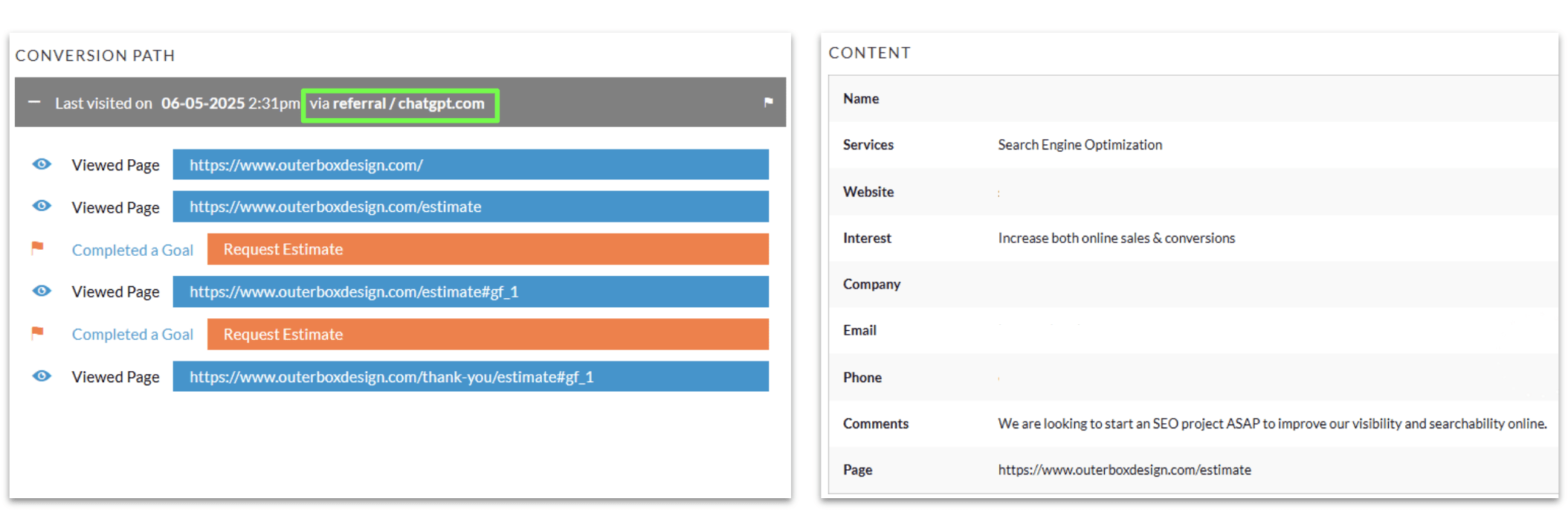
A lead in LOOP Analytics who used ChatGPT.
How? We don’t fully understand how AI algorithms make decisions or their “secret sauce,” if you will, and you should be wary of anyone who says they do. We do know, based on observed trends, that one big ingredient is high-quality content. Quality content isn’t exclusive to big brands with big budgets. Brands that blend SEO fundamentals with LLM visibility (think: reviews, backlinks, influencer content, and technical optimization) are already seeing traction.
Want to future-proof your visibility? Ask yourself: Would this content still be helpful if Google didn’t exist? If the answer is yes, use it.
AI has given rise to informational content, also known as definitional content, to populate search results. However, note that creating these results may not directly generate clicks, but it will enhance your brand presence for future considerations or searches.
Search engines and LLMs reward content that answers fundamental questions. That means:
- Structured, scannable formats
- Brand-aligned insights, not AI regurgitation
- Entity-rich paragraphs, not just keyword-stuffed blurbs
One underutilized strategy? The LLMs.txt file—think of it like robots.txt, but for ChatGPT and Perplexity. It helps AI platforms prioritize your most valuable pages.
Let’s keep the focus on content a bit longer. As much as AI values quality content, marketers are using AI to create that content, thereby diluting the overall quality.
Content: Authenticity Is Your Differentiator
In a world of AI-generated content, people are becoming more adept at distinguishing what’s real from what’s not. Whether through social posts, email nurture campaigns, or chatbot conversations, the question remains—how do you rise above the noise? It isn’t being louder, i.e., more content, but the right content.
Brands that win are those that sound human, act with intention, and build trust. To sum it up in one word—authenticity. While traditional SEO and LLMO work to gain visibility through user intent content and keywords, embed these items within brand authenticity.
As users pose longer, more complex questions, language models are evolving to deliver deeper, more contextual answers. By shaping your content strategy around these nuanced queries—and responding with helpful, brand-consistent insights—you enhance both your semantic relevance and visibility within AI-driven results.
A great format for authenticity is video. Simple, clean videos on YouTube and other social channels with video feeds are powerfully persuasive compared to AI-generated text. Highlight your team, take us on a facility tour, or have in-house experts share ideas in quick reels. Additionally, these channels serve millions of users, leading us to our next topic, channel diversification.
Channel Diversification: Search Alone Doesn’t Drive Demand
Search is great for capturing demand, but it doesn’t create it. So, where is that demand coming from? Increasingly, the answer is: everywhere else.
On average, most B2B organizations need 8 to 12 marketing touchpoints with a prospective customer to secure a B2B meeting. E-commerce businesses need, on average, 6 to 20 marketing touchpoints before earning a sale.
Channel diversification just made a lot more sense, didn’t it?
While Google’s market share remains high, it’s increasingly difficult to ignore not only the rise in AI use but also other channels that feature user-generated content. With AI, video, and social shaping behavior upstream, channel diversification is more important than ever.
What we are seeing in terms of smarter channel diversification:
- YouTube as a performance and awareness platform
- Engagement via channels like Reddit
- Paid social and content syndication
- Strategic remarketing using first-party data
- Smart segmentation powered by tools like LOOP
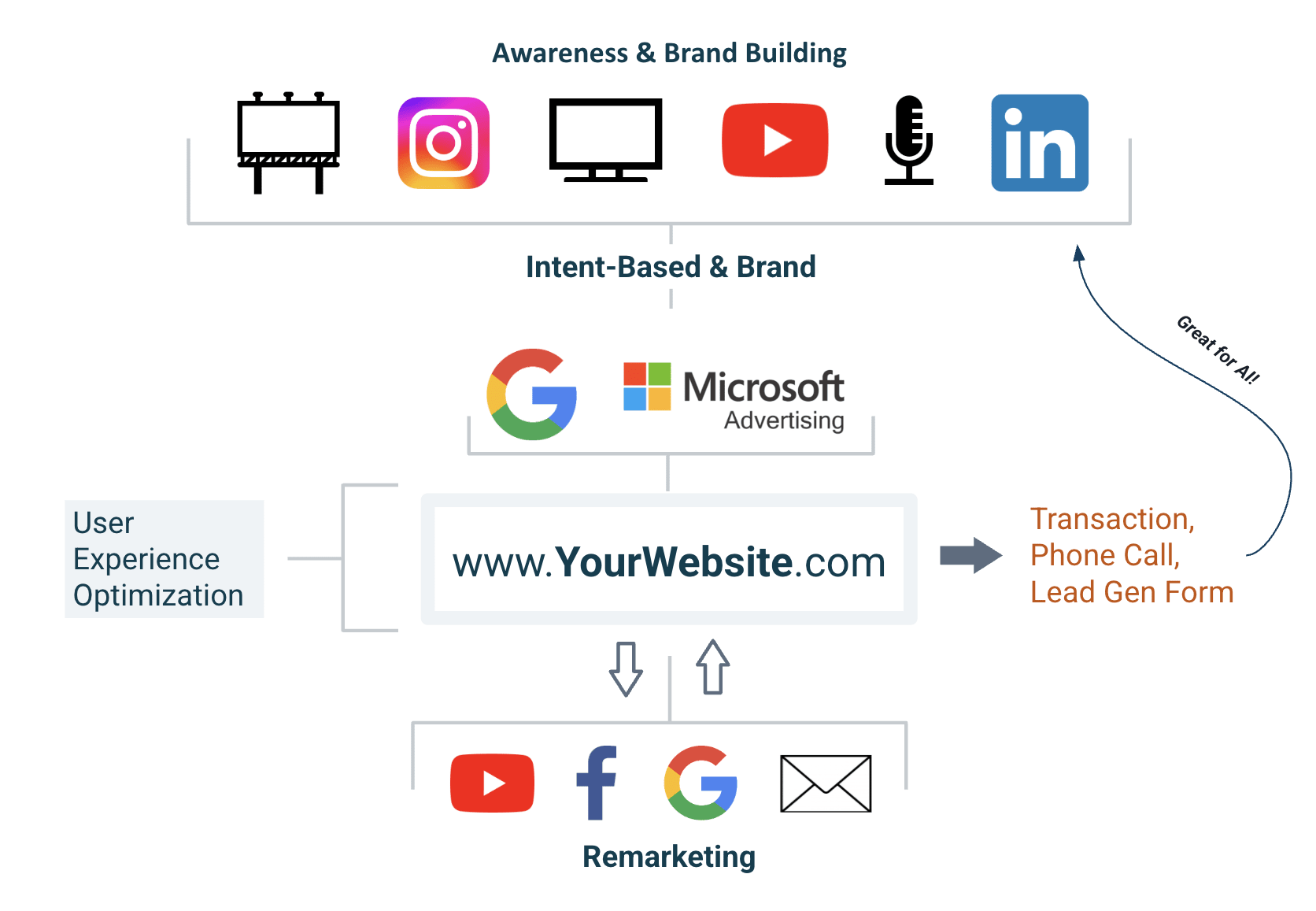
How channel diversification works.
The big idea? Don’t spend more—spend better. Get your lower-funnel strategy airtight before expanding into top-of-funnel channels. And let your data guide you every step of the way.
Integrated Marketing: Adapt, But Don’t Abandon What Works
Across B2B and B2C, brands are dealing with changing customer sentiment, economic headwinds, and budget reallocations. The knee-jerk reaction? Cut organic investment. But the smart move? Build resilience through proactive integrated marketing.
That means:
- Treating SEO and PPC as complementary, not competing
- Using SEO techniques for AI channels
- Tapping into real-time feedback loops across platforms like Reddit
- Staying human because audiences can smell generic AI content from a mile away
Now is the time to rethink your playbook— not abandon it.
2025 has proven that speed and substance both matter. The brands seeing success are those that invest in long-term strategies, even during short-term volatility.
Head still spinning? We’re helping clients optimize for AI, diversify channels, and measure success beyond the click. If you’re ready to rethink how your brand shows up in a shifting landscape. We can help.