By: Jeff Hirz
You’ve put real money, time, and trust into your business. When the website needs to launch or be rebuilt, it can feel reasonable to hire one company for web design and SEO strategy from another team. One team makes the site look right. The other helps people find it.
That separation sounds clean until the work starts. Website design and SEO are tied together at the template, content, speed, URL, tracking, and conversion level. If one team designs the site without search strategy in the room, the SEO team may spend the next six months fixing decisions that could have been avoided before launch.
A single accountable team does not make the work simple. It makes the tradeoffs visible. The same people are looking at rankings, redirects, page speed, content, analytics, and user experience before the site goes live and after the first round of data comes back.
Before Website Design and SEO Launches
The first step is building the site on a foundation that search engines can crawl, understand, and trust. That foundation is not just hosting reliability or a clean design system. It includes the SEO decisions that shape how Google discovers the site the moment it launches.
An SEO plan should be built into the website before launch. Google can crawl and index new or changed pages quickly, and a redesign can change almost everything Google used to understand about the old site: URLs, templates, navigation, headings, content, internal links, schema, speed, and mobile layout.
Timing matters. A beautiful site can still lose traffic if important pages are renamed without redirects, if mobile templates hide key content, if JavaScript delays the main copy, or if analytics are not ready to measure what happens after launch. The strongest launch plan treats design, development, SEO, and analytics as one build, not four handoffs.
Pre-Launch SEO Tasks Include
- Keyword research and page-to-keyword mapping
- Site architecture and navigation planning
- Competitor and SERP review
- Content optimization for priority pages
- Title tag and meta description planning
- GA4, Search Console, call tracking, and conversion setup
- URL structure review
- 301 redirect mapping
- Canonical tag configuration
- Structured data and schema validation
- Mobile content parity checks
- JavaScript rendering review
- Core Web Vitals and page speed testing
- Internal-link planning
A launch that skips these items can create damage that is expensive to unwind. The greatest site in the world will not help much if search engines cannot reach the right pages, and the best SEO plan will underperform if it sends potential customers to pages that feel unfinished, slow, confusing, or disconnected from the promise in the search result.
The pre-launch period is also when tradeoffs are cheapest. A URL can still be renamed, a heading hierarchy can still be adjusted, a template can still make room for copy, and a tracking event can still be added before reporting begins. Once the site is live, the same fixes usually compete with bug reports, stakeholder requests, traffic concerns, and the pressure to move on. Building SEO into the design phase protects the launch window and gives the team a cleaner baseline for measuring what changed.
Why Website Design And SEO Share The Same Blueprint
Google’s mobile-first indexing guidance says Google uses the mobile version of a site’s content for indexing and ranking. That turns responsive design, mobile navigation, accordions, tab content, image handling, and template behavior into SEO decisions. If the desktop page says everything Google needs and the mobile page quietly removes half of it, the design decision can become a visibility problem.
The same is true for site architecture. Designers think about how visitors move through the site. SEO teams think about how authority, relevance, and crawl paths move through the site. Those are not separate conversations. A main navigation change can bury a money page. A thin category template can cap organic growth. A beautiful card layout can hide internal links if the markup is wrong.
This is where one-team planning helps. Your web design services and SEO services should agree on which pages matter most, how SEO and website design decisions connect, what each template needs to say, and how the site should support both users and crawlers.
Where Separate Web Design and SEO Teams Break Down
Two separate companies can both be competent and still create a poor outcome together. The problem is not always skill. It is ownership.
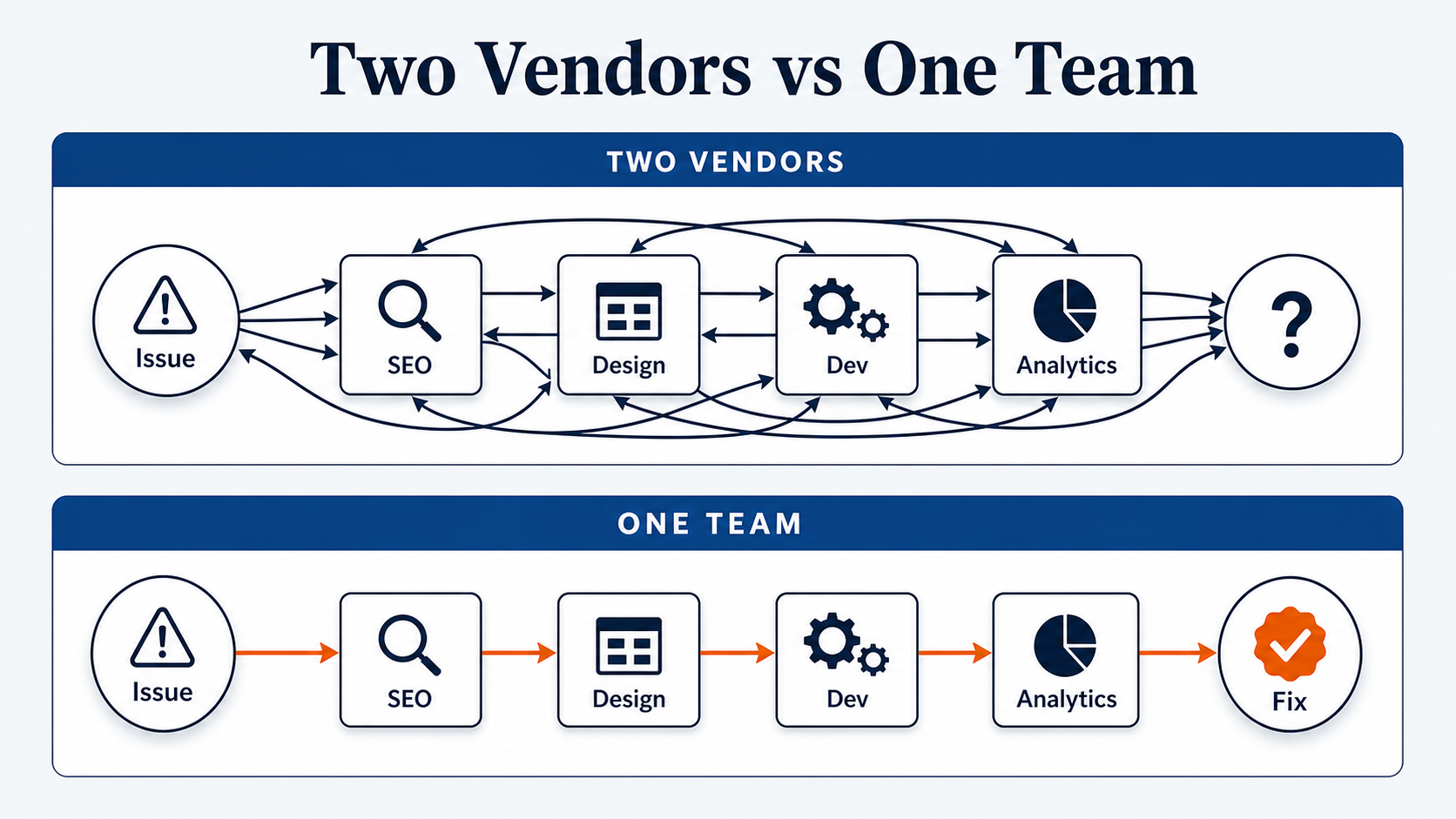
If rankings fall after a redesign, the design team may say the SEO team missed the redirect plan. The SEO team may say the development team shipped the wrong templates. The development team may say the content arrived late. Meanwhile, the business owner is stuck mediating a meeting that should have been a project plan.
Using one agency for both website design and SEO creates accountability, especially when web design and SEO marketing goals share the same launch checklist. Designers, developers, content strategists, analytics specialists, and SEO specialists can see the same goals and work from the same launch checklist. If a problem appears, the conversation can move straight to what needs to change rather than who caused it.
One accountable firm means simpler planning, faster response, and fewer moments where SEO rolls out before the site is ready or the site launches before SEO has been built into it.
Post-Launch SEO And Web Design
A successful launch is only the beginning. The real test comes after Google has crawled the site, users have interacted with the new pages, and the first reporting period shows what changed.
Very few post-launch problems belong entirely to one discipline. A product category may rank but fail to convert because the filters are hard to use. A service page may convert well but fail to grow because the internal links never reach it. A blog template may load fast but bury the author, schema, or related-service path. A form may work on desktop but fail on the device most organic users actually use.
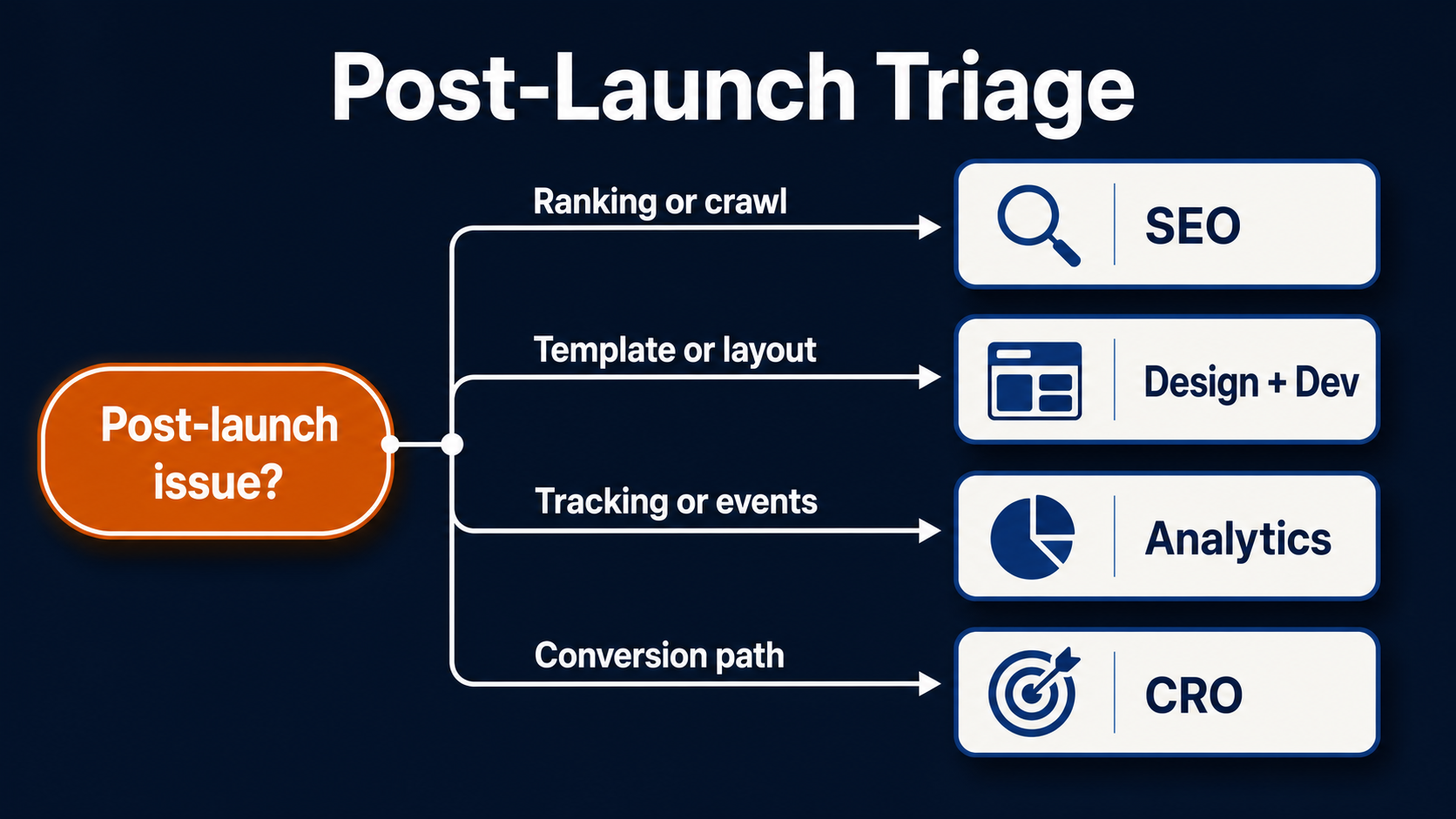
When your SEO company and web design company are separate, each team has to persuade the other to act. When one team owns both sides, the fix can move through the same operating system. The SEO team can flag a ranking or crawl issue, the design and development team can adjust the template, the analytics team can confirm measurement, and the strategy lead can explain what changed in plain language.
Regular meetings also get easier. Instead of coordinating two agencies with different dashboards and different incentives, you can review one plan: what shipped, what moved, what broke, what improved, and what happens next.
Redesigns, Redirects, And Technical SEO
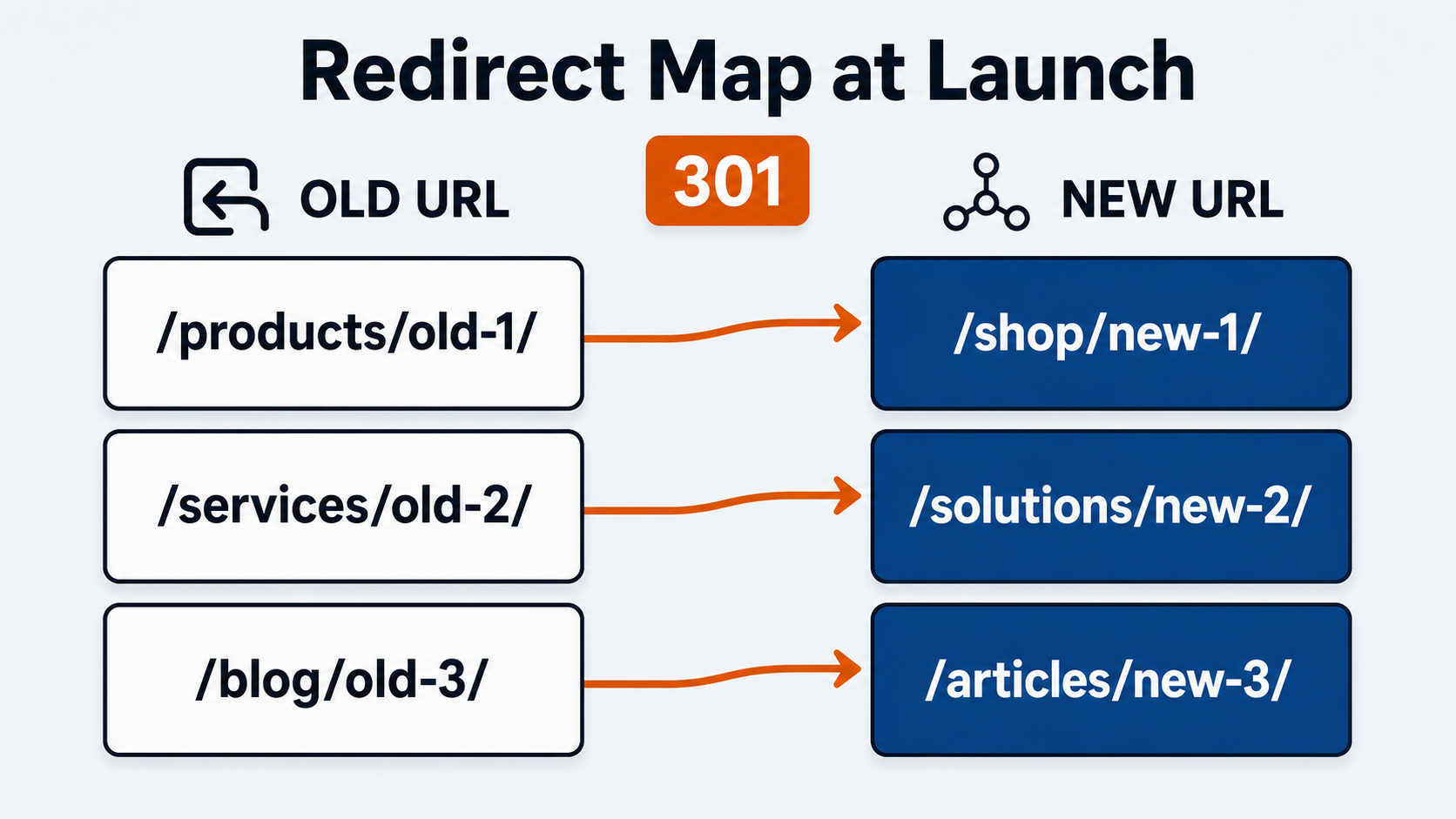
Redesigns are where the split-agency model gets especially risky. Google treats URL changes as a site move, and its site-move guidance recommends mapping old URLs to new destinations before redirects are configured. That work has to happen before launch because the old URLs may be carrying years of links, rankings, and user bookmarks.
Technical SEO also lives inside the build. Google parses rendered HTML and uses links it finds there, so JavaScript decisions can affect crawl paths and indexable content. Structured data also depends on templates that match the visible page. If schema says one thing and the redesigned page says another, the implementation can lose eligibility or create trust problems.
A strong technical SEO workflow does not wait until traffic drops. It reviews staging templates, redirect maps, canonicals, robots rules, XML sitemaps, rendered HTML, internal links, structured data, and analytics events before the launch window opens. That is much easier when the development team is already in the same room as the SEO team.
UX, Speed, And Conversion Still Decide The Value Of Organic Traffic
SEO does not end at the click. A visitor still has to understand the page, trust the brand, find the next step, and complete the action that brought them there.
Search Console’s Core Web Vitals report groups URL performance by LCP, INP, and CLS using real-world usage data. Those metrics are technical, but they describe user experience: how quickly the main content appears, how responsive the page feels, and whether the layout jumps around. Slow or unstable pages can reduce the value of otherwise strong organic visibility.
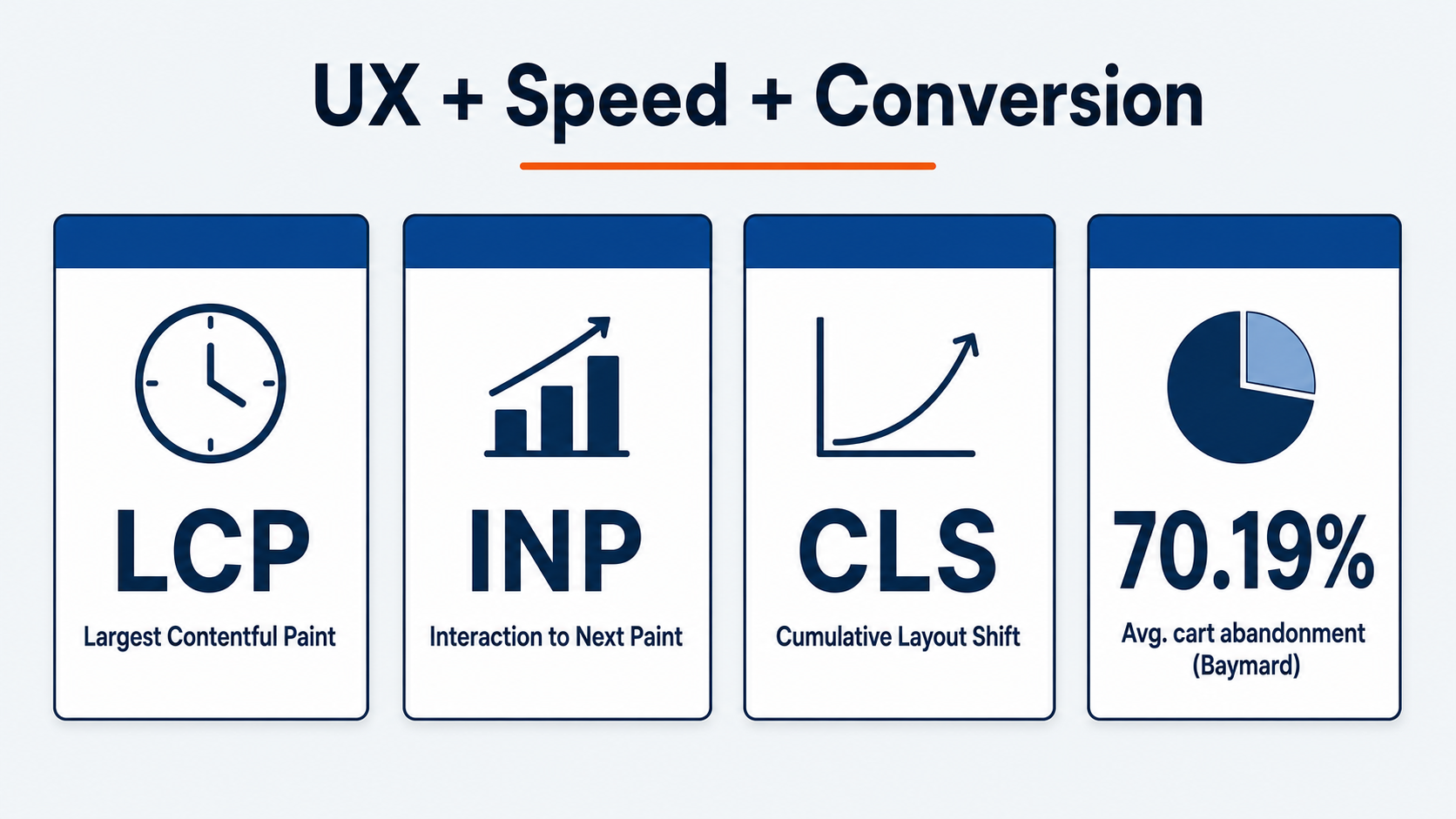
Conversion is part of the same conversation. Baymard Institute’s published checkout-usability average puts cart abandonment at 70.19%, and its research points to meaningful conversion gains from better checkout UX. For ecommerce sites, conversion rate optimization and SEO should not be treated as separate projects. Organic growth is only valuable if the site helps the right visitors buy, call, fill out a form, or move deeper into the decision.
That is why the website designer and SEO strategist should be planning together. Page speed, copy hierarchy, trust signals, forms, navigation, checkout, calls to action, and analytics all decide whether the traffic SEO earns becomes revenue.
When Separate Website Design and SEO Companies Can Still Work
Separate SEO and web design companies can work when ownership is explicit. The redesign needs one accountable lead, one launch checklist, one redirect map, one analytics plan, and one shared definition of success.
The risk starts when each vendor owns only its own deliverable. A design file is not a launch plan. An SEO checklist is not a working website. If you do use two teams, require weekly coordination before launch, shared access to staging, a written redirect and tracking plan, and a single person empowered to make final tradeoff decisions.
One Website Design and SEO Team, One Launch Plan
The reason to combine website design and SEO is not convenience. It is stewardship. Your site is where search visibility, user trust, technical infrastructure, and conversion all meet.
OuterBox was built around that kind of connected work. The web development, design, SEO, CRO, and analytics and reporting teams can work from the same plan before launch and stay with the site after it starts collecting data. That gives your business a cleaner path from “the new site is live” to “the new site is actually working.”
That continuity is the difference between a launch that simply happens and a site that keeps earning its place in search.
Website Design and SEO FAQs
How long should an SEO-aware website redesign take?
An SEO-aware redesign usually takes longer than a cosmetic refresh because the team has to plan URLs, redirects, templates, content, tracking, and launch QA. The exact timeline depends on site size, CMS complexity, approvals, and whether content is being rewritten, but SEO should be involved from discovery through post-launch monitoring.
Who should own analytics after a website launch?
Analytics ownership should be shared by the team responsible for growth, but one person should be accountable for the setup. GA4, Search Console, call tracking, forms, ecommerce events, and CRM fields need to be checked before launch and reviewed after launch so design, SEO, and revenue reports use the same truth.
Do we need new schema after a redesign?
You may not need new schema, but you should revalidate structured data after any redesign. Google uses structured data to better understand page content and qualify eligible pages for rich results. Template changes can remove fields, create mismatches, or apply schema to pages where it no longer fits.
What happens to rankings during a redesign?
Rankings can hold, improve, or drop during a redesign. The outcome depends on how well the site preserves URL equity, content relevance, internal links, crawlability, speed, and measurement. Some movement is normal after launch, but missing redirects, thin templates, blocked content, or broken canonicals can create avoidable losses.
How do you measure whether the one-team model is working?
Measure the launch and the months after it. The right scorecard includes redirected URLs, indexed pages, Core Web Vitals, organic traffic, rankings for priority terms, organic conversions or revenue, form and call quality, and the speed of post-launch fixes. The one-team model works when issues surface quickly and get resolved without vendor standoffs.
Should one company handle website design and SEO?
One company is usually better because SEO depends on decisions made during design, development, content, and analytics setup. When those disciplines share a project plan, launch checklist, and reporting dashboard, issues get caught before they cost traffic. Separate vendors can work, but only if ownership, communication, and accountability are explicit from the start.