
eCommerce Web Design Services Built for Revenue






What an eCommerce Website Design Company Has To Get Right
Store owners come looking for a store rebuild with one specific problem in hand, and that problem decides what the build has to do. These are the ones that start the conversation.
- A replatform is already on the calendar, and the organic rankings that took years to build have to come through it intact, along with the order history and the customer accounts.
- The catalog has outgrown the theme it sits on, and publishing a new category now takes a developer and a ticket.
- Checkout loses shoppers at the last step, and nobody can say which field, which cost, or which page is doing it.
- Product data sits in an ERP or a PIM while the storefront shows a different price or stock number, so customer service spends its day reconciling the two.
- Merchandising changes wait in a development queue because the storefront was built as one-off pages instead of reusable components.
- The last redesign looked current on launch day and started costing organic traffic once the new URLs were crawled.
Any one of these sets the scope, and together they shape which platform the store belongs on.






How A&C Plastics Grew Organic Traffic 1,225%
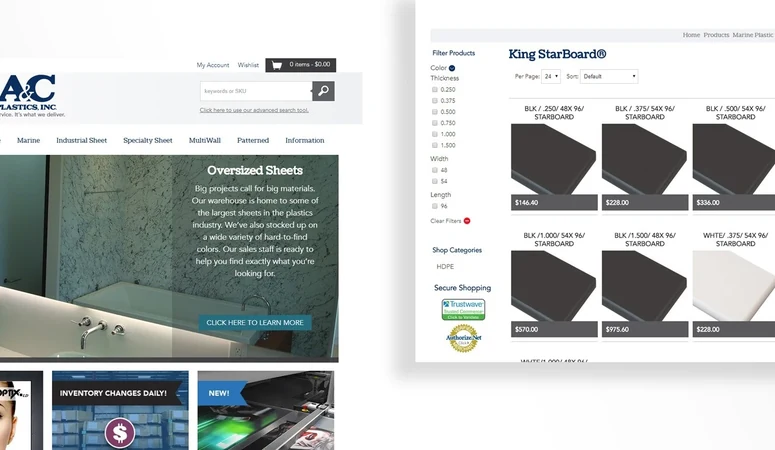
A&C Plastics sells industrial plastics from a catalog deep enough that finding the right sheet, rod, or tube is the whole buying experience. We rebuilt an outdated site into a custom store with advanced product filtering, and the design, search and paid media work ran as one coordinated program. The paid side of that same program produced a 522% AdWords conversion lift.
How Boat and RV Accessories Grew Organic Traffic 244%
Boat and RV Accessories needed to leave a legacy platform without losing the rankings or the history that came with it. We built a custom import process for the product, customer, and order database, deployed a 301 redirect module before launch, added AJAX filtering and instant search across thousands of products, and rebuilt the checkout. The redirect module and the custom import are what protected the search visibility and the order history through the move, and the conversion rate rose 39%.


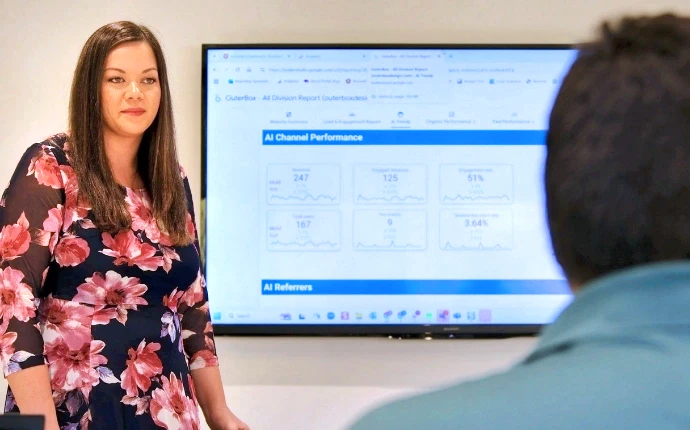
An eCommerce Web Design Agency That Learns the Catalog First
Your catalog already knows how the business sells. Which categories carry the margin, how buyers search and compare inside it, what the operations team touches every day, which systems hold the product and order records, and where the current store loses people between the category page and the confirmation screen. We read that before a wireframe exists, because it is what decides the templates and the platform.
A store gets judged on revenue per session and on what your team can operate once the build is over. That second test is the one design decisions quietly settle. A catalog that grows, campaigns that change, and merchandising that has to stay fast and indexable are all easier to handle when the templates, the components and the tracking were scoped with them in mind. Your team ends up with a store it can run, rather than one it can only file tickets against.
Store problems refuse to stay inside one discipline. A checkout decision turns into a paid-media problem. A category structure turns into a ranking problem. A product-feed decision turns into a customer-service problem. OuterBox has been in business since 2004 and runs designers, developers, SEOs, CRO specialists and analysts as one in-house US-based group, so those tradeoffs get settled once, in the open, before go-live turns them into surprises.
20+ Years
Digital Marketing Agency
1,000+
Successful Client Partnerships
2M+
Page-One Google Rankings
300+
USA-Based In-House Experts
What Boat & RV Accessories Says About Working With OuterBox
“They were actually the top-ranked result when we were looking for SEO and web development and that was a great sign as we were also looking to increase our Google rankings.”
Boat & RV Accessories
Josh Walk, Director of Digital Content and eMarketing
eCommerce Website Design Services, Answered
Six things merchants weigh up before they commit to a build.

Choosing a Platform for Your eCommerce Website Design Services Plan
Your catalog, your operations stack and the team publishing every day decide the platform, which is why a recommendation belongs after discovery. Shopify and Shopify Plus suit brands wanting a hosted platform and a clear upgrade path, with app bloat and checkout constraints worth watching. BigCommerce suits larger catalogs, B2B commerce and multi-storefront models, provided theme governance and product-data flow are planned. WooCommerce suits WordPress-led teams needing commerce alongside publishing, provided plugin quality and caching get governed.
Magento and Adobe Commerce suit enterprise catalogs and complex fulfillment, against a development budget, release process, hosting and admin complexity to match. The constraint that matters is the one your team lives with after launch.
Migrating an eCommerce Store Without Losing Rankings
Traffic and revenue do not have to drop during a platform move, but nothing about that is automatic. We crawl the URL inventory first, then map it to destinations one by one, with the pages that earn the most organic traffic treated as the priority list. Redirects go in at the URL level before launch.
Product, customer, order, review, and content records get mapped field by field so historical data survives the transfer. Structured data gets rebuilt to match the new template system, and Search Console and analytics get validated afterward. Rankings, indexation, crawl errors, and organic sessions then get watched daily until they settle.
Product Data, On-Site Search, and the Systems Behind the Storefront
A storefront is only as reliable as the data feeding it. ERP connections such as NetSuite, SAP or Dynamics keep inventory, pricing and order status aligned in both directions. PIM and DAM systems feed product content straight into templates, which ends the copy-paste cycle that leaves descriptions inconsistent across channels.
Shipping and 3PL integrations put accurate delivery estimates in front of the shopper at the point of purchase. On-site search and faceted filtering sit on top of all of it, and they work only when the product attributes underneath are clean. Transaction data then reconciles against the payment processor and the order system, so reported revenue matches what the business took.
Conversion and Checkout Work Inside eCommerce Web Design Services
Checkout is where design decisions turn into revenue or into abandoned carts. Guest checkout, visible shipping cost, a short field set, saved addresses, and clear error handling all reduce the reasons a shopper stops.
Product pages carry their own share of the work through specifications, size guides, reviews, comparison tools, and imagery that answers the next question instead of decorating the page. After launch, somebody watches the behavior instead of assuming it. Changes that are accepted practice with negligible downside get implemented directly; changes where the outcome is genuinely uncertain and the traffic supports a conclusion go into a controlled test.
Development and Support After Your eCommerce Store Launches
Your store keeps changing after go-live, and the agreement should say who handles that. Catalog growth, new categories, seasonal merchandising, platform updates, plugin and theme maintenance, security patching and performance regressions all arrive whether or not anyone planned for them.
Analytics wired during the build means optimization can start from real data, with no separate measurement project in the way. Support scope, response expectations and what counts as a new project belong in the contract, alongside the post-launch support period and how work outside it gets handled. Your team should know which of those it keeps and which it hands over.
How an eCommerce Website Design Agency Builds Search Into the Design
Category structure is a search decision before it is a design decision, and it gets made either way. Category hierarchy sets the crawl path. Internal linking sets which product and category pages accumulate authority.
Template markup decides whether a product listing can earn a rich result. Faceted navigation decides whether filtering creates useful landing pages or thousands of near-duplicate URLs competing with each other. When design and SEO run as one effort, somebody makes those choices deliberately, once. When they run in sequence, the search work becomes a list of things the design has to be talked out of.
Let's Talk About Your Store
Get an Estimate for Your eCommerce Website Design Project
Tell us what the store has to solve, whether that is a redesign, a platform move, a faster checkout, stronger product pages, cleaner integrations, or all of it. We will ask the scoping questions that change the answer, then come back with a real number. Prefer to talk it through now? Call 1-866-647-9218.
We’ll get back to you within 24 hours, Monday–Friday.
Services
"*" indicates required fields
From Start-Ups To Fortune 500 Companies, Our Clients Are Succeeding Online










Related Services
Related eCommerce Services






Related Reading on eCommerce Web Design

Web Design | 5 min read
Just like the latest technology advancements, website design is constantly evolving. What was cutting edge just a few years ago is quickly outdated because of…

Web Development | 5 min read
In the digital age, the importance of having an eCommerce website for your business cannot be overstated. As more and more consumers are shifting their…
Web Development | 5 min read
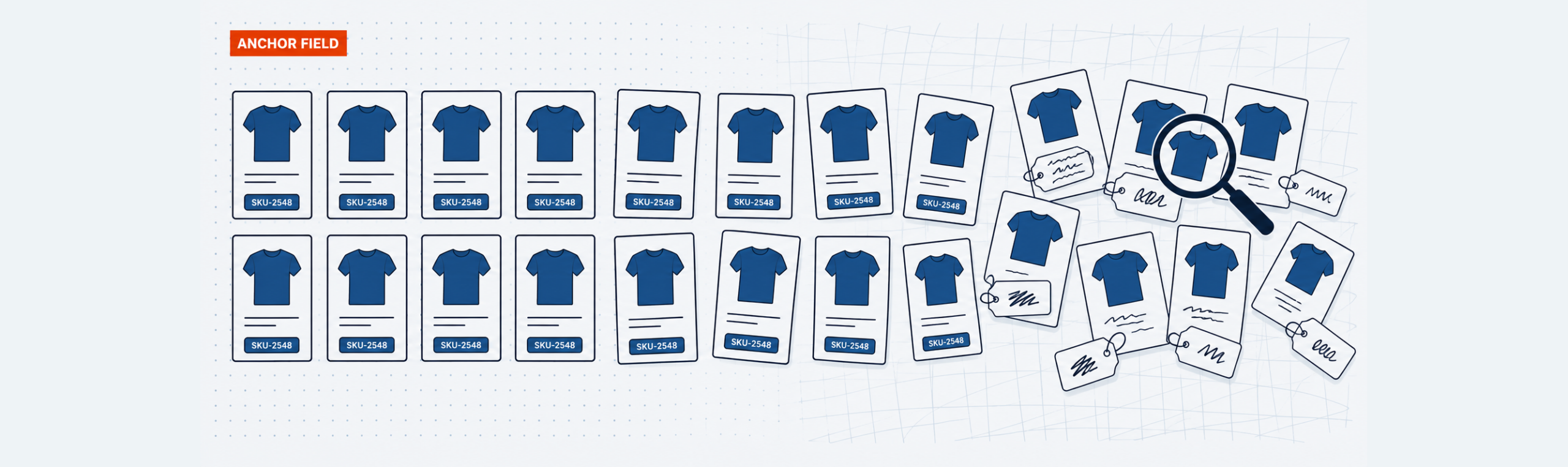
When you’re developing a new website or redesigning your eCommerce website it’s critically important to consider the data you’ll need to have. It may seem…
Ready To Build a Store That Earns Its Traffic?
Enter your website address and we will look at the store before we talk. You will get a read on what is working, what is costing you orders, and what a rebuild would involve.
"*" indicates required fields
"*" indicates required fields
eCommerce Web Design Services FAQs
The questions merchants ask when they are scoping a store rebuild.
What are eCommerce web design services?
eCommerce web design services cover planning, designing, building and improving an online store. The work an engagement can include: UX strategy and wireframes, visual design, front-end development, platform setup, product and category templates, checkout, integrations, SEO foundations, analytics, QA and launch support. Scoping decides which of those a given project carries.
An engagement can also cover the period after launch, when the catalog grows and the store must keep up.
How much does an eCommerce website cost?
eCommerce website cost follows catalog size, platform, design depth, custom functionality, integrations, migration work, content needs, compliance requirements and timeline. A straightforward Shopify or WooCommerce build and a complex Magento or custom integration project sit in different ranges, and integrations are one of the drivers that separate them.
We’ll give you a real number after a strategy conversation, not a generic package price.
How long does a custom eCommerce website take to build?
A custom eCommerce build’s schedule gets set during scoping, and four things drive it: how clear the requirements are, how ready the product data is, how many systems the store has to connect to, and how quickly content and design approvals come back. Complex catalogs, platform migrations and B2B account rules all extend it.
Scoping sets the sequence and names the assumptions behind it.
Can you redesign our store without hurting our SEO?
A redesign can hold its rankings, and the work that protects them happens before launch: a URL inventory, a redirect map, metadata, structured data, internal linking and sitemap behavior planned up front. Google notes that major site changes can move rankings during recrawling, so the plan reduces avoidable risk rather than removing it.
Search Console and analytics get validated once the new store is live, and indexation gets watched through the transition.
Do we own the website, code, content, and data?
On a standard engagement you own your website, your analytics data and your business profiles, and your team receives admin access when the engagement ends. OuterBox also offers a rental-style website arrangement, and which one applies is stated up front in your contract rather than discovered at handover.
We document the accounts, environments, integrations and workflows either way, so your team understands what was built and how to run it.
Is this a redesign, a replatform, or the full eCommerce program?
A redesign, a replatform and the full eCommerce program are three different engagements. A redesign rebuilds the experience on the platform you already run. A replatform moves the store and its data to a new system, with ranking preservation as a first-class requirement. The full program adds search, paid media, CRO and analytics on top of the build.
Scoping decides which one the store needs.
How is this different from your eCommerce SEO engagement?
eCommerce web design and development builds or rebuilds the store itself: architecture, templates, checkout, integrations and the technical foundation underneath. An eCommerce SEO engagement works on a store that already exists, earning its category, product and content pages more qualified organic demand.
The build decides what is capable of ranking. The SEO program is the ongoing work of competing for it.