
Google Shopping Agency for eCommerce Growth
OuterBox is a Google Shopping agency for retailers that need product ads, Merchant Center data, bidding, and revenue tracking working as one system. Our paid media team manages Shopping campaigns around feed quality, campaign structure, ROAS, product-level performance, and the landing-page experience that turns clicks into orders.
"*" indicates required fields
"*" indicates required fields



Google Shopping Management Services Built for Product Revenue
Google Shopping campaigns depend on more than a media budget. Google uses Merchant Center product data, not keywords, to decide how and where Shopping ads show. That makes product titles, attributes, categories, images, pricing, availability, and landing-page truth part of campaign performance from day one.
OuterBox connects that product-data layer to the paid media work. We manage Google Shopping strategy alongside Google Shopping feed management, bidding, campaign segmentation, tracking, promotion support, and post-click conversion work. The goal is not to spend more for the same traffic. The goal is to put cleaner data, tighter controls, and better revenue signals behind every dollar that enters the auction.
That matters most for eCommerce brands with large catalogs, changing inventory, seasonal promotions, margin differences, or messy product data. A weak feed can limit visibility before your media team ever sees a bid opportunity. Weak tracking can make profitable products look average. Weak landing pages can turn qualified Shopping clicks into wasted spend.
What Our Google Shopping Management Services Include
All engagements are customized to your catalog size, goals, and budgets. Core deliverables include:

Product feed optimization that puts every SKU in front of the right shopper
Your catalog only earns Shopping impressions when Merchant Center can read every product attribute cleanly. The work below pairs feed engineering with ecommerce SEO work so each SKU sits in the right category, against the right intent, in front of the right shopper. The same discipline a Google Shopping agency owns end to end.
- Your Google Shopping product feed lands every required attribute, from
idandtitletoavailabilityandimage_link, on first sync. - Your branded SKUs carry the strongly-recommended
gtinattribute, since missing GTINs limit visibility for products with manufacturer-assigned identifiers. - Your category mapping uses the deepest level of
google_product_categoryso shoppers see your listings against the right competitive set. - Your inventory updates flow through scheduled feed pulls, keeping price, stock, and availability accurate across every Shopping surface and free listing.
- Your seasonal SKUs get attribute refreshes ahead of demand spikes, so query relevance does not lag your merchandising calendar.
Your catalog reaches the floor where Shopping spend can scale confidently, and feed accuracy stops being the bottleneck against revenue.
- Your Google Shopping product feed lands every required attribute, from
Bid strategy that scales Google Shopping ads management without burning ROAS
Your bid strategy decides whether spend compounds toward profit or just chases impressions across every Shopping campaign you run. Google Ads bid strategies like Target ROAS push bids toward the conversion value your catalog actually earns. Smart bidding adjusts inside live auctions against the data your campaigns feed back daily. The mix of tROAS, manual CPC, and Maximize Conversion Value depends on margin profile and conversion-data quality.
Spend pacing and budget caps move alongside the bid strategy, since either lever pulled in isolation distorts the other. The same discipline runs through our paid search management work, and the Shopping side rolls into the same accountability loop. Your budget gets reallocated when a campaign’s ROAS drifts past target, before lost revenue hides inside an averaged monthly number.
Growth then comes from spend that earns its way upward, not from blind bid increases on tomorrow’s traffic peak.
Merchant Center setup and compliance that keep your catalog live
Your Google Merchant Center account is the gatekeeper between your catalog and every paid placement Google offers. A clean account configuration prevents the disapprovals and policy reviews that pull whole product groups offline. The setup work covers identity, claims, taxonomy, and the policy categories Google enforces against ecommerce sellers.
- Your business identity, contact info, and verified domain anchor every account so Merchant Center recognizes the catalog as legitimate at upload.
- Your product categories, restricted-product flags, and policy alignment route each SKU through the right enforcement lane, including Google’s Misrepresentation policy.
- Your tax, shipping, and returns settings reflect what shoppers actually pay, which Google audits against landing-page truth before letting ads run.
- Your platform connection through ecommerce platform design keeps stock, price, and variant data synced without manual stitching across separate vendor systems.
- Your account suspensions get a defined reinstatement playbook, so disapprovals turn into hours of recovery rather than weeks of lost revenue.
Approvals stay live across the catalog when compliance gets engineered into the feed, not patched after the next disapproval email.
Negative keywords and query sculpting that protect every dollar of paid spend
Search queries you never planned to bid on silently erode every campaign you run. Inside disciplined Google Shopping ads management, query sculpting reroutes spend toward the searches where your products actually convert. Our ecommerce PPC strategy thread runs the same playbook across Search and Shopping at once.
- Your Shopping queries surface inside the Google Ads Search Terms Report, where most accounts historically lose budget to poor-fit searches.
- Your negative-keyword lists block branded competitor terms, irrelevant categories, and informational queries that drain spend without driving cart adds or ROAS recovery.
- Your match-type discipline across broad, phrase, and exact stops Shopping campaigns from cannibalizing Search budget on the same intent.
- Your query-sculpting cadence runs against the live Search Terms data, not against assumptions made before the campaign launched against the catalog.
- Your high-margin SKUs win the auctions where revenue compounds, while informational queries route to better-fit campaigns or get suppressed entirely.
Your catalog earns impressions on the queries that convert, and wasted spend stops draining ROAS on the searches that never will.
Dynamic remarketing and audiences inside your Google Shopping management services
Past visitors carry conversion intent your acquisition spend already paid for. Dynamic remarketing rebuilds that value by serving the exact products a shopper viewed alongside relevant alternatives. Customer Match audiences pull your CRM list directly into Google Ads, and high-LTV buyers and lapsed customers get separate messaging instead of the same generic offer.
Cart abandoners, recent purchasers, and high-engagement non-buyers each get audience segmentation that matches where they sit in your funnel. Our conversion rate optimization work feeds the landing-page side of every remarketing impression. The click that returns a shopper does not land on the same page that already lost them. Audience configuration and creative rotation move together inside the same program, refreshed against live performance signals from the campaign.
Browsers come back to a catalog that recognizes them, instead of seeing the same first-time prospecting copy that ignored their visit.
Product titles and descriptions inside your Google Shopping feed
Titles and descriptions inside your Google Shopping feed carry the heaviest weight for query match. Google reads them more aggressively than most attributes and decides whether your SKU shows on a search at all. The structure below mirrors how shoppers actually search.
- Your product titles stay inside Google’s 150-character limit and lead with the brand, product type, and key spec shoppers query.
- Your secondary attributes (color, size, model, material) sit further into the title where shoppers refine, not where they start.
- Your descriptions repeat the title’s commercial spine and add the use-case detail Google’s SEO services work surfaces inside organic search.
- Your variant SKUs each carry their own title-description pair, since shopper queries differ between sizes, packs, and bundle counts.
- Your seasonal copy gets refreshed against actual query data, so what wins this quarter does not stale by next quarter.
Shoppers see listings that match their language word for word, not generic catalog text the search engine had to translate.
Multichannel feed management that keeps your catalog in sync across channels
Cross-channel sales pull from the same product catalog regardless of where the impression actually lands. Microsoft Shopping ads, Meta Commerce, and Pinterest Shopping each take their own cut of paid retail spend, demanding their own feed-quality discipline. The Shopping team running your account treats the master feed as the source of truth across every channel, and channel-specific overlays cover the spots where each platform expects its own attribute syntax.
Catalog corrections like discontinued SKUs, repriced bundles, and restocked variants propagate everywhere at once when one source-of-truth catalog drives the work. Our paid media channels work coordinates the bid and creative strategy across each surface, while feed engineering stays single-threaded. Channel reporting then rolls up to a unified ROAS instead of fragmenting into per-platform numbers no executive trusts.
Channels stop competing against each other for budget when one team owns the catalog and runs accountable bid strategy on every paid surface.
Promotion extensions and pricing inside Google Shopping management
Your offers only convert when shoppers see them inside the listing, not buried on the landing page. Merchant Promotions extend your discount, free shipping, or BOGO offer directly into the Shopping unit, where the comparison happens. Our email marketing automation work carries the same offer through retention channels.
- Your Merchant Promotions feed configures the offer once, then applies it across every eligible SKU without manual per-product setup work.
- Your discount stack respects margin guardrails, since promotions chained without rules rapidly erode the unit economics behind every Shopping campaign.
- Your free-shipping threshold gets tested against AOV, so the promotion lifts cart size instead of discounting orders that already converted.
- Your competitive pricing signals stay inside Google’s price-drop and price-comparison surfaces, where shoppers self-filter on value before the click.
- Your seasonal promo windows align with merchandising calendars, where feed changes, bid changes, and promo activations move on the same date.
Offers reach shoppers at the moment of comparison, where a stronger position inside the Shopping unit converts faster than landing-page copy.
Real-time tracking and reporting from your Google Shopping management services
Your revenue, ROAS, and cost-per-conversion need to be visible at the campaign and product-group level, not buried under averages a vendor hands back as a single rolled-up number. The reporting stack inside Google Ads, Merchant Center, and your store should show spend earning its way back to the catalog and the channel.
- Your spend, impression share, and conversion-value pacing show inside the live Google Ads dashboard against the targets the campaign was built for.
- Your store revenue, ad spend, and Merchant Center data stitch into one Looker Studio view your CFO actually opens.
- Your purchase, AOV, and revenue events pipe back into Google Ads conversion tracking, so smart bidding adjusts against real outcomes.
- Your striking-distance products, decaying queries, and rising-cost segments surface from inside the campaign noise before they spread further across the catalog.
- Your spend connects to revenue through the same web analytics dashboards every other channel in the program reports through.
Revenue gets traced back to the SKU, the campaign, and the keyword that earned it, not to a campaign-level average.
Testing and CRO alignment that turns paid traffic into revenue per visit
Paid traffic only earns its way to ROAS targets when the post-click experience converts at the rate the bid math assumes. A/B testing on landing pages tests variant copy, layout, social proof, and primary CTA placement against control. The work separates the changes that move conversion rate from the ones that stayed flat last quarter. Our CRO consulting services work runs the test plan, measures statistical lift, and rolls winners into the Shopping landing experience.
Your paid traffic deserves more testing rigor than your organic, since every visit costs you measurable spend. Conversion rate, AOV, and revenue per visit each get treated as separate metrics. A test that lifts conversion rate without growing AOV does not get mistaken for genuine revenue impact. The CRO loop runs against the same product pages your Shopping campaigns route to, not against orphaned variant pages built for the test environment.
Conversion lifts then compound across the same paid spend, so revenue per visit climbs without forcing the bid budget upward.
How OuterBox Google Shopping Agency Drives Revenue
Our work starts with an audit of Merchant Center, feed quality, account structure, conversion tracking, product groups, bidding, search terms, Performance Max overlap, landing pages, and reporting so the fix plan does not chase the wrong lever.
Our Google Shopping work starts with an audit of the system around the campaign: Merchant Center, product feed, account structure, conversion tracking, product groups, bidding, search terms, Performance Max overlap, landing pages, and reporting. The audit separates media problems from catalog, tracking, and conversion problems so the fix plan does not chase the wrong lever.
From there, the work moves into setup or restructuring. We clean the feed issues that limit visibility, organize campaigns around meaningful product or category groups, check bidding strategy against value signals, and make sure reporting can separate revenue from noise. If your account also needs a broader Google Ads agency engagement, Shopping becomes part of a larger paid search system instead of a disconnected catalog campaign.
Ongoing optimization keeps the system current. Search terms change, competitors change prices, inventory shifts, promotions start and end, and Google’s automation keeps learning from the signals you provide. OuterBox keeps those inputs aligned so automation has a better chance to optimize toward profitable outcomes.
Free Shopping Audit
Get a Google Shopping Management Services Estimate
If your Shopping campaigns are spending but the results are hard to read, start with a review of the feed, Merchant Center health, campaign structure, bids, search terms, landing pages, and reporting. OuterBox can show where performance is being limited before more budget goes into the account.
Services
"*" indicates required fields

The Team Behind Your Google Shopping Ads Management
OuterBox has worked in eCommerce, paid media, SEO, CRO, analytics, design, and development since 2004. That mix matters for Google Shopping because campaign performance rarely lives inside the ad account alone. Product data, landing pages, measurement, merchandising, and technical site health all affect what paid traffic can produce.
As a Google Shopping agency and Google Premier Partner, OuterBox brings paid media strategy together with in-house eCommerce specialists.
Why Choose OuterBox for Google Shopping?
We combine deep Shopping expertise with rigorous optimization and transparent reporting to deliver compounding ROI.

-
Feed and campaign alignment: Campaign strategy tied to product data, Merchant Center health, category structure, and landing-page truth.
-
eCommerce context: Paid media, feed, SEO, CRO, analytics, and development specialists available under one roof.
-
Shopping controls: Standard Shopping, Performance Max, search terms, negatives, audiences, promotions, and reporting reviewed together.
-
Reporting: Revenue, ROAS, product groups, conversion value, spend, and next-step recommendations.
-
Audit path: Feed, Merchant Center, tracking, campaign structure, and landing-page issues prioritized by likely impact.
Typical Agency
-
Feed and campaign alignment: Media changes made separately from feed and catalog issues.
-
eCommerce context: PPC-only support with limited control after the click.
-
Shopping controls: Broad automation with limited visibility into where spend is going.
-
Reporting: Clicks, impressions, and account-level averages.
-
Audit path: Surface-level account review without catalog or conversion context.

Shopping waste often starts before the click. Inaccurate product data can limit eligibility or trigger disapprovals, weak tracking can teach bidding systems the wrong lesson, and blended reporting can hide products that deserve a different budget decision. A structured audit can show whether the bottleneck is feed quality, campaign structure, measurement, landing-page conversion, or pricing pressure. Request a Google Shopping Audit >
Related Services
More Options to Supercharge Your Google Shopping Management



Google Shopping Management Services FAQs

What does a Google Shopping agency do?
A Google Shopping agency manages the product advertising system behind your Shopping performance. That usually includes Merchant Center, product feeds, campaign structure, bidding, Performance Max or Standard Shopping strategy, search term reviews, negative keywords, promotions, conversion tracking, reporting, and landing-page alignment.
How is Google Shopping different from standard Google Search ads?
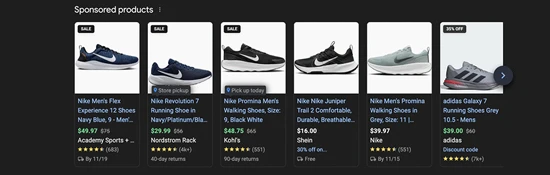
Google Search ads are usually built around keywords and text ads. Shopping ads use Merchant Center product data to decide how and where products show, and they can display product images, titles, prices, and store names before the click. That makes feed quality and product data central to performance.
How much does Google Shopping management cost?
Cost depends on account size, catalog complexity, ad spend, tracking needs, and how much feed or landing-page work is involved. Management fees often include a flat fee plus a percentage of spend, commonly in the 7-15% range. Treat that as planning context, not a universal quote.
How much should I spend on Google Shopping ads?
There is no single right budget. Standard Shopping ads use CPC pricing, so media cost depends on clicks, competition, product mix, conversion rate, and ROAS targets. A better starting point is to model budget from margin, conversion rate, average order value, inventory priorities, and the amount of data needed for bidding decisions.
Should I use Performance Max or Standard Shopping?
Both can fit. Performance Max can access Google Ads inventory from one campaign and uses Google AI to optimize bids and placements toward your goals. Standard Shopping can provide more direct control in some situations. The right mix depends on goals, data quality, feed strength, product segmentation, and how much visibility you need into search terms and product performance.
Why are my Google Shopping products disapproved?
Disapprovals can come from missing or inaccurate product data, price or availability mismatches, landing-page issues, policy-sensitive products, shipping or tax problems, image issues, or site trust concerns. The first step is to isolate whether the problem lives in Merchant Center, the feed, the landing page, or the account setup.
Can Google Shopping work for large catalogs?
Yes, but large catalogs need stronger structure. Product groups, custom labels, titles, categories, inventory updates, margin context, and reporting views all need to be organized so decisions can happen by category, product type, priority, or profitability. Otherwise, the account turns into one large average.
How do you measure Google Shopping success?
Success should be measured by revenue, conversion value, ROAS, cost, margin context where available, product-level performance, and contribution to the broader paid media program. Clicks and impressions matter, but they are not enough to decide whether Shopping spend is profitable.
Do you also help with landing pages and conversion rate optimization?
Yes. Shopping traffic lands on product pages, category pages, cart paths, and offer pages that affect ROAS. OuterBox can connect Shopping management with CRO, UX, analytics, and development support when post-click friction is limiting campaign performance.
Can you audit my existing Google Shopping campaigns?
Yes. A Google Shopping audit can review Merchant Center, feed quality, campaign structure, Performance Max or Standard Shopping setup, search terms, negative keywords, bidding, tracking, landing pages, promotions, and reporting. The goal is to identify the highest-impact constraints before more budget goes into the account.
Start with a Google Shopping Ads Agency That Knows eCommerce
Request a quote and get a clear read on where your Google Shopping campaigns can improve.
"*" indicates required fields
"*" indicates required fields
Related Articles: Google Shopping Ads Management

Paid Media | 5 min read
Most companies benefit from AI-enhanced PPC bid management systems that can optimize campaigns in real time. These platforms range from simple, rules-based widgets that automatically…
Paid Media | 5 min read
The internet has created a lot of self-proclaimed “digital marketing experts” who probably still use a flip phone and wish they could make Netscape Navigator…

Paid Media | 5 min read
Mobile advertising has become a non-negotiable component of every digital marketing strategy. Mobile drives the majority of online traffic (over 60% globally) and ad impressions…