By: Jeff Hirz
Businesses asking how to increase online sales often look for one lever. In practice, growth comes from bringing better buyers to the site, giving them clearer reasons to buy, removing checkout friction, and following up after the first interaction.
That holds whether you sell products through an eCommerce store, generate leads for a sales team, or use the website to support a longer buying journey. A site can have strong traffic and weak sales if shoppers cannot find the right product, trust the offer, understand the value, or finish checkout. It can also have a clean checkout and still struggle if the traffic is not qualified.
The 20 strategies below are practical ways to increase online sales and increase qualified website traffic without treating every business the same. Work them in the order that matches where your revenue actually leaks: traffic quality, product or service clarity, checkout or form completion, trust, retention, and measurement. If you do not know which of those is leaking, start by finding out.
1. Increase Online Sales by Using SEO to Reach Buyers Who Are Already Looking
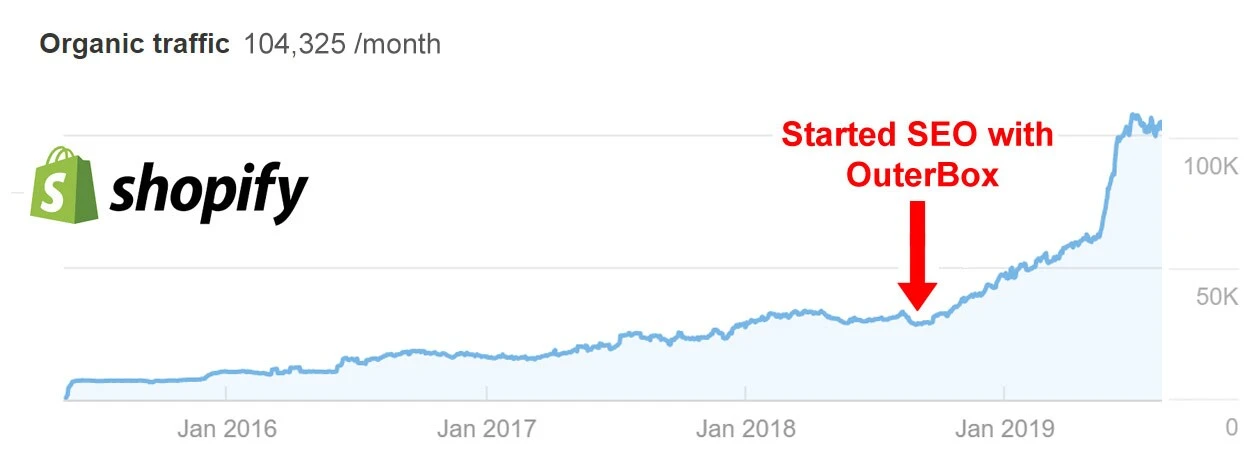
SEO reaches people while they are already searching for a product, service, answer, or comparison. Paid media buys attention now. SEO earns visibility that keeps producing visits after the work is done, which is why it remains one of the strongest long-term ways to increase online sales.
For eCommerce stores, the most important SEO question is not simply which keyword has the most volume. It is which page can satisfy the buyer’s job. Category pages usually fit broader shopping terms. Product pages fit model numbers, SKUs, sizes, colors, compatibility, and brand modifiers. Articles and buying guides support research, comparison, and decision confidence.
Google’s eCommerce guidance focuses on helping Google find and parse product data and site structure so products can appear across relevant search surfaces (Google Search Central). That means your SEO work should include crawlable navigation, useful category copy, descriptive product information, product data consistency, internal links, and content that answers real buyer questions.
Give each page a reason to earn the visit: real compatibility notes, real pricing logic, and the questions your support team answers every week.
If you are asking how to increase eCommerce sales, start with the pages that already have demand and business value. Improve titles, H1s, product descriptions, category copy, internal links, images, and calls to action. Then build content around the questions customers ask before they buy. If the catalog is large or technically complex, eCommerce SEO work should connect keyword demand to products that can actually convert.
2. Use Paid Campaigns to Increase Online Sales Faster
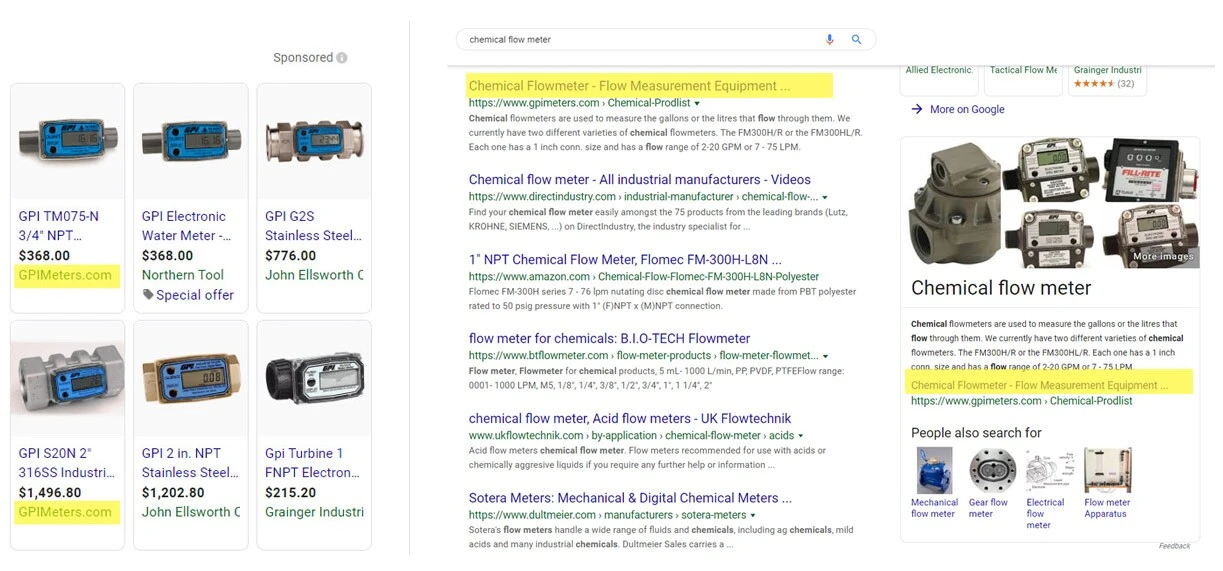
Paid media does one thing SEO cannot: it puts a product, offer, or landing page in front of buyers this week. Search ads, Shopping campaigns, paid social, display, and remarketing can all help boost online sales, but only when the offer, the audience, and the landing page agree with each other.
Buyer intent is the first sort. Someone searching a part number, a model, a service, or a local provider is closer to a decision than someone scrolling a feed. Paid search and Shopping usually earn the high-intent demand. Paid social earns its place when the product is visual, the audience can be defined tightly, or the campaign is built for remarketing and education rather than cold conversion.
Define the buyer before you define the campaign: what they are solving for, what objection stops them, and what proof the landing page has to carry. A campaign can buy clicks immediately, but weak targeting or a vague page turns that spend into noise.
PPC lets you test search terms, offers, and objections quickly, and those results can inform SEO, email, product copy, and your testing queue. We treat that budget the way we treat our own, which mostly means shutting off what is not working sooner than a client expects us to.
3. Sharpen Your Value Proposition
Every business should be able to say why a buyer should choose its product or service over the closest alternative. When that answer is hard to find on the page, the buyer does the work or leaves.
Use these diagnostic questions to make the message more direct:
- What problem does this product or service solve?
- Which buyer does it fit best?
- What measurable or visible benefit does the customer get?
- What makes it different from the closest alternative?
- What proof supports the claim?
- What risk, effort, or uncertainty does it remove for the buyer?
Then check whether the page actually says it. The value proposition belongs in the hero, the product or service copy, the proof blocks, the comparison language, the ads, and the emails, in roughly the same words each time. Feature lists are the usual failure: they tell a buyer what the thing has and leave them to work out what it does for them. Rewrite those sections around outcome, fit, and reason to believe, including who this is not for.
4. Use Social Media as a Sales and Support Channel
Social media earns its place in a sales plan when it does a specific job: discovery, proof, or support.
Pick channels the way your buyers actually behave. Visual and impulse-friendly products get real discovery from image and short-video platforms. Considered B2B purchases rarely close there, though LinkedIn carries education and credibility for the people who sign off. Remarketing can be a practical use of paid social for an existing catalog because it reaches people who already looked and did not buy.
Support is the part most brands underrate. Buyers use social to ask whether a company is real, whether an order shipped, and whether anyone answers when something goes wrong. Those exchanges are public, so a fast and helpful reply protects trust while a slow or defensive one costs more than the single order it came from.
Then connect it to the site. Social media marketing should move people toward a product, a buying guide, an FAQ, or a support path, and you should be able to see that movement in analytics. If you cannot see it, the channel is producing activity rather than sales, and it is fair to say so out loud.
5. Remove Checkout Friction
Checkout is where a lot of online sales are won or lost. Baymard’s cart abandonment research reports a 70.22% average documented online shopping cart abandonment rate, and many reasons are fixable through better UX and clearer information (Baymard Institute). Among non-window-shopping abandonments, Baymard lists extra costs, slow delivery, trust concerns, account creation, and long or complicated checkout as major reasons.
That gives you a practical audit list. Can shoppers see total cost before the final step? Are shipping, taxes, and fees clear? Can they check out as a guest? Are return policies easy to find? Do errors explain how to fix the problem? Is the payment path short enough for mobile buyers? Are common payment methods available?
Do not stop at the checkout page. Product pages, cart pages, shipping calculators, promo-code fields, account prompts, and confirmation messages all affect conversion. If a buyer hesitates because a size chart is missing, delivery timing is unclear, or a coupon field makes them leave to search for a code, the checkout problem started earlier.
For stores with meaningful traffic, conversion rate optimization can increase website sales by improving the value of traffic you already earned.
6. Use Reviews and Case Studies to Increase Website Sales
Reviews, testimonials, and case studies do one job: they lower the uncertainty a buyer is already carrying. That only works when the proof sits next to the decision rather than on a separate page nobody visits.
For products, reviews belong on product pages, category pages, and wherever shoppers are comparing options. For services, the testimonial or case study should support the specific claim being made. If a section says your team can improve revenue, show a result nearby.
Here is ours. Lethal Performance is an aftermarket performance parts eCommerce brand, and OuterBox has run its SEO, paid search, and email work. In the owner’s words:
“We’ve grown our online sales by 923% over the last three years… OuterBox has been the best digital marketing partner we’ve ever had for SEO, paid search, email, and more.”
Jared Rosen, Lethal Performance
Quality matters more than volume. A review carrying product details, use cases, photos, or sizing notes does more work than a generic five-star line. If a competitor has hundreds of reviews and you have nine, that gap affects buyer confidence even when your product is better, so review generation belongs inside the customer experience rather than on a quarterly to-do list.
Case studies earn their keep when the purchase is complex or expensive. A good one shows what changed, how the work happened, and what outcome is realistic.
7. Strengthen Trust Signals Before Payment
Trust signals are the visible cues that tell a buyer the business is real, the offer is clear, and the transaction is safe. Badges are the smallest part of that.
Start with the basics: secure checkout, recognizable payment methods, transparent contact information, clear shipping and return policies, realistic delivery timing, privacy language, and accurate product availability. If the product is high value or technical, add warranty details, certifications, compatibility notes, documentation, or expert support.
Third-party badges help when they are recognizable and true, and they cannot carry the weight alone. What convinces a hesitant buyer is consistency: the price, the shipping estimate, the reviews, the product data, and the support path all telling the same story.
Trust concerns and hidden costs are already on Baymard’s list of reasons buyers leave checkout, and both are usually decided before the checkout page loads. Fixing them earlier in the journey can grow online sales without increasing traffic.
8. Test Offers, Samples, and Shipping Thresholds to Increase Website Sales
Offers can increase online sales when they reduce hesitation or create a clearer reason to act. The offer does not always have to be a discount.
Product samples, free trials, bundles, first-order incentives, limited free gifts, loyalty points, consultation offers, and free-shipping thresholds can all work in the right context. A free-shipping threshold does the most work when it sits just above average order value, close enough that one sensible add-on clears it.
Pop-ups can support an offer, but timing and placement decide whether they help. One that covers the product before a mobile shopper has seen it costs more than it earns. The same offer, triggered on exit intent or after a second page view, reads as helpful.
Judge every offer on margin, average order value, conversion rate, repeat purchase rate, and the quality of the customer it brought in. More orders are not always better if the promotion erodes profit. And one that teaches your buyers to wait for the next discount has quietly changed your pricing.
9. Be Clear and Honest About the Product
Honest product and service information is a sales tactic because it prevents buyer regret. If a page overpromises, hides limitations, or makes every option sound perfect, customers may buy once and then return, complain, or never come back.
Clear copy should explain who the product is for, who it is not for, what is included, what is not included, what setup is required, and what tradeoffs the buyer should understand. For services, explain scope, timing, deliverables, dependencies, and what the client needs to provide.
A buyer who understood the fit before purchase is cheaper to support and likelier to stay. Say the hard part on the page, and every sales conversation after it starts from a true premise. The alternative is learning the same thing from a return, a chargeback, or a review.
10. Use Email to Recover and Retain Revenue
Email reaches an audience that has already raised a hand, which makes it useful for recovery and retention. The goal is not more email. It is email that arrives when it is useful.
Start with the flows that map to a real moment: the welcome sequence, the abandoned cart or form, the post-purchase setup note, the replenishment reminder when the product has a predictable life, and the win-back when it does not. For considered B2B purchases, email carries the comparison material and the follow-up a sales team cannot do at scale. Each of those fires because something specific just happened. A general monthly newsletter serves a different job and should not replace these event-driven flows.
The relationship should not end at the confirmation page. Setup guides, care instructions, usage tips, and honest next-step recommendations reduce returns and support tickets while making the second purchase more likely. In our experience, this retention work is often skipped.
If you are still building the list, offer something that matches the purchase rather than a blanket discount: a stock alert, a sizing or compatibility guide, early access, or a warranty extension. Strong email marketing turns one transaction into a customer you keep, and it holds up when ad costs move against you.
11. Make Customer Service Visible
Customer service decides sales before it ever handles a complaint. Buyers arrive with questions about fit, compatibility, shipping, returns, pricing, scope, and timing. When the answer is not reachable in a few seconds, a share of them leave and do not come back.
Put the answer where the question occurs. Fit and compatibility questions belong on the product page rather than in a support portal. Shipping and return terms belong in the cart and at checkout. Scope and pricing questions belong on the service page that raised them. Live chat, a visible phone number, and product-level FAQs all work: what matters is that the reader does not have to change context to get an answer.
AI chat has made this easier and riskier at once. An assistant working from your actual catalog, policies, and documentation can handle routine questions. One improvising on top of thin product data can invent a compatibility answer, and a confidently wrong answer costs more than a slow one. Two rules keep it honest: it answers only from documentation you control, and escalation to a person is one click away.
Monitor public reviews and the search results around your brand name as well. A buyer searching your company plus reviews or returns is looking for risk signals, and helpful responses there protect trust the same way a fast support reply does.
12. Make Contact and Quote Forms Easy to Find
Not every online sale happens through a cart. For services, custom products, B2B purchases, expensive items, and complex projects, the conversion may be a form fill, phone call, quote request, demo request, or consultation.
Do not bury those paths. Navigation should make contact obvious, product and service pages should carry the relevant quote or inquiry prompt, and an article should offer a next step when the topic genuinely connects to one. A quote request sitting two clicks under a mega-menu is a design decision with a revenue cost attached.
Keep forms as short as the response requires, and no shorter. Three fields that force a rep to call and ask what the project even is will lose to six fields that let them arrive prepared. When you need the extra detail, say why. And tell the buyer what happens next, including who will contact them and roughly when.
13. Lower the Risk of Buying
Risk reduction can increase online sales by giving hesitant buyers a safer path forward. The right risk reducer depends on the product, price, margin, and buyer expectation.
Put more usefully: it depends on what the buyer is actually risking. For a low-cost product it is usually the return window and who pays return shipping. For an expensive one it is the warranty, the trial period, or a demo. For a service it is scope in writing, a phased first project, a named point of contact, and references the buyer can call. Match the guarantee to the fear, because a generic money-back promise on a complex project reassures nobody.
Mattress brands made trial-based returns a category expectation, and buyers carry that comparison into other purchases. If your competitors offer easier returns, clearer warranties, or lower-friction trials, your page needs to address that gap. You do not have to match every policy, but you do need to explain why buying from you feels safe. And the policy page has to agree with the product page.
14. Use Social Proof Beyond Reviews
Social proof is broader than reviews. Buyers also read the signals that other people chose this, kept using it, and would do it again.
Which form helps depends on the purchase. Bestseller and most-reordered labels help in a deep catalog. Customer counts and industry logos help when the buyer’s real question is whether a company like theirs has done this before. User photos help when fit, scale, or finish is the hesitation. Awards and media mentions mostly help in categories where buyers cannot judge quality for themselves.
Accuracy is the whole game here. Fabricated recent-purchase pop-ups, inflated customer counts, and vague “trusted by thousands” claims read as decoration to anyone paying attention. Specific proof survives scrutiny: a named client, a real review with detail in it, a visible unit count, a case-study outcome with a number attached.
15. Boost Online Sales by Featuring Bestsellers and High-Intent Products
A deep catalog is an advantage for buyers who know exactly what they want and a tax on everyone else. Bestsellers, recommended products, popular plans, comparison tables, and curated collections cut that tax.
Choose what to feature on more than popularity. The products worth prime real estate have demand, margin, reliable availability, enough reviews to reassure a stranger, and a conversion rate that already proves the page works. Featuring a high-demand product that ships in six weeks generates support tickets instead of revenue. For services or software, lead with the plan that fits the most common buyer and say plainly who should pick a different one.
Design carries a lot of this. Labels, spacing, comparison rows, badges, and short scannable copy let someone see the difference between three options without reading all three pages. Sorting and filtering matter as much: a buyer who cannot narrow a 400-product category by the attribute they care about will narrow it by leaving.
The aim is never to funnel everyone into the same product. It is to shorten the distance between arriving and deciding, which is also one practical way to boost online sales in a catalog that already converts.
16. Optimize for Mobile Buyers
Mobile traffic is often where sales friction shows up first. A page can look clean on desktop and still be hard to use on a phone.
Check navigation, filters, product images, variant selectors, review modules, add-to-cart buttons, forms, shipping calculators, promo fields, live chat, and payment options on real mobile screens. Make sure buyers can return to a cart across sessions and devices.
Speed matters too. Google’s Core Web Vitals guidance lists current thresholds for good user experience: LCP within 2.5 seconds, INP of 200 milliseconds or less, and CLS of 0.1 or less, measured at the 75th percentile across mobile and desktop (web.dev). Those metrics do not replace conversion testing, but they help identify loading, interaction, and layout-shift issues that buyers feel.
Mobile payment options also reduce friction. If your buyers expect Apple Pay, Google Pay, PayPal, Shop Pay, or other common methods, make those options visible and reliable.
17. Improve the Design Around the Buying Decision
Web design earns its budget at the moment of decision. Its job is to make the offer easy to understand, the product easy to evaluate, and the next step easy to take.
Design problems that hurt sales are usually practical: unclear hierarchy, weak product images, hidden shipping information, poor contrast, cluttered pages, confusing navigation, thin comparison tools, intrusive pop-ups, or CTAs that do not match the buyer’s stage.
Look at the pages that drive revenue: home page, top categories, top products, pricing pages, landing pages, cart, checkout, and lead forms. Each should answer the buyer’s next question. What is this? Is it right for me? Why should I trust it? What does it cost? What happens after I buy or submit the form?
If the current site is hard to use or no longer matches the brand, web design work should start with the revenue paths rather than the cosmetics. A redesign that refreshes the look and leaves the checkout flow untouched is unlikely to improve sales.
18. Use Photos and Video to Answer Product Questions
Photos and video increase online sales when they answer a question that copy answers slowly. Scale, materials, fit, finish, installation, what is actually in the box: a buyer resolves these faster by looking.
Shoot the objection rather than the catalog. If returns cluster around sizing, the fix is a photo with a person or familiar object in frame instead of another white-background angle. If support keeps explaining installation, a sixty-second clip of the real install beats a page of instructions. For services, a short walkthrough of how the work runs answers the question few buyers ask out loud: what is it like to work with these people?
Keep an eye on what all this costs. Uncompressed hero images and autoplaying video can make a product page feel slow on a phone, which undoes the confidence the media was there to build. Compress, size correctly, lazy-load what sits below the fold, and write alt text that describes the product instead of repeating the keyword.
19. Split Test Revenue Pages to Increase Ecommerce Sales
Testing is how you stop paying for opinions. Run tests where there is enough traffic and enough revenue at stake to get a real answer: product pages, category pages, pricing pages, landing pages, cart pages, checkout steps, lead forms, and the home page.
Change one clear idea at a time: headline clarity, offer framing, CTA wording, product image order, review placement, the shipping message, form length, payment options on display, category copy. Decide the primary success metric, required sample size, and minimum run length before launch, because a test you stop the moment it looks good cannot support a reliable conclusion.
Use Search Console and Google Analytics together when the test touches organic traffic. Google explains that Search Console shows pre-click data such as impressions, clicks, queries, and CTR, while Google Analytics shows on-site behavior and actions after visitors arrive (Google Search Central). That split matters. A page can earn more clicks but fewer sales, or convert better while attracting fewer visitors.
LOOP Analytics connects traffic, channel performance, and revenue so a test gets judged on business impact instead of a surface metric. A win that never shows up in revenue is not one we will report as one.
20. Use Honest Urgency as a Marketing Tactic
Urgency works when the reason is true. Shipping cutoffs before a holiday, a genuinely expiring promotion, real low stock, a seasonal deadline, an event date: each of these moves someone who was already close.
The guardrail is honesty. Countdown timers that reset, invented scarcity, and permanent “last chance” banners train buyers to ignore every deadline you ever set, including the real ones. Use urgency where a real reason exists, state the terms plainly, and let the date pass when it passes.
Urgency also amplifies whatever is already there. A deadline will not repair a weak offer, unclear shipping, missing proof, or a confusing checkout: it will just make those problems arrive faster. Treat it as the last nudge on a page that already earns the sale.
FAQs About How to Increase Website Sales
How can I increase online sales quickly?
The fastest way to increase online sales is usually to improve traffic quality and conversion friction at the same time. Paid search, Shopping campaigns, paid social, and remarketing can bring qualified buyers quickly. Checkout fixes, clearer offers, stronger proof, and better landing pages help more of those visitors buy.
If the site already gets meaningful traffic, CRO work may move faster than a new traffic campaign because it improves the value of visits you already have.
What marketing channels should I start with to increase website sales?
Start with the channel closest to buyer intent. For many eCommerce stores, that means SEO for category and product demand, Google Ads agency services for high-intent search, Google Shopping for product visibility, and email for cart recovery and repeat purchases.
Social media, content marketing, and display can help when the product needs education, visual discovery, or remarketing. The right channel mix depends on product margin, buying cycle, demand, and how much proof the buyer needs before purchase.
How do I increase eCommerce sales without discounting everything?
Improve the offer before cutting price. Better product information, reviews, comparison tools, shipping clarity, return policies, bundles, payment options, merchandising, and email follow-up can raise conversion without training buyers to wait for discounts.
Discounts can still work, especially for first orders, seasonal promotions, or inventory goals. Just measure margin, repeat purchase rate, and customer quality so revenue growth does not hide profit problems.
How should I measure online sales growth?
Measure sales growth by channel, page type, product group, margin, conversion rate, average order value, lead quality, repeat purchase rate, and assisted revenue. Rankings and traffic matter, but they are not the final outcome.
Use Search Console for queries, clicks, impressions, and CTR. Use analytics and platform data for behavior, transactions, lead submissions, revenue, and retention. The useful question is not only whether traffic grew. It is whether the right traffic produced more valuable actions.
How can OuterBox help increase online sales?
OuterBox can help identify which levers matter most for your site: SEO, paid media, CRO, web design, analytics, email, product-page optimization, or a combination. The best plan depends on where revenue is leaking today.
If you need help prioritizing, start with the channel or page type closest to the problem. For example, organic visibility issues may call for SEO, low conversion rates may call for CRO, and unclear revenue attribution may call for analytics.
Build a Sales System, Not a Tactic List
The best way to increase online sales is to treat the website as a sales system. Traffic, offers, product pages, proof, checkout, support, email, mobile UX, and measurement all affect the outcome.
Start where the revenue impact is likely highest. If traffic is weak, fix demand capture. If traffic is strong but sales are low, fix conversion. If sales happen once but do not repeat, fix retention and post-purchase communication. The strongest gains usually come when those pieces work together.