
Plastic Surgery SEO Services Built For Patient Consultations
Plastic surgery SEO should do more than bring search traffic. It should help the right patients find a board-certified practice when they are ready to research a procedure, compare surgeons, and request a consultation.
OuterBox builds plastic surgery SEO around local visibility, procedure-specific pages, medically reviewed content, reputation, and tracked consultations. The goal: stronger rankings on the searches that matter and reporting a practice owner can act on.
"*" indicates required fields
"*" indicates required fields






Plastic Surgery SEO Has To Match How Patients Actually Choose A Practice
Patient research in plastic surgery is rarely a single search. A person considering rhinoplasty may read about candidacy, recovery, and risk for weeks before searching “plastic surgeon near me”. Someone planning a mommy makeover compares pricing windows, surgeon credentials, and before-and-after content across multiple sites before booking a consultation. A patient looking at facial procedures may weigh AAFPRS-affiliated specialists against general plastic surgeons.
That mix changes how an SEO program should be built. A useful plastic surgery SEO strategy accounts for procedure research, local intent, surgeon-name searches, cost-sensitivity, and the trust signals patients use to decide who to call. It also has to fit the way Google evaluates results. Google has documented that local results are shaped by relevance, distance, and prominence, and that medical content is held to higher Page Quality and E-E-A-T standards through Google’s published Quality Rater Guidelines.
For plastic surgery practices, that means a tighter connection between accurate business information, named medical reviewers, transparent sourcing, reputation signals, and the way calls and consult requests are tracked after the click.
What's Included In Plastic Surgery SEO Services
OuterBox builds plastic surgery SEO programs from the pieces that actually affect how practices get found and chosen. The exact mix depends on practice size, surgeon roster, location footprint, procedure mix, and website condition, but the work typically covers the following areas.

Core Deliverables
Local SEO and Google Business Profile for plastic surgery practices that need real Map Pack visibility
A plastic surgery practice that wants to compete in its metro needs its local presence to match the procedures it actually performs and the markets it actually serves. We review Google Business Profile categories, service items per procedure, hours, photos, posts, questions, and review signals so the profile supports the same search strategy as the website.
That work connects directly to local SEO services for practices that need Map Pack visibility, stronger city-level relevance, and cleaner local signals across medical directories. It also keeps the program grounded in accuracy rather than keyword stuffing. Google’s documentation advises businesses to choose Business Profile categories that describe the core business, which matters when a practice offers surgical, non-surgical, and med-spa procedures from the same listing.
Local citation accuracy across Healthgrades, RealSelf, RateMDs, Vitals, and Yelp matters here too. Patients use these directories to validate credentials and read reviews, so the data they show should match the data Google sees on the practice site.
Procedure pages, content strategy, and medical review patterns that hold up under YMYL evaluation
Plastic surgery content cannot stop at one generic services page. A practice site needs procedure-specific pages for the work patients actually search for: rhinoplasty, breast augmentation, mommy makeover, tummy tuck, liposuction, body contouring, facelift, blepharoplasty, gynecomastia, and non-surgical adjacents such as injectables and laser treatments.
Each procedure page should explain what the procedure is, who is a candidate, what recovery looks like, what risks and side effects to expect, and what the consultation process covers. OuterBox uses SEO copywriting services to build that content around real patient questions, with a named medical reviewer credited on the page and referenced in author and reviewer schema.
Before-and-after galleries should be treated as descriptive content with accurate alt text and patient-consent attribution. They should not promise typical outcomes, and they should not be presented in a way that violates state-level medical advertising rules or platform-level content policies.
E-E-A-T, YMYL, and the trust signals Google’s quality raters and patients both look for
Google’s public Quality Rater Guidelines describe medical topics as Your-Money-or-Your-Life, which means medical pages are evaluated against a higher quality bar than ordinary commercial content. For plastic surgery, that translates into a few concrete signals on the page itself: a named board-certified surgeon, their credentials and association memberships such as ABPS, ASPS, ASAPS, or AAFPRS, a named medical reviewer credited on procedure and educational pages, citations to peer-reviewed sources where claims are made, and author and reviewer schema.
OuterBox works on these signals at the page-template level so they are consistent across the site, not bolted onto one or two pages. The goal is for Google’s quality raters and patients to find the same answer to the question, “who is responsible for this content, and are they qualified to publish it?”
For practices that need broader medical-vertical context, our medical SEO services page covers how E-E-A-T applies across other medical specialties.
Technical SEO and site performance for high-stakes visitors researching a surgical procedure on mobile
A patient researching a surgical procedure on a mobile phone will not wait for a slow page. Technical SEO for plastic surgery focuses on crawlability, indexation, canonical hygiene, redirect cleanliness, and schema that fits the page type, including MedicalOrganization, Physician, MedicalProcedure, and FAQPage where appropriate.
Core Web Vitals matter for the same reason. Google reports the field thresholds as Largest Contentful Paint under 2.5 seconds, Interaction to Next Paint under 200 milliseconds, and Cumulative Layout Shift under 0.1. When a site is missing those marks, Core Web Vitals optimization can help bring the page experience back into a range that searchers and search engines both treat as healthy.
Reviews, reputation, and local authority signals that influence Google and patients at the same time
Reviews influence both Google and patients at the moment a patient is choosing who to call. They appear with the Business Profile in Maps and Search and they feed into how confident a patient feels before booking a consultation.
Plastic surgery practices have to handle reviews carefully. The FTC’s Endorsement Guides treat undisclosed incentivized reviews as deceptive, and platforms such as Google, Healthgrades, and RealSelf each have their own review policies. Our review work focuses on ethical review acquisition, response guidance for both positive and negative reviews, profile accuracy on the major medical directories, and on-site proof such as named-reviewer credentials and association badges. The aim is to make genuine patient experience easier to find, not to game any single platform.
Local authority signals matter as well. Inclusion in association directories from ASPS, ASAPS, or AAFPRS, mentions in local press or community-health coverage, and links from reputable medical publications all support local prominence in a way that ranking-buy services cannot.
Tracking consults, calls, and booked procedures so the program is judged on patient demand rather than raw traffic
Plastic surgery SEO should be judged by more than rankings. The business decision usually depends on phone calls, consultation form submissions, virtual-consult requests, and booked procedures by market and procedure type.
OuterBox connects SEO reporting with call tracking analytics so a practice can see which pages, keywords, locations, and procedures are producing demand. Form handling and call routing are configured with HIPAA-aware intake in mind, meaning forms and call captures should not log Protected Health Information in places that the practice cannot govern. SEO itself is not subject to HIPAA, but the way leads are captured and stored absolutely is, and we plan around that boundary.
When the practice’s CRM or PMS supports it, reporting can move beyond consult requests and toward booked-procedure attribution by source, so the program can be evaluated on the outcomes that matter to the practice owner.
Multi-Location And Multi-Surgeon Plastic Surgery SEO
Plastic surgery groups with multiple offices or multiple surgeons need more than copied location pages. Each office needs a clear role, accurate NAP, a populated Business Profile, the right surgeon-of-record content, and reporting that shows how one office or surgeon is performing against another.
OuterBox builds multi-location architecture around real differences: which surgeons practice at which office, which procedures are offered in which market, which financing partners are available, what before-and-after policy is allowed under each state’s medical advertising rules, and how reviews are governed across offices. For groups with franchise or regional structures, our franchise SEO services keep local execution aligned with brand standards.
The architecture also matters for niche procedures. A practice with a known specialty in mommy makeovers, gynecomastia correction, or revision rhinoplasty usually benefits when the procedure has its own authority page rather than being buried in a general services list. Hub-and-spoke architecture lets the procedure spoke earn its own rank without diluting the parent practice page.
Send us your website and tell us where you want more qualified consults.
Get A Plastic Surgery SEO Audit And Growth Plan
Send us your website and tell us where you want more qualified consults. OuterBox can review local visibility, procedure-page coverage, technical health, content gaps, reviews and reputation, and tracking setup, then outline the SEO opportunities most likely to affect qualified plastic surgery demand. Prefer to talk now? Call 1-866-647-9218 (Mon-Fri, 9-5 EST). We do not promise rankings, consult volume, or booked procedures; we plan a program around what your practice actually needs.
Services
"*" indicates required fields
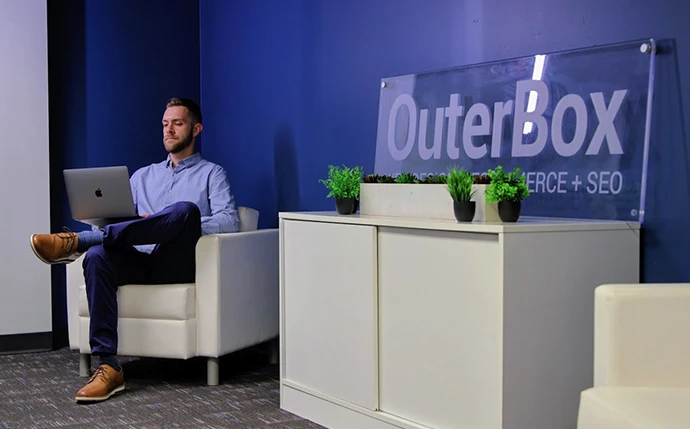
Plastic Surgery SEO With Operational Depth Across One Roof
OuterBox has been in SEO since 2004, and our team brings strategy, content, technical SEO, development, design, conversion-rate optimization, paid media, and analytics under one roof. That matters for plastic surgery because the bottleneck is rarely one isolated ranking factor. The issue may be a thin procedure-page set, weak page speed, messy call tracking, missing medical reviewers, low local authority, or a form path that loses qualified consults.
Company-wide, OuterBox has earned more than two million page-one Google rankings and worked with more than one thousand clients across more than twenty years in business, with a 4.8 out of 5 average rating from 867 reviews on FeaturedCustomers and Clutch.
For a plastic surgery practice, that track record means operational depth. A program can pull from SEO specialists, medical-content writers, technical SEO engineers, web designers, conversion rate optimization analysts, and paid-media teams without forcing each issue through a different vendor.
20+ Years
Digital Marketing Agency
1000+
Successful Client Partnerships
2M+
Page #1 Google Rankings
250+
USA-Based, In-House Experts
Why Plastic Surgery Practices Choose OuterBox
Plastic surgery practices rarely fail in one isolated ranking factor. The issue may be a thin procedure-page set, weak page speed, messy call tracking, missing medical reviewers, low local authority, or a form path that loses qualified consults. Here is how OuterBox handles those decision points relative to an agency that does not specialize in plastic surgery.

- YMYL and E-E-A-T: Named board-certified surgeon, medical reviewer credits on procedure and educational pages, source citations, and author/reviewer schema baked into the template.
- Procedure architecture: Real procedure-specific pages (rhinoplasty, breast augmentation, mommy makeover, gynecomastia, etc.) instead of one generic services page with the procedure name swapped.
- Local visibility: Google Business Profile categories, service items, citations across Healthgrades, RealSelf, RateMDs, Vitals, and Yelp tuned to actual procedures and markets.
- Technical SEO: Crawlability, indexation, canonical hygiene, schema for MedicalOrganization, Physician, MedicalProcedure, and FAQPage, plus Core Web Vitals budgets set at the template level.
- Reviews and reputation: Ethical acquisition, response guidance, FTC-aware disclosure, profile accuracy on medical directories, and on-site reviewer/credential proof.
- Tracking and intake: Call tracking, form submissions, consult requests, and where possible booked-procedure attribution, with HIPAA-aware intake on the capture side.
- Operational depth: Strategy, content, technical SEO, development, design, CRO, paid media, and analytics under one roof, so plastic surgery work is not forced through separate vendors.
Typical Agency
- YMYL and E-E-A-T: Treats medical pages as ordinary commercial content; no medical reviewer pattern, no author schema, no source citation discipline.
- Procedure architecture: Generic procedure-template paragraphs with the procedure name swapped in; thin pages that do not earn rank.
- Local visibility: Google Business Profile left at default, citations untouched after launch, no audit of medical directory data accuracy.
- Technical SEO: Schema added page-by-page rather than at the template, Core Web Vitals treated as a separate post-launch project.
- Reviews and reputation: Encourages incentivized reviews without FTC disclosure, ignores response handling, treats reputation as a separate vendor.
- Tracking and intake: Form fills counted as conversions; no call tracking, no HIPAA-aware capture, no booked-procedure attribution.
- Operational depth: Hands off to separate vendors for design, paid, CRO, and analytics, so plastic surgery context is rebuilt from scratch each time.

Did you know Google holds medical sites to higher YMYL standards? Plastic surgery pages are evaluated against a higher quality bar than ordinary commercial content, and named board-certified expertise, transparent sources, and trust signals can be the difference between ranking and not appearing at all. Learn more about our Medical SEO >
Ready To Build A Plastic Surgery SEO Program That Earns Real Consults?
Send us your website and tell us where you want more qualified consults. OuterBox plans the program around your surgeon roster, market footprint, procedure mix, and patient-acquisition goals.
Need an expert now? Call (866) 647-9218
"*" indicates required fields
"*" indicates required fields
Other SEO Services from OuterBox
Related Services That Support Plastic Surgery SEO



Plastic Surgery SEO Services FAQs

What is included in plastic surgery SEO services?
Plastic surgery SEO services typically include keyword and procedure research, Google Business Profile review, local citation cleanup, procedure-page strategy, medically reviewed content, technical SEO, schema implementation, reviews and reputation work, link earning through reputable medical sources, and reporting tied to calls, forms, and consult requests. Many practices also benefit from call tracking and HIPAA-aware intake configuration so rankings can be tied back to qualified consultations rather than raw traffic.
How is plastic surgery SEO different from general medical SEO?
Plastic surgery SEO has to account for high patient research time, procedure-specific page sets, before-and-after content rules, reviews on platforms such as Healthgrades and RealSelf, board-certification signals, and the trust evaluation patients run before booking. General medical SEO may cover the basics, but SEO for plastic surgeons needs to understand how procedure research, surgeon-credential checks, and local high-intent searches turn into scheduled consultations.
How long does plastic surgery SEO take to work?
SEO is not instant, and no agency should guarantee a number-one ranking or a specific consult timeline. Google notes that SEO results often take time, commonly several months or longer. Plastic surgery practices may see earlier movement from technical fixes, profile cleanup, and improved procedure-page content, but durable growth usually comes from consistent work across content, local signals, technical health, reputation, and measurement.
How much do plastic surgery SEO services cost?
Cost depends on market competition, website condition, number of surgeons and offices, procedure mix, content needs, and whether the program also includes technical SEO, CRO, paid media coordination, or call tracking. A solo single-location surgeon usually needs a different scope than a multi-surgeon network with several offices. The better question is what work is required to create qualified consult demand in the practice’s priority markets and procedures.
Do plastic surgery practices need procedure-specific pages?
Most do. Patients searching for rhinoplasty, breast augmentation, mommy makeover, tummy tuck, liposuction, body contouring, facelift, blepharoplasty, or gynecomastia each have different research questions. A strong procedure page covers candidacy, recovery, risks, side effects, what to expect at consultation, and named medical-reviewer credit. A weak one repeats generic copy with the procedure name swapped in.
How do reviews and before-and-after content affect plastic surgery SEO?
Reviews influence patient trust and Business Profile prominence, especially on platforms patients actually use to validate surgeons, such as Google, Healthgrades, RealSelf, and RateMDs. We focus on ethical review acquisition, response guidance, and on-site proof. Before-and-after content can support patient understanding when treated as descriptive media with accurate alt text and patient-consent attribution. It should not imply typical results, promise specific outcomes, or violate state medical-advertising rules.
Can SEO work alongside paid ads for plastic surgery practices?
Yes. SEO, search ads, and social ads can support different parts of plastic surgery demand. Paid campaigns can cover urgent demand for time-sensitive procedures, seasonal offers, or markets where organic rankings are still building. SEO builds the longer-term foundation: procedure pages, local relevance, technical health, reputation, and authority. Paid advertising does not improve organic rankings, but the combined data can help a practice make better decisions about budget and coverage.
How should I compare plastic surgery SEO companies?
Look for a company that can explain what will be done, how it maps to the practice’s procedures and markets, how calls and consult requests will be tracked, and what claims are realistic. A strong plastic surgery SEO agency should talk about Business Profile accuracy, procedure-page strategy, medical-reviewer pattern, schema, technical SEO, reviews, intake-aware tracking, and patient-acquisition outcomes. Be cautious with guaranteed rankings, fixed consult-volume promises, and packages that do not account for the practice’s actual surgeon roster, procedure mix, and location footprint.
Related Articles: Plastic Surgery SEO Services

SEO | 9 min read
Google says no third-party SEO tool sees its ranking data. Here’s where Search Console is authoritative, and where third-party tools still earn their place.

SEO | 16 min read
SEO prices in 2026 run $100–$250 per hour, $3,000–$7,500 a month for most US agencies, or $5,000–$50,000 for project-based work. The range is wide because…

SEO | 6 min read
Searching for an eCommerce SEO Agency in 2026 feels…familiar. Every “Top 10” list looks the same. Every agency claims to be “data-driven”. And half of…