
Digital Marketing Services for Small Business That Fit Your Next Stage
Your business does not need an enterprise marketing machine. It needs digital marketing services for small business that fit the stage you're in now, protect the budget you have, and make the next smart move easier to see.






Digital Marketing Services for Small Business With Real-World Constraints
OuterBox builds that kind of program across SEO, paid media, local visibility, email, CRO, web design, and analytics. The work starts with your market, your team, your sales path, and the customers you actually want more of.
Businesses at this size make marketing decisions with less room for waste. A bad campaign does not sit quietly in a departmental budget. It shows up in payroll pressure, owner time, lead quality, inventory, cash flow, and the sales team’s calendar.
That reality changes the strategy. A digital marketing agency for a small business should not hand over a channel menu and ask you to pick what sounds good.
The first job is diagnosis. OuterBox looks at where demand already exists, where your site is losing buyers, which leads are worth paying for, and which work your internal team can support.
For one company, that may mean fixing quote requests and call tracking before adding campaigns. For another, it may mean rebuilding product pages so sales stops answering the same basic questions by hand.
OuterBox meets you where you are. Some small businesses need a full program across search, paid media, email, web, and analytics. Others need one stand-alone service done well before the next layer makes sense.
Both paths can work when the sequence is honest (and when the budget has a job).
What Sets a Small Business Marketing Company Apart
OuterBox keeps these seven service areas connected for a small-business program. Each one can stand alone, but the strongest programs use them as parts of the same growth path.

SEO & Content For Specific Buyer Intent
Your best customers rarely search in broad, tidy phrases. They search by product type, material, city, problem, brand, size, industry, requirement, and comparison. Small business SEO should catch those specific searches before a larger competitor wins them with a broader page.
OuterBox uses the B-SMART method to map that specificity: brand, size, shape, SKU, materials, areas of industry, requirements, and types. Google says 15% of searches it sees every day are entirely new, which is why narrow buyer language matters. Your content has to answer the searches that do not fit neatly into last year’s keyword list.
The Rapid Rivets intent-based content example shows how this works in practice. B-SMART product content helped produce a 216% traffic increase, a 155% lift in conversion events, and 54 new business opportunities from product requests.
That proof does not mean every page performs the same way. It shows why specific buyer intent is worth building around.
Paid Media That Filters Bad-Fit Clicks
Your paid budget should not pay for every possible click. Small business marketing services need paid media that filters out bad-fit demand before spend scales.
PPC management services at OuterBox start with the searches, audiences, products, offers, and landing pages most likely to create qualified activity. Negative keywords matter. So do lead-source data, product-feed accuracy, landing-page clarity, and the difference between a cheap click and a customer worth pursuing.
For smaller budgets, account hygiene matters as much as ambition. Match types, search-term review, geography, dayparting, product feed errors, and landing-page message match can decide whether spend teaches you something useful or only buys noise. The early paid-media plan should protect learning quality before it scales volume.
A food co-packing paid media case study makes the point clearly. OuterBox used LOOP Analytics and 1,684+ negative keywords to filter consumer intent for an anonymized food co-packing company. PPC produced 32% of total MQLs, paid form submissions rose 50% year over year, and traffic increased 83%.
Local SEO For The Markets You Actually Serve
Small business marketing companies with a local or regional footprint have a different problem than national brands. Customers need to find the right location, trust the listing, understand the service area, and call the business that fits their need.
Local SEO services help that happen across Google Business Profile, location pages, citations, reviews, local content, and call tracking. Google says local results are shaped by relevance, distance, and prominence. Complete business information, accurate hours, reviews, photos, categories, and service details all help customers understand whether you’re the right nearby choice.
OuterBox keeps local visibility tied to lead quality. A call from the wrong city or wrong service line is not a win. A local program should show which markets are creating real calls, form fills, visits, and sales conversations.
That can mean different work for different footprints. A service-area business may need clearer city coverage and call tracking. A multi-location retailer may need profile cleanup, location-page consistency, review flow, and store-level reporting.
Email That Turns Existing Demand Into Repeat Revenue
Your email list is one of the few channels your business actually owns. Search and paid media can create the first visit, but email marketing services help keep that demand working after the first interaction.
OuterBox builds email around the customer stage: welcome flows, abandoned cart recovery, lead nurture, replenishment reminders, review requests, reactivation, and post-purchase follow-up. A small business does not need a bloated calendar. It needs the right message at the moment a subscriber, lead, or customer is most likely to act.
Email also helps the rest of the program. Paid audiences get sharper, CRO tests get cleaner, and sales teams get warmer leads.
Customers hear from the brand after the ad budget has already done its job.
CRO That Makes Current Traffic Work Harder
Marketing companies for small businesses should not ask you to buy more traffic before the current traffic has a fair chance to convert. Conversion rate optimization is where pages, forms, checkout paths, calls to action, and proof points get tested against real buyer friction.
OuterBox looks for the quiet spots where visitors hesitate: long forms, vague offers, slow mobile templates, and weak proof. It also checks unclear service fit, missing pricing context, and pages that answer the wrong objection.
The fix may be a shorter form. It may be better copy. It may be a cleaner path from ad to landing page to call.
CRO does not need an unsupported statistical promise to be useful. Your business needs a steady testing rhythm that makes each qualified visit more likely to become a lead, sale, or next conversation.
Web Design And Development That Supports Marketing
For small businesses, internet marketing still has to land somewhere: the website. If the site is slow, confusing, hard to edit, or disconnected from tracking, the rest of the program works uphill.
Website design services from OuterBox connect the page experience to marketing outcomes. That includes speed, mobile usability, crawlability, schema, conversion paths, form behavior, and the CMS your team can maintain.
Core Web Vitals give one practical performance lens. Current good-experience thresholds are LCP within 2.5 seconds, INP at 200 milliseconds or less, and CLS at 0.1 or less at the 75th percentile.
For a small team, maintainability matters. A landing page, product page, location page, or service page should be easy to update without breaking tracking, forms, schema, or the sales path behind it.
The site should support growth without becoming fragile. Your pages need to load, rank, convert, and stay editable when the next campaign, product, location, or service line goes live.
Analytics That Show What To Do Next
Your reporting should make the next decision clearer. Web analytics services connect GA4, forms, calls, CRM data, ad platforms, email, and sales outcomes.
That connected view helps your team see what is working and what only looks busy.
Google Ads describes conversions as valuable customer actions such as purchases, sign-ups, phone calls, app actions, and offline conversions. That framing matters for small businesses. Pageviews alone do not tell you whether marketing is helping the business.
Calls, form fills, qualified leads, purchases, close rates, and revenue signals get closer to the truth. The practical output is a shorter list of better decisions. That includes which campaign to pause, which page to fix, which market to support, and which lead source deserves more attention.
The Kapp Alloy LOOP Analytics case study shows why lead quality belongs in the data. OuterBox used LOOP Analytics and B-SMART content to help Kapp Alloy target B2B buyers instead of hobbyist orders, contributing to a 50% eCommerce sales increase by year’s end.
Small Business Marketing Services Built in the Right Sequence
Marketing services work best for small businesses when each channel has a job. SEO can build durable visibility, PPC can test demand faster, and local SEO can turn market proximity into calls.
Email can bring existing demand back. CRO can make the traffic you already earn more valuable. Analytics can show which channel deserves the next dollar.
OuterBox plans those pieces together instead of forcing them to compete for credit. If your site cannot convert, more traffic may only reveal the leak faster. If your market already has search demand, paid media can create feedback while SEO compounds.
If your local visibility is weak, Google Business Profile work and location pages may come before a broader content program. That sequencing keeps the plan from becoming a wish list. It also gives your team a practical operating rhythm: fix the constraint, measure the change, and decide what deserves the next round of effort.
The goal is not to do everything at once. The goal is to know what should move first, what should wait, and what needs a real test.
Marketing for Small Businesses Without Enterprise Overhead
Smaller teams deserve serious performance marketing without the heavy process that slows larger organizations down. Your program should still have strategy, documentation, accountability, and clear reporting. It just should not take three committees to decide what happens next.
OuterBox gives small teams access to specialized depth across search, paid media, web, analytics, CRO, email, and content. The difference is how the work is sequenced. Your team gets a path that respects cash flow, internal capacity, and the reality that owner-led decisions often need a clear answer quickly.
Accountability looks practical: a clear next action after each reporting cycle, campaign decisions tied to lead quality, and enough documentation that your team can see what changed. Rigorous, but not heavy.
How OuterBox delivers accountable, results-driven performance marketing for businesses of every size
Small Business Digital Marketing
Get a Free Quote From a Digital Marketing Agency Built for Small Business Growth
Send us your site, your goals, and what is not working yet. OuterBox will look at the fit, ask the right questions, and recommend the first digital marketing moves that make sense for your business stage.
Services
"*" indicates required fields
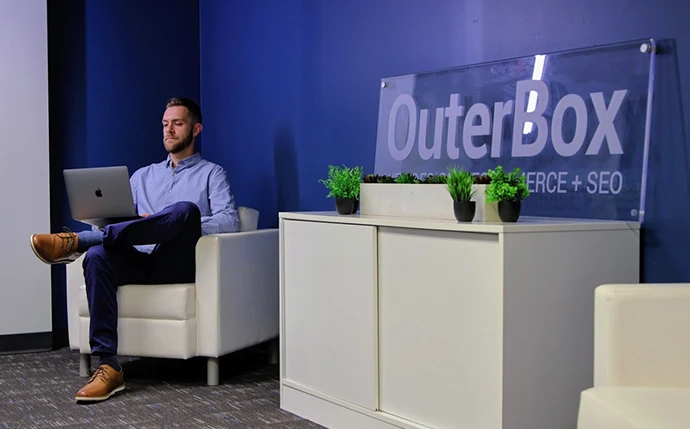
Meet The Team Behind Your Small Business Marketing Program
OuterBox has been building digital marketing programs since 2004. The team includes 300+ in-house experts across SEO, paid media, web design, development, CRO, email, analytics, content, and strategy.
That depth matters for a small business because most marketing problems are connected. A lead problem may start with search intent. A paid media problem may come from the landing page.
A reporting problem may hide inside the CRM. A website problem may be slowing every campaign at once.
OuterBox keeps those specialists in the same room. Our team has supported 1,000+ client relationships and earned 2M+ page-one Google rankings, but the point is not size for its own sake. The point is that your business gets the right specialist when the next problem needs one.
20+ Years
Digital Marketing Agency
1,000+
Successful Client Partnerships
2M+
Page #1 Google Rankings
300+
In-House Experts
Why Small Businesses Choose OuterBox for Marketing Services
Companies at this stage need a partner that can bring depth without turning the engagement into enterprise theater. The five decisions below are the difference we try to protect — small business fit on the left, mid-market pattern in the middle, enterprise pattern on the right.
OuterBox works well for small businesses because the program does not have to pretend you are bigger than you are. The strategy meets your current stage, then builds the next layer when the business is ready for it. Call tracking analytics can be part of that proof when phone quality matters as much as lead volume.
That fit also protects owner and manager time. A useful program should make fewer decisions feel mysterious. You should know what changed, why it changed, what the data says so far, and what tradeoff comes next.
How B-SMART Finds Internet Marketing Searches Small Businesses Miss
Google says 15% of searches it sees every day are entirely new. That is one reason broad keyword lists miss real buyers, especially in markets where customers search by product details, materials, use cases, service areas, or requirements.
OuterBox’s B-SMART method helps uncover those modifiers. The framework looks at brand, size, shape, SKU, material, area of industry, requirement, and type.
A broad phrase like steel plates can be too vague to guide a buyer. A phrase like Type 304 stainless steel plates gets closer to a customer who knows what they need.
Small businesses can use that specificity to compete without outspending larger brands. The win is not always the biggest keyword. Often, it is the right page answering the right buyer at the right moment.
Talk Through The First Move
Your next marketing dollar should have a clear job. OuterBox can help you decide whether that job is visibility, paid demand, local calls, better conversion, cleaner tracking, or a stronger website foundation.
Bring us the goal and the constraint. We'll help you sort the sequence.
Other Services from OuterBox
Additional Digital Marketing Services for Small Businesses



Small Business Digital Marketing FAQs
Common questions about digital marketing services for small business — what’s included, how long it takes, and how to measure whether marketing is actually working.
What do digital marketing services for small business include?
Digital marketing services for small business usually include SEO, PPC, local SEO, email, CRO, web design, analytics, and content. The right mix depends on your market, website, budget, sales path, and internal capacity.
How is small-business digital marketing different from enterprise or mid-market marketing?
Small-business digital marketing needs tighter sequencing, faster feedback, simpler reporting, and clearer budget stewardship. Enterprise programs usually need more governance, more stakeholders, and more infrastructure before work can move.
How much should a small business spend on digital marketing?
Small-business marketing budgets depend on competition, geography, site health, service mix, and growth goals. OuterBox scopes the first priorities after reviewing your site and goals, then explains the recommended investment before work begins.
Which digital marketing channel should a small business start with?
The first channel should match the constraint. SEO fits durable demand capture, PPC fits faster testing, local SEO fits market-based calls, CRO fits traffic that is not converting, and analytics fits unclear performance.
How long does small-business digital marketing take to work?
Timing depends on the channel and the starting point. Paid media can create faster feedback, while SEO and content usually compound over time as technical, content, authority, and conversion improvements reinforce each other.
Can this work for local, eCommerce, and B2B small businesses?
Yes. Local businesses often need GBP, reviews, calls, and location pages. eCommerce businesses need product, category, feed, and checkout support.
B2B small businesses need lead quality, specific buyer intent, and sales-cycle tracking.
How do you measure whether small-business marketing is working?
Small-business marketing should be measured by the actions that matter: calls, form fills, qualified leads, sales, order value, repeat purchases, and channel-level trends. Marketing analytics reporting keeps those signals connected.
Related Articles: Small Business Digital Marketing

Digital Marketing | 8 min read
Digital marketing gets more complicated for health and wellness brands every year, particularly on social media. Each platform has its own distinct policy restrictions for…

Digital Marketing | 11 min read
Senior living lead generation playbook for better senior living leads, stronger follow-up, more tours, and clearer move-in reporting.

AI, Digital Marketing | 8 min read
From OuterBox leaders, learn how AI search, earned authority, and connected marketing can educate prospects before they click and help turn search visibility into better…