
Amazon SEO Services That Build Marketplace Revenue
Amazon is where many product searches start, but marketplace growth gets expensive when listings, ads, reviews, and your D2C site move in different directions. OuterBox Amazon SEO services improve the product pages, catalog structure, brand content, and reporting that help your products rank, convert, and protect margin across the Amazon store.
"*" indicates required fields
"*" indicates required fields



Amazon SEO Services for Brands That Need Marketplace Growth
Amazon SEO is not the same work as optimizing your ecommerce website for Google. Amazon’s product search engine rewards relevance, conversion, availability, reviews, price, fulfillment, and sales velocity, so a listing that looks complete can still underperform when the catalog foundation is weak.
OuterBox treats Amazon as one part of your ecommerce marketing program, not a replacement for the channel you own. The right Amazon strategy helps shoppers find and trust your products inside the marketplace while your D2C site keeps building brand equity, customer data, and margin control.
Since 2004, OuterBox has helped ecommerce brands connect SEO, paid media, CRO, analytics, and web development around revenue. That matters on Amazon because listing copy alone rarely fixes the real issue. Suppressed ASINs, weak variation structure, thin A+ Content, review gaps, wasted PPC spend, or missing attribution can all cap growth before keyword optimization has a fair chance to work.
Your Amazon program should make the next priority obvious: which listings need technical cleanup, which products need better content, which campaigns should support organic ranking, and which category opportunities are worth chasing now.
What Our Amazon SEO Services Include
Amazon SEO works best when every marketplace signal supports the same goal: more qualified shoppers reaching the right product page and buying with fewer doubts.
OuterBox connects Storefront, A+ Content, listing structure, Amazon PPC support, and reporting around the catalog priorities that matter most, so marketplace work does not split into separate SEO, creative, and advertising lanes.

Core Service Components
The Amazon SEO services foundation your catalog needs before search can do its job
Your catalog’s ranking potential is set before the first keyword is optimized. When account structure, brand enrollment, and catalog hygiene are misaligned, entire product families get suppressed before any listing-level work can matter, and this eCommerce program clears that foundation first.
Category assignments, variation hierarchies, and catalog attributes all run through your Seller Central and Vendor Central setup. When that configuration is right, keyword and listing optimization compounds; when it’s wrong, ASINs get suppressed before any search work has a chance to land.
Your listings get protected from unauthorized resellers through Brand Registry enrollment, and the same registration enables A+ Content, Storefront eligibility, and the compliance layer Amazon requires as your catalog grows. Accounts built clean scale without the suppression risks or policy flags that surface at each new product launch.
Sellers who build on a verified, well-structured account foundation rank faster, hold their catalog more consistently, and spend less time correcting structural problems that compound at scale.
Every revenue leak and ranking gap in your account, named and prioritized before it costs more
Unaudited Amazon accounts carry problems that compound quietly: suppressed listings losing daily sales, duplicate ASINs splitting catalog authority, and attribution gaps misrepresenting which channels actually drive revenue. The eCommerce consulting work starts with a full account diagnostic before any optimization begins.
- Your indexed terms: which backend keywords are actually returning your ASINs in search results versus sitting in the field with no ranking signal.
- Your suppressed listings: every ASIN removed from search by policy holds, incomplete attributes, or image violations, identified with root cause.
- Your variation structure: parent-child conflicts and duplicate ASINs fragmenting authority across competing product pages in the same catalog.
- Your attribution accuracy: off-Amazon traffic gaps, promotional disconnects, and source mismatches distorting the revenue picture.
- Your listing quality floor: attribute completeness gaps limiting eligibility for search features and browse placement across categories.
- Your policy exposure: TOS risks, counterfeit signals, and brand gating gaps that carry account-level consequences if left unresolved.
Gaps get prioritized by revenue impact and addressed in that order, so the fixes that restore the most sales happen before the optimization work builds on top of them.
Amazon SEO experts who build listings that rank in Amazon’s search and convert on arrival
Your listings compete on two fronts simultaneously: Amazon’s search algorithm and the shopper’s attention span, and the gap between a technically complete listing and one that closes the sale is where conversion rate on your listings falls or holds.
- Your titles carry primary keyword architecture, brand context, and key attributes inside Amazon’s character limits, structured for search and readable for conversion.
- Your bullet points lead with the benefit the buyer cares about, supported by the feature that delivers it, in a parallel format that survives a three-second skim.
- Your descriptions reinforce search relevance, answer pre-purchase objections, and extend keyword coverage your title cannot hold.
- Your backend search terms include misspellings, regional variants, and competitive terms within TOS, expanding indexed reach without cluttering the visible listing.
- Your images meet main image compliance and include lifestyle shots and infographic slides that convert browsers before the first scroll.
- Your attribute fields carry the specification depth Amazon needs to surface your products in category features and reduce buyer return rates.
Listings optimized at every layer rank more consistently, convert more shoppers, and generate fewer returns than those treated as a one-time setup task.
Search terms your buyers use: discovered, indexed, and tracked
Your catalog loses demand with every relevant keyword that goes unindexed on Amazon’s search engine, giving competitors who captured those terms a visibility advantage your amazon seo services should be closing.
- Your seed and long-tail term map covers category browse language, customer phrasing, and spec-level terminology across the full product family beyond the obvious head terms.
- Your competitor keyword gap analysis surfaces the search terms driving traffic to rival ASINs that your listings haven’t yet captured or indexed.
- Your backend search terms include misspellings, regional variants, and relevant foreign-language terms that expand indexing reach without appearing in the visible listing.
- Your Brand Analytics data and Amazon Search Query Performance reports get reviewed regularly to surface demand shifts before they cost you rankings.
- Your indexed terms are verified (not assumed) with confirmation that backend terms are returning your ASINs in live search results rather than sitting in the field without ranking signal.
Rankings grow when the full set of terms your buyers are using is indexed, validated, and tracked across every Amazon search entry point your catalog can own.
Paid visibility that accelerates organic rankings and compounds sales velocity
Your paid campaigns do more than generate immediate sales; they build the sales velocity signal that Amazon’s ranking algorithm uses to determine organic placement. Structured correctly, your amazon ppc work and organic strategy reinforce each other rather than operating as separate budget lines competing for the same conversions.
- Your Sponsored Products coverage targets the same keywords your organic ranking is working toward, so paid and organic signals compound instead of duplicate.
- Your brand captures category entry points and branded searches through Sponsored Brands that product-level ASIN campaigns cannot reach on their own.
- Your catalog stays visible to buyers who browsed competitor listings and to those who visited your ASINs without converting, through Sponsored Display.
- Your paid spend doesn’t fund keywords you already own organically at a fraction of the cost; bid strategy and negative keyword review keeps the two channels from undercutting each other.
Sales velocity from coordinated paid and organic coverage compounds your ranking signals faster than either channel can build working in isolation.
Reviews that move your conversion rate and signal quality to Amazon’s ranking algorithm
Review velocity is one of the few Amazon ranking signals your brand controls directly. Every compliant acquisition cycle compounds its effect on both conversion rate and search placement, making the review program one of the highest-impact inputs in your Amazon catalog’s performance strategy.
As a brand-registered seller, your two compliant paths to review volume are Amazon Vine enrollment and post-purchase solicitation, both built into a repeatable sequence through eCommerce optimization work that accelerates acquisition without violating Amazon’s solicitation guidelines.
Your star rating floor takes the largest hit from unaddressed negative reviews, and each defect-based review without a response reinforces the problem while compounding Amazon’s conversion and placement penalties. Issue remediation maps defect patterns, escalates policy violations, and targets root causes before the rating floor drops below the threshold your BSR position depends on.
Ratings built through a consistent, compliant acquisition program compound over time and hold their BSR position through the seasonal shifts and competitor launches that erode weaker review profiles.
Brand pages that turn browsers into buyers and deepen the catalog story
Shoppers who land on flat ASIN pages make departure decisions faster than those who encounter brand content that answers their questions visually. A+ Content and Brand Storefront give your brand the surfaces to close that gap, and your conversion rate optimization work keeps performance improving after the content is live.
- Your product pages carry comparison modules, enhanced imagery, and specification layouts through Premium A+ Content that answer objections before shoppers need to search elsewhere.
- Your brand story, feature context, and use-case detail fill the A+ narrative sections that a standard description can’t fit in the space Amazon provides.
- Your catalog gets a curated Brand Storefront hub with collection pages, featured rows, and video integration that moves buyers through your full inventory rather than dropping them at one ASIN.
- Your average order value grows when category links and bundle visibility in upsell architecture extend the shopping session within your brand rather than pushing it back to search.
Buyers who land on a complete brand story convert at higher rates, explore more of the catalog, and return to the Storefront when they’re ready to purchase again.
Marketplace reporting that connects your rankings to revenue and keeps the roadmap clear
Your reporting connects organic rank movement, paid efficiency, and attribution work into one picture of what your catalog is actually earning: the connected view an Amazon SEO company needs to show you rather than separate dashboards for each channel.
- Your organic rank movement: keyword and ASIN position tracked against target terms, with historical trending to show whether velocity is building or stalling across the category.
- Your sales and revenue trends: units sold, session-to-sale conversion rate, and ASIN-level revenue that surfaces which products are growing and which need intervention.
- Your TACoS and ACoS by campaign: total and advertising cost-of-sale measured against your category margins to show whether the full program is moving toward sustainable profitability.
- Your BSR movement: Best Sellers Rank changes mapped against competitor BSR shifts to separate your catalog’s performance from market-wide seasonal patterns.
- Your roadmap: the specific next-quarter priorities ranked by projected revenue impact, with context for why each item is sequenced when it is.
You always know which metrics moved, which tactics are compounding, and what the next priority is before the reporting cycle starts over.
An Amazon SEO agency that builds category-level market position beyond individual keyword rankings
BSR measures which products deserve prime placement in your category, and it responds to competitor signals as much as to your own performance improvements. Holding a strong position requires the kind of competitive intelligence an Amazon SEO consultant brings: knowing where rivals are vulnerable, how their promotions shift category demand, and which moves to anticipate before they displace your rankings.
Your category position gets benchmarked against the pricing, promotions, keyword share, and ASIN performance of the rivals closest to displacing your rankings. Those patterns feed into your eCommerce SEO work, identifying which listing and keyword investments will move you past specific competitors rather than improving your catalog in the abstract.
Best Sellers Rank responds to sales velocity, conversion rate, and external traffic quality. Improving one in isolation rarely moves the overall number. The strategy layer maps how organic ranking work, paid adjustments, and listing changes are expected to shift BSR before execution begins, so resources go where they compound fastest.
Market share in a competitive Amazon category is compounding: the catalog that holds BSR through competitor launches, price changes, and algorithm updates built its position systematically rather than chasing individual rank gains quarter by quarter.
Industry-Specific Amazon SEO
Amazon category rules change how search and conversion problems show up. A beauty brand may need review velocity and compliance-safe claims. An industrial catalog may need cleaner variation logic, spec fields, and B2B buyer terminology. A home and kitchen seller may need stronger image sequencing, bundle logic, and seasonal query coverage.
-
Beauty & Personal Care
-
Home & Kitchen
-
Health & Household
-
Grocery & Gourmet
-
Pet Supplies
-
Sports & Outdoors
-
Toys & Games
-
Apparel & Accessories
-
Automotive
-
Industrial & Scientific
-
Consumer Electronics
Get a Quote for Your Amazon SEO Campaign
Tell us where your Amazon catalog is stuck: rankings, suppressed listings, review volume, A+ Content, PPC efficiency, or attribution. OuterBox will review the opportunity and come back with the first issues we would investigate.
Services
"*" indicates required fields
Meet OuterBox
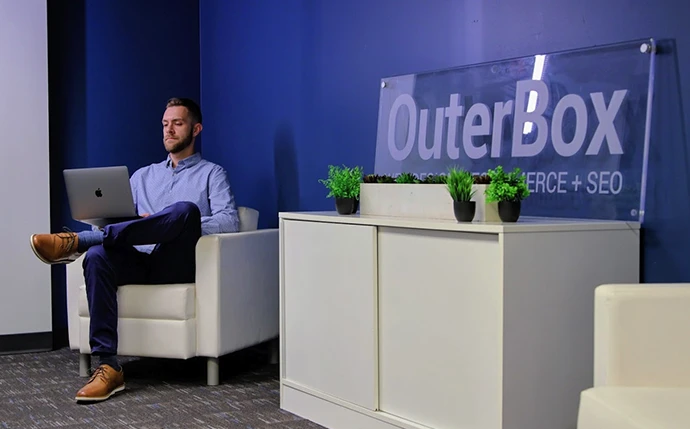
OuterBox is an ecommerce-focused digital marketing agency built for the places where search, paid media, site experience, and analytics overlap. Amazon SEO consulting sits directly in that overlap.
Your Amazon account reaches specialists who understand marketplace ranking signals, product-page conversion, Amazon PPC, ecommerce SEO, CRO, analytics, and development. That structure keeps the program from becoming a listing-copy project when the actual problem is catalog hygiene, paid-search waste, missing attribution, or a weak D2C handoff.
20+ Years
Digital Marketing Agency
1000+
Successful Client Partnerships
2M+
Page #1 Google Rankings
300+
USA-Based, In-House Experts
Real Brand Results
Brands That Drive Real Growth
OuterBox has run ecommerce marketing programs for brands across many industries. These wins came from sustained work on catalog structure, content, search visibility, and reporting — the same discipline we bring to every Amazon SEO engagement.
CORSA Performance partnered with OuterBox on a long-running ecommerce marketing program covering SEO, paid media, and content strategy. The result: a 366% organic search revenue lift and continued year-over-year growth.

Bambi Baby brought OuterBox on for an ecommerce SEO program that tightened catalog structure, content, and rankings. The result: 102% organic revenue growth quarter over quarter, a 67% increase in organic transactions, and a 138% lift in page-one keyword rankings.
Why Choose OuterBox as Your Amazon SEO Agency
Amazon SEO buyers do not need another vendor who rewrites a title, adds backend keywords, and disappears. Your marketplace program needs the pieces that affect rank and conversion to move together, and the right Amazon SEO company should make that coordination visible before the first optimization cycle starts.

-
Your strategy starts with catalog structure, Brand Registry readiness, suppressed listing risk, and D2C channel fit.
-
Your listings are written for search relevance and shopper conversion.
-
Your Amazon PPC management and organic ranking plan reinforce the same priority terms.
-
Your A+ Content, Storefront, images, and listing copy answer objections visually.
-
Your reviews and rating strategy stays compliant with Amazon rules.
-
Your reporting connects rank movement, units sold, conversion rate, ACoS, TACoS, BSR, and revenue.
-
Your D2C ecommerce site remains part of the plan.
-
Your team hears from a named point of contact, sees written recaps, and understands what changed each cycle.
-
Your plan is supported by ecommerce SEO proof, with Amazon-specific claims kept separate from broader channel results.
-
Your roadmap is prioritized by revenue impact and operational risk.
Typical Listing-Only Provider
-
The work starts at title and bullet copy, even when account setup is the real issue.
-
Keyword volume drives the copy, even if the listing becomes harder to buy from.
-
Ads and SEO run in separate lanes, so spend can hide weak organic placement.
-
Creative work is treated as a design task after SEO is done.
-
Review growth is treated as a vague reputation task or skipped entirely.
-
Reporting focuses on activity and keyword movement without margin context.
-
Amazon growth is handled in isolation from the owned ecommerce business.
-
Communication depends on dashboard access or scattered task updates.
-
Proof is vague, overstated, or borrowed from unrelated marketplace work.
-
Every recommendation looks equally urgent.

Amazon says Basic A+ Content can increase sales by up to 8%, and well-implemented Premium A+ Content can increase sales by up to 20%. That does not mean every listing gets the same lift. It does mean rich product content deserves a real testing and measurement plan, especially when paid traffic is sending shoppers to the same ASINs your organic Amazon SEO strategy is trying to grow. Pair Amazon SEO with Amazon PPC management →
Related Services from OuterBox
Other OuterBox Services



Amazon SEO FAQs

What is Amazon SEO?
Amazon SEO is the process of improving product visibility and conversion inside Amazon search. It includes keyword research, listing optimization, catalog attributes, backend terms, review strategy, A+ Content, Storefront structure, and performance measurement.
How do Amazon SEO services improve rankings?
Amazon SEO services improve the signals Amazon can read and the signals shoppers respond to. Titles, bullets, attributes, images, reviews, price, fulfillment, availability, conversion rate, and sales velocity all influence whether a product earns more visibility.
Is Amazon SEO different from Google SEO?
Yes. Google SEO helps your website rank in Google search. Amazon SEO helps product listings rank and convert inside Amazon’s product search engine. Strong Amazon SEO can help Amazon listings appear in Google results, but it does not directly improve the Google rankings of your D2C website.
How much do Amazon SEO services cost?
Amazon SEO pricing depends on catalog size, category competition, content scope, PPC involvement, review needs, and reporting complexity. OuterBox scopes Amazon SEO after reviewing the account and catalog, so the proposal reflects the work needed instead of a generic package.
How long does Amazon SEO take?
Some listing fixes can affect indexation and conversion quickly, but durable Amazon SEO usually needs several cycles of cleanup, content updates, PPC support, review growth, and measurement. Amazon recommends 8 to 10 weeks as a seller-selected duration for Manage Your Experiments tests, and competitive catalogs should plan around months, not days.
Do Amazon SEO and Amazon PPC work together?
Yes. Amazon PPC can build paid visibility and sales velocity around the same terms the organic strategy is trying to win. The key is coordination, so ad spend supports ranking growth instead of masking weak listings or overpaying for terms the catalog already owns.
What is A+ Content, and does it help SEO?
A+ Content adds richer product modules such as enhanced images, brand story, comparison charts, and custom text placements. Amazon positions A+ Content as a sales and engagement tool, and stronger conversion can support the performance signals that help organic visibility.
How do reviews affect Amazon SEO?
Reviews influence buyer trust and conversion rate, and conversion matters in Amazon search. A compliant review strategy can include eligible Amazon Vine enrollment for up to 30 reviews on eligible products, post-purchase solicitation inside Amazon’s rules, issue remediation, and tracking review themes that point to product or listing problems.
Why choose OuterBox as your Amazon SEO agency?
OuterBox connects Amazon SEO with ecommerce SEO, Amazon PPC, CRO, analytics, and development. Your catalog gets a marketplace plan that improves rankings and conversion while protecting the owned ecommerce strategy that keeps long-term brand value in your hands. The result is an Amazon SEO agency relationship with the strategic range of an Amazon SEO consultant and the execution depth needed to keep marketplace work moving.
Talk to OuterBox About Amazon SEO
Tell us about your catalog, your Amazon account, and where growth is getting stuck. Reach OuterBox at 1-866-647-9218 or use the form, and we will come back with the first marketplace issues worth investigating.
Related Articles: Amazon SEO Services
SEO | 6 min read
Searching for an eCommerce SEO Agency in 2026 feels…familiar. Every “Top 10” list looks the same. Every agency claims to be “data-driven”. And half of…

SEO | 5 min read
Search isn’t what it used to be. And neither is local SEO. Today, homeowners find contractors through AI summaries, map packs, and conversational engines that…

SEO | 5 min read
When you have an online store you face some of the same issues that regular brick and mortar stores face, especially when it comes to…