
Content Marketing Services Built Around Revenue, Not Volume
Your content should make the next sales conversation easier, not just add another URL to the site. A useful program gives buyers the answers they need, gives search engines a clear reason to rank the page, and gives your team a plan for what to publish next.
OuterBox provides content marketing services for teams that need strategy, SEO, writing, distribution, refreshes, and reporting connected from the start. The goal is not more content. The goal is content that earns attention, supports the buyer path, and keeps working after the first publish date.
"*" indicates required fields
"*" indicates required fields



Content Marketing Services for Pages That Need a Job
Content marketing solutions get stronger when every idea is tied to a page type, buyer question, and business outcome before it reaches the calendar. Your team may publish blogs, service pages, guides, emails, social posts, and sales assets, but the work only compounds when each piece has a purpose.
That purpose might be ranking for a commercial search, helping a buyer compare options, supporting a product category, answering a sales objection, or giving paid and email teams stronger material to reuse. The best content in the world is still wasted if nobody finds it or if it sends the reader nowhere useful.
OuterBox builds content marketing around that full path. Strategy, SEO services, paid media, email, social, analytics, and sales support should not compete for separate messages. They should make the same buyer journey easier to understand and act on.
What's Included in Our SEO Content Marketing Services
Every content engagement starts with the same practical question: what should these content marketing services change for the business? From there, OuterBox shapes the strategy, research, writing, optimization, distribution, reporting, and refresh work around that answer.

Content Marketing Strategy Services Built Around Revenue Paths
Your content plan should make the next quarter easier to defend. Strong content marketing strategy services connect audience questions, search demand, sales priorities, and production capacity before the calendar fills with disconnected ideas. The strategy should show which pages earn new demand, which assets support sales, and which topics should wait because they cannot influence revenue yet.
- Your 90-day roadmap separates awareness, consideration, and decision-stage needs before writing starts.
- Your topic map shows which service pages, articles, comparisons, guides, and refreshes support the same revenue path.
- Your editorial priorities stay realistic because digital marketing consulting keeps channel timing, internal bandwidth, and measurement in the same conversation.
- Your team sees the difference between a useful cluster and a list of low-value topics.
Priorities become clearer when every planned asset has a buyer question, a business reason, and a place in the funnel.
Keyword Research That Turns Searches Into Content Priorities
Search demand has to be sorted before it becomes a content queue. Content marketing services work better when keyword research separates curiosity queries from terms that support demos, quotes, carts, calls, or sales conversations. Volume matters, but the page that should rank and the buyer reason behind the search matter more.
- Your keyword set gets grouped by intent, funnel stage, page type, and business value.
- Your existing rankings show which page-one and page-two terms deserve updates before new assets get scoped.
- Your Google Search Console data exposes real query language that may not appear in a clean keyword export.
- Your cannibalization risks surface before two URLs compete for the same opportunity.
- Your topic groups follow semantic keyword research patterns so one page can support a cluster without stuffing every phrase.
Search targets become easier to act on when each term has a page, a purpose, and a realistic next move.
Content Development That Sounds Like Your Experts
Your buyers can tell when a page was written from a generic brief. Content development should turn expert input into useful copy without asking your product, sales, or leadership teams to become writers. The strongest drafts carry the language your customers use and the proof your internal experts know, then organize it into pages that search engines and readers can understand.
Subject-matter intake gives the writer the details that rarely appear in competitor pages: objections from sales calls, product constraints, category language, service boundaries, and proof points your team can defend. The editorial brief keeps the draft aligned with search intent, internal links, and brand voice. Review loops catch weak claims, vague examples, and sections that sound polished but say little. That same discipline is what separates effective blog content from a post that only fills a publish slot.
Drafts earn trust when the voice sounds familiar to your team and useful to the buyer.
SEO Content Marketing Services Built Into Every Draft
Your pages should not need a rescue pass two months after launch. SEO content marketing services work best when search requirements are built into the draft: the heading structure, internal links, entity coverage, schema opportunities, image context, and metadata all support the same intent before the page goes live.
- Your title, H1, and H2s clarify the page topic without repeating the same phrase in every line.
- Your body copy answers the buyer’s next question instead of padding the page to hit a word count.
- Your internal links move readers toward related service, article, and case-study paths that help them decide.
- Your images, alt text, FAQ opportunities, and structured data are planned while the page is still editable.
- Your SEO copywriting services layer keeps readability, relevance, and conversion intent from splitting into separate edits.
Pages perform better when readers, search engines, and internal teams can all understand why the page exists.
Distribution That Gives Strong Assets a Second Life
Your best content should not disappear after the launch email. Content distribution gives each strong asset more than one route to attention, whether the buyer finds it through organic search, a sales follow-up, an email segment, a LinkedIn post, or a YouTube explanation. The plan starts before publication because the format affects how easily the asset can be reused.
A pillar guide might become sales talking points, short social posts, product-page links, newsletter segments, and a webinar outline. A comparison article might support paid retargeting, partner outreach, and follow-up sequences for prospects who need one more proof point. The repurposing content for greater reach model works best when the asset has a clear job from the beginning instead of being chopped into fragments after the fact.
Assets keep moving when distribution is planned into the brief rather than treated as a launch-day scramble.
Reporting That Connects Content Marketing Services to Revenue
Your reporting should explain whether content is helping the business instead of stopping at traffic movement. Content marketing services need a measurement layer that connects rankings, engaged sessions, assisted conversions, form fills, sales conversations, influenced revenue, and content refresh decisions in one view leadership can use.
- Your GA4 and CRM data show which content paths create qualified actions beyond visits.
- Your Looker Studio views keep rankings, traffic, leads, and revenue context visible in the same reporting cycle.
- Your LOOP Analytics layer helps connect content-assisted journeys when default attribution misses the influence.
- Your baseline snapshots make month-over-month movement easier to explain.
- Your refresh recommendations come from performance patterns rather than opinion.
Reporting earns confidence when every chart points to a decision the team can make next, whether that decision is expanding a winner, fixing a decline, or retiring a weak asset.
eCommerce Content Marketing Solutions for Catalog Growth
Your catalog needs content that helps shoppers choose without slowing them down. eCommerce content marketing solutions should connect category copy, product details, buying guides, comparison pages, FAQs, reviews, and internal links so shoppers can move from research to the right product with less hesitation.
- Your category pages explain product families, materials, applications, sizes, compatibility, or buyer type without turning every category into the same paragraph.
- Your product detail pages answer the questions that block add-to-cart decisions: specs, use cases, shipping, fit, care, support, and trust signals.
- Your buying guides and comparisons capture research demand before shoppers leave for another marketplace.
- Your Product and Offer schema, image context, and FAQ blocks make the catalog easier for search engines to interpret.
- Your eCommerce marketing services path keeps content, merchandising, SEO, paid media, and CRO connected.
Shoppers stay closer to purchase when every content asset supports the catalog instead of sitting beside it.
B2B Content for Buying Committees That Need Proof
B2B content has to survive more than one reader. A five-to-seven person buying committee may include a technical evaluator, a department lead, procurement, finance, legal, and an executive sponsor, and each person looks for a different reason to keep the vendor on the list. Thin thought leadership rarely carries that handoff.
Strong B2B content gives each stakeholder enough proof to move the conversation forward. Technical readers need implementation detail. Financial readers need risk, cost, and return context. Procurement needs comparison language and requirement clarity. Executives need the strategic reason the change matters now. B2B SEO services support that same journey by tying search demand to the pages a committee uses before sales ever joins the conversation.
Committees make cleaner decisions when content answers the practical objections that usually slow the deal, then gives every reader language they can reuse in the next internal conversation.
Content Refresh That Protects the Library You Already Paid For
Your existing library is often the fastest path to better performance. Content refresh work finds the pages that once earned traffic, links, or leads and decides whether they need an update, consolidation, expansion, internal links, or a redirect. The goal is to protect the value already built before decay becomes normal.
- Your 12-18 month review window catches stale claims, outdated examples, thin sections, and slipping rankings before competitors own the topic.
- Your update plan separates pages worth expanding from pages that should merge with stronger assets.
- Your internal links move authority from older resources toward current service, article, and product paths.
- Your metadata, schema, and image context get corrected when older publishing standards no longer match the site.
- Your measure SEO performance process turns decline into a prioritized action list.
Libraries keep compounding when older assets receive the same strategic attention as new ones.
How Our Content Marketing Process Works
Your content process should make priorities easier to explain before writing starts. OuterBox diagnoses the current library, maps demand to business value, builds the production plan, and keeps performance visible after the asset goes live.
- Content and search audit: Review current pages, rankings, impressions, clicks, conversions, stale claims, cannibalization, and content gaps.
- Strategy and page mapping: Decide which topics need service pages, articles, guides, comparisons, product content, email support, social reuse, or refreshes.
- Keyword and audience research: Group demand by intent, funnel stage, buyer question, page type, and revenue path.
- SME and brand intake: Gather sales objections, product details, service boundaries, examples, terminology, and claims your team can defend.
- Brief development: Define the angle, primary query, supporting entities, internal links, proof needs, CTA, metadata, and distribution use.
- Drafting and optimization: Write content with the structure, voice, on-page SEO, and next-step path built in from the start.
- Editorial QA: Check accuracy, brand voice, readability, source support, keyword fit, internal links, and AI-tell patterns.
- Distribution planning: Turn strong assets into sales talking points, email segments, social posts, paid support, or article paths where useful.
- Reporting and refresh: Use rankings, traffic, engagement, leads, revenue, and assisted conversions to decide what gets expanded, updated, merged, or retired.
The process is structured because content decisions get expensive when they drift. A clear operating model keeps writers, SEOs, analysts, sales teams, and channel owners working from the same map.
Real Brand Results
What Content-Led Growth Has Delivered for OuterBox Clients
Content marketing should be judged by what the content helps the business do. Four public case studies show how content, SEO, and measurement worked together.

Rapid Rivets & Fasteners
Intent-based content built around brands, specifications, materials, and industries for precision fastener buyers. OuterBox used the B-SMART Method including eight new product pages. Rapid Rivets & Fasteners saw 216% website traffic in six months, 155% lift in conversion events, 6,441 visits to new content pages, and 54 new business opportunities.
1 EDI Source
On-page updates, technical work, content optimization, and new landing pages to lift lead-generation quality. 1 EDI Source reports a 66% month-over-month increase in organic leads, 57% year-over-year organic conversion increase in the first full month, and 70% keyword ranking increase.

CORSA Performance
Content planning built six months ahead of go-to-market campaigns so assets were ready before launch. Across two years CORSA Performance saw a 366% increase in organic search revenue, nearly 300% total revenue growth, and 122 first-page Google keywords.

Cardinal Peak
Recovery work after a website launch led to ranking, traffic, and lead declines. Homepage optimization, refined landing pages, new service and category content, and internal-link work. Cardinal Peak reports a 167% year-over-year organic traffic lift, 169% lift in organic goal conversions, and 99% keyword ranking increase.
Send us your site and we'll tell you what we see. No generic calendar, no pressure.
Get a Free Digital Marketing Quote
Your content may need a new strategy, a stronger publishing system, a refresh plan, better service pages, product and category support, or reporting that leadership can actually use. Send us your site and we will tell you what we see. Prefer to talk now? Call (866) 647-9218 between 9 and 5 EST.
Services
"*" indicates required fields
How OuterBox Builds Content That Earns Its Place
See how strategy, SEO, writing, and distribution connect inside a content marketing program built around revenue, not volume. The video walks through how OuterBox plans the page, builds the asset, and keeps it working after launch.
How OuterBox plans, writes, and measures content built to support buyers and earn search visibility.
“I view the OBx team as an extension of my own marketing team… 100% focused on what we want to do to make our business work.” – Brent Noward, Director of Marketing, CORSA Performance
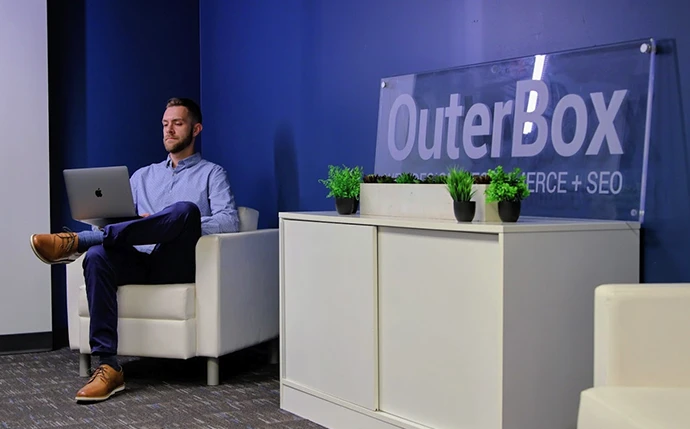
An In-House Team Built Around Content That Performs
20+ Years
Digital Marketing Agency
1000+
Successful Client Partnerships
2M+
Page #1 Google Rankings
300+
USA-Based, In-House Experts
Why Choose OuterBox for Content Marketing
The difference is ownership. OuterBox does not treat content as a stack of assignments. We treat it as part of the search, sales, and revenue system your team depends on.

- Strategy: Audience, search demand, sales priorities, and business value shape the content queue before writing starts.
- SEO integration: Keyword mapping, internal links, metadata, entity coverage, and page type are planned with the draft.
- Distribution: Each strong asset can support search, email, social, sales, paid media, or refresh paths where useful.
- Reporting: Rankings, traffic, engagement, leads, revenue, assisted conversions, and refresh needs guide the next decision.
- Refresh discipline: Existing pages are reviewed for decay, overlap, freshness, and consolidation before net-new work expands.
- Team structure: Writers, SEOs, strategists, analysts, CRO, design, and development can work from one plan.
- Brand accuracy: SME input, voice guides, editorial QA, and source checks keep content useful and defensible.
Writing-Only Content Support
- Strategy: Assignments may begin from a topic list without a clear revenue path.
- SEO integration: SEO may arrive as a keyword handoff or a separate edit after writing.
- Distribution: Publication may be treated as the finish line.
- Reporting: Delivery may end when the document is approved.
- Refresh discipline: New content may keep filling the calendar while older assets lose value.
- Team structure: Copy may sit apart from the teams responsible for ranking, conversion, and measurement.
- Brand accuracy: Drafts may sound polished but miss the details your team knows are true.

Did you know? Refreshing and consolidating existing content often yields faster organic gains than creating net-new posts—especially when paired with internal linking and updated schema. Top-ranking pages are updated every 2 years on average to maintain their position. SEO Services>
Related Services from OuterBox
Related Digital Marketing Services






From Start-Ups To Fortune 500 Companies, Our Clients Are Succeeding Online










Send Us the Content That Is Not Pulling Its Weight
Send us the content that is not pulling its weight and we will tell you what we see. No generic calendar. No pressure. A real conversation about which pages, assets, and refreshes can help your site earn more qualified attention.
"*" indicates required fields
"*" indicates required fields
Content Marketing FAQs

What are content marketing services?
Content marketing services plan, create, optimize, distribute, measure, and refresh content that supports a business goal. The work can include strategy, keyword research, service pages, articles, guides, product content, sales enablement, reporting, and content updates.
What does a content marketing agency do?
A content marketing agency helps decide what content should exist, who it should serve, how it should be found, and how it should support the business. OuterBox connects that work to SEO, analytics, paid media, email, social, CRO, and sales support where useful.
Do we need a full content marketing strategy or just a few blogs?
Your team may only need a focused batch of articles, but the topics still need a strategy. Even a small content plan should define the audience, search intent, page type, internal links, proof, distribution use, and measurement goal before writing starts.
How is content marketing different from SEO copywriting?
Content marketing covers the broader program: strategy, content types, distribution, reporting, and refresh decisions. SEO copywriting is one part of that program, focused on writing pages that satisfy search intent, explain the offer, and guide the reader toward the next step.
Can OuterBox write technical or B2B content?
Yes. OuterBox uses SME input, sales notes, product details, technical documentation, and editorial review to write for complex services, B2B buying committees, software, ecommerce catalogs, industrial products, and other technical topics. If a topic needs outside expert authorship, we will say so.
Do you write ecommerce content?
Yes. OuterBox can support category pages, product detail pages, buying guides, comparison pages, FAQs, merchandising content, and refresh work for ecommerce sites. The goal is content that helps shoppers choose while supporting search, internal links, schema opportunities, and catalog growth.
How do you measure content marketing performance?
Performance depends on the content’s job. OuterBox may review rankings, impressions, clicks, engaged sessions, assisted conversions, form fills, revenue, sales conversations, internal-link movement, and content refresh outcomes. A service page, article, guide, and product page should not all be judged the same way.
How long does content marketing take to work?
Timing depends on site authority, competition, page type, technical health, publishing cadence, internal links, and whether the content is new or refreshed. Some updates can move quickly after indexing. Broader programs usually need several months of publishing, measurement, and adjustment.
Can you refresh our existing content instead of writing new pages?
Yes. Existing content is often the fastest path to better performance because it already has history. OuterBox can review stale claims, thin sections, slipping rankings, weak internal links, cannibalization, and pages that should be updated, consolidated, expanded, or retired.
Does OuterBox use AI for content marketing?
OuterBox may use AI to support research organization, ideation, or workflow speed, but final content should be shaped, checked, edited, and approved by people. Human review matters for source accuracy, brand voice, buyer usefulness, claims, and whether the content deserves to represent your company.
Related Articles: Content Marketing Services


SEO | 16 min read
SEO prices in 2026 run $100–$250 per hour, $3,000–$7,500 a month for most US agencies, or $5,000–$50,000 for project-based work. The range is wide because…

SEO | 6 min read
Searching for an eCommerce SEO Agency in 2026 feels…familiar. Every “Top 10” list looks the same. Every agency claims to be “data-driven”. And half of…