By: Jeff Hirz
Paid search advertising, also known as pay-per-click (PPC) advertising, can be a highly effective and profitable way to grow your business and positively impact your bottom line.
If it’s done well, that is.
At OuterBox, we tailor our approach to paid search for each client based on their needs and goals. No two accounts are the same, but the majority of our clients have one thing in common: PPC is driving a significant portion of their online revenue and conversion volume.
So, how does PPC actually work, and what makes some campaigns succeed while others fall flat? Let’s explore the fundamentals.
What is Pay-Per-Click (PPC) Advertising?
Pay-per-click (PPC) advertising is exactly what it sounds like—an online advertising model where you pay only when someone clicks on your ad. In essence, you decide how much a visit to your website is worth and bid for that traffic.
At its core, PPC is a paid search advertising model used across search engines like Google and Bing, as well as on social platforms such as Meta (Facebook and Instagram), LinkedIn, TikTok, and Amazon Ads. These platforms let businesses show ads to users based on what they search for, browse, or engage with online.
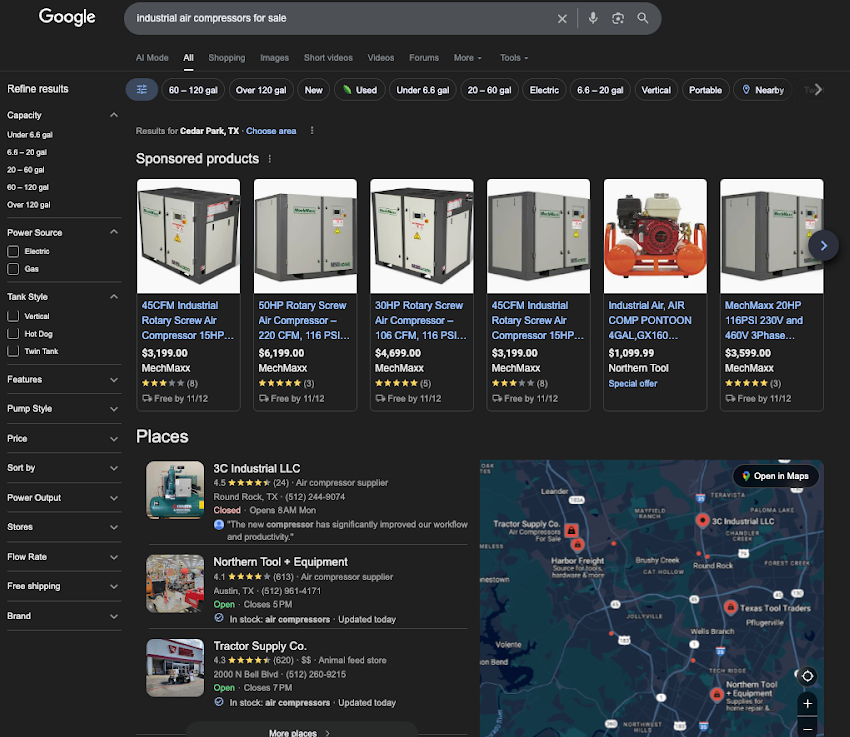
In search campaigns, advertisers choose target keywords relevant to their products or services and enter an auction every time someone searches for those terms. For example, when someone searches for “industrial air compressors for sale” in Google, the ads they see are from manufacturers and distributors that have decided that keyword is critical to reaching their buyers.
The ad auction determines which ads appear and in what order, based on factors such as:
- Bid amount: how much the advertiser is willing to pay per click
- Quality Score: how relevant and high-performing the ad and landing page are
- Expected impact: including click-through rate and ad extensions
While a higher bid can increase visibility, relevance and quality matter just as much in determining placement. This balance between budget, quality, and audience intent is what makes PPC such a strategic, data-driven channel.
Today, much of this process is powered by AI-driven algorithms that automatically adjust bids, match ads to search intent, and predict which placements are most likely to convert.
In short, PPC advertising is a flexible way to buy targeted traffic, control your ad spend, and measure ROI. Understanding how the auction works is key to getting the best return on investment.
Most Popular PPC Channels
It’s no secret that Google remains the most widely used search engine globally. With billions of daily searches, Google Ads currently dominates the paid search marketplace. For most businesses, it’s the best place to start and scale PPC campaigns, offering unmatched reach and targeting options.
Google Ads relies heavily on machine learning and smart bidding to optimize performance automatically—from choosing the best ad placements to adjusting bids based on user behavior, device, and time of day. However, these algorithms are not perfect, and oversight is key.
Microsoft Ads is another valuable channel that shouldn’t be overlooked. Many Bing users don’t actively search on Google, meaning you can reach a unique audience that might otherwise never see your ads. Running campaigns on both platforms helps maximize visibility across demographics and devices.
Beyond traditional text ads, Google offers an extensive range of display advertising options through the Google Display Network (GDN) — allowing brands to reach millions of users as they browse websites, watch videos, or use mobile apps. You can also leverage Google’s ecosystem to show ads on YouTube, within Gmail, and across Discovery Ads, blending text, image, and video formats to build awareness and drive conversions.
For retailers, Google Shopping and Performance Max campaigns are among the most effective ways to drive online sales and maintain strong return on ad spend (ROAS). These campaigns display actual product listings at the top of SERPS, complete with images, prices, store names, and ratings.
These ads pull information from your Google Merchant Center feed and automatically match your products to relevant searches, eliminating the need for manual keyword targeting. The result is high-intent visibility for shoppers who are already comparing products or ready to buy.
In addition to search and display, social and marketplace PPC channels such as LinkedIn Ads, Meta (Facebook & Instagram), TikTok Ads, and Amazon Sponsored Ads are becoming increasingly important. These platforms enable advanced audience targeting, remarketing, and AI-driven optimization that can complement your Google Ads strategy and expand your reach.
Your Takeaway: Start with Google and Microsoft Ads for broad coverage, then expand into social and marketplace PPC to build a full-funnel, multichannel paid media strategy.
How to Use it for My Business
Pay-per-click advertising can serve multiple goals—from sending targeted traffic to specific landing pages to increasing phone calls, driving local store visits, and boosting eCommerce sales. The key is aligning your PPC strategy with your overall business objectives.
If your goal is to increase online sales or generate qualified leads, PPC should be a central part of your digital marketing plan. The first step is to identify the keywords most relevant to your products or services. For example:
- An eCommerce store selling industrial equipment might bid on terms like “buy industrial air compressors online” or “factory ventilation systems for sale.”
- A local HVAC company focused on lead generation could target phrases such as “HVAC repair near me” or “emergency furnace service.”
Choosing the right keywords ensures your ads appear in front of people with high purchase intent—helping you spend your advertising dollars more effectively.
If your focus is on building brand awareness, consider expanding into display, video, or social PPC campaigns on Google Display Network, YouTube, LinkedIn Ads, Meta,, and TikTok Ads to allow you to reach potential customers early in their buyer journey with visuals, storytelling, and remarketing. These channels are especially valuable for new businesses looking to increase visibility and recognition before pushing conversions.
Over time, consistent testing and optimization are key to PPC success. Monitor which channels and keywords deliver the best ROI and allocate more budget to what’s working. At OuterBox, we continuously analyze client performance data, fine-tune campaigns, and leverage AI-driven bidding strategies to maximize conversions and profitability.
Your Takeaway: Start with clear goals, choose high-intent keywords, and test across multiple PPC channels. Data-driven optimization turns your ad spend into sustainable business growth.
Determining Pay-Per-Click Budget & Profitability
One of the biggest advantages of pay-per-click (PPC) advertising is full control over your budget. You can set exactly how much you’re willing to spend by campaign, keyword, or day—ensuring you never exceed your limits.
Your cost-per-click (CPC) will vary based on keyword competition, industry, and audience intent. In more competitive verticals, you may need to bid higher to maintain visibility, while niche or local terms can often deliver great results at a lower cost. Whether you’re spending $5,000 or $500,000 per month, what matters most is the return you earn from that investment.
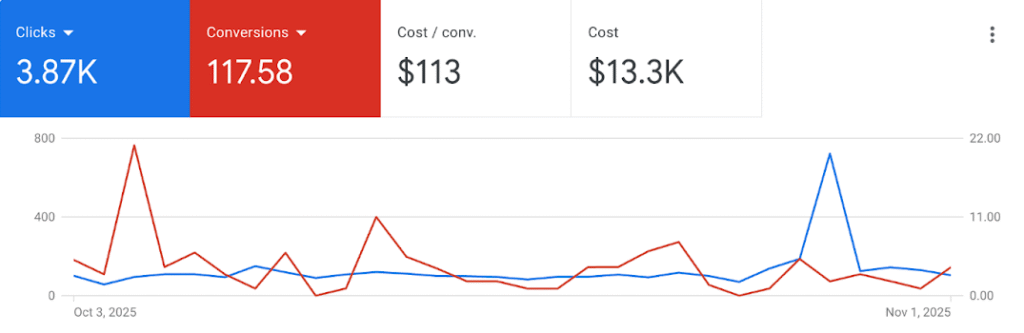
For many of our clients at OuterBox, the concept of “budget” is flexible. We often increase spend when campaigns are producing a strong return on ad spend (ROAS) — because if every $1 invested generates $8–$10 in revenue, scaling simply makes sense.
The key is to regularly evaluate profitability and performance metrics:
- ROI or ROAS: How much revenue you earn per dollar spent
- Conversion rate: How effectively clicks turn into leads or sales
- Cost per acquisition (CPA): How much you pay for each conversion
- Margin alignment: Ensuring your profit margins justify ad spend
If performance falls short of goals, adjust your strategy: reduce spend on underperforming keywords, pause low-quality campaigns, or shift toward lower-cost tactics such as display, video, or remarketing ads.
Your Takeaway: A winning PPC budget isn’t about how much you spend—it’s about how efficiently you turn clicks into profit. Test, analyze, and scale what works.
Why Use a PPC Agency
Partnering with a PPC agency can feel intimidating at first—we get it. Sharing your marketing goals, budgets, and performance data takes trust, and it adds another line item to your P&L sheet. But the right agency partnership can be one of the most effective ways to accelerate growth, improve ROI, and stay ahead in a competitive paid media landscape.
Working with a team like OuterBox gives you more than campaign management—you gain a strategic partner invested in your long-term success. Here’s what that means for your business:
- Industry expertise and proven results: Access to specialists who manage campaigns across industries every day, applying insights and best practices that drive measurable ROI.
- AI-powered insights: Agencies have access to advanced tools and automation features like predictive audience modeling and smart bidding strategies that uncover growth opportunities and improve performance at scale.
- Integrated marketing support: Instant access to other in-house teams—SEO, web development, and analytics—ensuring your PPC strategy aligns with every aspect of your digital marketing.
- Scalable partnership: An agency functions as an extension of your internal team, offering enterprise-level experience at a fraction of the cost of hiring full-time staff.
- Preferred vendor pricing: Agencies often receive discounted “agency rates” from major advertising platforms and tools, lowering your overall media and technology costs.
- Time savings and efficiency: Instead of managing complex ad accounts, keyword bids, or conversion tracking, your team can focus on strategy while we handle day-to-day optimization, testing, and reporting.
A trusted PPC management agency doesn’t just run ads—it continuously refines strategy, analyzes performance, and ensures your marketing dollars work harder.
Your Takeaway: The right PPC partner delivers the experience, data insights, and efficiency that turn ad spend into sustainable business growth.