
White Label SEO Services
White label SEO services should help your agency sell search work without losing control of the client relationship. OuterBox gives agencies, resellers, and consultants an in-house SEO fulfillment team, private-label reporting, and client-safe strategy support under your brand.




White Label SEO Services For Agencies That Need A Real Fulfillment Partner
Client demand for SEO can grow faster than an agency’s internal team. One account needs a technical audit, another needs content, another needs authority work, and the next one needs a clean monthly report your account manager can explain.
OuterBox helps agencies add or scale SEO services without hiring a full internal department. The program is built for agencies that need strategy, execution, reporting, and account support that can sit quietly behind their brand.
The point is not cheap outsourcing. The point is a partner your team can trust with the client promise you already made.
What Our White Label SEO Program Covers
Full-service, ready-to-sell SEO programs your agency can offer confidently on day one.

Packages and Deliverables
White label SEO services mapped to the accounts your agency already sells
Your agency needs an SEO strategy that fits the account you sold, rather than a checklist that looks identical for every client. White label SEO services for agencies should separate eCommerce revenue goals, B2B pipeline goals, and local lead-generation goals before the first roadmap reaches your client.
- Your keyword map labels which searches belong to product pages, service pages, blogs, location pages, or resource hubs inside the agency-sold scope.
- Your search-intent summary gives account teams client-safe language for why some terms need content, some need landing pages, and some should wait.
- Your competitor gap view separates quick-win opportunities from larger bets so proposals do not overpromise before fulfillment begins.
- Your opportunity roadmap gives your team a sequence they can present under your brand without exposing the fulfillment layer.
This structure also protects the agency promise made during sales. A local-services client needs a different plan than an eCommerce catalog, and a B2B lead-gen client needs different proof points than a retailer chasing category demand.
Accounts move more cleanly when the first plan connects the client’s business model, search demand, and agency promise.
Technical SEO recommendations your agency can explain without exposing fulfillment
Your clients see rankings, traffic, and site health. The technical SEO work behind those outcomes needs to be specific enough for developers, but packaged clearly enough for your agency to own the recommendation.
- Your branded audit summary shows which important pages search engines can reach, render, and trust.
- Your Core Web Vitals notes connect speed and usability problems to the templates or scripts causing them.
- Your XML sitemap, robots directive, canonical, and redirect findings get translated into client-ready priorities your agency can own.
- Your schema markup recommendations identify where products, services, articles, breadcrumbs, and FAQs need structured data.
- Your dev-team handoff separates specialist notes from the client-facing explanation, so implementation does not expose the fulfillment chain.
Technical translation matters in white label SEO because your client usually sees the recommendation before they ever see the specialist who found it. The work has to be accurate, prioritized, and easy for your account team to defend.
Recommendations move faster when your client gets clear technical direction and your agency keeps control of the relationship.
On-page and content work your account team can hand off with confidence
Your client’s pages need more than keyword insertion. On-page SEO inside a white-label SEO program should make each page easier for search engines to understand and easier for buyers to act on once they arrive.
- Your product, category, service, and landing page recommendations arrive in a format your agency can place into client tickets or creative briefs.
- Your content briefs give writers the search angle, page structure, internal links, and client context before drafting starts.
- Your metadata and heading updates improve relevance while still sounding like the client’s brand instead of the fulfillment partner’s voice.
- Your blog and resource-hub plans give account teams a rationale for each topic before the client asks why it belongs in the roadmap.
- Your revision notes separate must-fix SEO items from optional copy improvements, so client approvals stay focused.
Content earns its place in the program when every page has a search job, a client-facing business reason, and a handoff your agency can confidently own.
White label SEO authority work that protects your client’s brand standards
Your clients need authority signals, but they also need brand risk handled carefully. White label link building should support the strategy your agency sold through relevant placements, clean outreach standards, and link decisions that can be defended if a client asks why they matter.
The white label link building layer starts with the backlink profile your client already has. Toxic patterns, lost links, thin referring domains, and competitor authority gaps shape the plan before outreach begins. Digital PR angles, publisher targets, and content-promotion opportunities are filtered through the client’s market instead of link volume alone.
Placement governance keeps outreach aligned with the client’s brand rules and your agency’s relationship. Placement quality, anchor context, publisher fit, and disavow recommendations all need to be explainable in client-safe language when the monthly report or account call reaches the table.
Authority grows with less risk when every placement supports the client’s category, reputation, and search opportunity.
White-labeled reporting your clients can understand and your agency can defend
Your agency needs reporting that makes SEO performance clear without turning every monthly call into a data translation exercise. White label SEO services should give you branded reporting, useful commentary, and marketing analytics context your client can connect to rankings, traffic, leads, or revenue.
- Your branded monthly report summarizes ranking movement, organic sessions, landing-page performance, and completed goals.
- Your GA4 and Google Search Console views connect visibility changes to the pages and queries behind them.
- Your Looker Studio dashboard gives account teams a client-safe way to review trends between reporting cycles.
- Your analysis explains what changed, why it matters, and which priority comes next on the roadmap.
The report should also protect the account team from surprise questions. When a keyword slips, a page jumps, or a lead source changes, the explanation needs to be clear enough to use in a client conversation without pulling the fulfillment team into every meeting.
Reports protect retention when your client understands the progress and your agency can explain the next decision with confidence.
Account leadership that keeps white-label client relationships aligned
Your client relationship needs senior SEO direction without making the fulfillment partner visible. A white label partnership should give your agency roadmap notes, branded meeting support, escalation paths, and clear answers before client questions turn into account risk.
NDA coverage matters, but day-to-day communication matters more. Agendas, status notes, recommendation summaries, and optional call support have to match the role your agency wants us to play. Some accounts need behind-the-scenes strategy only. Others need subject-matter support that still shows up under your brand and follows your client-communication rules.
This support model matters when a private label SEO reseller has several client types in motion at once. One account may need a quiet roadmap review, while another needs help preparing a technical explanation for a stakeholder who controls implementation.
Client relationships stay stronger when your agency has expert backup without adding another visible vendor to the room.
SEO reseller support that helps your agency scope, price, and sell the work
Your sales team needs enough structure to sell SEO profitably without promising work the account cannot support. SEO packages give a starting point, but white label SEO reseller programs also need scope control, proposal support, and pricing guidance that protects margin as volume grows.
- Your scopes of work clarify which deliverables belong in each package before the proposal reaches the client.
- Your pricing guidance helps account teams match client need, budget, and margin expectations without guessing.
- Your proposal notes translate technical SEO, content, authority, and reporting into outcomes buyers can understand.
- Your package options give resellers a repeatable way to sell small, mid-market, and growth accounts.
- Your bulk-buyer context supports scale without turning every new sale into a custom fulfillment scramble.
Margins hold when your agency can sell the right SEO scope before fulfillment begins.
How OuterBox Supports White Label SEO Growth
White label SEO works when the fulfillment team has enough depth to support the promise your agency made. OuterBox brings SEO, content, technical, analytics, paid media, CRO, and web experience into the same operating structure, so recommendations do not get trapped in one channel.
Your clients experience the program as steady strategy, clean execution, and reporting your team can explain. Your agency gets the scale behind that work without making another vendor visible.
Confidential SEO Fulfillment, Built To Protect Your Client Relationship
White label work depends on trust. Your client is not hiring another visible vendor. Your agency is bringing in a fulfillment partner that has to respect the relationship, the communication rules, the brand standards, and the promises already made during sales.
OuterBox structures white label support around the rules your agency sets: NDA posture, branded reports, account-team language, escalation paths, and client-call boundaries. Those details protect retention because white label work can fail even when the SEO tactics are correct.
Your agency gets senior SEO support without giving up the relationship it earned.
White Label SEO Services
Get A Free SEO Quote
Tell us about the clients you want to support, the services you want to sell, and where your current fulfillment model is stretched. OuterBox can help you review scope, pricing, deliverables, reporting, and the right white label support model for your agency. Prefer to talk through an active account? Call (866) 647-9218.
Services
"*" indicates required fields
Meet OuterBox
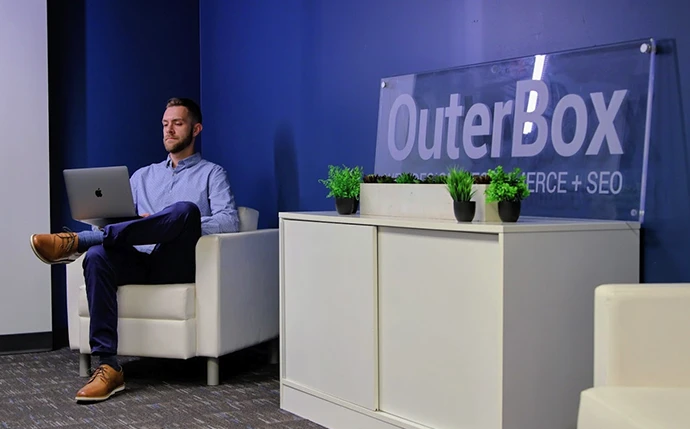
OuterBox has been building SEO and digital marketing programs since 2004. Today, 300+ USA-based, in-house experts work across SEO, paid media, analytics, CRO, content, web design, and development.
That in-house structure matters for white label SEO. Our 300+ USA-based, in-house experts (a.k.a. Boxers) can connect technical recommendations, content priorities, reporting, and client-facing explanations without handing the work to another vendor. The broader OuterBox record includes 1000+ successful client partnerships and 2M+ page-one Google rankings across SEO programs.
100/100 is the OuterBox ownership standard: 100% ownership of 100% of actions, results, and behaviors. For agency partners, that means details get owned before they become client risk.
20+ Years
Digital Marketing Agency
1000+
Successful Client Partnerships
2M+
Page #1 Google Rankings
300+
USA-Based, In-House Experts
Why Agencies Choose OuterBox For White Label SEO
Eight signals separate a real white label SEO partner from a typical fulfillment vendor. The difference is control. Agencies comparing a white label SEO company or platform should look for in-house strategy, client-safe reporting, and support that stays behind the brand.
OuterBox
- Team structure: 100% in-house, USA-based SEO fulfillment with broader digital support around it.
- Client relationship: Your agency keeps the relationship, brand, and communication rules.
- Strategy: Roadmaps are shaped around the account type, search demand, and client goals.
- Technical SEO: Findings are translated into developer-ready notes and client-safe priorities.
- Content and on-page work: Recommendations connect search intent, page type, brand voice, and approval workflow.
- Reporting: White-labeled reports explain movement, results, and next steps.
- Reseller support: Scope, pricing, packages, and account planning protect margin before the sale.
- Confidentiality: NDA-friendly support can stay fully behind the scenes or join calls under your rules.
Typical Fulfillment Vendor
- Team structure: Outsourced layers or rotating contractors.
- Client relationship: Vendor process can become visible or hard to control.
- Strategy: Generic checklist work is reused across very different accounts.
- Technical SEO: Audits are either too shallow for developers or too dense for account teams.
- Content and on-page work: Keyword edits arrive without enough business context.
- Reporting: Static reports leave your team to interpret the data.
- Reseller support: The agency sells first and discovers fulfillment limits later.
- Confidentiality: Account support is rigid or visibly vendor-led.

Agency margin is usually lost when a package is sold before scope, reporting, and the client’s actual SEO need line up. OuterBox also supports white label PPC when your clients need paid media fulfillment under the same partner model.
Other SEO Services from OuterBox
Related Services





White Label SEO FAQs

What is white label SEO?
White label SEO is SEO strategy and fulfillment performed by one team while another agency presents the work under its own brand. OuterBox can provide deliverables, reporting, and support that fit your agency’s client relationship.
Do you offer private label SEO reporting?
Yes. OuterBox can provide white-labeled reporting with your agency branding, KPI commentary, rankings, organic traffic, landing-page performance, conversions, and roadmap notes. The goal is a report your client understands and your account team can defend.
Is OuterBox's white label SEO work outsourced?
OuterBox keeps SEO fulfillment in house with a USA-based team. That matters for quality control, confidentiality, communication, and follow-through when an agency needs consistent work across several client accounts.
Can you support eCommerce, B2B, lead generation, and local SEO clients?
Yes. OuterBox can support different client types, including eCommerce, B2B, lead generation, local, and multi-location accounts. Each account still needs its own scope because the search intent, page types, and reporting story are different.
Do you offer bulk discounts or reseller pricing?
Yes. OuterBox can discuss reseller pricing, volume context, package options, and scope guidance with agencies that expect recurring or multi-account work. Pricing depends on the service mix, account complexity, and fulfillment needs.
Will OuterBox join client calls under our agency brand?
OuterBox can support client communication in the role your agency approves. Some partners want behind-the-scenes strategy only, while others need NDA-friendly call support, roadmap walkthroughs, or technical explanations.
What is included in a monthly white label SEO engagement?
A monthly engagement can include strategy, technical SEO, on-page recommendations, content planning, authority work, reporting, analytics context, and account support. The exact scope should match the client type, budget, and growth goal.
Can we resell other OuterBox services?
OuterBox can discuss white label support for related services such as PPC, CRO, web design, content marketing, analytics, and technical SEO. The right mix depends on what your agency sells and how visible you want OuterBox to be.
Ready To Add SEO Without Building The Whole Department?
Bring us the client types you serve, the SEO work you want to sell, and the fulfillment gaps your team needs covered. OuterBox will help you shape a white label SEO program your agency can sell, explain, and keep under your brand.
"*" indicates required fields
"*" indicates required fields
Related Articles: White Label SEO Services

SEO | 9 min read
Google says no third-party SEO tool sees its ranking data. Here’s where Search Console is authoritative, and where third-party tools still earn their place.

SEO | 16 min read
SEO prices in 2026 run $100–$250 per hour, $3,000–$7,500 a month for most US agencies, or $5,000–$50,000 for project-based work. The range is wide because…
SEO | 6 min read
Searching for an eCommerce SEO Agency in 2026 feels…familiar. Every “Top 10” list looks the same. Every agency claims to be “data-driven”. And half of…